

Kootenai Prosthetics and Orthotics playing key role in helping people adjust to new lifestyle
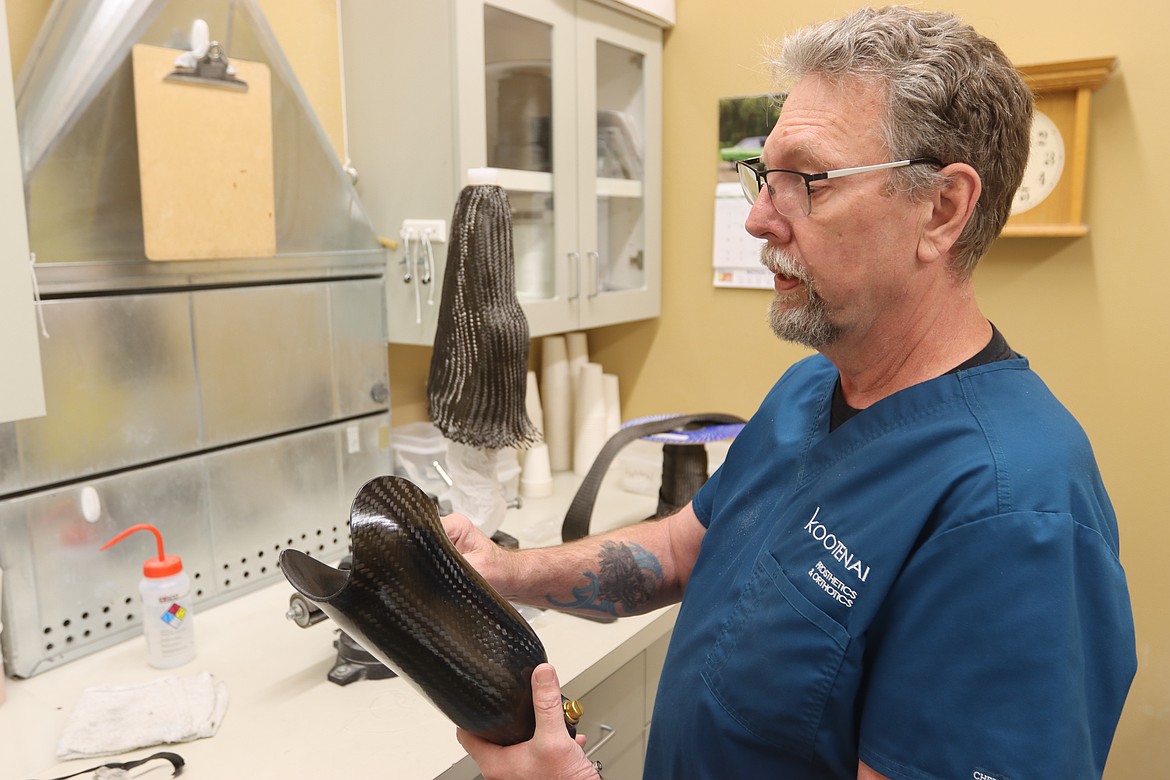
Lab Manager Keim Bill, CTPO, holds a finished prosthetic product next to one in progress.
DAVID BERNAUER/Press
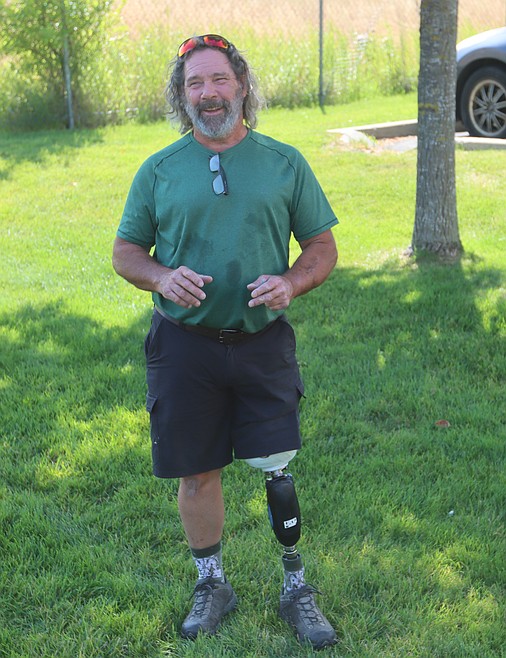
Tom Carroll smiles as he tests out a microprocessor knee behind the Kootenai Prosthetics and Orthotics building.
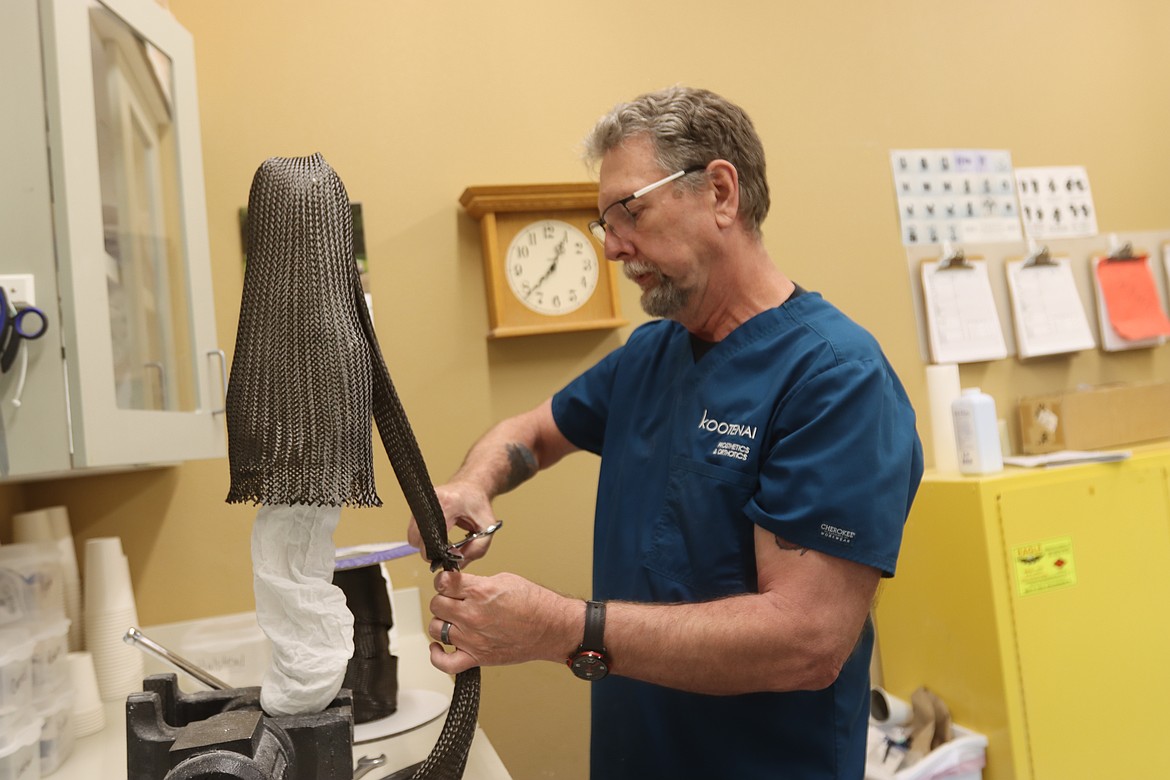
Lab Manager Keim Bill, CTPO, begins work on a prosthetic.
DAVID BERNAUER/Press
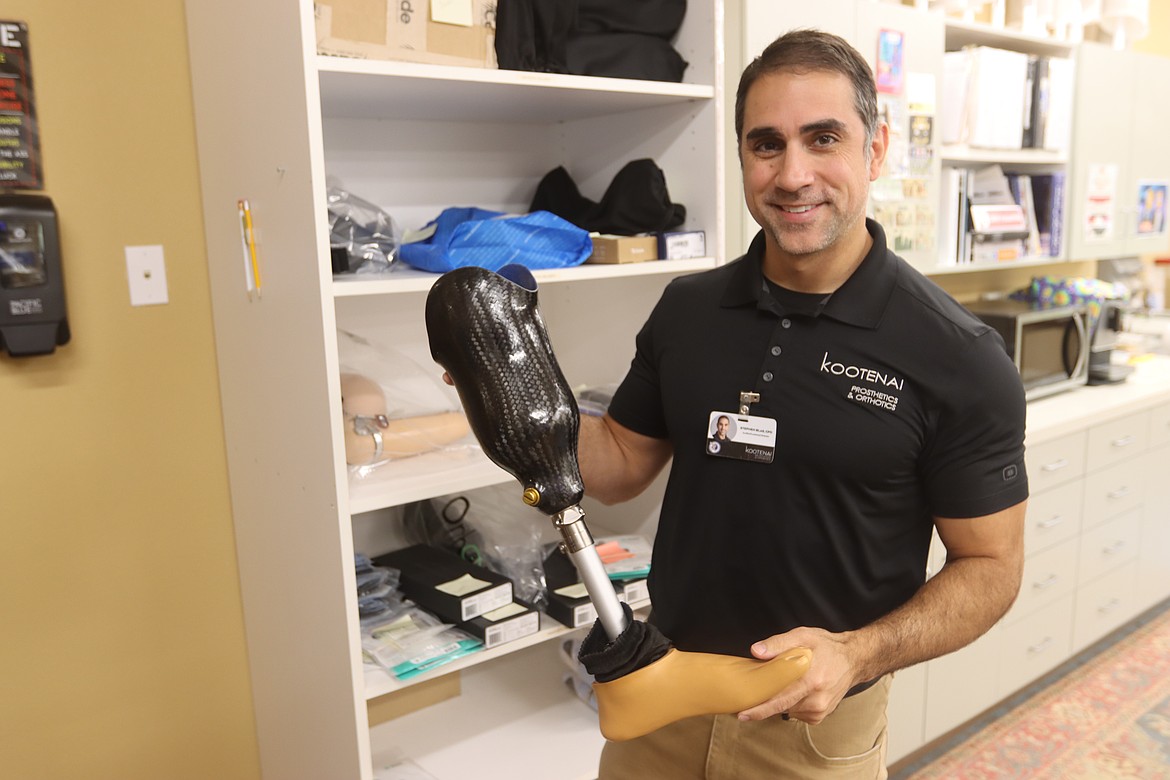
Stephen Blas, CPO, holds a below the knee prosthetic with a foot attachment.
DAVID BERNAUER/Press
Nearly 1.9 million people in the United States live without a limb, and according to the National Library of Medicine, that number is expected to double by 2050 due to rising rates of diabetes.
Kootenai Prosthetics and Orthotics in Post Falls plays a major role in helping amputees in the region navigate life without a natural arm or leg.
It begins with an evaluation of a person's needs, followed by a doctor's order for a prosthetic. The person then makes an appointment to consult with Stephen Blas, CPO, or Daniel Daley, CPO, who answer questions about their new prosthesis.
“A lot of it is education on those first early visits,” Blas said. “Let's talk with the patient, get a sense of what they are looking for functionally, then we take casts of their legs to start the process.”
It takes about a month from the initial visit to the final visit to make prosthetic limbs. The fitting process can be tedious, but both the provider and patient need to make sure everything works as it should and is comfortable for any movement the prosthetic user may make. Measurements are continually adjusted based on feedback to find the best fit.
Kootenai Prosthetics and Orthotics does just that with its infrared oven, which has seven bulbs running over 1,000 watts to melt the plastic mold.
“In a lot of facilities, they still use these great, big, huge, long pizza ovens and they throw their stuff in there," Fabrication Lab Manager Keim Bill said. "What we're looking for is a consistent heat and that's what we need out of our ovens.”
One patient, Tom Carroll, was testing a new leg featuring a microprocessor with Blas and his team. The microprocessor can take pressure input at the knee joint to adjust how much support it provides for different angles and steps, whereas a “traditional” leg can’t. Even small steps up a curb or an uneven sidewalk can feel like scaling an ice wall.
“I'm using at least 60, 70% more energy on every single step I take compared to an able-bodied person,” Carroll said.
Carroll lost his leg in a motorcycle accident July 7, 1990. He was in the hospital for 18 months and had to relearn how to talk, eat and remember his family.
The most important part of a prosthetic is the socket that holds the residual limb. Getting the right fit requires trial, error and testing.
“We’re making sure it's suspending well, working well, and we use a series of test sockets,” Daley said. “Then we send them out so they can do normal day-to-day life. They come back to us and they might have some hot spots or might have some concerns or issues, and we continue to fine tune it until it’s finalized.”
Once they find the perfect fit, they make a plaster cast of the check socket to mold the final product around. They place carbon braid over the cast and cut it to the appropriate length to cover it. Next comes the first layer of laminate.
“I’ll shoot that liquid resin and that’s what’s going to coat it,” Bill said. “Then we're going to come to my goodie box.”
Inside that box, Bill said, are several small, expensive pieces, including a socket adapter that connects the socket to the artificial knee joint. This adapter will be securely fastened to the recently laminated piece, and a second lamination will take place.
After that, patients can request different colors and designs to personalize their new leg or arm.
Once the prosthetic limb is completed, the patient is sent home. However, the job isn’t finished. The limbs see wear and tear, patients gain or lose weight, the residual limb heals and changes shape, or daily activities shift from one physical demand to another. All of this can mean changing how the prosthesis fits.
Because the residual limb needs to fit snugly in the socket, getting it on can be cumbersome at best and a grueling challenge at worst. One way to make it easier is a pull sock, a bag made of the same material as parachutes that you place over the limb, slide into the socket and pull out through the bottom.
For someone new to being an amputee, such as Steve Harrington, having Carroll there to teach the process goes a long way.
Blas said they get a lot of joy from helping patients.
“When patients start walking again, they're not saying, ‘Oh, yay, I can walk again,’” Blas said. “They're saying, ‘I can be more independent.’ What really lights them up, I think, is the restoration of independence.”
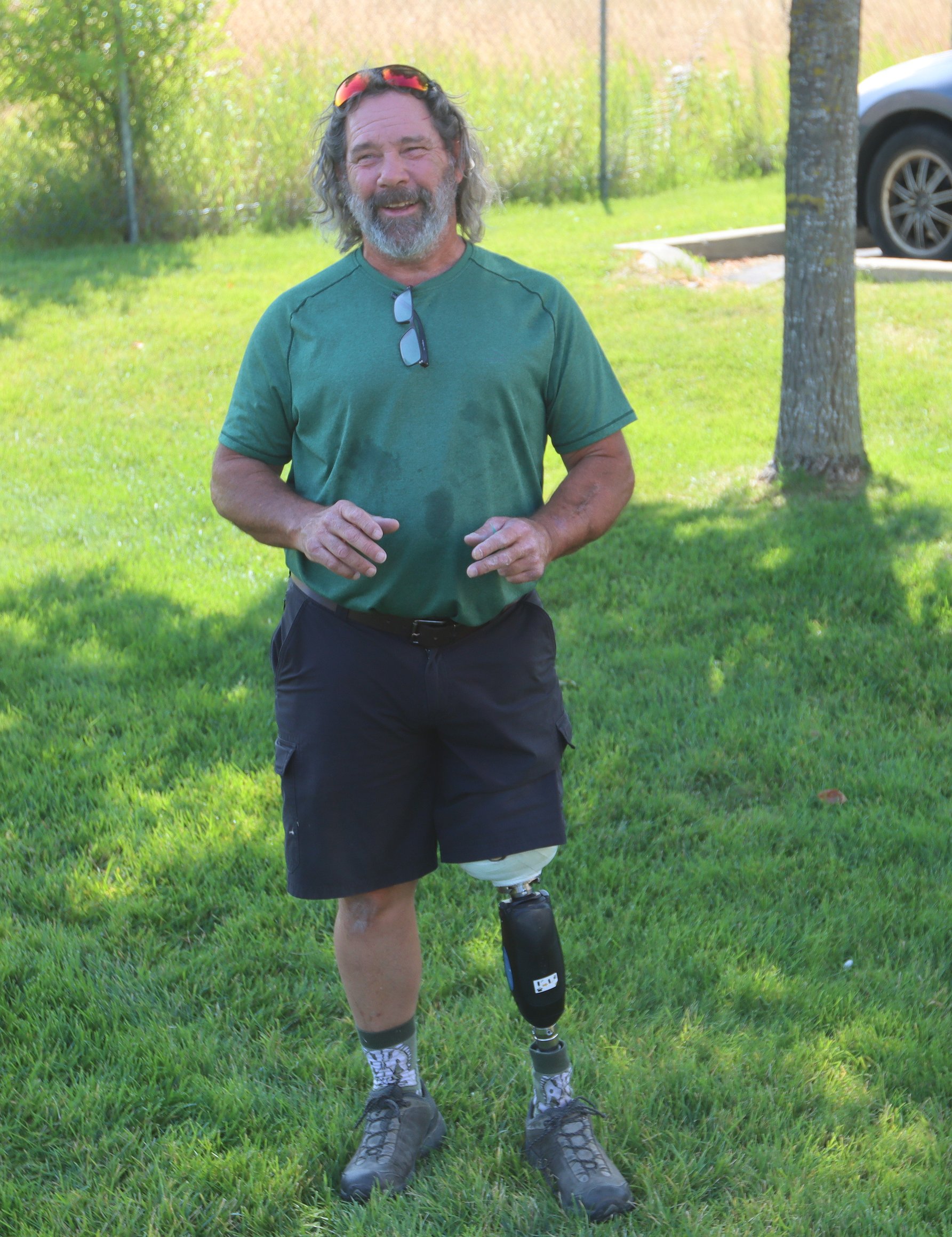 Tom Carroll smiles as he tests out a microprocessor knee behind the Kootenai Prosthetics and Orthotics building.
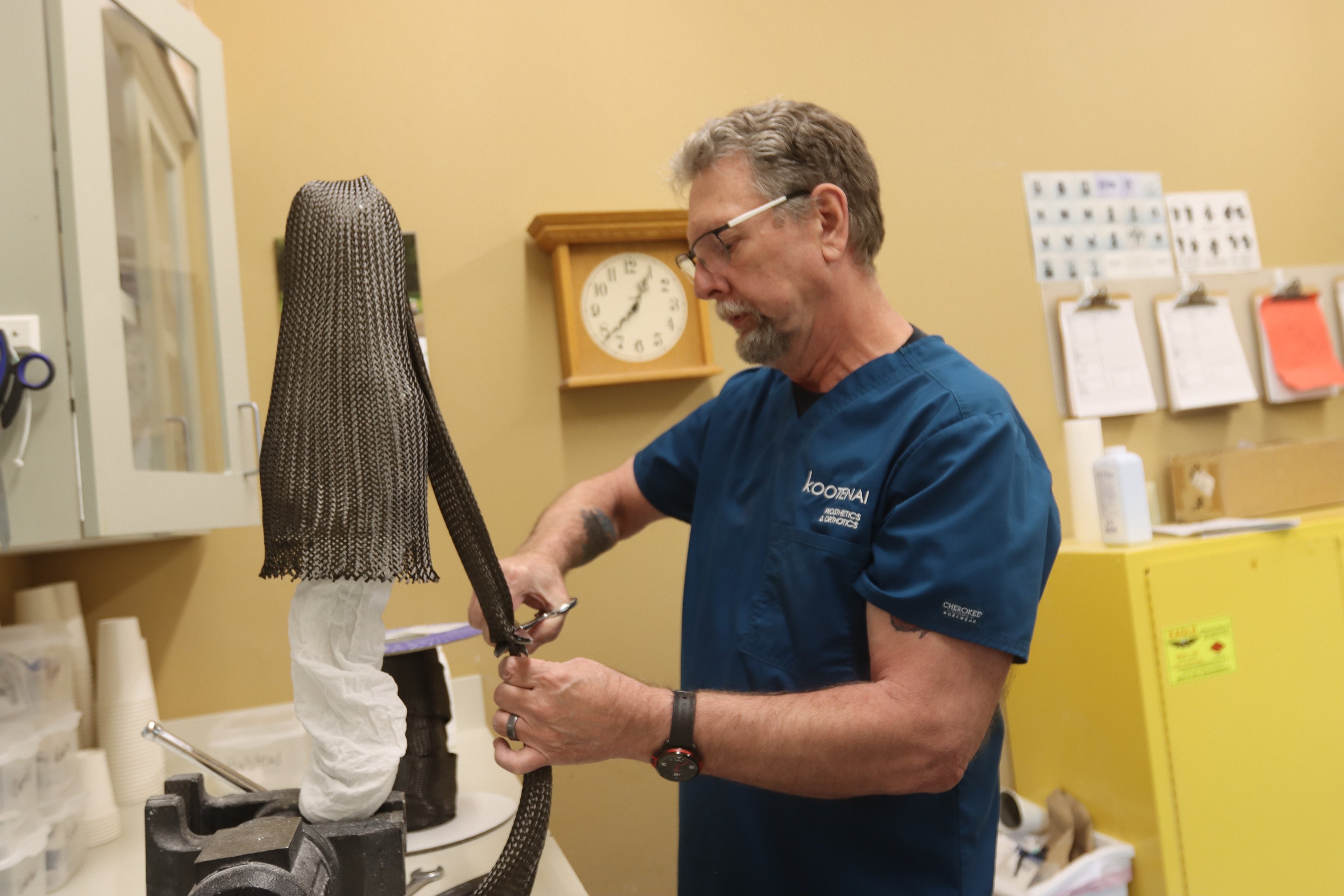 Lab Manager Keim Bill, CTPO, begins work on a prosthetic.
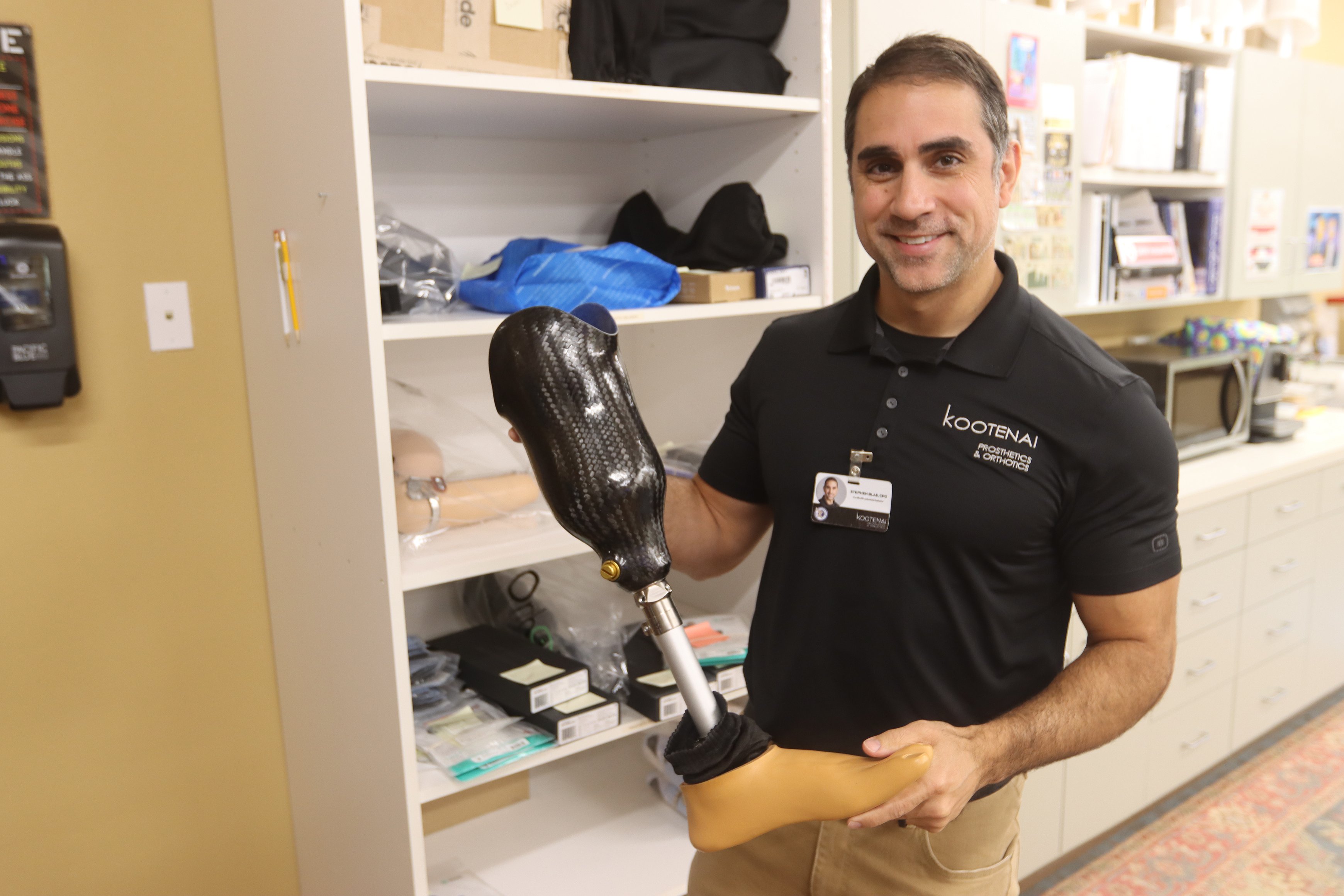 Stephen Blas, CPO, holds a below-the-knee prosthetic with a foot attachment.