

Idaho Supreme Court rejects appeal in drag defamation case
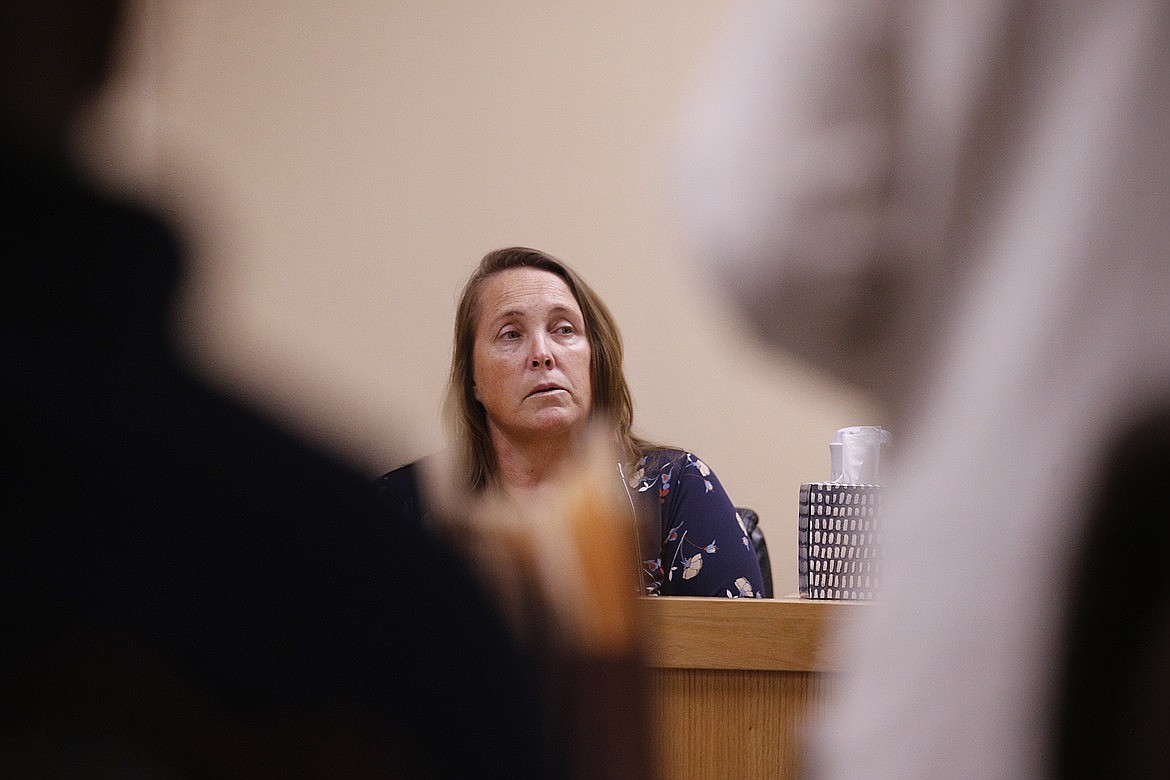
In this 2024 photo, Summer Bushnell testifies during a defamation trial.
KAYE THORNBRUGH/Press file
The Idaho Supreme Court upheld a $1.1 million civil judgment against Summer Bushnell, a Post Falls blogger who falsely claimed a drag performer exposed himself to a crowd that included children at a Pride event in 2022.
In 2024, a Kootenai County jury unanimously found that Bushnell defamed Eric Posey by posting a doctored video of his performance at the City Park bandshell, in which a blurred spot covered what she claimed were his “fully exposed genitals.”
The edited video garnered thousands of views and was republished many times, sparking national news coverage and a police investigation. City prosecutors declined to file charges and publicly stated that the unedited video showed no exposure.
Jurors awarded Posey $926,000 in compensatory damages for defamation and $250,000 in additional punitive damages. Court records indicate that Bushnell has not made any voluntary payments toward the debt, though her husband's wages are now being garnished. Court records show Bushnell is not regularly employed.
Bushnell appealed the case and represented herself in April when she went before the Idaho Supreme Court in Lewiston. She alleged that the jury selection process was biased against her and argued that the jury's punitive damages award was “not clearly tied” to her conduct.
In a unanimous opinion published Tuesday and written by Chief Justice Richard Bevan, the court found that "most of the issues raised on appeal are unsupported by cogent argument or authority."
"Many of her issues are presented in passing with very little explanation," the decision said in part. "Others are so amorphous that it is almost impossible to determine what she is arguing."
The court noted that only six of Bushnell's 22 citations of case law, statutes, court rules and other sources are "accurate quotations with some minor spelling errors." The errors in her briefing are "pervasive and egregious."
"Indeed, the nature and extent of the inaccuracies and misrepresentations in Bushnell’s briefing suggest that she may have relied on generative artificial intelligence (“GenAI” or “AI”) in drafting her briefs," the decision said.
When she argued before the Idaho Supreme Court, Bushnell denied using generative AI to prepare her briefing.
"Review of her briefing and the record raise serious doubt as to that assertion," the decision said.
All litigants, whether represented by counsel or pro se, must ensure the accuracy and validity of the arguments they present to the court and certify that those arguments are "well grounded in fact" and warranted by law.
"This Court possesses ample authority to sanction a litigant for submitting briefing containing the type of pervasive inaccuracies and misrepresentations present here," the decision said.
The court determined that additional monetary sanction is unnecessary, though that decision "should not be understood as minimizing the seriousness of Bushnell’s conduct."