
OUR GEM: Living Lake artists, seeing the lake through new eyes
A remarkable program is unfolding in our region, bringing together art, culture, science, and environmental stewardship to help protect our shared watershed and Coeur d'Alene Lake.
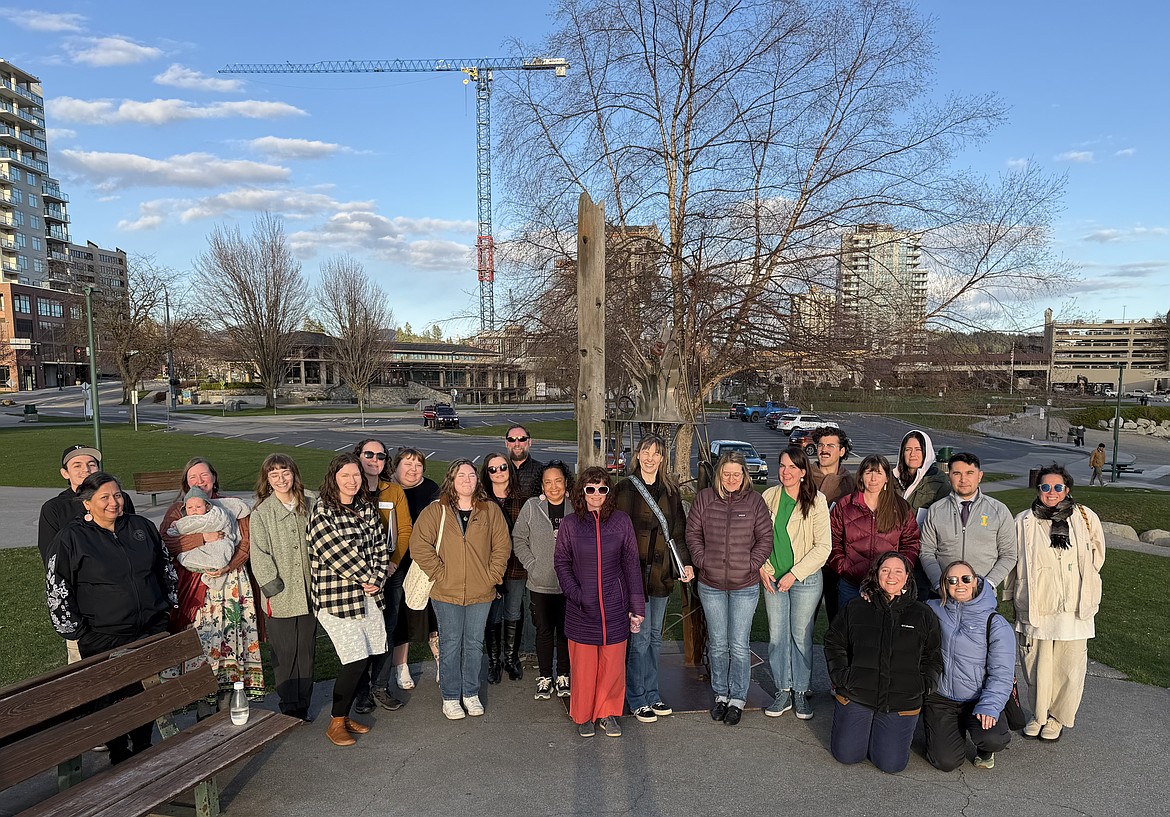
The Living Lake Project has brought together 10 artists from Kootenai, Shoshone and Benewah counties for a 15-month fellowship designed to explore the health of Coeur d'Alene Lake through field experiences, research, and hands-on learning. Their mission is to transform complex environmental issues into compelling works of art that inspire awareness, conversation, and collective action to protect the waters that sustain us all. The project is made possible through a partnership with the Coeur d'Alene Arts & Culture Alliance, Coeur d'Alene Tribe, ID DEQ, and the Economic Recovery Corps, funded through an NW philanthropy EPA EJ grant, and supported by a steering committee of creative, environmental, and Tribal organizations.
Since beginning their immersive journey in the spring of 2026, the artists have spent the past six months gaining a deeper understanding of the challenges facing our watershed. They've worked alongside the Idaho Department of Environmental Quality's Lake Management Team, met with members of the Coeur d'Alene Tribe to better understand the lake's cultural significance, and toured cleanup projects throughout the Bunker Hill Superfund Site to see firsthand how more than a century of mining continues to shape today's restoration efforts.
While some entered the fellowship with a strong understanding of the watershed's history, many were encountering these issues for the first time. What united them was a willingness to listen, learn, and see Coeur d'Alene Lake through new eyes. As they absorbed perspectives from scientists, Tribal leaders, restoration professionals, and community members, they discovered that protecting the lake isn't just about understanding data; it's about understanding our relationship with the place we call home.
When asked how the fellowship had changed their perspective, artist Duncan Menzies summed it up perfectly:
"Before this fellowship I thought I was going to make a piece to show an aspect of the lake. Now I think I am here to show a piece that reveals ourselves through the lake."
Many artists were surprised to learn how climate change, water quality, fish populations, invasive species, nutrient loading, and restoration efforts are all interconnected. Nearly every artist also pointed to conversations with members of the Coeur d'Alene Tribe as one of the most meaningful parts of the fellowship.
"Hearing members of the Tribe speak about their unique experiences and views has given me a deeper appreciation of how interlinked the environment is in the fabric that makes up the Tribal community," said Jen Erickson.
Menzies echoed that sentiment:
"LoVina from the Tribe definitely changed my perspective of the watershed. She has a way of embodying the stewardship of the land. Witnessing that made me see my own disconnection from the land."
Artists naturally process information differently than scientists. Rather than focusing only on data, they look for stories, emotions, and experiences that help people connect with complex issues.
For Christina Villagomez, learning about the watershed feels much like creating a drawing.
"I don't start with the details. I start with big, broad shapes and work my way down. I'm finally starting to zoom in on the elements I want to bring to life."
Others found inspiration in everything from microscopic aquatic organisms to historic mining photographs, and in the realization that stormwater runoff and warming lake temperatures influence watershed health.
"I feel a responsibility to articulate my ideas in a way that can educate and motivate the public," Erickson explained.
The fellowship isn't simply about producing beautiful artwork. It's about helping people connect with the watershed.
"People need to feel connected in order to care," said Jessica Bryant. "And they need to care in order to be willing to take action."
Villagomez hopes viewers leave with something equally important: hope.
"It's easy to look at environmental damage and feel helpless," she said. "But the reality is a lot of small actions can culminate in big results."
Despite learning about contamination, climate change, and ongoing environmental challenges, the artists remain optimistic. They found hope in restoration projects already underway, advances in water treatment, and the many scientists, Tribal members, volunteers, and community organizations working to protect the watershed.
Kate Lund perhaps captured it best:
"I am very hopeful. I do think that our community cares about the lake because our community culture is the lake."
That hope is matched by a growing understanding that protecting the watershed belongs to everyone who lives, works, and recreates here. The artists' advice was remarkably consistent: learn about the issues, reduce pollution from our own properties, pick up pet waste and leaves, minimize fertilizer use, share what you've learned, and remember that small actions add up.
As Sarah Thompson Moore reflected:
"Before this fellowship, I thought there wasn't anything I could do to help the situation with our waterways. Now, I think maybe there is."
That realization may be the fellowship's greatest work of art, not a painting or sculpture, but the creation of new ambassadors who see the lake through fresh eyes and invite the rest of us to do the same.
Keep an eye out for updates and the new Living Lake website coming soon at https://www.artsandculturecda.org/new-page-1
Learn more about the Our Gem Collaborative at uidaho.edu/OurGem
Sharon Bosley is the Executive Director for the Basin Environmental Improvement Project Commission.