

Don't fear failure
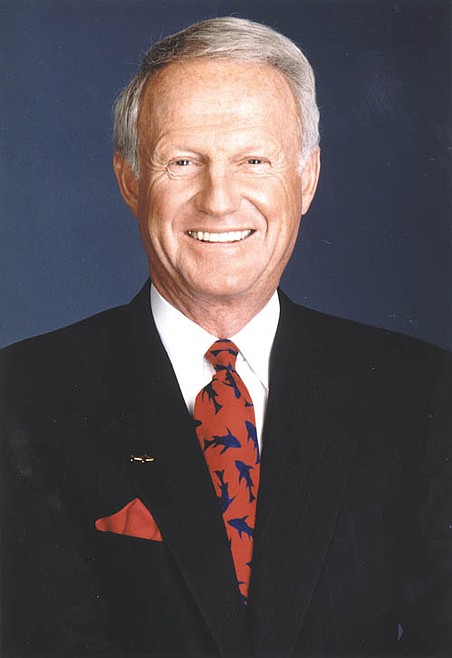
Harvey Mackay
Two drifters were sleeping by a stream with their backs against a tree when one of them said, "You know, Jim, this business of drifting your way through life is not what it's cracked up to be. Think it over — nights on park benches or in a cold barn. Being kicked from one town to another. Wondering where your next meal is coming from. Wandering, unwanted everywhere."
His companion shifted his position and said, "Well, if that's the way you feel about it, why don't you go and find yourself a job?"
The first drifter sat up and said in amazement, "What? And admit I'm a failure?"
I had a chance to hear former NFL standout receiver Adam Thielen speak recently, and three things he said really hit me. During his playing days with the Minnesota Vikings, Carolina Panthers and Pittsburgh Steelers, Thielen said he had zero fear of failing.
This was surprising to me because Thielen was an undrafted free agent in 2013. He attended a Vikings camp and was signed to report to rookie camp and then training camp, where he made the practice squad during his first season before making the team the following year and setting several NFL records, including eight straight games over 100-plus yards receiving and 74 receptions in the first half of a season.
Most people think of failure as the opposite of success. I think that is completely wrong. Failure is actually a component of success. It is part of the process, not the end of the road.
The fear of failure is far more destructive than actual failure. Fear of failure causes paralysis. When you are afraid to fail, you stop taking risks. And when you stop taking risks, you stop growing. And when you stop growing, you start dying — professionally, creatively and personally.
Another point Thielen made that caught my attention was about being delusional. When he was attending rookie camp, he thought he should be a starter on day one. I call this confidence.
Let me be clear about something first. There is a difference between being truly delusional — meaning completely out of touch with reality in a harmful way — and what I like to call "productive delusion": the kind of bold, audacious dreaming that makes people around you shake their heads and say, "That will never work."
The greatest entrepreneurs, leaders and innovators in history were all considered a little "crazy" by someone at some point. Steve Jobs said he was going to put a computer in everyone's pocket and people scoffed. Elon Musk said he was going to send rockets to Mars and people laughed.
I believe big, bold, even "delusional" thinking is actually a competitive advantage for the following reasons.
Big dreams attract big people. When you have a vision that is bold enough, it acts like a magnet. The best talent, the best partners and the best opportunities are drawn to people who think big.
You cannot hit a target you cannot see. If your goals are small and safe, your results will be small and safe. But when you dare to dream big — even "delusionally" big — you set your sights on a target that forces you to grow, stretch and become more than you currently are.
The "delusional" thinker ignores the naysayers. One of the greatest skills any entrepreneur or leader can develop is the ability to tune out the noise. The world is full of people who will tell you why something cannot be done. The productive dreamer smiles, nods politely and does it anyway!
Failure looks different to a big dreamer. When you are swinging for the fences, even a strikeout teaches you something valuable. Big dreamers do not see failure as a stop sign — they see it as a detour pointing them toward a better route.
The final takeaway I picked up from Adam Thielen was about feedback. He said it is uncomfortable at times, but it makes you better.
Feedback is the breakfast of champions. Without it, you are essentially driving a car with no mirrors, no GPS and a foggy windshield. You might eventually get where you are going, but the journey will be a lot bumpier and longer than it needs to be!
Studies consistently show that employees who receive regular, meaningful feedback are more engaged, more productive, more loyal to their organization and more likely to grow and advance.
Mackay's Moral: There is no failure until you fail to keep trying.
• • •
Harvey Mackay is the author of the New York Times bestseller "Swim With the Sharks Without Being Eaten Alive." He can be reached through his website, www.harveymackay.com, by emailing [email protected] or by writing him at MackayMitchell Envelope Co., 2100 Elm St. SE, Minneapolis, MN 55414.