
Preservation Act overhaul poses ‘huge setback,’ local official says
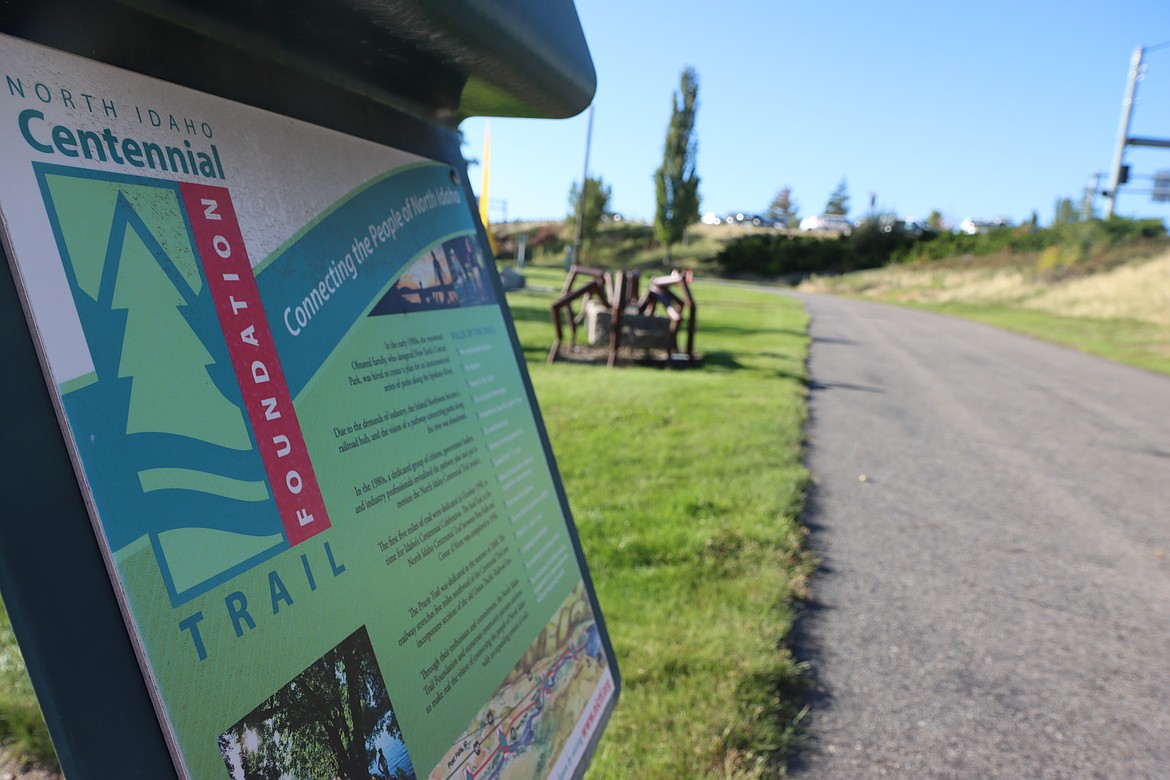
The North Idaho Centennial Trail in Coeur d'Alene on Wednesday.
RAY ERKU/Press
Proposed changes to a federal law requiring public input amid major project planning could pose negative impacts on local cultural heritage, according to Coeur d’Alene Historic Preservation Commission officials.
“It would be a huge setback for historic preservation; I almost want to use the word disastrous,” HPC Chair Walter Burns said. “That’s a key part of the National Historic Preservation Act.”
In July, a federal agency called the Advisory Council on Historic Preservation approved reducing public and local input on federal projects that could interfere with surrounding historic resources. Alterations to the original law, which is Section 106 of NHPA, currently await review by the Office of Management and Budget’s Office of Information and Regulatory Affairs.
According to Coeur d’Alene Historic Preservation Commission Member Shannon Sardell, if Section 106 is completely gutted, that would also interfere with grant funding related to mitigating adverse effects to surrounding historic resources caused by federal projects.
“In some terms, there will be no oversight,” Sardell said if Section 106 is altered. “There will be no community voice for what is important in the demolition of buildings and property. That includes archeological findings.”
How could this proposal affect Coeur d’Alene?
Interstate 90 comes to mind, Sardell said.
The Idaho Transportation Department is currently widening a five-mile stretch of the freeway to four lanes in each direction between State Highway 41 in Post Falls and U.S. Highway 95 in Coeur d’Alene by 2029.
Once that project reaches the U.S. 95 exits, any historical artifact or resource left unturned in the area could be simply demolished without any input from Coeur d’Alene stakeholders. This includes whether the project potentially affects certain viewsheds, noise barriers and historical neighborhoods in its vicinity.
“They could just plow through anything they want and not tell anybody,” Burns said.
Section 106 of the NHPA also requires federal agencies to fund and implement mitigation measures agreed upon during project consultation to offset adverse effects on historic properties, according to the National Endowment for the Humanities.
For instance, the historic Springston Bridge over the Coeur d'Alene River near Harrison generated $260,000 in federal Section 106 mitigation funds after it was slated for removal due to severe deterioration, according to the Kootenai County Historic Preservation Commission.
“There have been bridges removed in Kootenai County that were historic, so money went into a grant program for mitigation for adverse effects,” Sardell said.
Section 106 mitigation funds have helped local amenities such as the North Idaho Centennial Trail and the Rails to Trails program, which converts old railroad lines into walking paths. Sardell said those projects both use Section 106 mitigation funds.
Asked why federal bodies and agencies are considering getting Section 106, Sardell said it will “streamline project readiness.”
“There have been holdouts when people hold on to projects for longer than 30 days,” she said. “There’s kind of a small power-hungry fiefdom.”
Burns said he looks to call attention to Mayor Dan Gookin and Coeur d’Alene City Council about Section 106 of the NHPA in the hopes they pass a resolution or letter.