

Best Night Sky Events for September
This month, the celestial inhabitants put on a memorable show where the moon, the Pleiades, and Saturn will be occupying center stage! While August dazzled us with meteor showers and planetary alignments, September also has quite a lineup. Expect a Lunar conjunction with the Pleiades, more than once, and then with Saturn. Then add in our normal Lunar phases to include the full Harvest Moon, plus the Autumnal Equinox. So set your stargazing calendar so you don’t miss a thing. Let's begin!
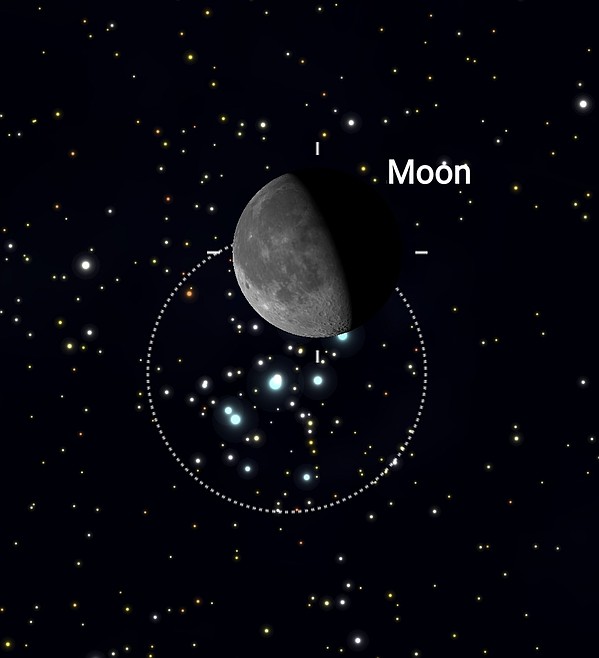
Sept. 3 — The Moon Fully Immersed in the Pleiades Star Cluster
For all you early risers, you can see this event at 4 a.m. until dawn’s astronomical twilight ends. Look high in the southeast sky to see the waning gibbous moon fully immersed within the Pleiades star cluster. A pair of 10x50 binoculars will definitely enhance the view.
Sept. 4 — Third Quarter Moon
The third (or last) quarter phase, at 12:51 a.m., shows the moon appearing half-illuminated on its western, or left side. It rises before midnight local time and then remains visible until it sets in the western daytime sky in the early afternoon. The dark, moonless evening skies that follow this phase gives you an opportunity for observing deep sky targets, like the Andromeda galaxy!
Sept. 10 — New Moon
On Thursday, at 8:27 p.m., the moon will officially reach its new moon phase. The moon is now between Earth and the sun, and the side of the moon facing toward us receives no direct sunlight making it hidden from view from anywhere on Earth for about a day or two. This is a mid-week new moon, but it is still your best opportunity to get away from city lights putting you out under very dark skies to see what there is to see. One of the things to see is the late summer Milky Way. It is prominent at directly overhead staring around 9 p.m.
Binoculars on a tripod would really make this a spectacular view.
Sept. 18 — First Quarter Moon
When the moon completes the first quarter of its journey around Earth this afternoon at 1:44 p.m., its 90-degree angle between us and the sun will cause us to see the moon half-illuminated — on its eastern side, the right side.
At first quarter, the moon always rises around mid-day and sets around midnight, so it is also visible in the afternoon daytime sky. The evenings surrounding first quarter are the best evenings to use a telescope or even a pair of binoculars for seeing the lunar terrain which will be dramatically lit by low-angled sunlight, especially along the terminator, the pole-to-pole boundary that separates the light and dark hemispheres.
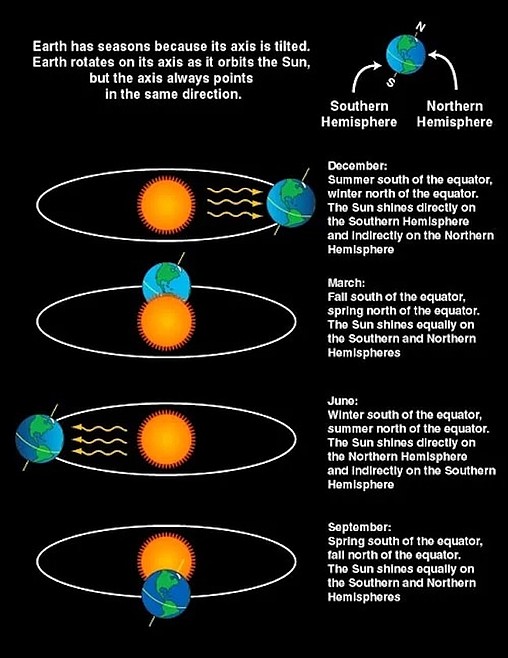
Sept. 22 — Autumnal Equinox
The Autumnal or September equinox (at 5:05 p.m.) marks the beginning of autumn for those of us in the northern hemisphere and the start of spring for those in the southern hemisphere. During the equinox, there is approximately equal duration of day and night, hence the name equinox, Latin for “equal night.” On this date the Sun’s position in relation to the Earth makes it appear that it is moving across the equator from north to south, as such our days will continue to get shorter until the Solstice in December.
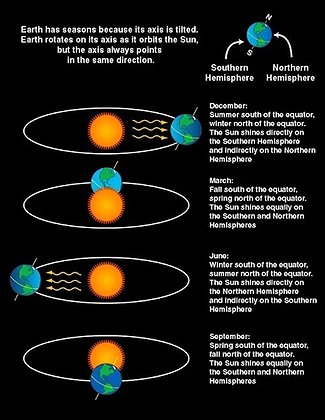 Image courtesy of NASA
Sept. 26 — Full Moon, The Harvest Moon
The moon will be located on the opposite side of the Earth as the sun and its face will be fully illuminated. This phase occurs at 9:49 a.m. Because this moon is closer to the autumnal equinox than the October full moon it is called the Harvest Moon. This full moon was once used to harvest many different crops well past sunset, ergo its “Harvest Moon” name.
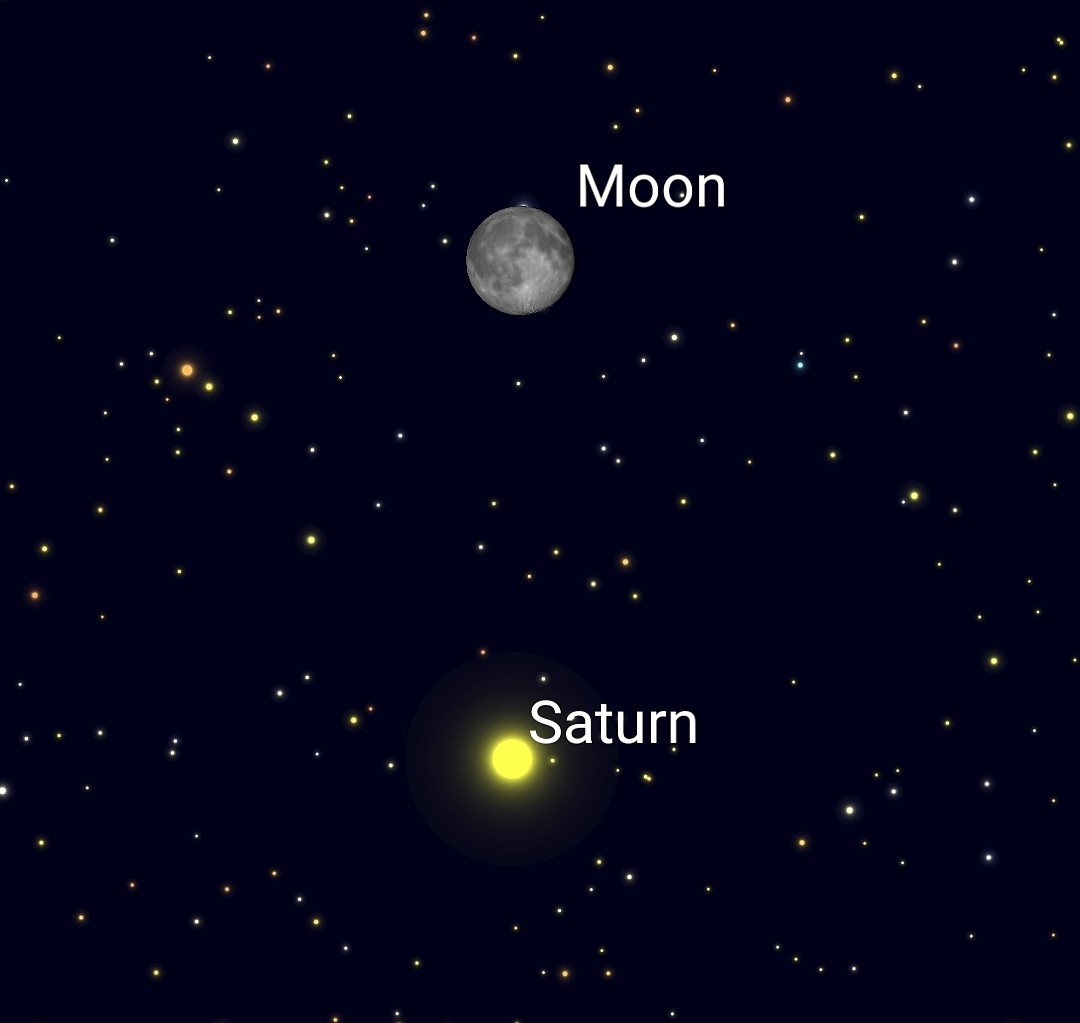
Sept. 26 — A Conjunction of the Moon and Saturn
At 10 p.m. on this night, look to the southeast to see the full Moon and Saturn just 5 degrees apart (5 degrees is three fingers held at arm’s length). Even though the moon is full, Saturn is still bright enough to see when it is this close to the bright moon.
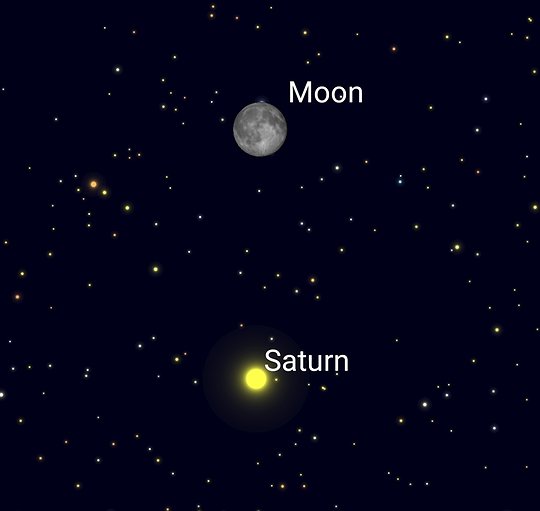 Image courtesy of John Taylor and Sky Safari 6 Pro
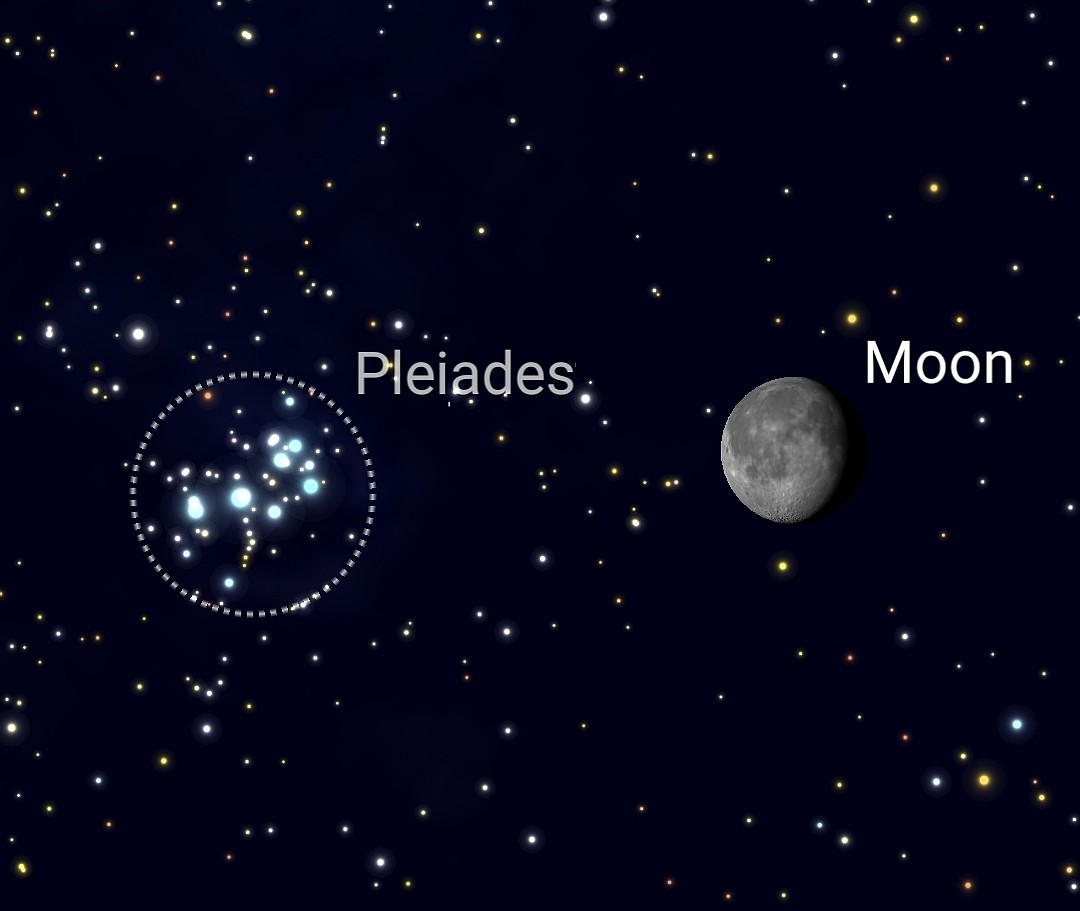
Sept. 30 — A Conjunction of the Moon and the Pleiades Star Cluster (M45)
Much like we started the month, we end the month with an event for you early risers, again. The waning gibbous moon will be very close to the Pleiades star cluster. Look high in the southeast sky at 3:30 a.m. to see these two players interact again.
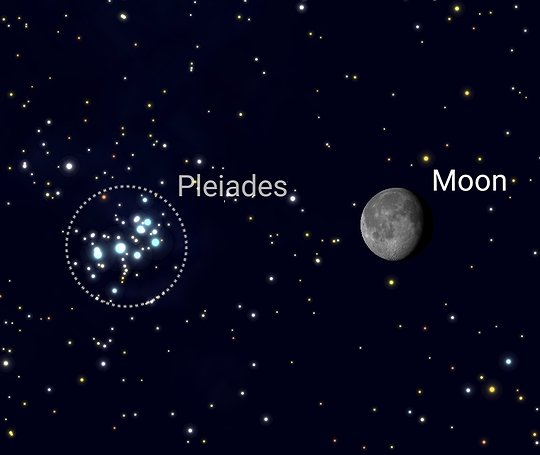 Image courtesy of John Taylor and Sky Safari 6 Pro
 Lastly, whether you’re choosing your first telescope, setting up gear, tracking down night sky objects, or diving into astrophotography, just ask at:
http://ncmrrimrockobservatory.space/contact/
• • •
John Taylor is an amateur astronomer who lives in Hayden.