

Remembering North Idaho's fight against white supremacy
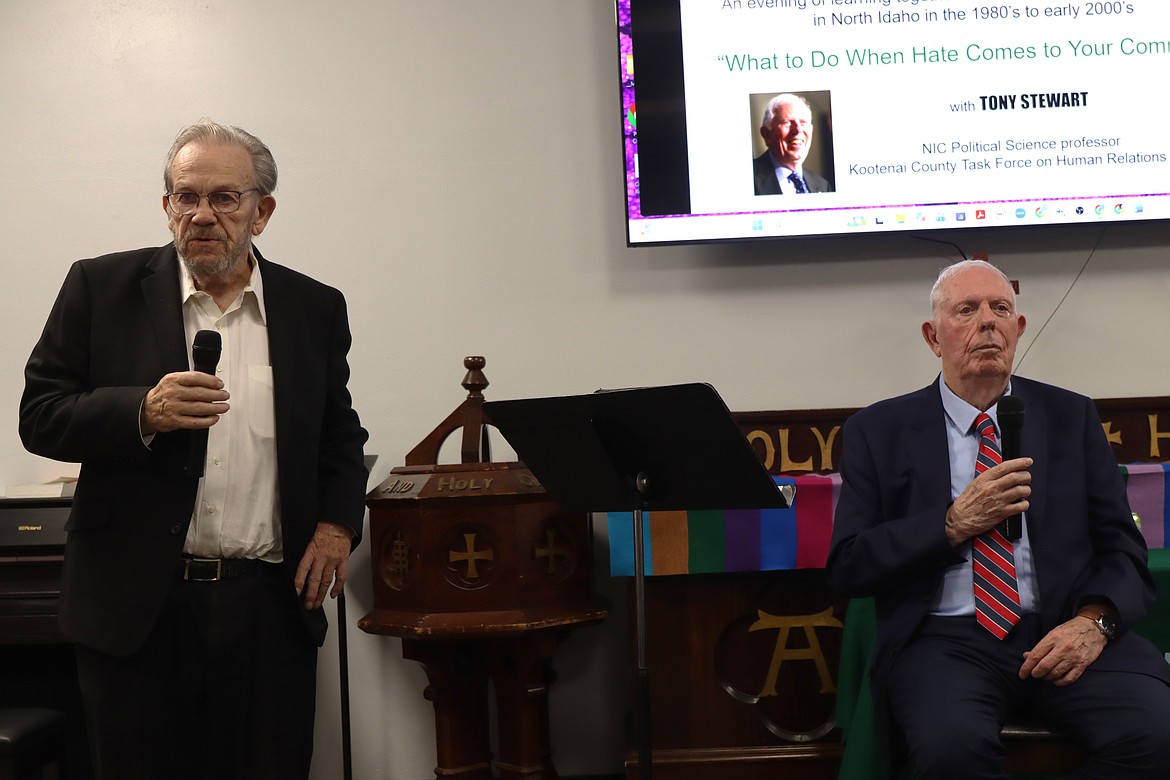
Norm Gissel and Tony Stewart gave a talk to those in attendance at St. Luke's Episcopal Church on Thursday night about the history and fight against white supremacy in North Idaho.
DAVID BERNAUER/Press
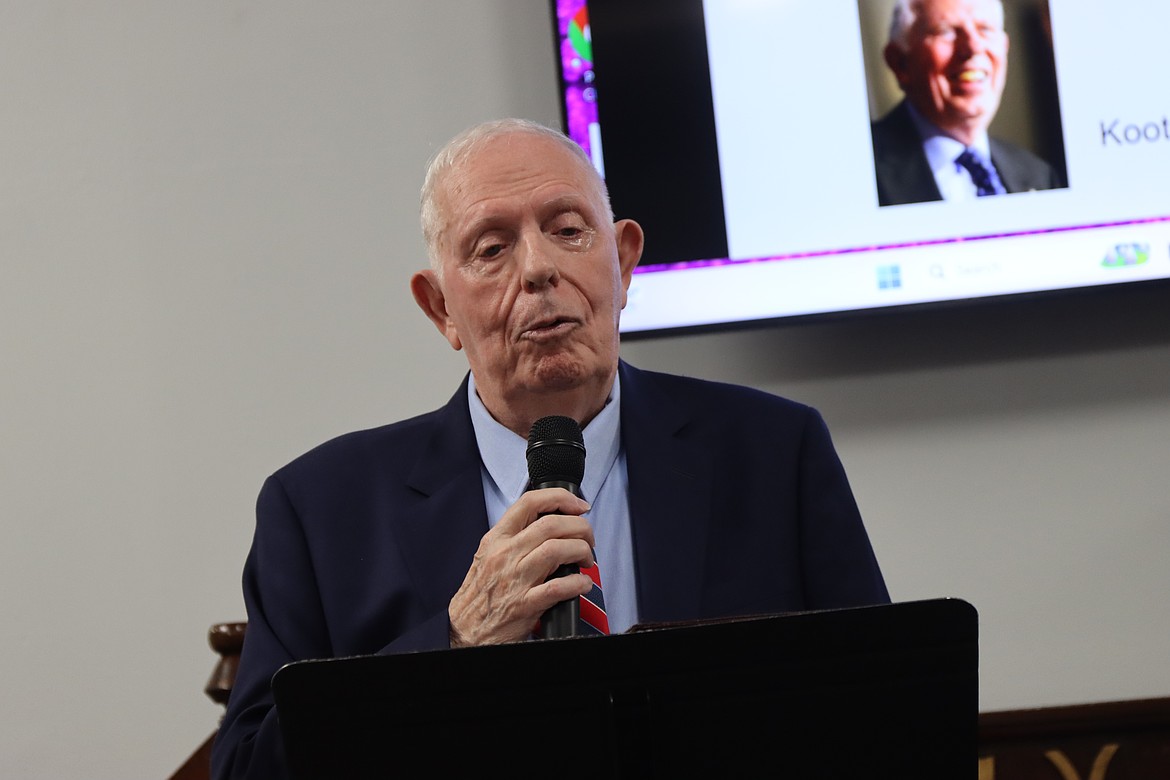
Tony Stewart from the Kootenai County Task Force on Human Relations educated the audience on the activities of neo-Nazi Richard Butler and his followers.
DAVID BERNAUER/Press
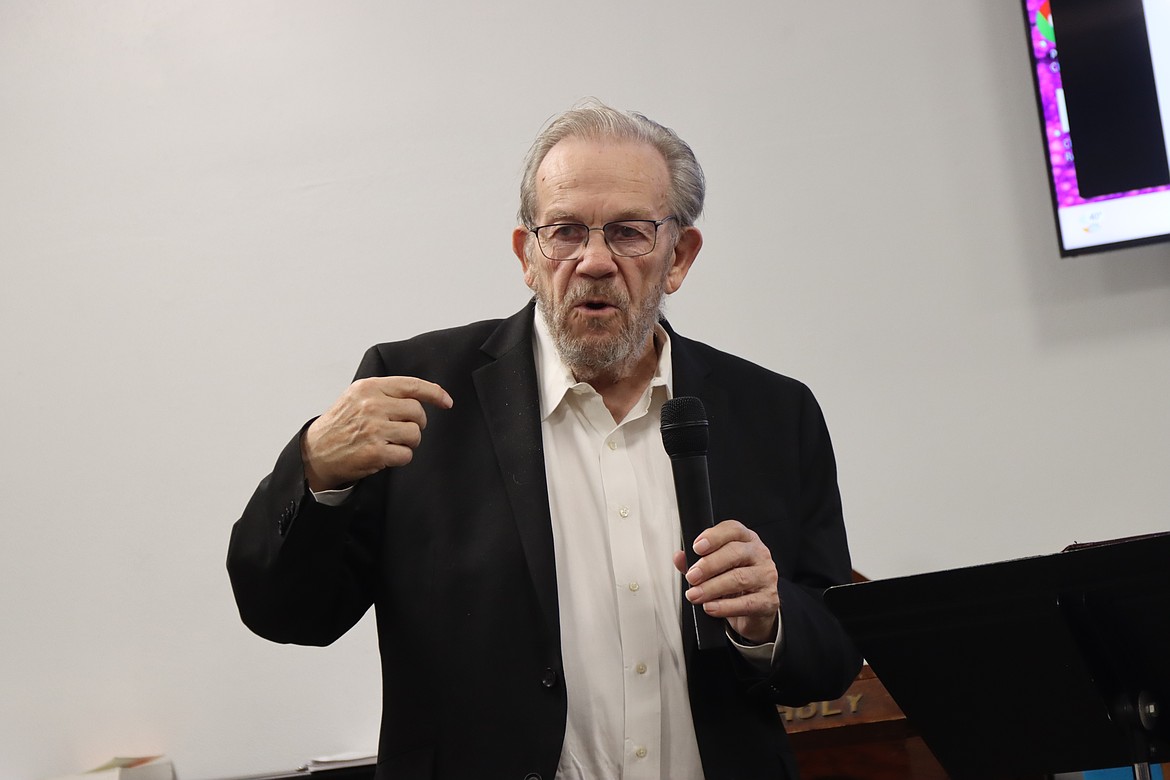
Retired attorney Norm Gissel shares stories about the many legal cases he took for victims of assault and harassment from white supremacists in North Idaho.
DAVID BERNAUER/Press
If anything was made clear Thursday night at St. Luke's Episcopal Church, it was that hate cannot thrive here.
Tony Stewart of the Kootenai County Task Force on Human Relations and retired attorney Norm Gissel met at St. Luke’s to discuss the history of white supremacy in the region.
“A community is just like an individual,” Stewart said. “Each of you in this room have to make decisions throughout your life of who you'll be and what you will do.”
Stewart repeated what he said to a group of Eastern Washington University students once.
“You only have two choices,” he said. “You can go down the path of human rights, or you can go down the path of hate.”
Stewart spoke to about 50 people about how the Kootenai County Task Force on Human Relations was created and how white supremacy had placed roots in North Idaho.
In December 1980, a group from the Aryan Nations came into Hayden and vandalized Jewish restaurant owner Sid Rosen’s business with Nazi slogans and antisemitic slurs. Shortly thereafter, the Kootenai County Task Force on Human Relations was born.
“Our first mission that evening was to try to get a law passed in Idaho to make malicious harassment a crime,” Stewart said. “A coalition of Republicans and Democrats in the Legislature and the governor got it passed in 1983.”
Stewart shared several stories about hate crimes that took place in Coeur d’Alene and nearby cities, highlighting neo-Nazi Richard Butler’s activities.
Butler and his group moved from Orange County, Calif., to North Idaho, Stewart said.
“From 1973 to 1980, Richard Butler used that time to build his compound," he said.
Butler's movement lost steam after his followers harassed Victoria and Jason Keenan when they drove by the compound Butler had built. The compound guards followed the Keenans and shot their car five times, forcing them into a ditch.
“The car backfired, some of the guards were drunk and heard it, and they said, ‘The Jews have just invaded us. They're after us,’" Stewart explained.
The Keenans, represented by Gissel in court, won a civil case against Butler. The jury awarded $6.3 million, of which Butler would be responsible for $4.8 million. Butler soon filed for bankruptcy.
“Butler would say a lot that, ‘Hate is my creed, revenge is my duty,’” Gissel said. “He would say it over and over and over again.”
Eventgoer Rudy Schnabel had marched with Martin Luther King Jr. in Alabama and said that although there isn’t as much hate as there was back in the day, he still views comments he hears as an issue in the area.
“I'm glad they're having this group," he said.
Schnabel’s daughter-in-law, Julie Craig-Schnabel, also attended.
“I feel like up here in this area we're seen as a monolithic political culture that is distrusted by those who believe in human rights,” Craig-Schnabel said. “It was nice to hear decent people believe that every person has value and worth.”
One question was what the future of the Kootenai County Task Force on Human Relations would look like. Stewart mentioned there was some “new youth” on the task force’s board and would continue to travel the country and world promoting human rights as long as his health allows.
“It was a wonderful audience,” Stewart said. “It gave me new energy, and we'll go to the next crowd.”
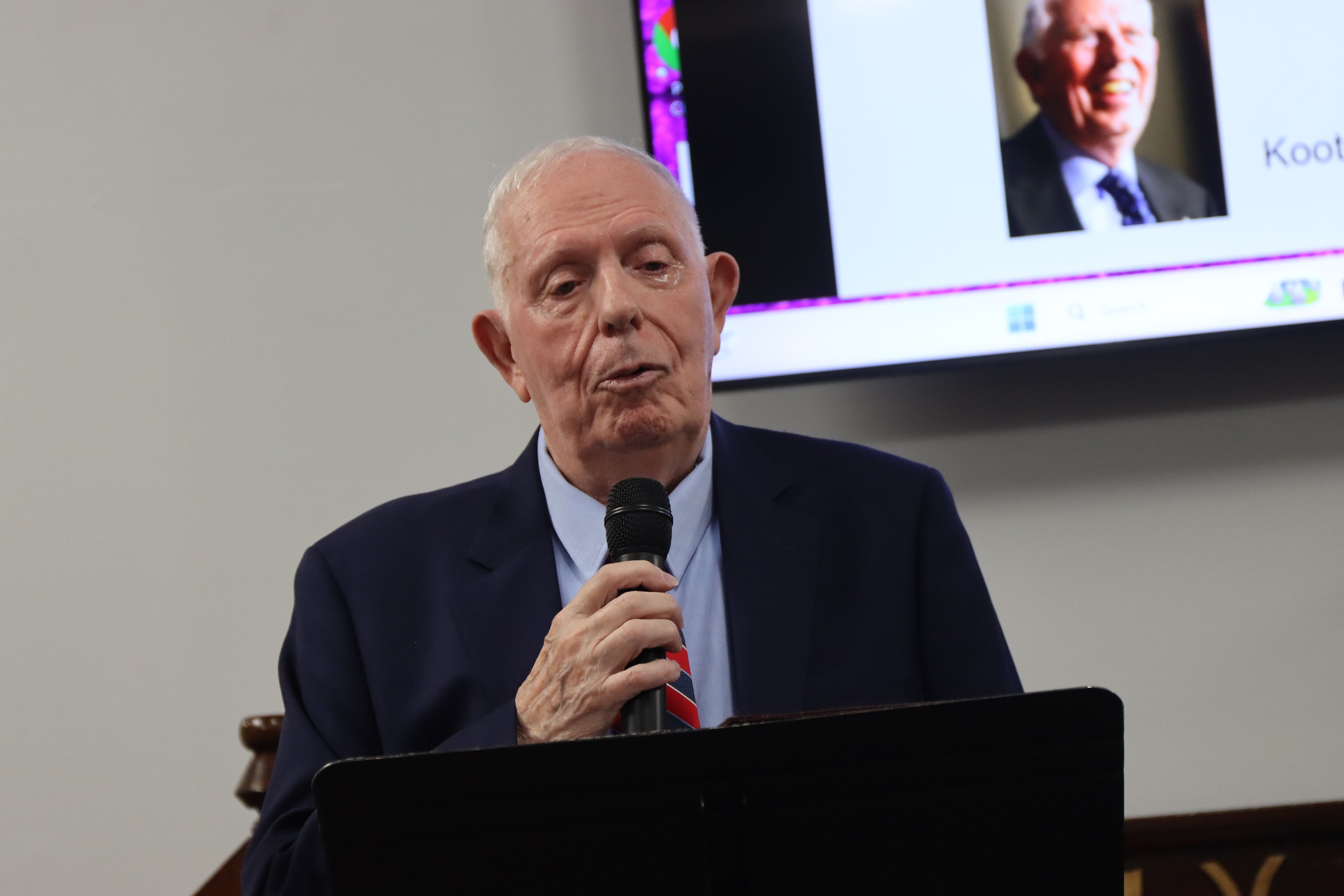 Tony Stewart from the Kootenai County Task Force on Human Relations educated the audience on the activities of neo-Nazi Richard Butler and his followers.
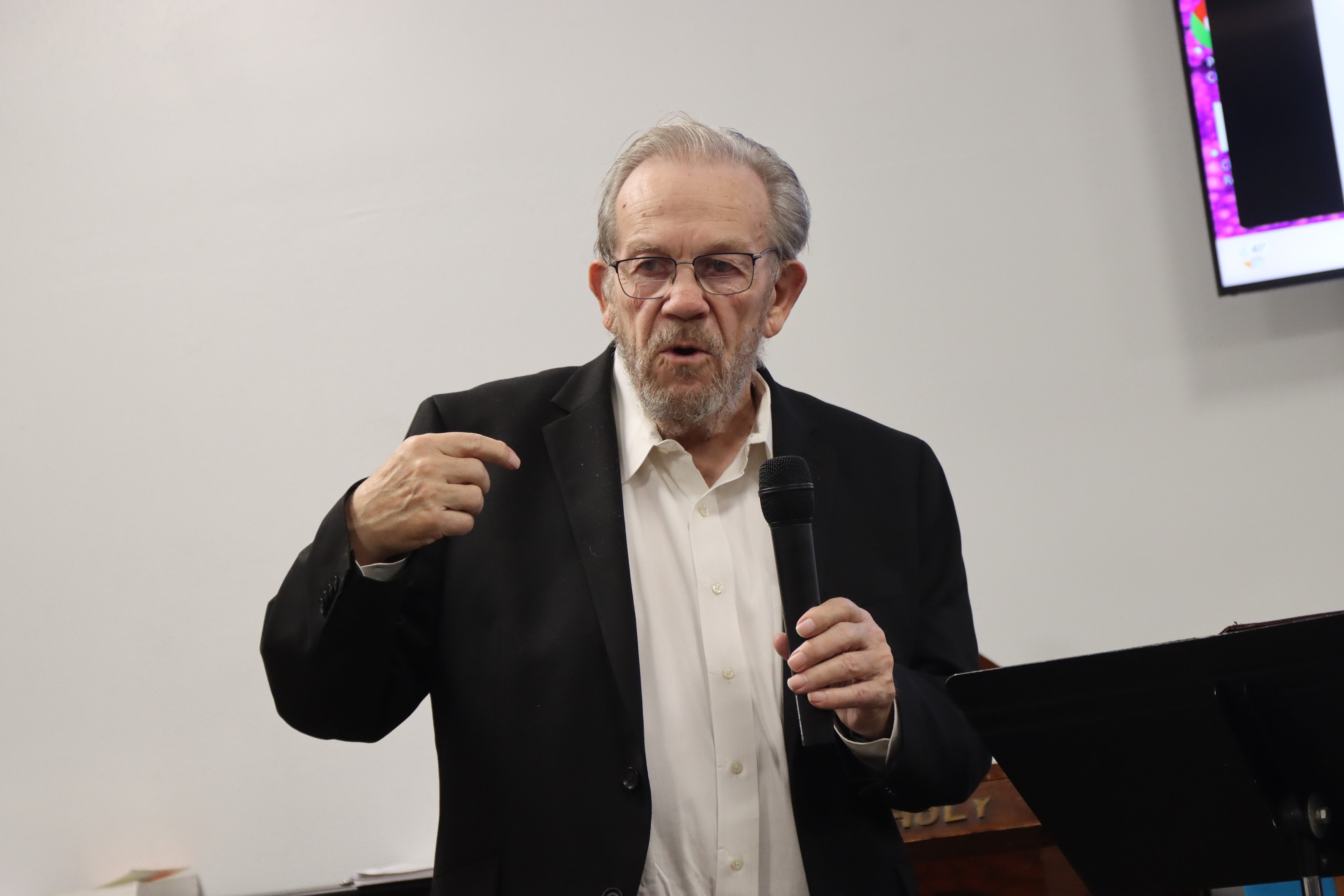 Retired attorney Norm Gissel shares stories about the many legal cases he took for victims of assault and harassment from white supremacists in North Idaho.