

Local fire departments practice with specialized rotator
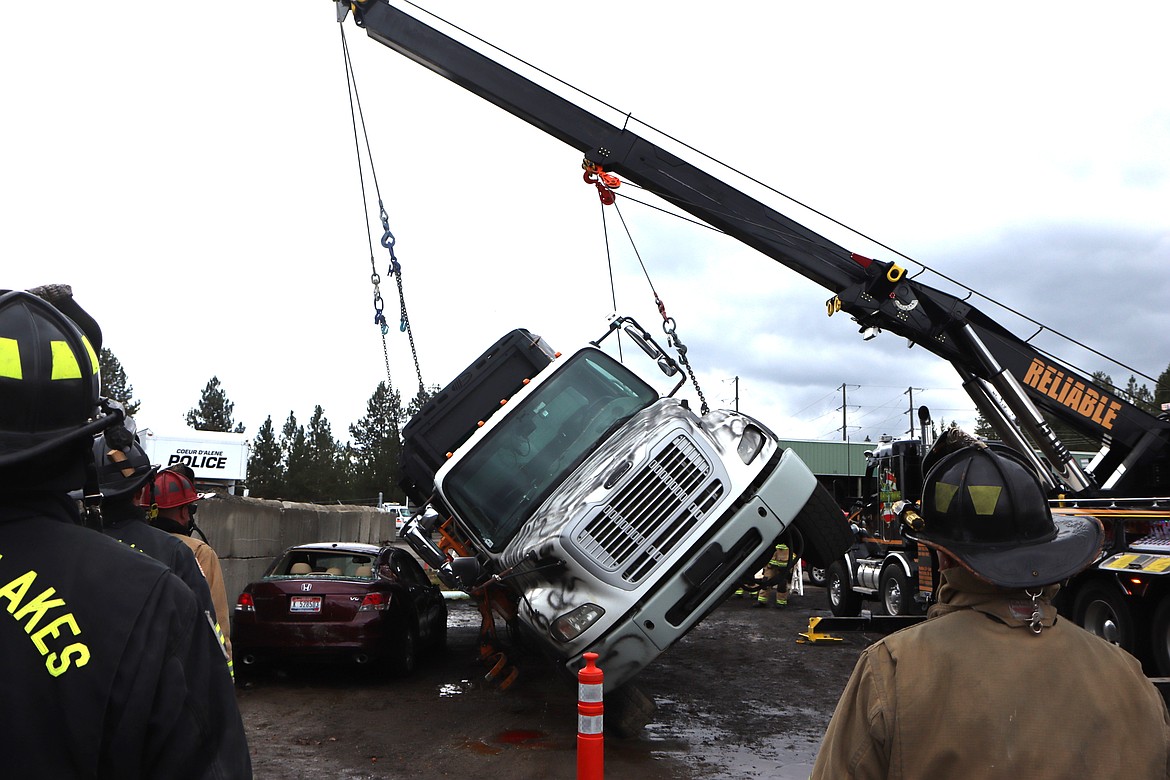
Reliable Towing's Joe Andrews uses a remote control to pilot the boom and rotate the heavy truck off of the pinned training vehicle on Tuesday.
JACK DeWITT/PRESS
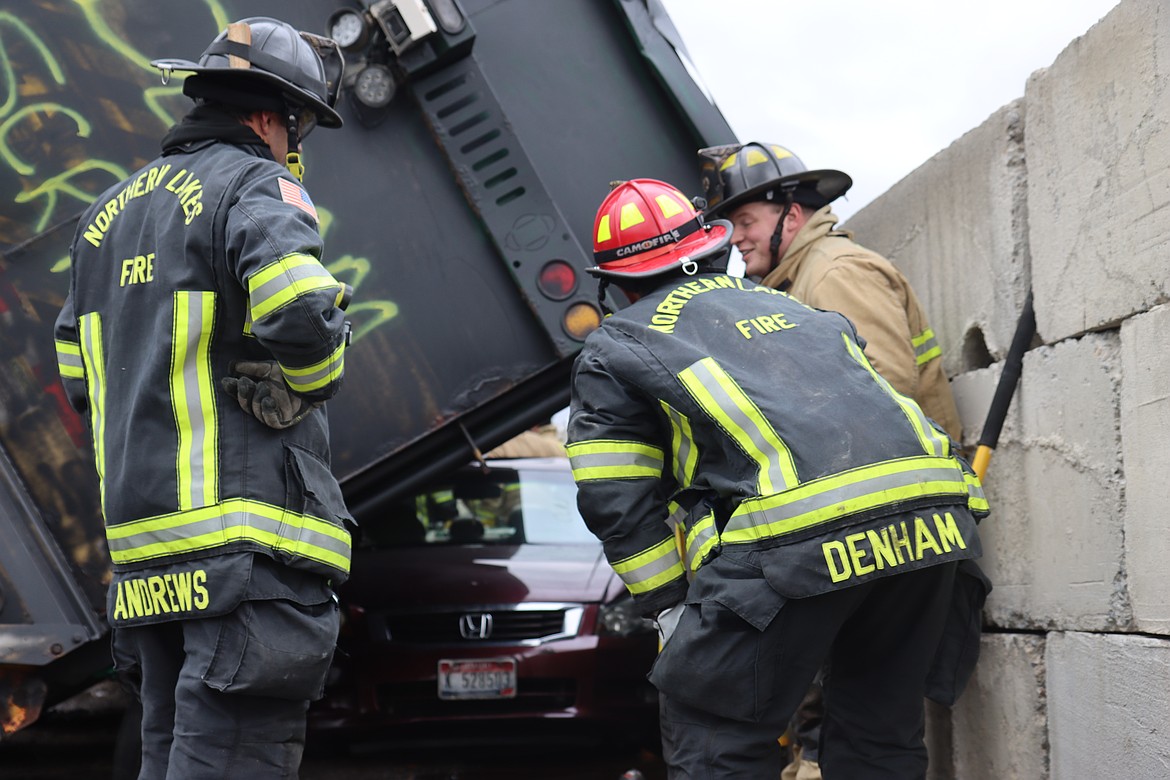
Northern Lakes Fire District Captain/Paramedic Tyler Denham instructs a team of firefighters on how to lift the heavy vehicle off of the pinned training vehicle.
JACK DeWITT/PRESS
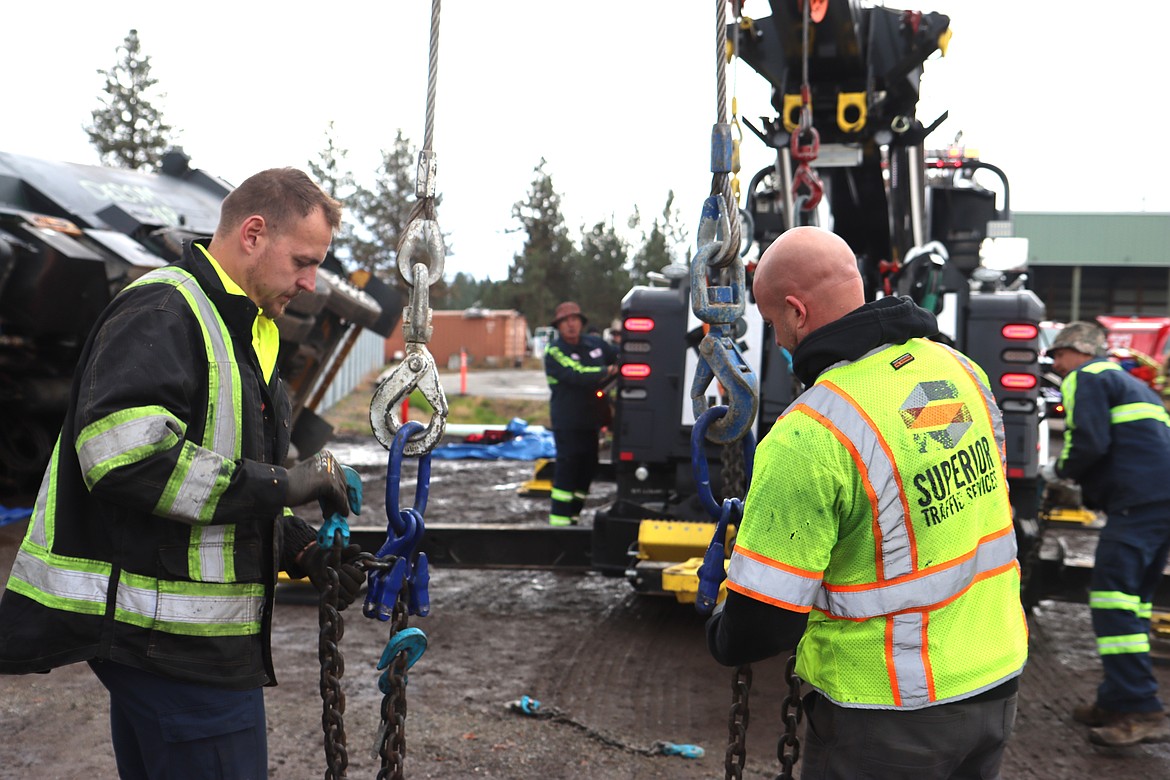
Reliable Towing's Spencer Rink and Tyson "T-dog" Startup begin looping and tying chains while preparing to use their Rotator to move the heavy truck on Tuesday.
JACK DeWITT/PRESS
COEUR d’ALENE — A specialized 75-ton rotator truck and crews from three fire agencies worked Tuesday on heavy-vehicle extrication training designed to speed response and improve safety when conventional methods can't reach a trapped motorist.
The session brought together Reliable Towing, the Coeur d’Alene Fire Department, Kootenai County Fire & Rescue, and the Northern Lakes Fire District. The scenario simulated a situation in which a large vehicle prevented firefighters from quickly accessing a person trapped inside a pinned vehicle, requiring coordinated use of the rotator’s 360-degree boom and multiple winches.
Spencer Rink, a trainer with Reliable Towing, said the partnership grew from years of routine collaboration.
“We bring them cars on a pretty regular basis where they do practice,” he said.
The arrangement expanded after a recovery training donation last month.
“Basically, we ended up coming out and, when we were picking up cars, we just made conversation about trying to integrate using this truck, because I guess they’ve had some situations where it would be pretty ideal," Rink said.
The truck itself is a relatively new addition. Rink said the company acquired the unique 75-ton rotator last November.
"In a 300-mile radius, we’re the only one,” said Rink.
He said some area companies have 50-ton rotators, but the next closest 75-ton rotator is in Seattle or Boise.
Unlike a conventional straight-stick wrecker that often requires positioning perpendicular to an overturned vehicle and can force longer lane closures, the rotator can work from alongside.
“With this, we’re able to keep the highway open better, because we can park alongside it, swing the boom around, and we can still potentially keep the lane of traffic,” Rink said.
Coeur d’Alene Fire Capt. Steve Jones emphasized the value of interagency practice.
“It’s highly important because we all work together, especially on an incident of this magnitude,” Jones said. “More than likely, we’re all going to probably be on this type of a call together anyway, so that’s why we’ve invited everybody out here today."
Jones said pre-planned coordination is critical.
“That’s what makes the difference in time," he said. "Everything’s based on time, and we try to do everything that we can to take a second to make a second and also consider safety at the same time.”
The idea for the joint rotator drill grew from a personal connection.
“I’ve been friends with Joe here for quite a while. He’s one of the rotator truck drivers,” Jones said. “Him and I got to talking about a year or so ago about trying to do a scenario like this."
Rink said even routine traffic incidents carry cascading risk.
“Keeping the road clear and working efficiently, it’s very important, there’s tons of dangers of getting more accidents. And so, a lot of times, the accidents end up being worse," he said.
Jones said the agencies gain mutual understanding of equipment and capabilities.
“This just helps with that collaboration and the communication that needs to take place," he said. "And then for each of us to be able to see what each of our organizations can bring to solve kind of a problem like this.”
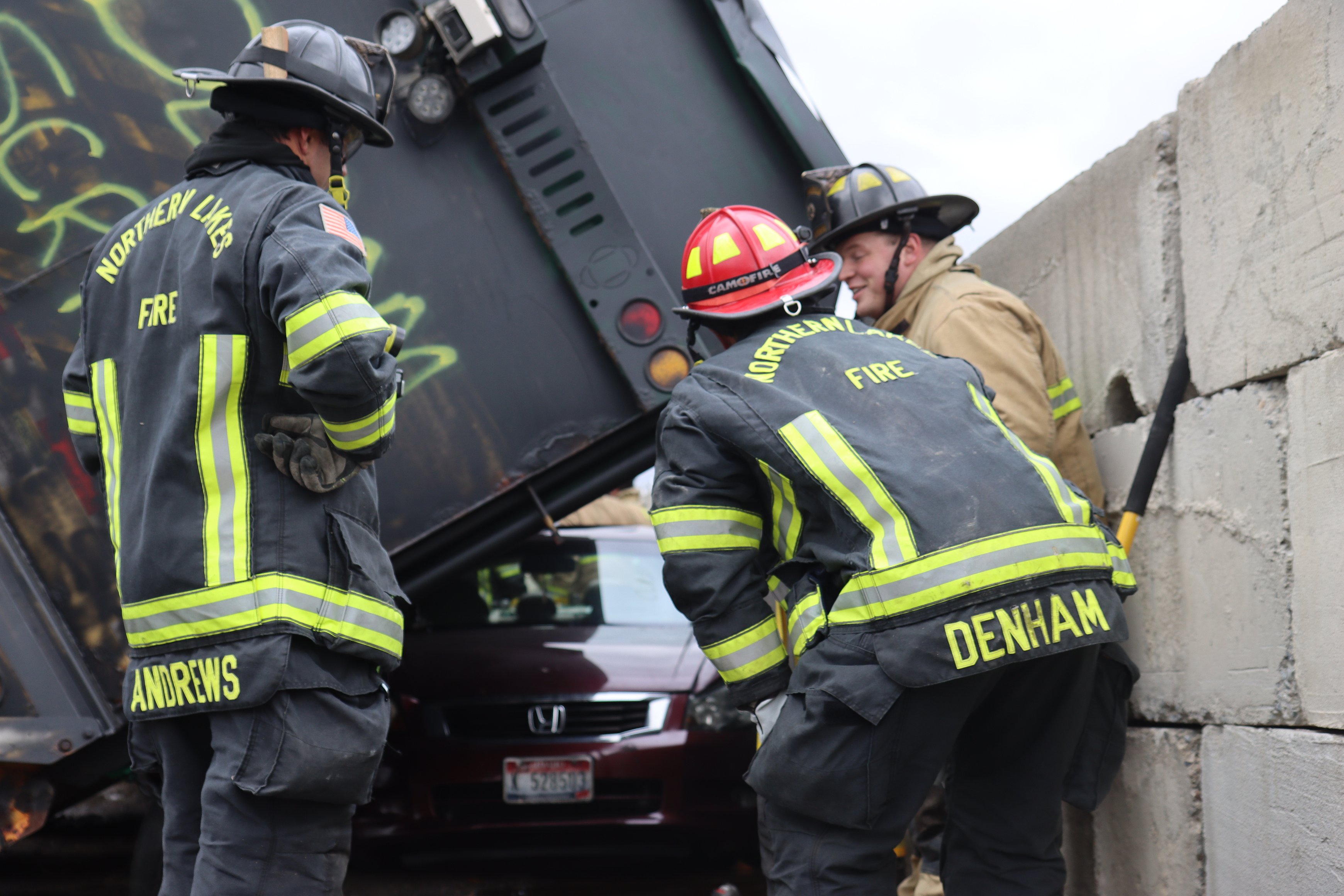 Northern Lakes Fire District Captain/Paramedic Tyler Denham instructs a team of firefighters on how to lift the heavy vehicle off of the pinned training vehicle.
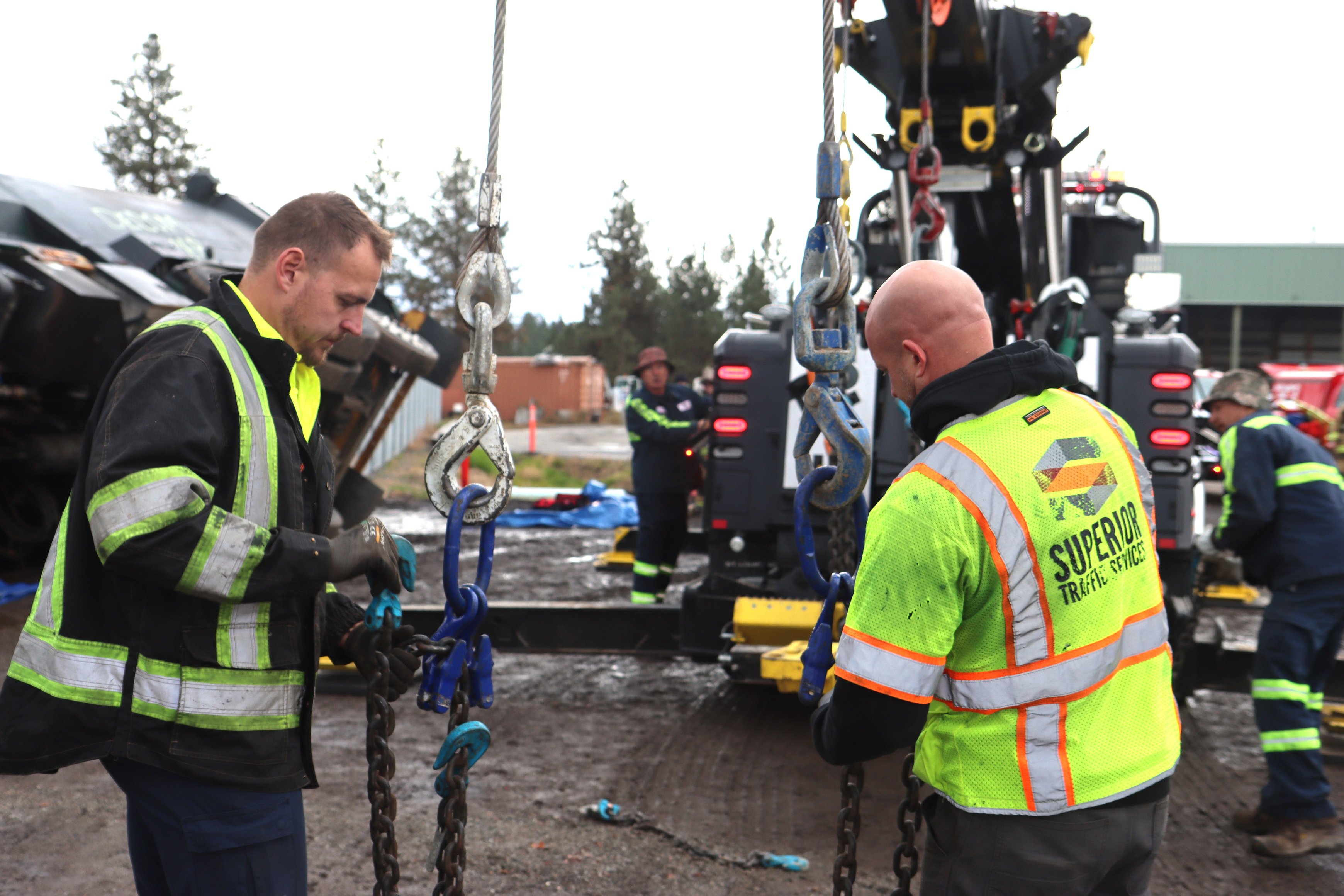 Reliable Towing's Spencer Rink and Tyson "T-dog" Startup begin looping and tying chains as they prepare to use their Rotator to move the heavy truck on Tuesday.