

Property disputes threaten funding for two Shoshone County bridge projects
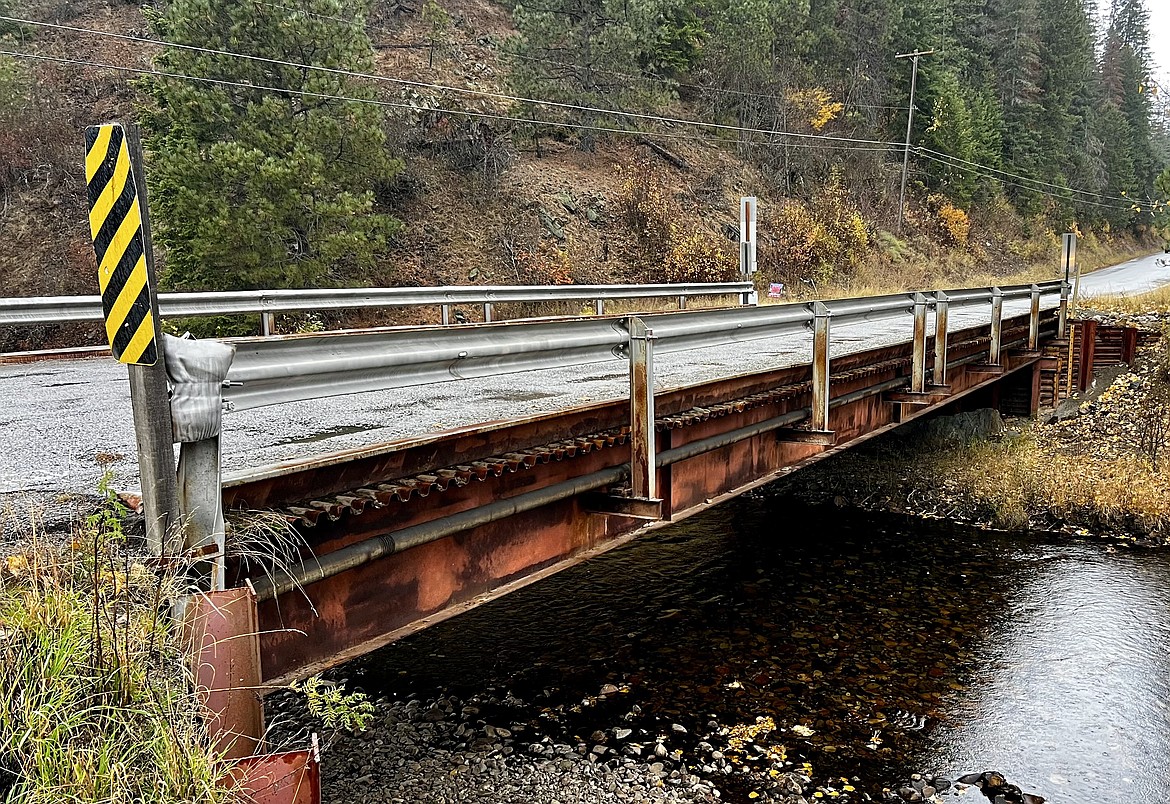
Terror Gulch Bridge near Osburn spans the South Fork Coeur d'Alene River. State and county officials are working to acquire property rights needed for a planned replacement of the aging structure, which provides the only maintained access to more than 100 homes in the Terror Gulch and Sunny Slopes areas.
JOSH McDONALD
OSBURN — Funding for two bridge replacement projects near Osburn could be jeopardized after negotiations with property owners stalled, prompting Shoshone County commissioners to approve impasse letters last week.
During a meeting with Scott Wood of the Local Highway Technical Assistance Council, or LHTAC, commissioners were informed that negotiations with property owners near the Terror Gulch Bridge and Two-Mile Bridge projects have stalled, putting funding for both projects at risk.
The property acquisitions are tied to the county's planned replacement of the Terror Gulch Bridge and Two-Mile Bridge. Both projects are funded through Idaho's Leading Idaho bridge program and have been in development for several years, with millions of dollars allocated for design and construction.
The Terror Gulch Bridge, which officials say has reached the end of its service life, provides primary access to more than 100 homes in the Terror Gulch and Sunny Slopes areas.
The Two-Mile Bridge, which provides access to Two-Mile Gulch and Nuchols Gulch, was among several bridges included in the Leading Idaho initiative to replace aging or load-restricted structures.
In both cases, the affected properties are located north of the South Fork Coeur d'Alene River.
"We're ready to go to construction," Wood said. "We've been working with those two property owners — they're being nonresponsive, combative, asking a lot."
The landowners, identified as Forrest and Alice Van Dorn and Bryan Williford, had been in communication with LHTAC representatives but were unable to reach agreements with the agency on compensation and property acquisition terms.
Gail Cutsforth, one of LHTAC's negotiators working on the Terror Gulch Bridge project, said the design was modified after Williford raised concerns about the project's size and scope. According to Cutsforth, the redesign reduced the affected area from approximately 1,200 square feet to 88 square feet.
She also reported that the owner had several demands that could not be accommodated.
"We have to make forward progress," she said.
Williford disputed that characterization, saying his concerns center on the bridge design and his interactions with negotiators during the acquisition process.
According to Williford, the offer from Cutsforth was for $1,800 for the 88 square feet of property directly next to the river, which he does not want to lose. Because of his apprehension, Cutsforth reportedly asked why he had not developed the property since he was so attached to it.
He also pointed out that the new plans involved moving the bridge location several feet east of its current location, which is why the dispute began in the first place.
Williford said the revised bridge alignment would create setback and regulatory issues that could affect future development of that portion of his property.
"I'm a single father of three, I'll probably never be able to buy property like this ever again," he said. "I understand the need for a new bridge, but why aren't we just replacing the one already in place. I'm sorry that you made plans with property that doesn't belong to you."
He also voiced concerns over much of the process being conducted behind closed doors, including the recent meeting with commissioners that he claims Cutsforth told him he could not attend.
Regarding the Two-Mile Bridge project, Wood said the property owners, much like those involved in the Terror Gulch project, presented demands beyond what LHTAC could meet, causing negotiations to stall.
If negotiations remain unsuccessful, county officials could seek the necessary property rights through condemnation proceedings. Under that process, the county would file an eminent domain action in district court seeking to acquire easements or other property interests needed for the bridge projects. Property owners would retain the right to challenge the county's valuation and present their own evidence regarding compensation, while settlement discussions could continue throughout the court process.
Wood said a lengthy condemnation process could significantly delay the projects and potentially jeopardize their funding.
A representative for the Van Dorns could not be reached for comment.
"I have the money now," Wood said. "Don't know what's going to happen in the future. If it gets delayed much longer, it would go to other projects."