

More than 80% wildfires on Idaho state land caused by humans this year
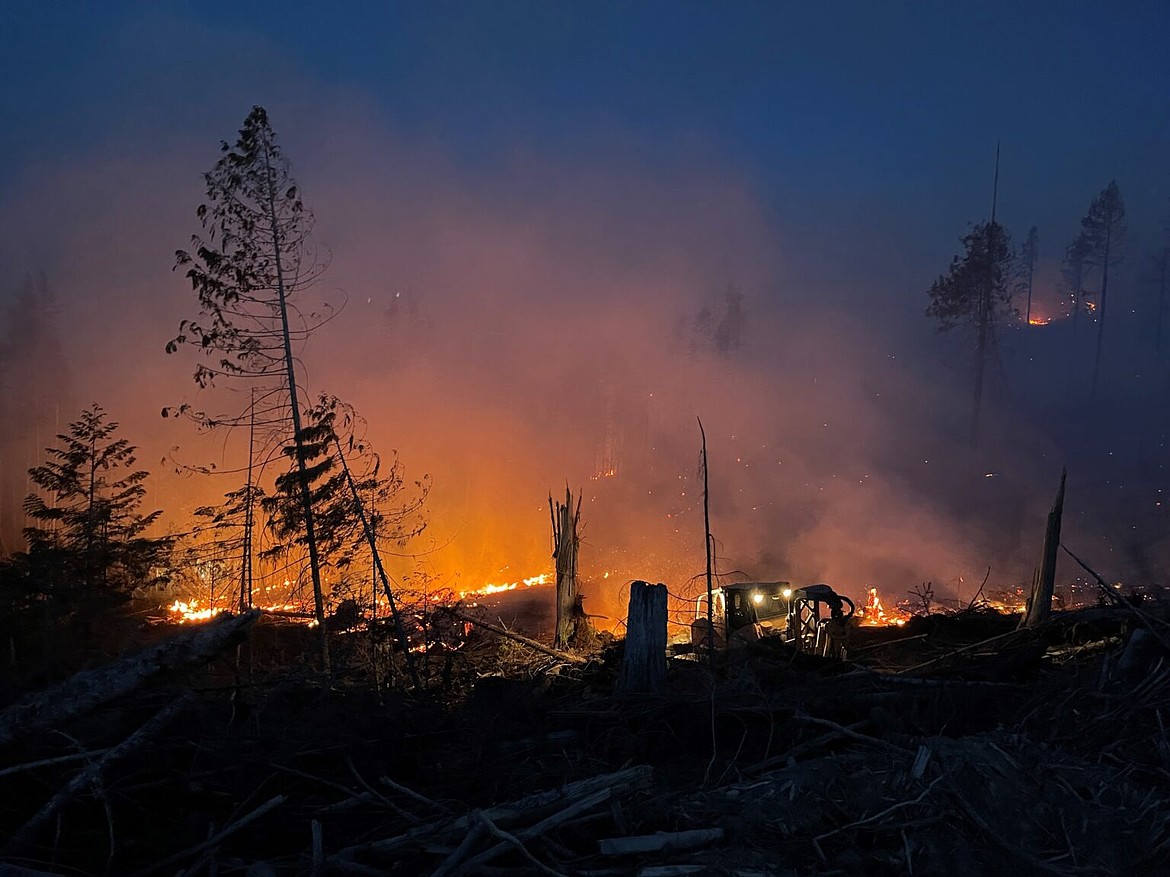
The Idaho Department of Lands managed the Tyson Fire, which firefighters responded to in Benewah County in July 2023. (Photo courtesy of the Idaho Department of Lands)
More than 80% of the wildfires that the Idaho Department of Lands has responded to this year have been caused by humans, Director Dustin Miller told an interim committee of Idaho legislators Tuesday.
“This staggering figure just underscores the importance of not only a robust fuels mitigation program … but also a solid prevention program,” Miller told the Idaho Legislature’s Natural Resources Interim Committee during a meeting at the Idaho State Capitol in Boise.
Through the end of September, a total of 10,000 acres of land that the Idaho Department of Lands is responsible for protecting has burned. (That figure does not include the larger number of acres of federal land, such as U.S. Forest Service land, that burned in wildfires this summer.)
The increase in human-caused fires is not new. In 2023, Miller also told a commission of statewide elected officials that he was investigating a spike in human-caused fires, the Idaho Capital Sun previously reported.
Miller told state legislators the costs of wildfires are high, and several legislators immediately pushed for more answers.
Through the end of September, the state’s wildfire costs were a little over $47 million, of which an estimated $19.8 million could be reimbursable from other agencies the state partners with, Miller said.
In addition to the financial cost to taxpayers, fires also can also threaten the safety of firefighters and the public, destroy property and burn state endowment timber lands that generate funding for public schools and other beneficiaries. There is also the cost of rehabilitation and recovery following fire and the long-term effects caused by fire.
Idaho legislators ask how state can recoup costs for human-caused fires
While human-caused fires aren’t new, the 80% figure grabbed the attention of several legislators.
Senate Majority Leader Lori Den Hartog, R-Meridian, asked Miller if the state was doing enough to go after the people who were responsible.
Natural Resources Interim Committee Co-Chair Britt Raybould, R-Rexburg, asked if stronger penalties would be a deterrent.
“Just something that encourages people to think a little more responsibly about how their behavior can have, not only the financial, but the environmental and property damage and all of the surrounding consequences,” Raybould said.
Miller told the committee that the state investigates the cause of every fire and attempts to recoup funding from individuals or groups that are deemed “negligent.”
Sometimes the recovery process works well, Miller said, but sometimes it can take years to recover the money, and the state doesn’t always succeed.
“Oftentimes we settle for less than what the suppression costs were,” Miller said.
“We really try to work with the individual and their insurance companies,” Miller added. “These are taxpayers always, and we want to recoup as much as we can back to the general taxpayer. But you know, we have been fairly successful.”
During a break in Tuesday’s meeting, Miller told the Sun the causes of the fires include people losing control of their burning debris piles, sparks caused by chains or other metal equipment, discarded cigarette butts, escaped camp fires that were never fully extinguished and more.
Miller also said the state’s wildfire suppression fund kept a positive funding balance throughout this year’s wildfire season following an infusion of approximately $32 million from the Idaho Legislature that arrived July 1. Miller said the state has not had to use deficiency warrants – a process some state officials compare to using a credit card – to pay for wildfire expenses this year.
Miller said the department’s staff is in the process of calculating a wildfire funding estimate for next year.