

Alaska Viking’s ‘Mooseltoe’
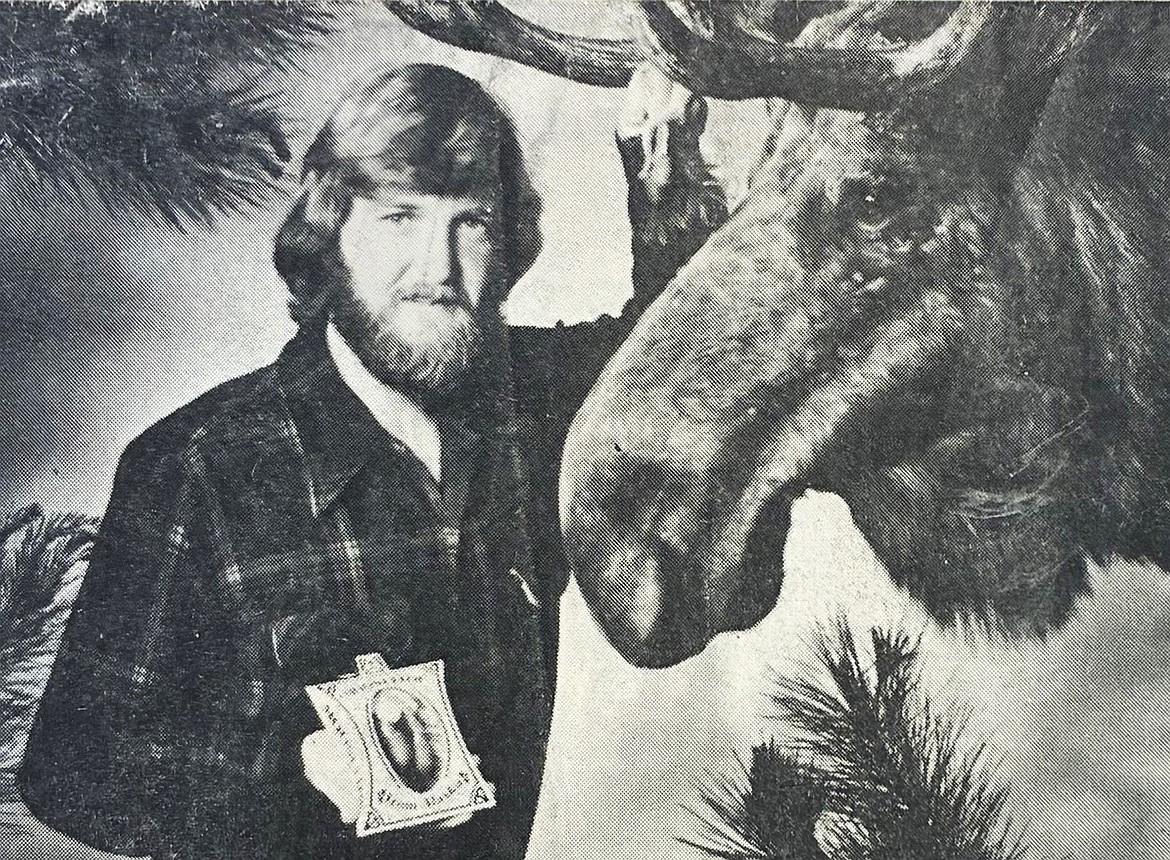
In 1976, Keith Iverson posed with his one-of-a-kind Mooseltoe, made from dried moose “nuggets.”
Coeur d'Alene Press Archive
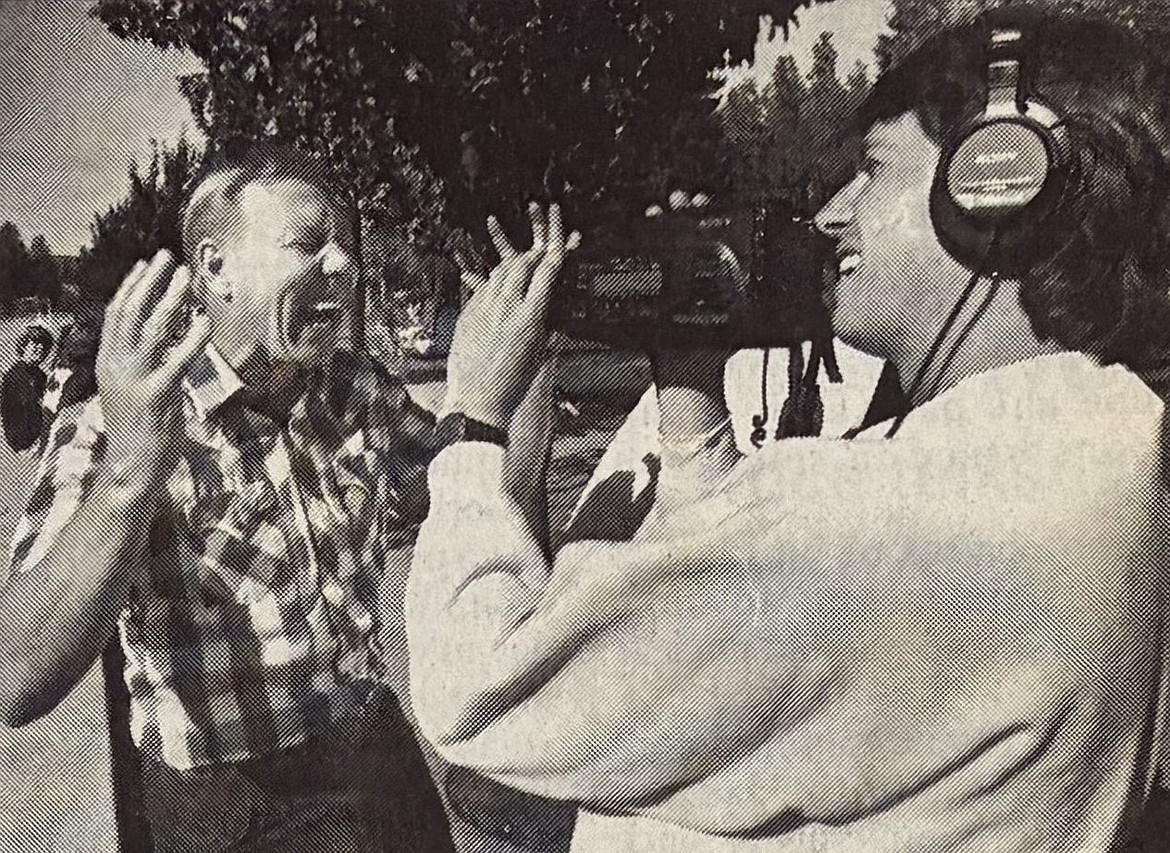
In 1991, former legislator Ron Vieselmeyer laughed and laughed at City Park for ABC-TV’s “America’s Funniest People.”
Coeur d'Alene Press Archive
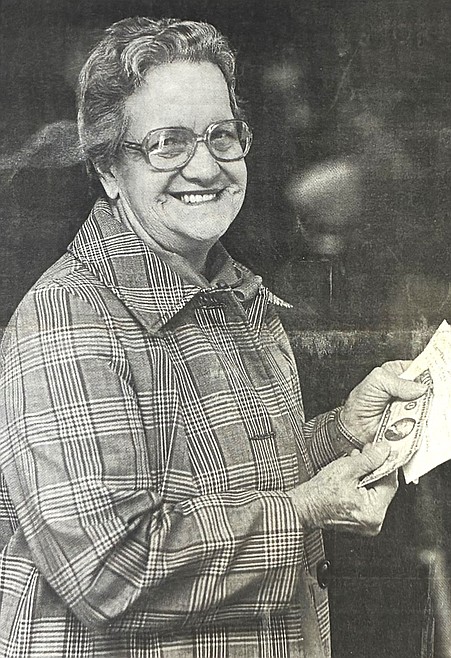
In 1986, Lucille Applegate displayed a $10 bill that she received from an old acquaintance who had "swiped it from her,” 51 years before.
Coeur d'Alene Press Archive
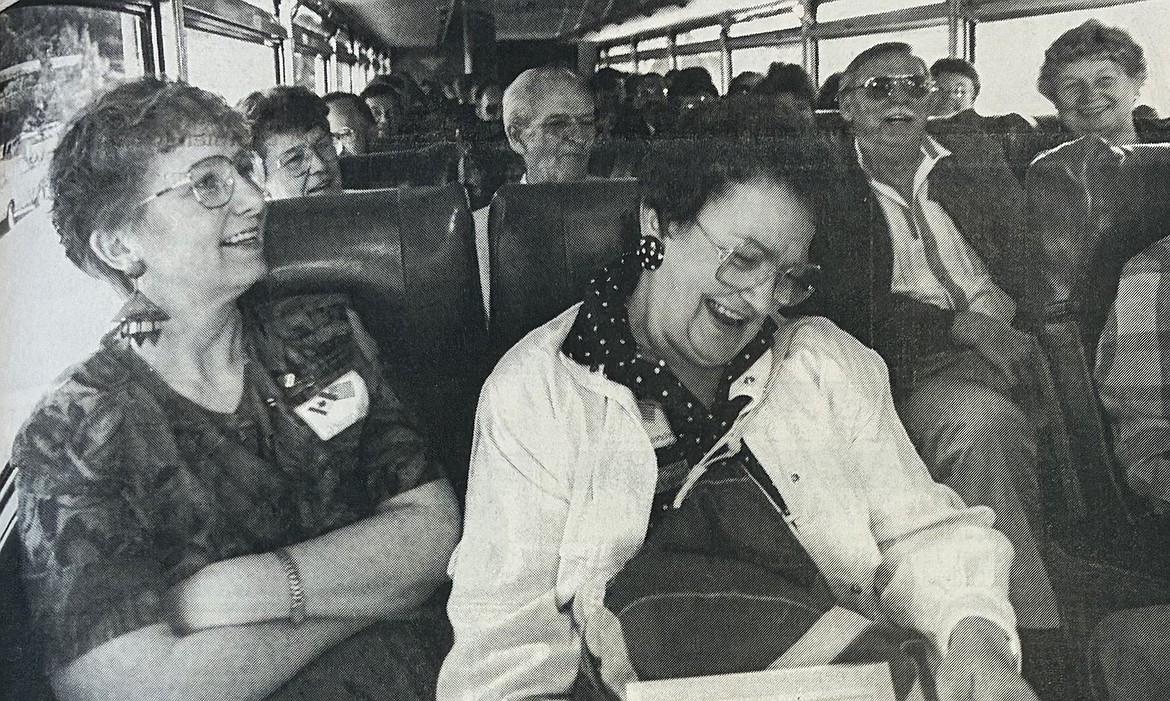
Sharon Billey, left, and Delphine Kennelly of Cranbrook, British Columbia, toured Coeur d’Alene. The towns were sister cities.
Coeur d'Alene Press Archive
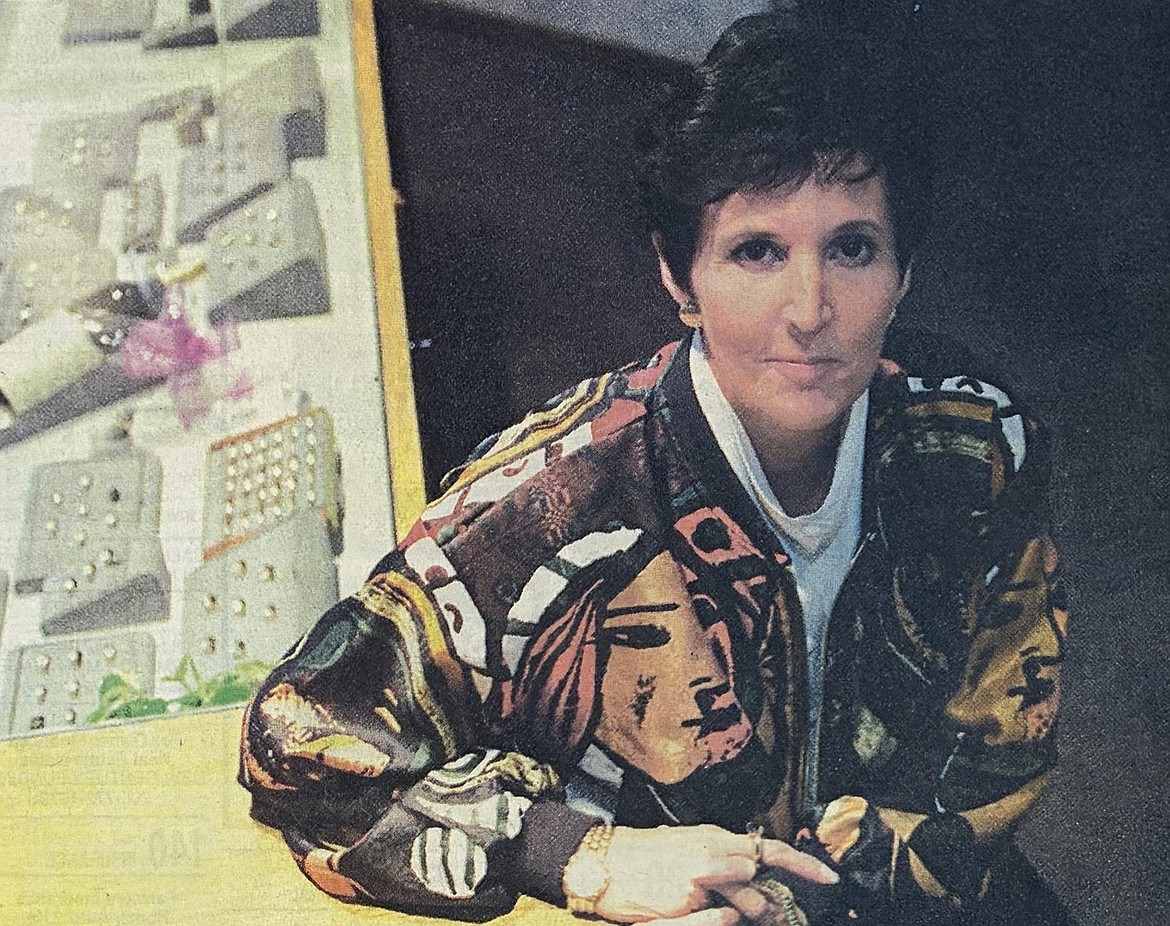
In 1996, Sandi Bloem led downtown revitalization efforts. Ten years before, she was the subject of a Coeur d’Alene Press mini profile.
Coeur d'Alene Press Archive
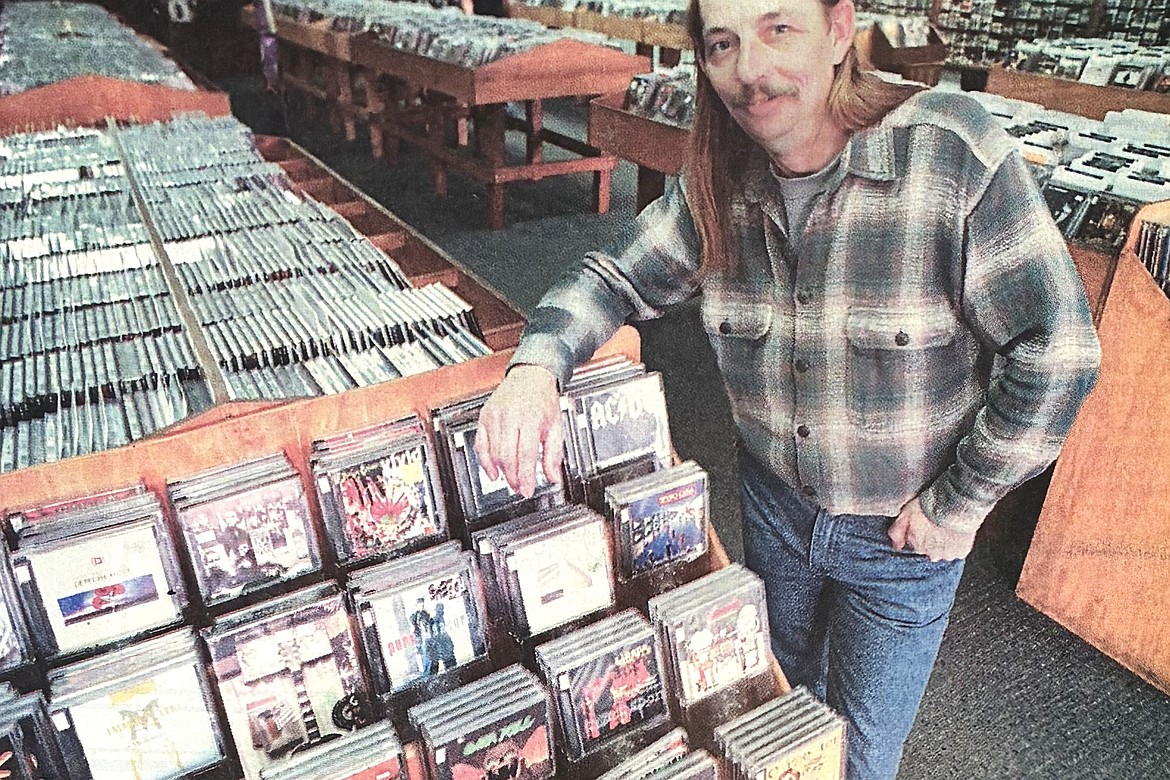
In 1996, Terry Borchard rummaged through CDs in his Long Ear record store. The popular shop shut in July after more than four decades here.
Coeur d'Alene Press Archive
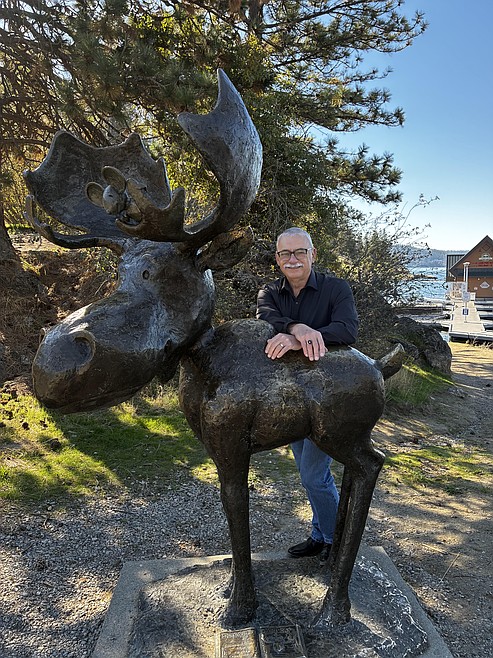
I couldn’t resist posing with Coeur d’Alene icons, Mudgy and Millie, during a waterfront photo shoot for my upcoming book. “Coeur d’Alene Chronicles,” a modern history of Coeur d’Alene, comprised of stories from Huckleberries, is on track for a late-November release.
Coeur d'Alene Press Archive
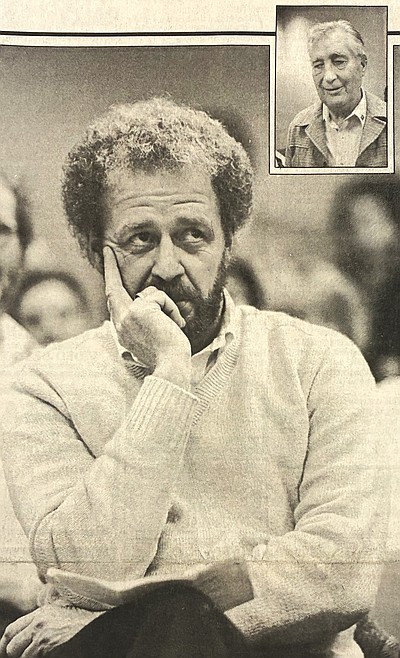
In September 1986, Bill Wassmuth had plenty on his mind at a community rally for him after his home was bombed by criminals tied to the Aryan Nations. Richard Butler (inset), leader of the Aryan Nations, attended the rally, too.
Coeur d'Alene Press Archive
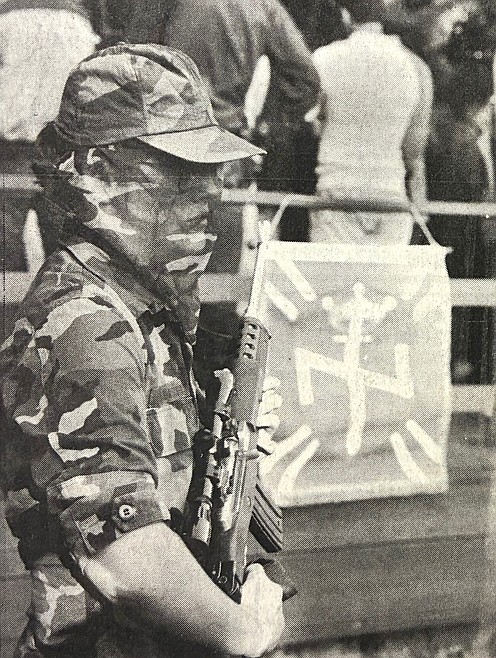
In July 1986, a racist guard, armed with an automatic rifle, watched a press conference at the annual Aryan Nations World Congress, near Hayden Lake.
Coeur d'Alene Press Archive
Americans in the 1960s and 1970s proved they were suckers for cute gimmicks before a Coeur d’Alene-born Alaskan began selling moose poop. Mood rings. Smiley Faces. Pet Rocks. Sea Monkeys. The fads came and went.
Keith Iverson didn’t strike pay dirt with his “Mooseltoe.” But he earned enough money to provide what his survival hunting and fishing skills couldn’t in Sadie Cove, Alaska, population one, 12 miles and three dangerous hours by kayak from Homer.
On Oct. 11, 1976, Iverson, 33, told Coeur d’Alene Press readers why he traded a lucrative job as an architectural consultant in San Francisco for Alaska’s Kenai Peninsula isolation.
As a youth, he said, he gained his love of the outdoors while fishing on Lake Coeur d’Alene with his grandfather, John Iverson, and his uncle, Jake Withus.
By 1976, Iverson had spent many winter nights collecting moose turds to make Christmas Mooseltoe packets, with two kissing moose on the wrapper and the greeting: “Mooseltoe for a merrier, moosier Christmas.” Iverson baked the droppings in his oven to remove moisture and odor. Then, he coated the turds and added greenery for a mistletoe look.
As Christmas 1976 approached, the “Mooseltoe” was bringing in some money and, according to The Press, was advertised as a novelty item in Sears Roebuck, J.C. Penney, Montgomery Ward, and at Anchorage military bases.
Iverson offered this sales pitch for his moose “nuggets”:
“With Mooseltoe, a person can expect not only more kisses but moosier kisses. And if you’ve ever been kissed by a moose, you know what I mean. Too, Mooseltoe is believed to possess moosterious powers, all of a benign nature.”
A proud Norwegian, Iverson (aka “The Mad Viking,”) penned a 1992 book, “Alaska Viking: An Autobiography” in which he describes his life as an “entremanure.” Also, the book tells of his role as a cleanup specialist, according to Amazon.com, after “the Exxon Valdez oil spill shatters his sanctuary, and he enlists in the cleanup effort.”
“Mooseltoe” wasn’t the first enterprise that came to his mind when Iverson set out to earn extra money. He thought of developing a better moose trap or a chain of moosage parlors in the Arctic. But, he said, “I gave up these ideas in favor of Mooseltoe.”
Hee Haw
The late Ron Vieselmeyer, a reserved former Coeur d’Alene legislator, wore many hats during his long career of community service, including pastor, family counselor, North Idaho College trustee, highway evangelist, and companion to Windy, Lake City High’s former mascot. But few in this area knew about his hidden talent: Laughter.
Ron could laugh hysterically for up to a minute.
In October 1991, according to The Press, Ron showcased his rare ability when ABC-TV’s “America’s Funniest People” visited Coeur d’Alene.
Ron traced his laughing skill to a prank that he and a friend pulled 20 years before in a Minneapolis department store. The business had a table of windup novelty items called a “Bagful of Laughs,” which produced an extended sound of laughter. So, Ron and his buddy wound up all the toys, which cracked up everyone nearby, including the offenders.
Ron learned to guffaw on cue, especially to entertain his children’s friends.
Others who performed for the cameras of “America’s Funniest People” at City Park, included KHTQ counselor Gary Allen of Coeur d’Alene, who used his belly to “channel” an aging Elvis Presley. And a woman who sang “I’ve Been Working on the Railroad” in pig Latin.
Ron Vieselmeyer probably chuckled at those two acts.
Righting Wrong
Imagine plucking chickens for 2½ cents an hour to buy a $5 store-window dress.
It took a while for Nampa High sophomore Lucille Applegate to earn enough money to buy the garment, even as she added her weekly allowance of 50 cents to her stockpile.
And then it was gone — her money and her dream.
It happened in 1935, during the Depression, when money was tight. Lucille knew who stole her money — a senior named Gordon Jones, her brother’s friend.
Fifty-one years later, Lucille, who had moved to Coeur d’Alene, told her story to The Press.
“I had the dress all picked out,” she said. “Then, I didn’t have the $5 anymore.”
Disappointed, she continued to admire the dress in the shop window. Then, she forgot about it — until July 1986, when conscience-stricken Jones called from Tacoma.
“I guess he got religion,” Lucille quipped.
Jones admitted his theft and asked if he could return the money in person. Before he could make the trip, however, Jones suffered a stroke. But he still made things right. Lucille received a letter from him with a $10 bill inside.
Maybe it saved me money over the years,” she said. “I’m much more careful about money.”
Huckleberries
• Poet’s Corner: Oh comely pizza, hot and cheesy, / the most alluring fragrance greasy / bewitches like a siren’s call — / I curseth my cholesterol — The Bard of Sherman Avenue (“Pleasures Now Forbidden”).
• So Far Away: In May 1991, Canfield Middle School conducted a student exchange with Hilltop Elementary of Cranbrook, British Columbia. Twenty Coeur d’Alene sixth-graders visited Canada for a week; 25 Canadian kids came here. And the Cranbrook mayor lamented that only 50 to 70 percent of the Idahoans had been to his town before. He said, “So near, yet so far.” In this tariff era, he might say: Good riddance.
• Can-Do ‘Tude: Never say “can’t” to Sandi Bloem. In October 1986, well before she became the three-term mayor of Coeur d’Alene, Sandi was the subject of a mini-profile in The Press. Her business? Dingle’s. Her interests? Racquetball, walking, and reading. Her secret to success? “A positive attitude.” And her favorite saying? “Never say can’t.” Words she lived by during her remarkable 12 years as mayor.
• Keep On Truckin’: Terry Borchard had a “thing” for music but few marketable skills. So, he opened a “hippy record store” in Big Bear Lake, Calif. And later one in Coeur d’Alene: The Long Ear. He told The Press in October 1996: “I thought something like this will work.” And it continued to work. He and wife Deon offered this money-back guarantee: “Try this. If you don’t like it, bring it back.” That laid-back attitude and niche product kept them in business for 53 years.
• Old Man River: Since I began writing Huckleberries for The Press in April 2020, I’ve used a 2017 photo for my “mug shot.” I was 67 in 2017 and working for The Spokesman-Review. I’ll be 77 in November. Christina Goold of Christina G’s Photography snapped the new photo during a shoot for my upcoming book, “Coeur d’Alene Chronicles.” (It should be out before Dec. 1). I’ve added a few wrinkles.
Parting Shot
Bill Wassmuth “didn’t like the way they painted us” after reading a Life magazine story about the 1986 Aryan Nations World Congress and the human rights task force response.
In the three-page article, Life portrayed Coeur d’Alene residents and Aryans alike as people affected by “cool mountain air that disorients.” The November issue was released weeks after neo-Nazis bombed Bill’s home and three other Coeur d’Alene locations.
The Life reporter questioned Bill’s role as chairman of the Kootenai County Task Force on Human Relations, noting that he had said privately of the Aryans: “I don’t know any of them. I don’t want to know any of them. I’d like to drive them out. They’re nothing but haters.”
And the article hinted that tourism — not a concern for human rights — may be the motivation behind the Kootenai County task force.
Kootenai County Sheriff Floyd A. “Merf” Stalder objected to his portrayal in Life, too. He was described as “a big-bellied sheriff” who spends his summers talking to out-of-town reporters about the Aryan problem.
Stalder denounced the comment as “sensationalism and poor reporting.” Besides, he said, the article probably was talking about Undersheriff Larry Broadbent, KCSO’s Aryan Nations expert. Stalder said, “I’ve just lost 30 pounds.”
• • •
D.F. Oliveria can be contacted at [email protected].
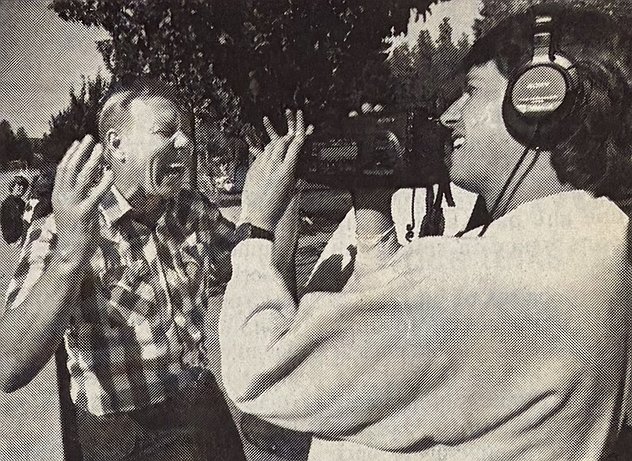 In 1991, former legislator Ron Vieselmeyer laughed and laughed at City Park for ABC-TV’s “America’s Funniest People.”
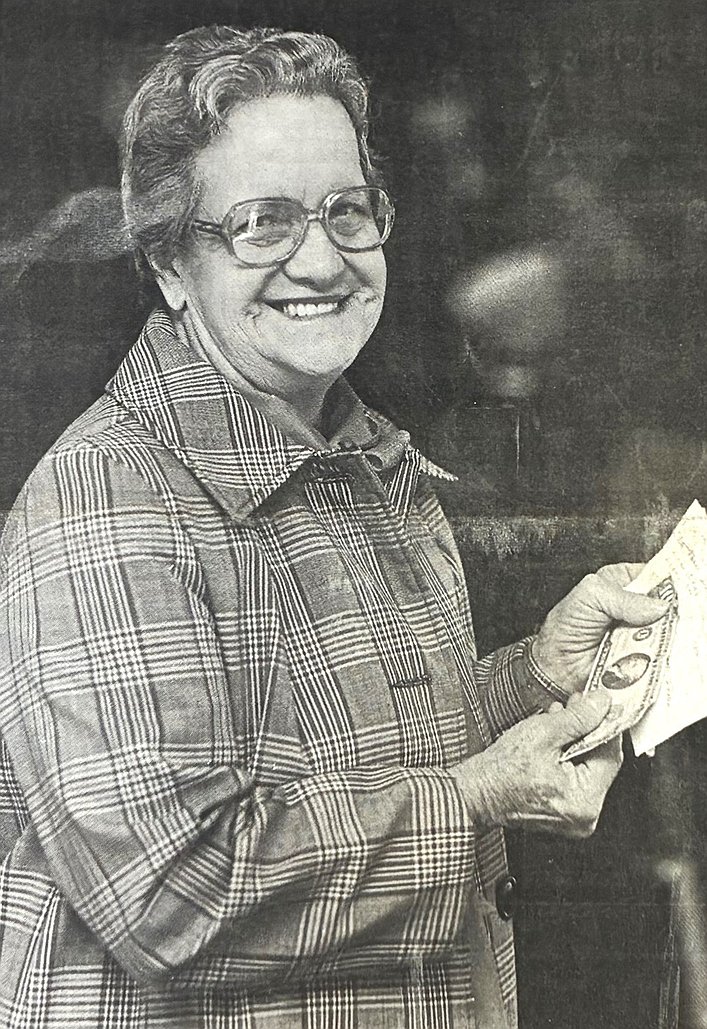 In 1986, Lucille Applegate displayed a $10 bill that she received from an old acquaintance who had "swiped it from her,” 51 years before.
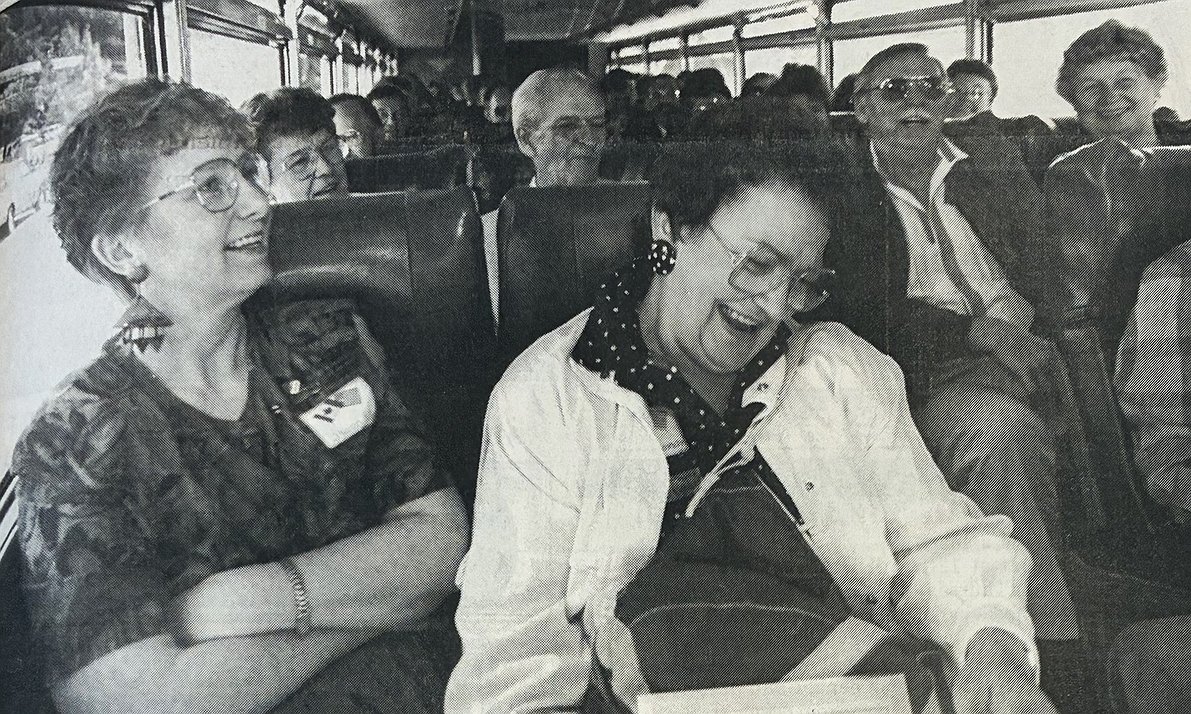 Sharon Billey, left, and Delphine Kennelly of Cranbrook, British Columbia, toured Coeur d’Alene. The towns were sister cities.
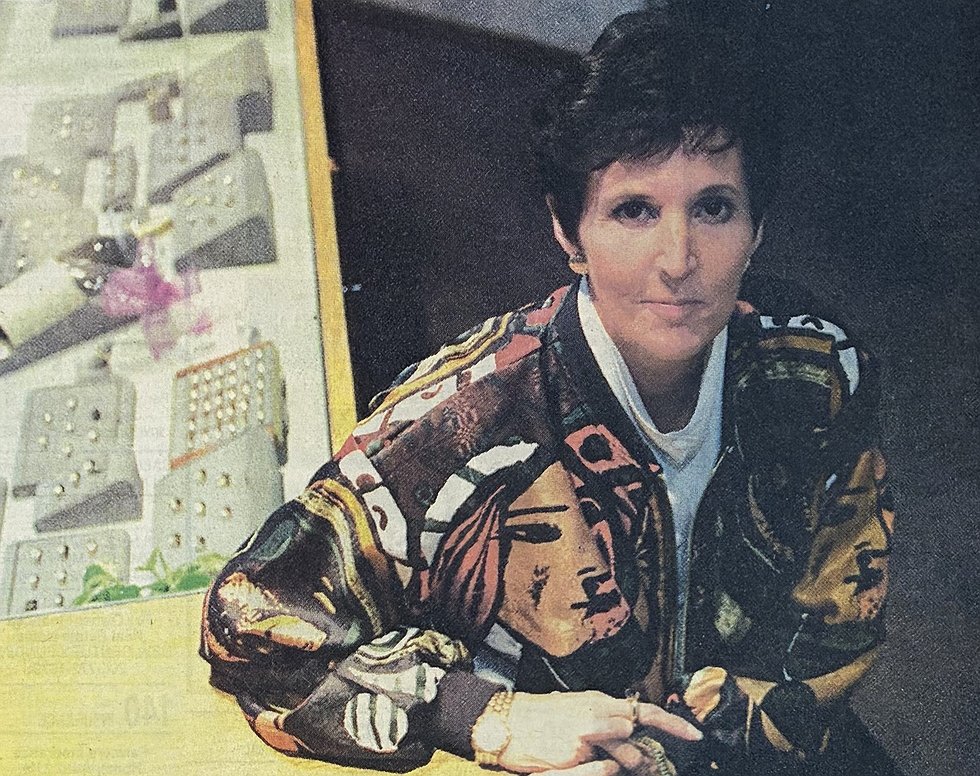 In 1996, Sandi Bloem led downtown revitalization efforts. Ten years before, she was the subject of a Coeur d’Alene Press mini profile.
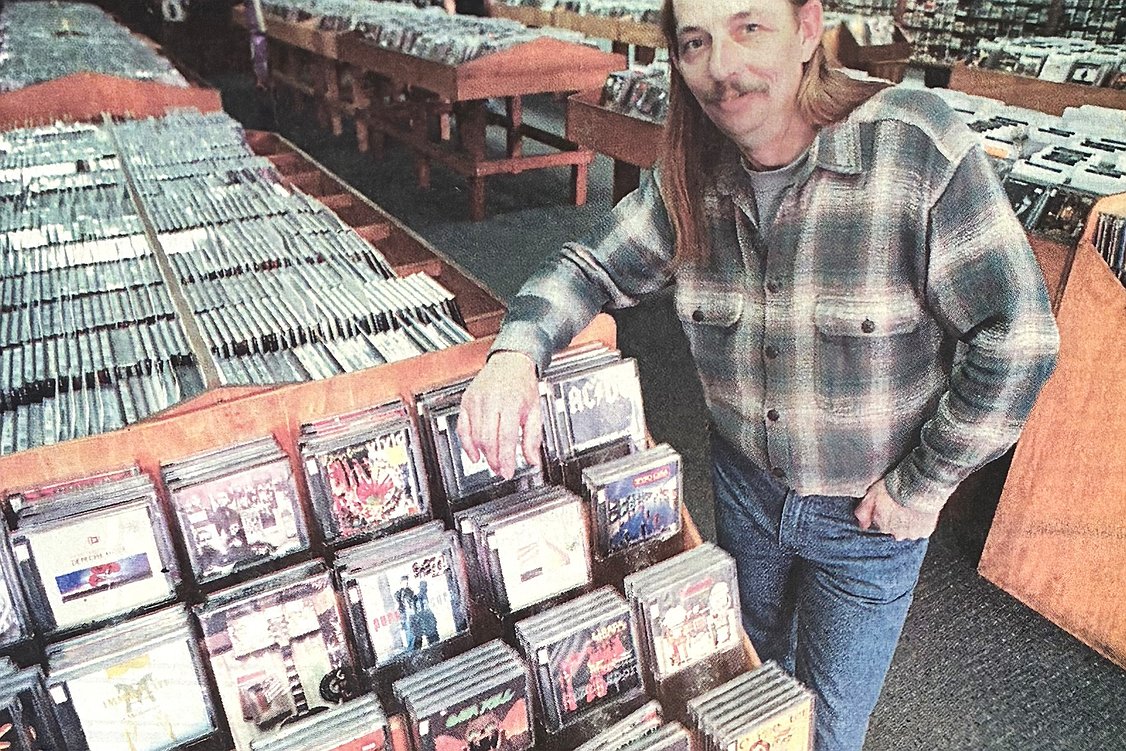 In 1996, Terry Borchard rummaged through CDs in his Long Ear record store. The popular shop shut in July after more than four decades here.
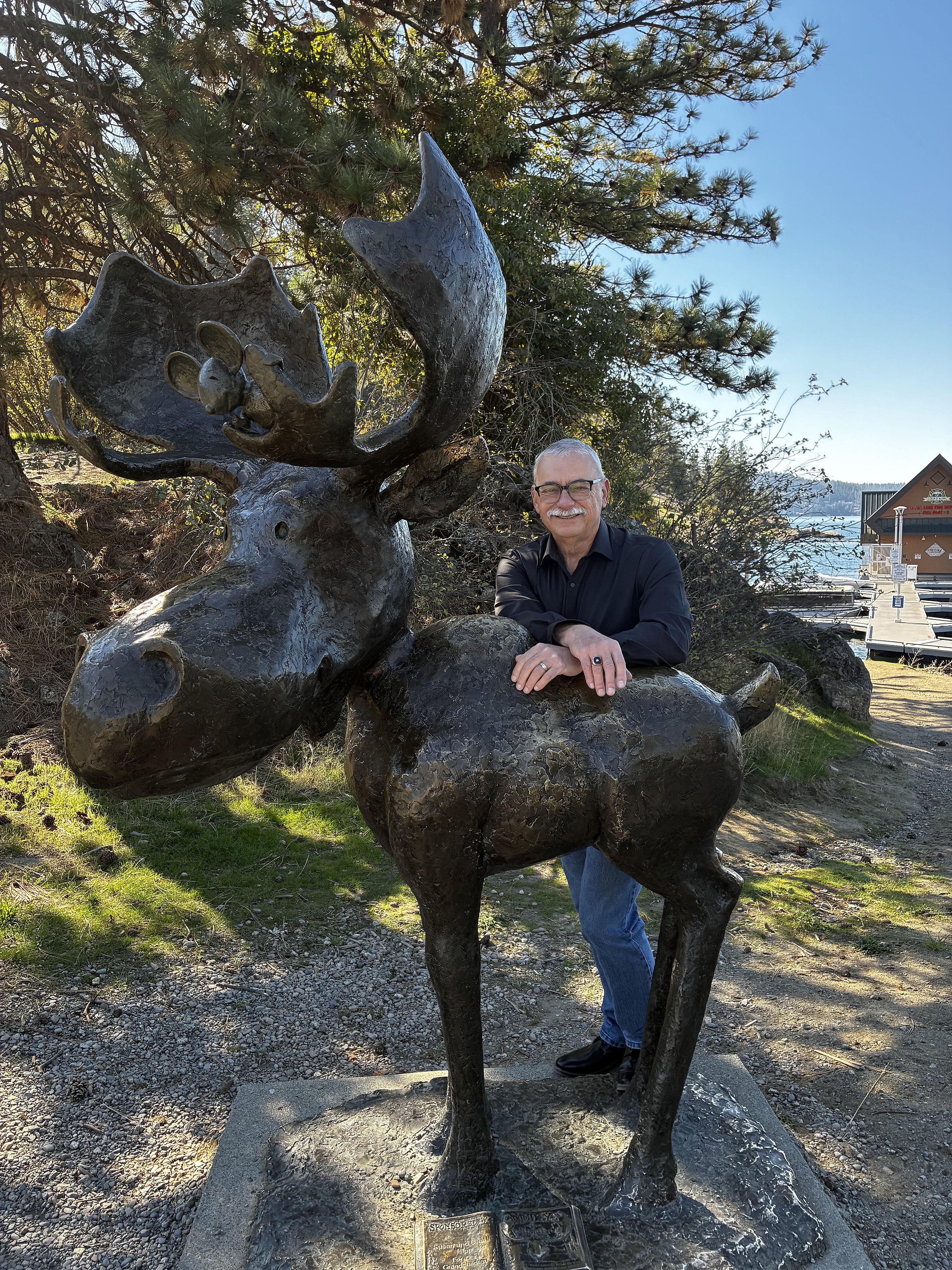 I couldn’t resist posing with Coeur d’Alene icons, Mudgy and Millie, during a waterfront photo shoot for my upcoming book. “Coeur d’Alene Chronicles,” a modern history of Coeur d’Alene, comprised of stories from Huckleberries, is on track for a late-November release.
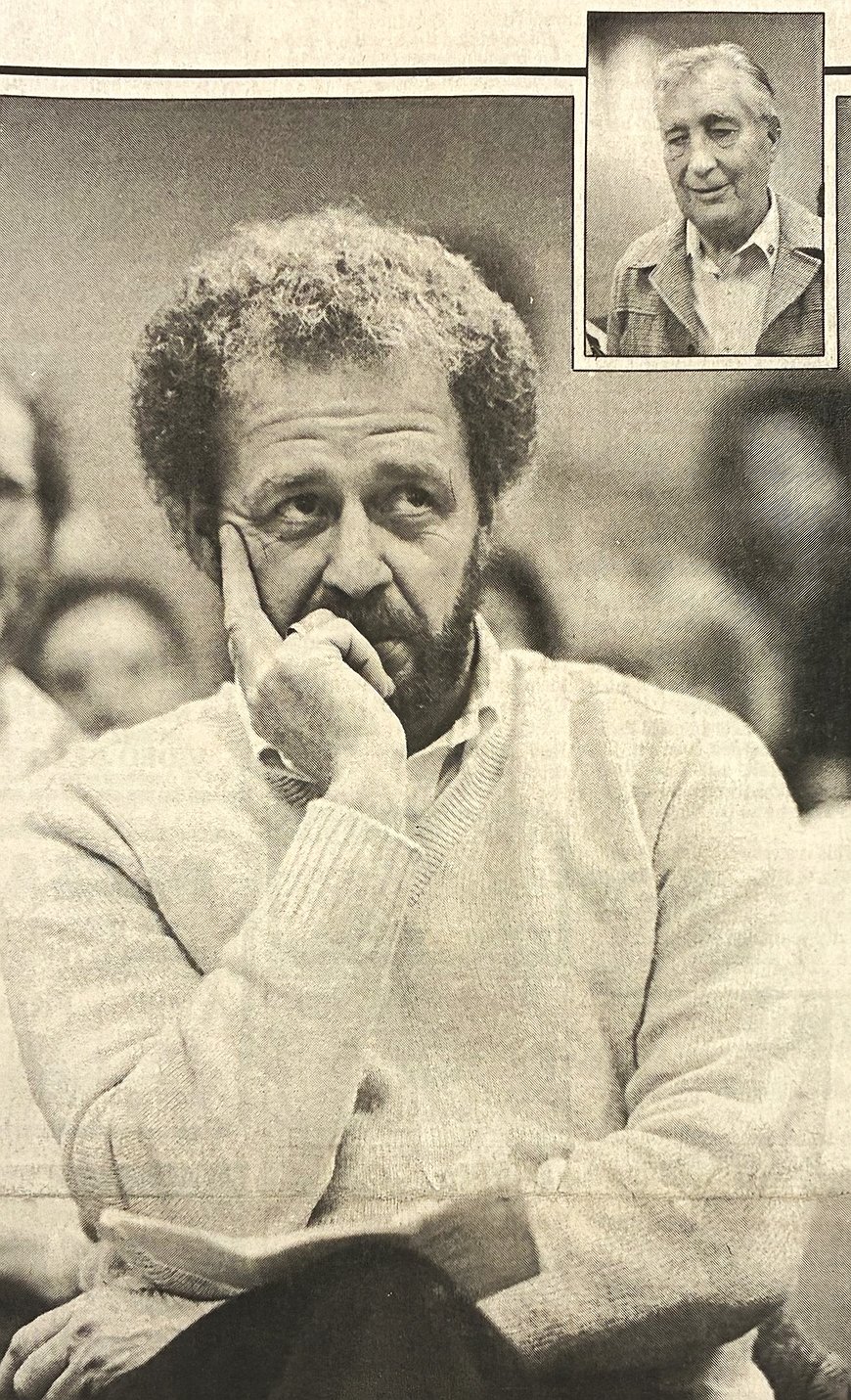 In September 1986, Bill Wassmuth had plenty on his mind at a community rally for him after his home was bombed by criminals tied to the Aryan Nations. Richard Butler (inset), leader of the Aryan Nations, attended the rally, too.
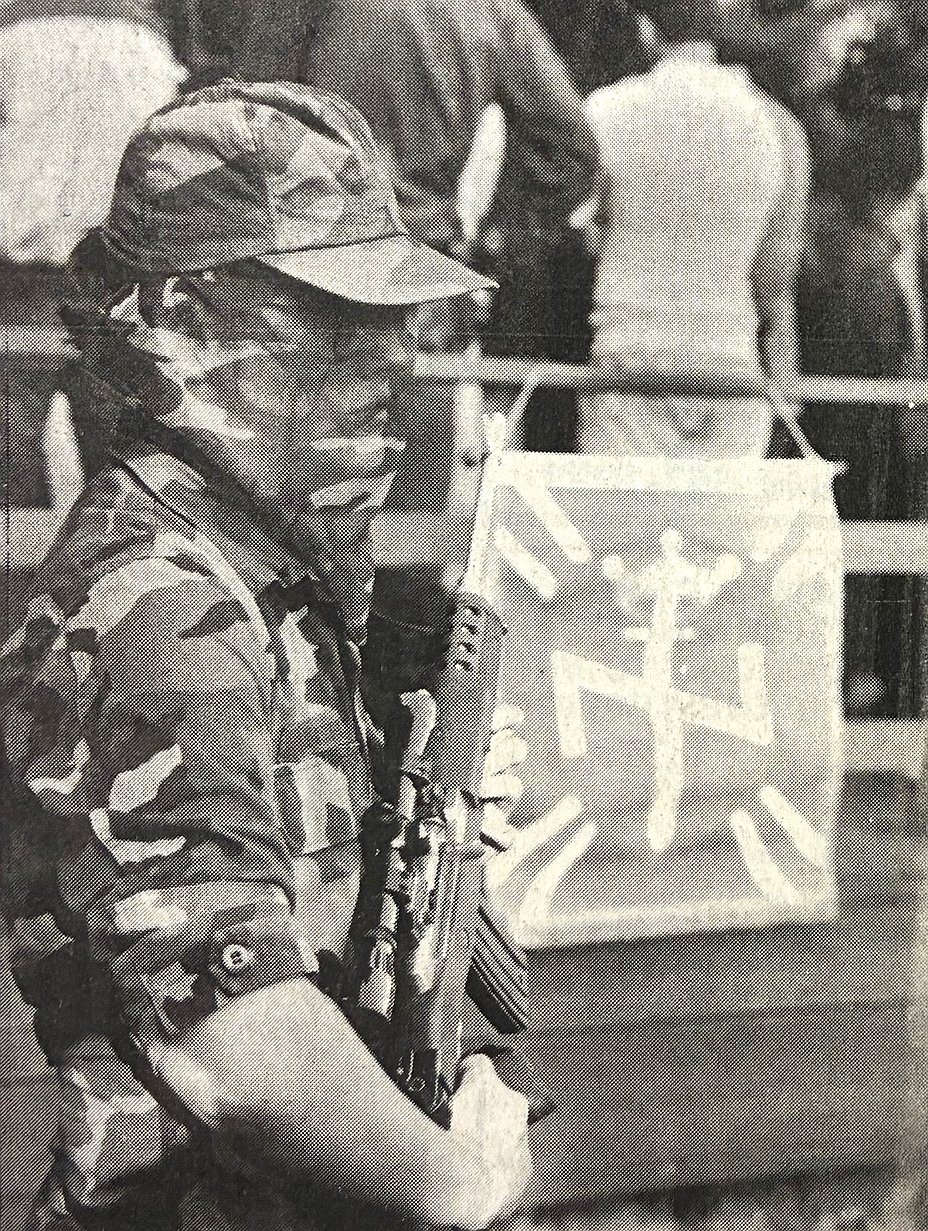 In July 1986, a racist guard, armed with an automatic rifle, watched a press conference at the annual Aryan Nations World Congress, near Hayden Lake.