

Lawmakers talk housing, taxes, growth
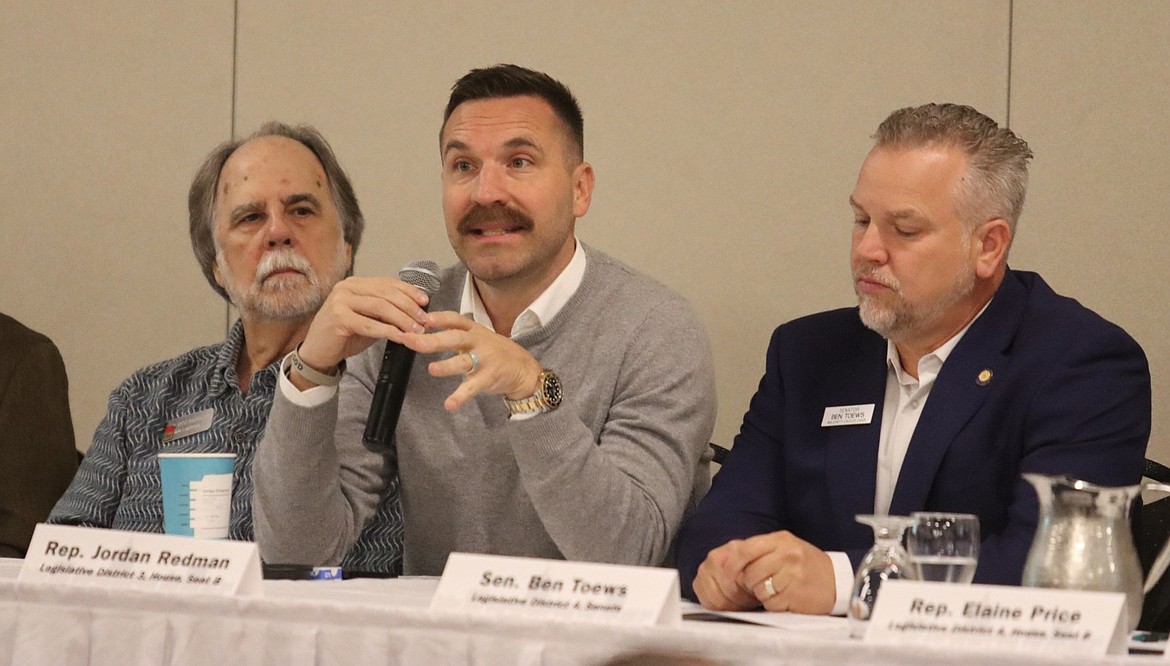
From left: Rep. Vito Barbieri, Rep. Jordan Redman and Sen. Ben Toews. Redman said that when approaching 2025 housing bills that the legislature was trying to get "government out of the way."
JACK DeWITT/PRESS
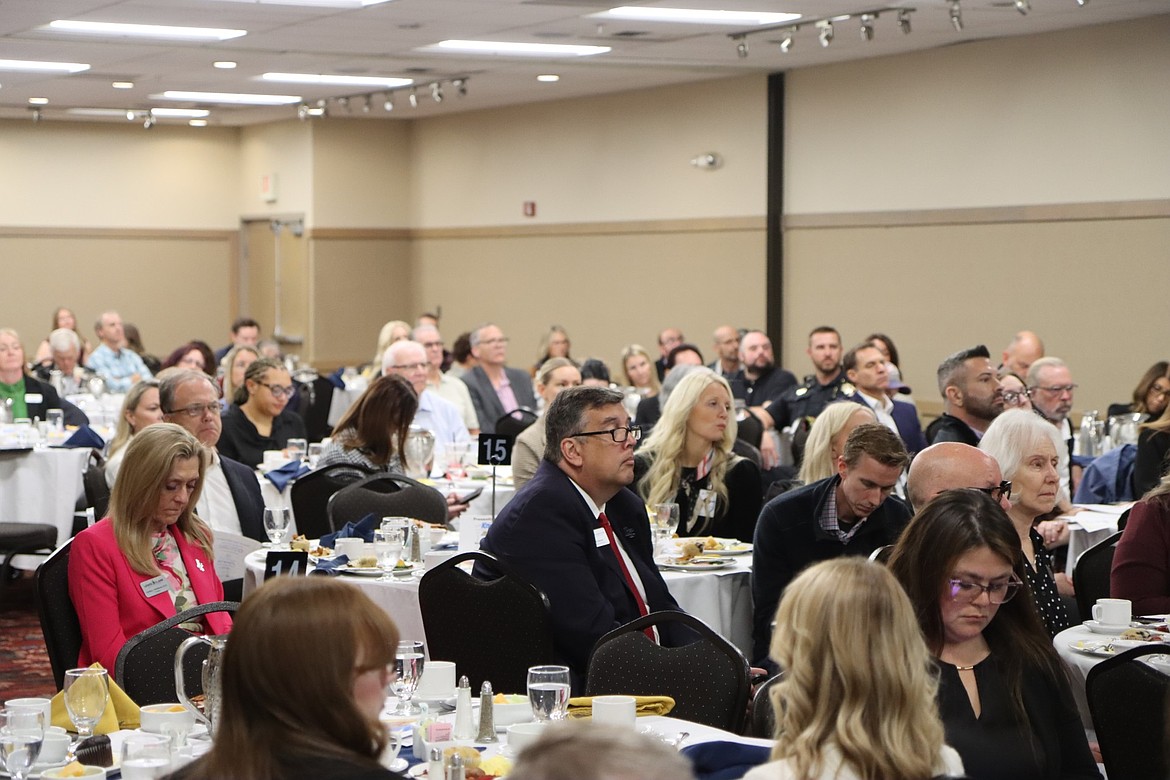
Around 180 people attended the 2026 Breakfast with the Legislators, Rep. Barbieri said that it was the largest Chamber meeting he has experienced in 16 years.
JACK DeWITT/PRESS
North Idaho business leaders packed the Best Western Plus Coeur d’Alene Inn on Wednesday to hear from state legislators.
Housing and growth dominated the discussion before about 200 people. Recent state laws have expanded options for starter homes and accessory dwelling units while limiting local control of short-term rentals and capping property-tax growth.
Sen. Ben Toews, who helped advance several housing measures, framed the legislative intervention as a response to market barriers.
“The next generation of Idahoans are either going be renters, or they’re going be able to own a house, or they’re going to move away,” he said. “We recognize that the market is the best way to solve these issues.”
Toews, Sen. Carl Bjerke, Sen. Phil Hart, Rep. Heather Scott, Rep. Dale Hawkins, Rep. Vito Barbieri, Rep. Elaine Price, Rep. Jordan Redman, and Rep. Ron Mendive attended the Post Falls Chamber of Commerce and Joint Chamber Public Policy Committee event.
Hart, a structural engineer, pointed to ballooning building codes and the broader monetary system as drivers of housing costs. Price said many of the bills originated with constituent requests for consistency across the state.
On data centers, speakers largely deferred to local planning and zoning while cautioning about power and water demands.
“It’s coming whether we are going to fight it or not.” Price said. “It’s an opportunity if that’s what local land use wants.”
On the state budget, Bjerke reported that revenues are currently running about $150 million above earlier projections and that Idaho maintains a balanced budget and healthy reserves.
The event began with about attendees taking part in an online poll asking them to highlight the issues they felt best represented them or their business.
Dozens flagged a qualified workforce as a major headache. The State Board of Education is seeking roughly $12 million to restore cuts from last year through Enrollment Workload Adjustment funding. The panel was asked if they would support reinstating the Enrollment Workload Adjustment funding after seeing its impacts.
Hawkins rejected reinstating the previous model.
“In 2018 the Idaho School Board Association voted unanimously to get away from EWA for funding,” he said. “So, no, I won’t be voting to reinstate a program that was already determined to be hurting higher education.”
Hawkins urged a return to a “classic, liberal” education and said that universities offer remedial programs because many high-school graduates arrive unprepared.
On K-12 funding, legislators said the current formula is outdated. Mendive described it as “primitive” and among the most complicated in the nation. He said a group is already working with the state superintendent to modernize it.
Healthcare access and Medicaid were part of the discussion.
Redman described work on a $185 million rural health transformation grant program and efforts to reduce improper Medicaid payments, which he said accounts for 20% of the Medicaid budget.
He said he was interested in legislation that would ease the so-called “welfare cliff” so modest salary gains do not abruptly eliminate benefits.
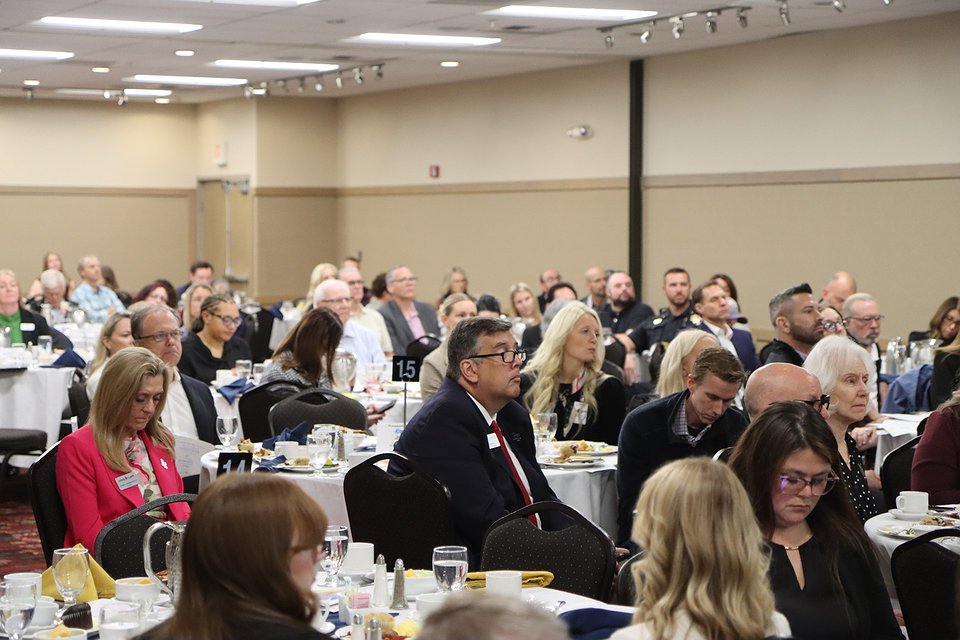 Around 180 people attended the 2026 Breakfast with the Legislators, Rep. Barbieri said that it was the largest Chamber meeting he has experienced in 16 years.