
Annual fair equips residents for bear encounters
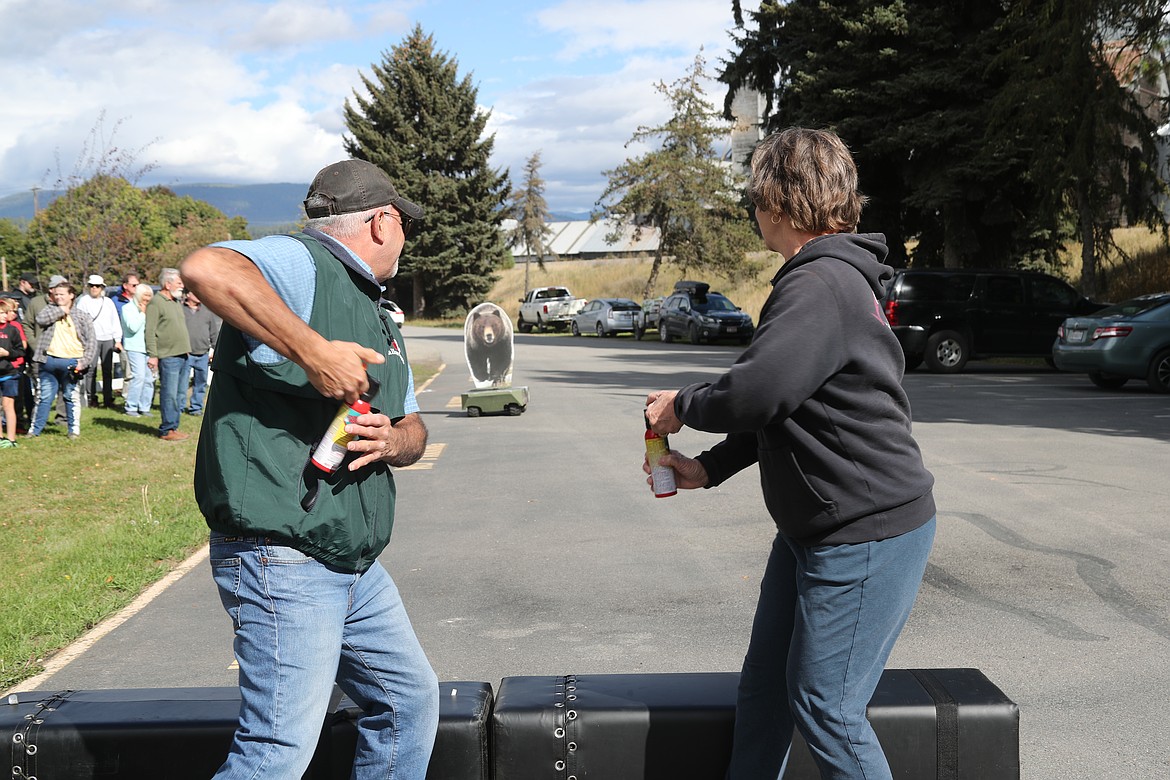
A Boundary County couple readies to deploy bear spray as they take part in bear safety training at Idaho Department of Fish & Game's annual Bear Fair on Saturday, Sept. 26.
Photo by CAROLINE LOBSINGER
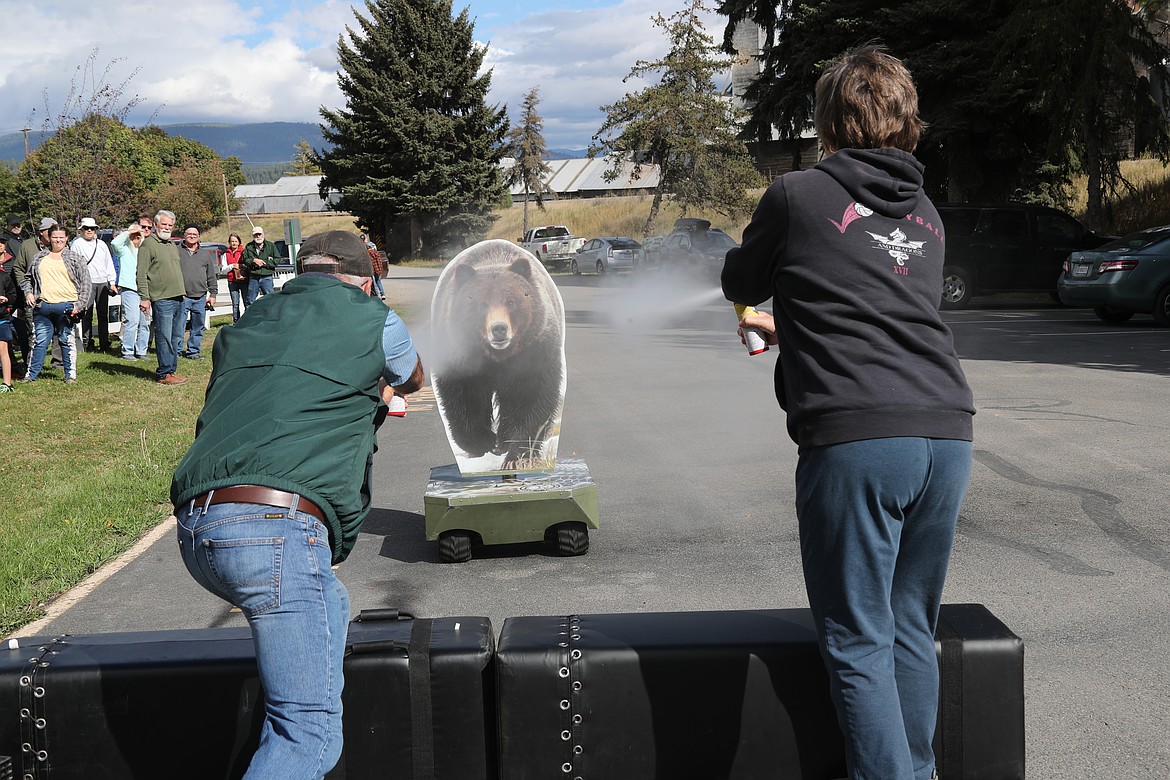
A Boundary County couple takes part in bear spray training at Idaho Department of Fish & Game's annual Bear Fair on Saturday, Sept. 26.
Photo by CAROLINE LOBSINGER
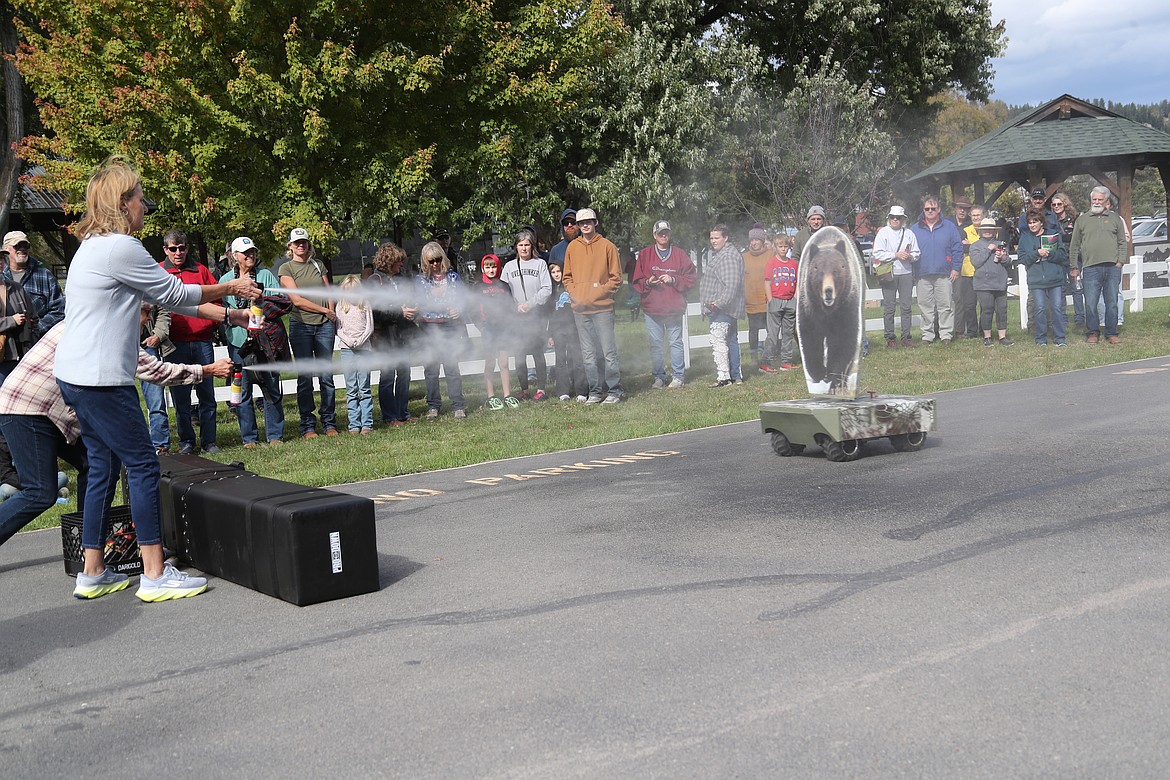
Local residents try their hand at using bear spray at Idaho Department of Fish & Game's annual Bear Fair on Saturday, Sept. 26.
Photo by CAROLINE LOBSINGER
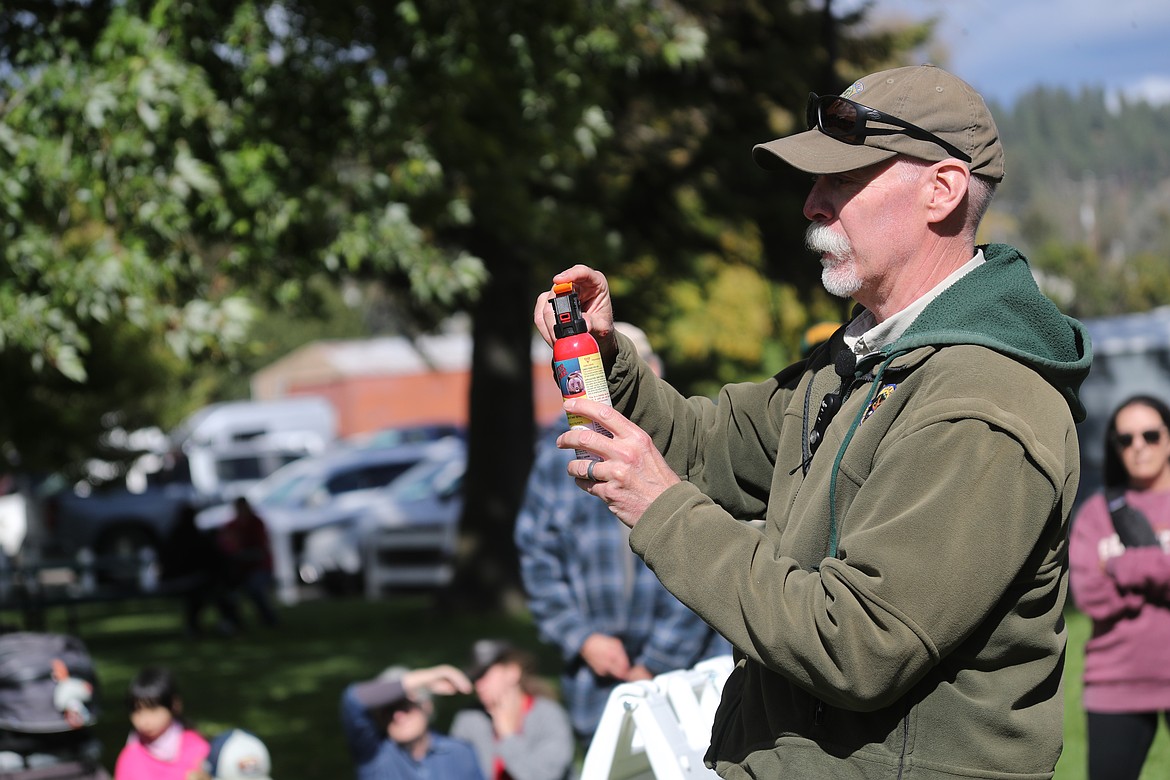
Rob Morris, Idaho Department of Fish and Game grizzly bear conflict biologist, shows how to use bear spray at Saturday's Bear Fair in Boundary County.
Photo by CAROLINE LOBSINGER
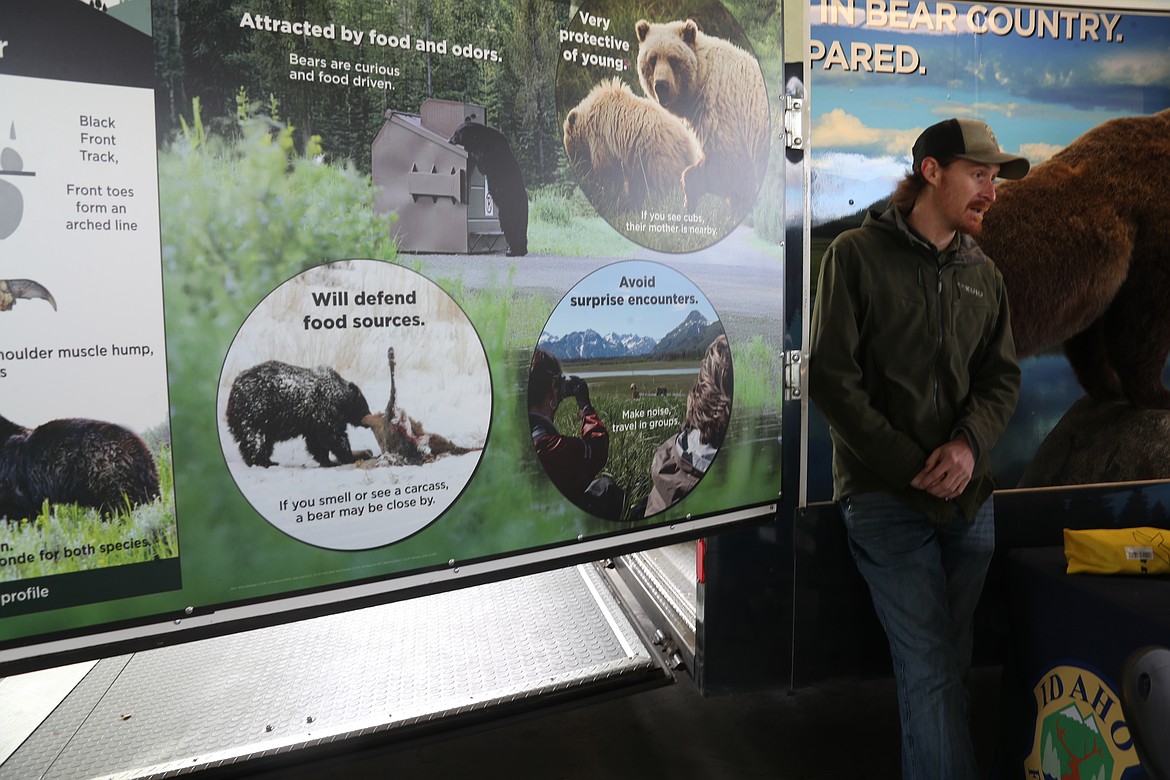
Among the station's at the 2026 Bear Fair was information on how to identify black and grizzly bears.
Photo by CAROLINE LOBSINGER
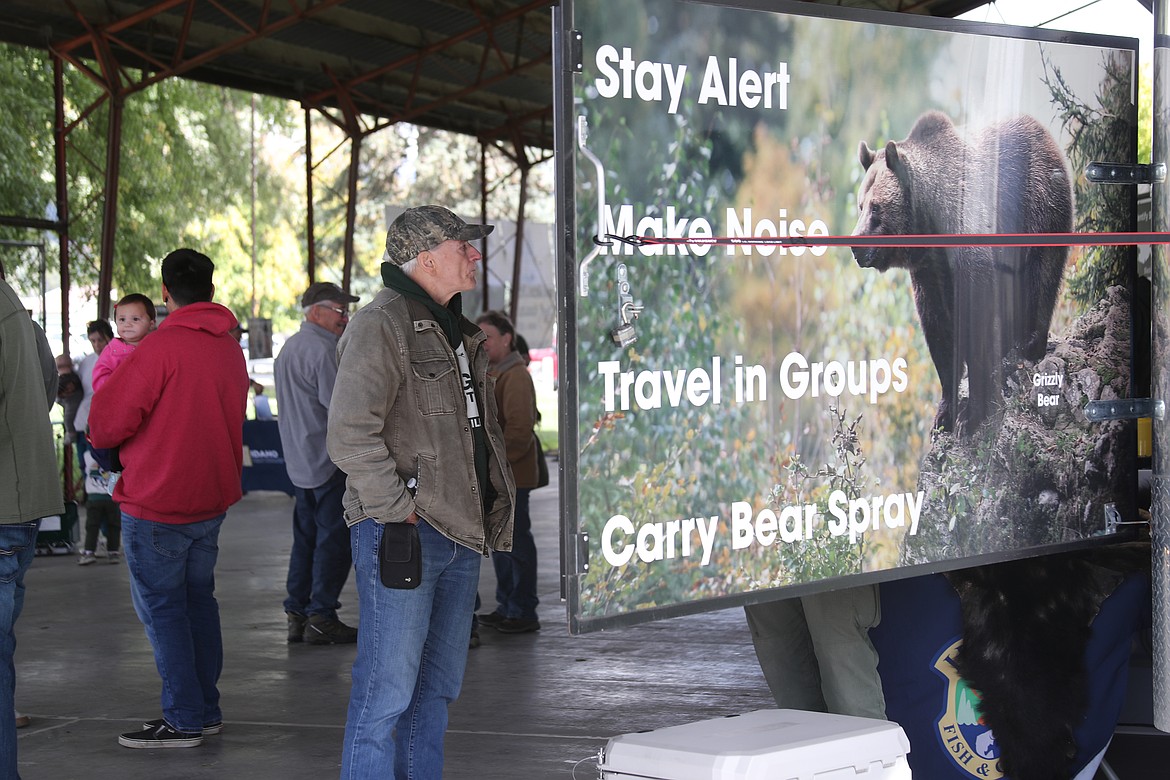
A Boundary County resident explores information on black bears and grizzly bears at the 2026 Bear Fair, held this year in Boundary County. The fair offers bear spray training, bear identification, and information on how to live and recreate safely in bear country.
Photo by CAROLINE LOBSINGER
BONNERS FERRY — The man was up in avalanche country installing a repeater when he heard a clump of snow flop off the branches.
At first, the Forest Service worker didn't think much of it and kept laying out his tools and getting to work. Then, another clump of snow hit the ground.
"He looked underneath the tree and, 20 feet away, there was a grizzly bear staring at him and it came right at him," said Rob Morris, an Idaho Department of Fish and Game grizzly bear conflict biologist. "Luckily he had his bear spray right there. He grabbed it and dumped the whole can on that bear."
The bear took off, went about 40 yards, then turned, looked over its shoulder at the man, and took off again.
"He had taken my class a year before and so it made me feel good that he knew what to do," Morris told the group of about 200 area residents taking part in IDFG's annual Bear Fair safety training Saturday.
Held annually and rotating between Bonner and Boundary counties, the fair teaches how to recreate safely in bear country; how to install electric fencing around areas such as gardens, fruit trees and beehives; and more.
"I think the biggest thing is just understanding that no matter where you live in North Idaho, you live in bear country, whether you have grizzly bears or not," said Austin Terrell, who works for the Office of Species, Minerals, and Energy Coordination, about the fair's message of safety and preparation. "I mean, we still have a ton of black bear conflicts. All of North Idaho is bear country, and so it's important to get this education, understand how to protect yourself, your property, and make sure that you're prepared for it."
The annual event showcases the different components of IDFG programs, all designed to minimize conflict between humans and bears and teach residents how to live safely in bear country, IDFG biologist Morgan Pfander said. Different stations offer information on how to camp safely, how and when to install electric fencing, and an identification station teaching the differences between black bears and grizzly bears.
"All of that is just to try to prevent conflicts with bears," Pfander said. "Trying to keep bears out of people's spaces and have them keep doing wild bear things and have us stay safe in our spaces, too."
In Boundary County, residents also have access to a carcass disposal program that removes remains to a safe location instead of property owners burying them near their home and potentially attracting bears or other wildlife.
Other tools, such as bear-resistant containers and electric fencing, also help keep bears out of human spaces and "keeps them acting like they should out in the wild," Pfander said.
One of the most popular aspects of the Bear Fair is bear spray training, which includes a chance to put the skills taught into practice using a radio-controlled charging grizzly bear capable of going up to 20 mph.
A real grizzly can run almost 35 mph, Morris told the crowd of 200 people who turned out for the training, almost two-thirds of those who turned out for the fair held this year in Bonners Ferry.
A retired conservation officer, Morris has spent the past five years working as a grizzly bear conflict biologist for the Idaho Department of Fish and Game. In that role, he deals with bears, particularly grizzly bears, who have come into contact with humans, whether it's getting into a family's chicken coop or causing problems in the garden.
He works to identify solutions to mitigate the problem, from installing electric fencing to trapping and relocating the bear. His job also involves education, from the individual level to events like Fish and Game's annual Bear Fair.
"We're just trying to get people to understand that all of North Idaho is bear country, whether it's black bear or grizzly bear," Morris said.
This spray is a bear-snare behavior, awayhing ihumans and toward safetyftowardafety. Each canister holds about seven seconds of a capsaicin-based solution.
The three most common bear encounters happen when people surprise a bear and it is spooked, when the bear defends its food, or when it reacts to protect its cubs.
Noise is a recreationist's or hunter's best friend, alerting the bear to a human's presence. While dogs can be helpful, they should be on a leash or a shock-collar leash for immediate control.
"You don't want a dog that's going to interact with a bear or you know, mama bear that's got cubs, and the dogs getting into the cub. That's going to be another bad day for the dogs, too," Morris said, noting that dogs being chased by bears often lead them straight back to their owners. "So yeah, so making lots of noise is your best friend when you guys are out there recreating. Give those bears plenty of opportunity to know that you're in the area."
Morris also recommended traveling in groups of two or more, increasing the chance bears hear them and move away.
When out in the woods, whether hiking a favorite trail or searching for deer or elk during hunting season, the bear conflict biologist told those gathered to recognize that bears could be present.
"All of North Idaho is bear country," he said.
Noise makers can be helpful, as can guns. However, bear spray can change a bear's behavior without risking human life, Morris said. He recommended keeping the spray close at hand and in the same spot each time to build muscle memory. Holsters should be easy to use and keep the spray canister close at hand.
Each person in the party should have his or her own canister of bear spray, which should be checked each year to make sure it hasn't expired.
While the bear spray training attracts many to the fair, IDFG officials said other information is equally important. Chicken coops, a prime attractant for bears, need to be secured, as do any garbage, barbecue grills and pet food. Terrell said deer or elk meat stored in a freezer on the back porch also needs to be secured.
Grizzly bears are protected under both state and federal law. The only exception is preserving human life.
"You're never going to get into any trouble with our agency if it's a life-or-death situation and you kill a grizzly bear," Morris said. "You don't have to have anything to worry about but it's going to be reasonable, though, right? If a bear's 300 yards in the other direction and he's walking away and he's got bullets in his butt, it's probably not a good idea to shoot."
For more information on living in bear country, go to the Idaho Department of Fish and Game website at idfg.idaho.gov.
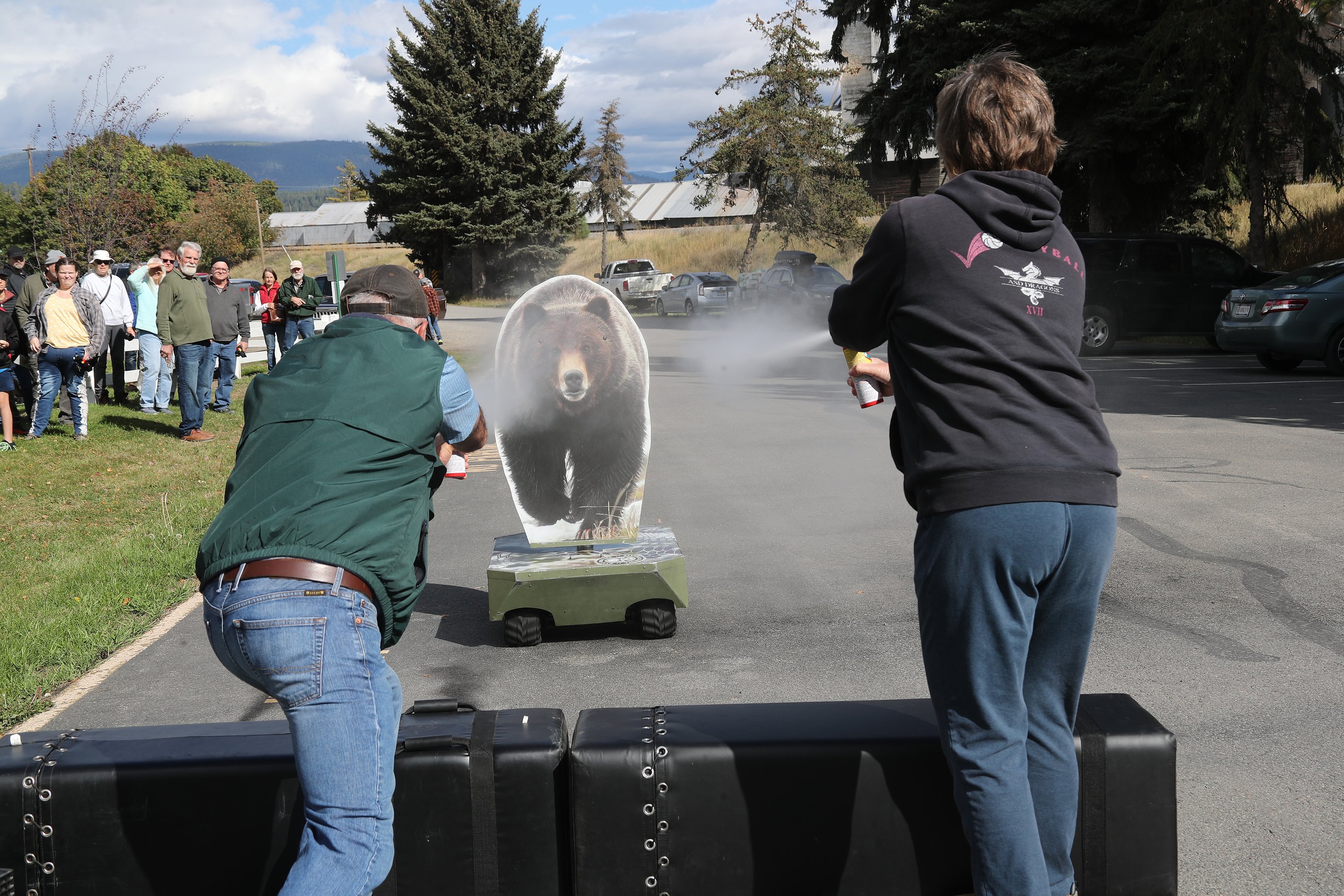 A Boundary County couple takes part in bear spray training at Idaho Department of Fish & Game's annual Bear Fair on Saturday, Sept. 26.
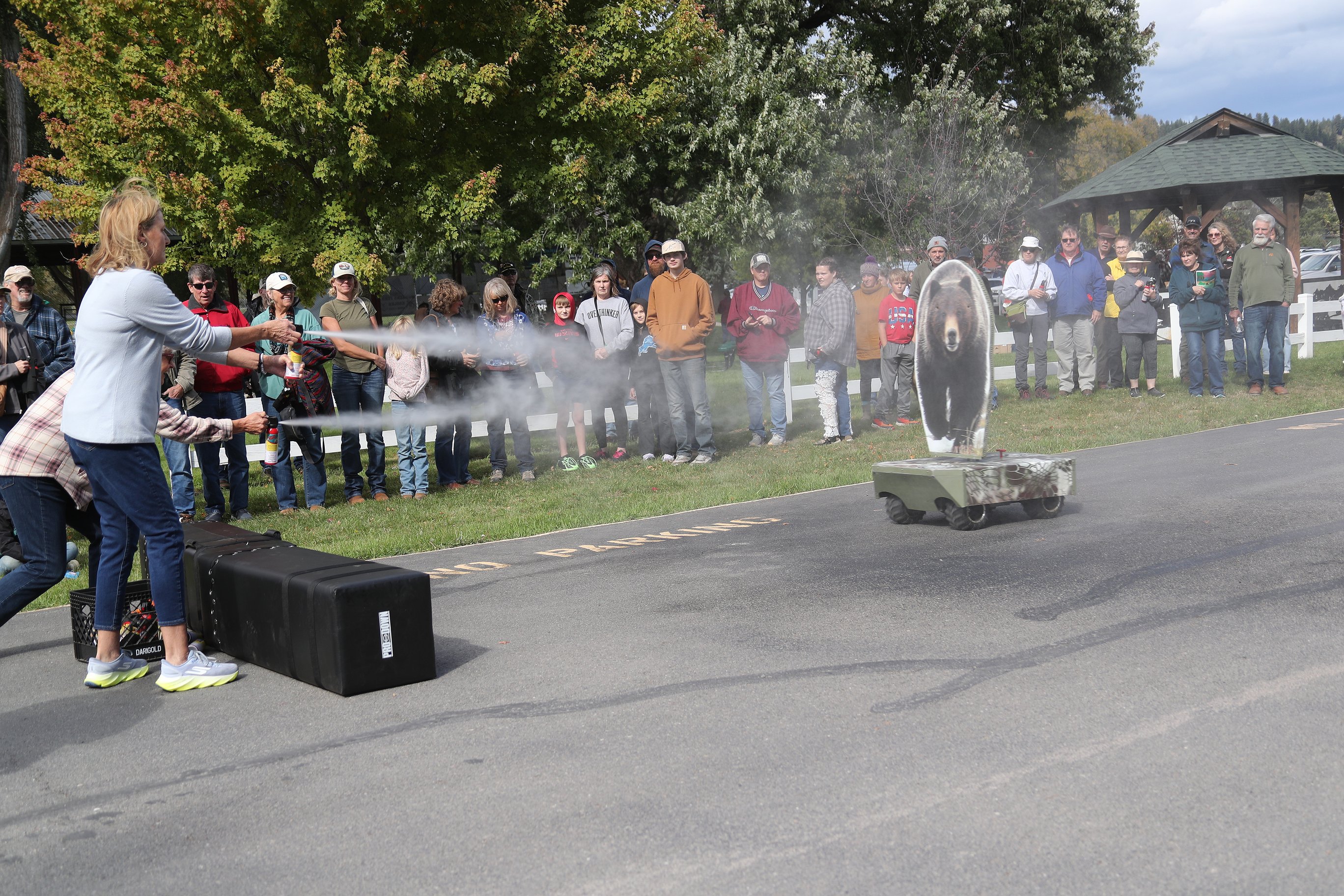 Residents try their hand at using bear spray at Idaho Department of Fish & Game's annual Bear Fair on Saturday, Sept. 26.
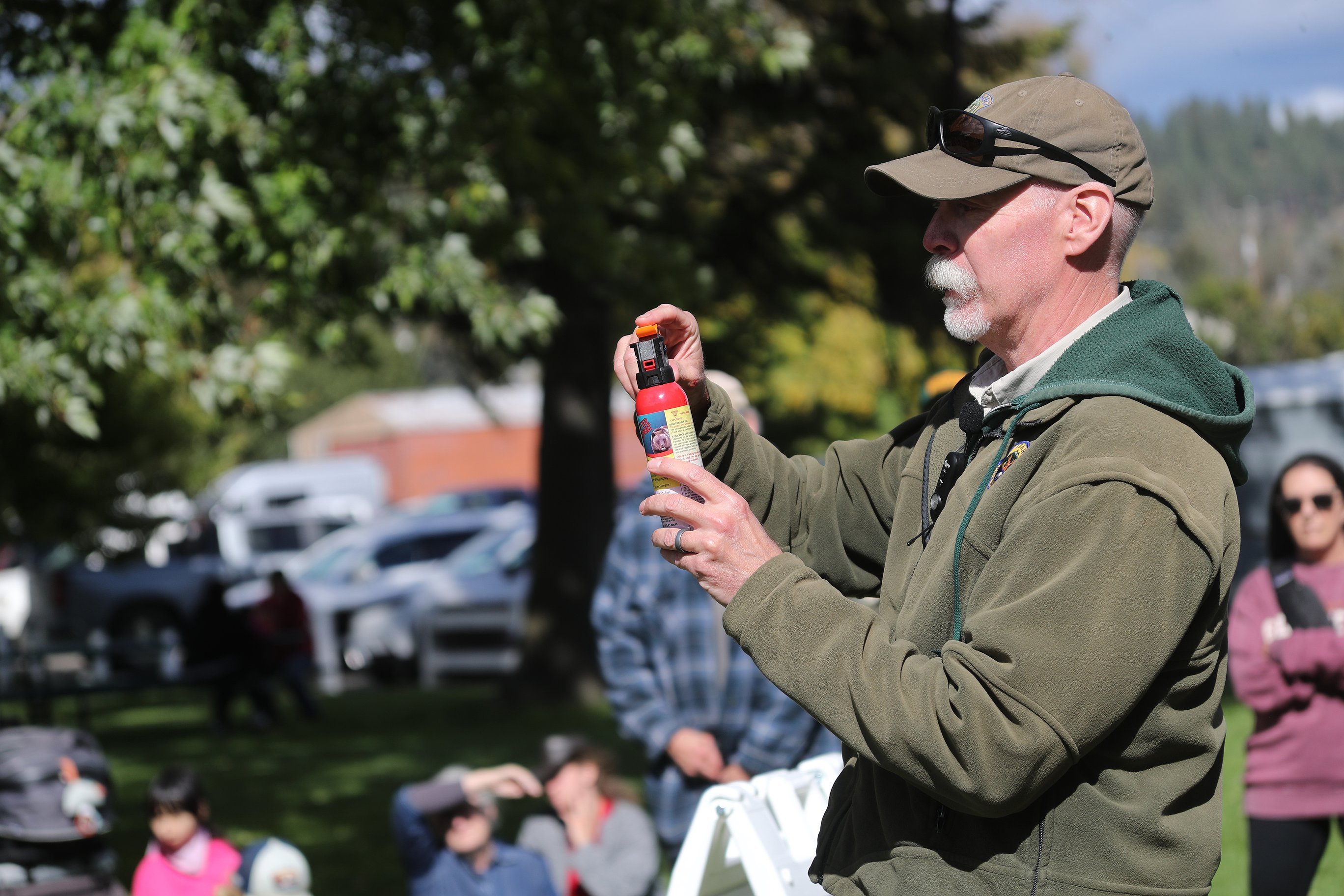 Rob Morris, Idaho Department of Fish and Game grizzly bear conflict biologist, shows how to use bear spray at Saturday's Bear Fair in Boundary County.
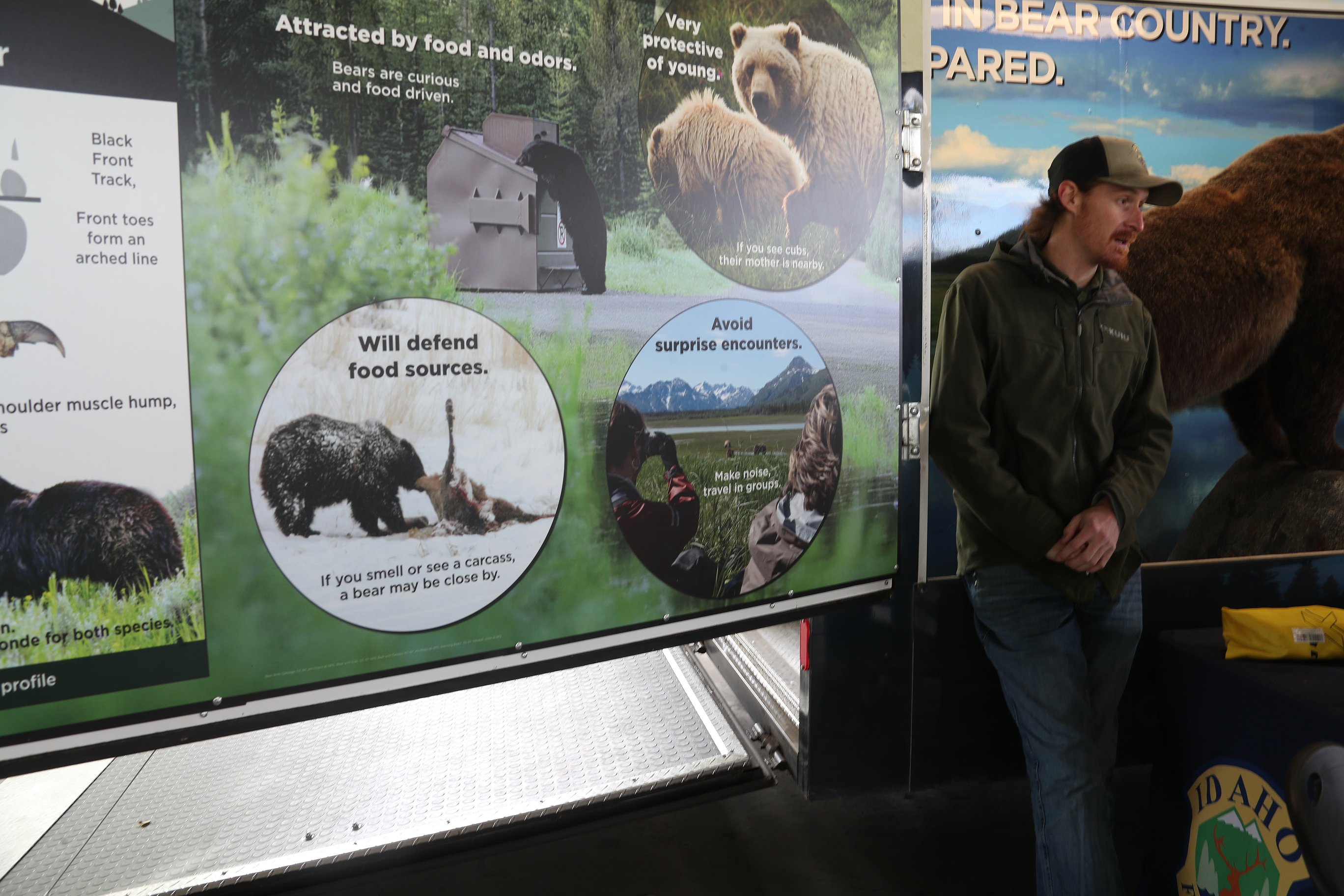 Among the stations at the 2026 Bear Fair was information on identifying black and grizzly bears.
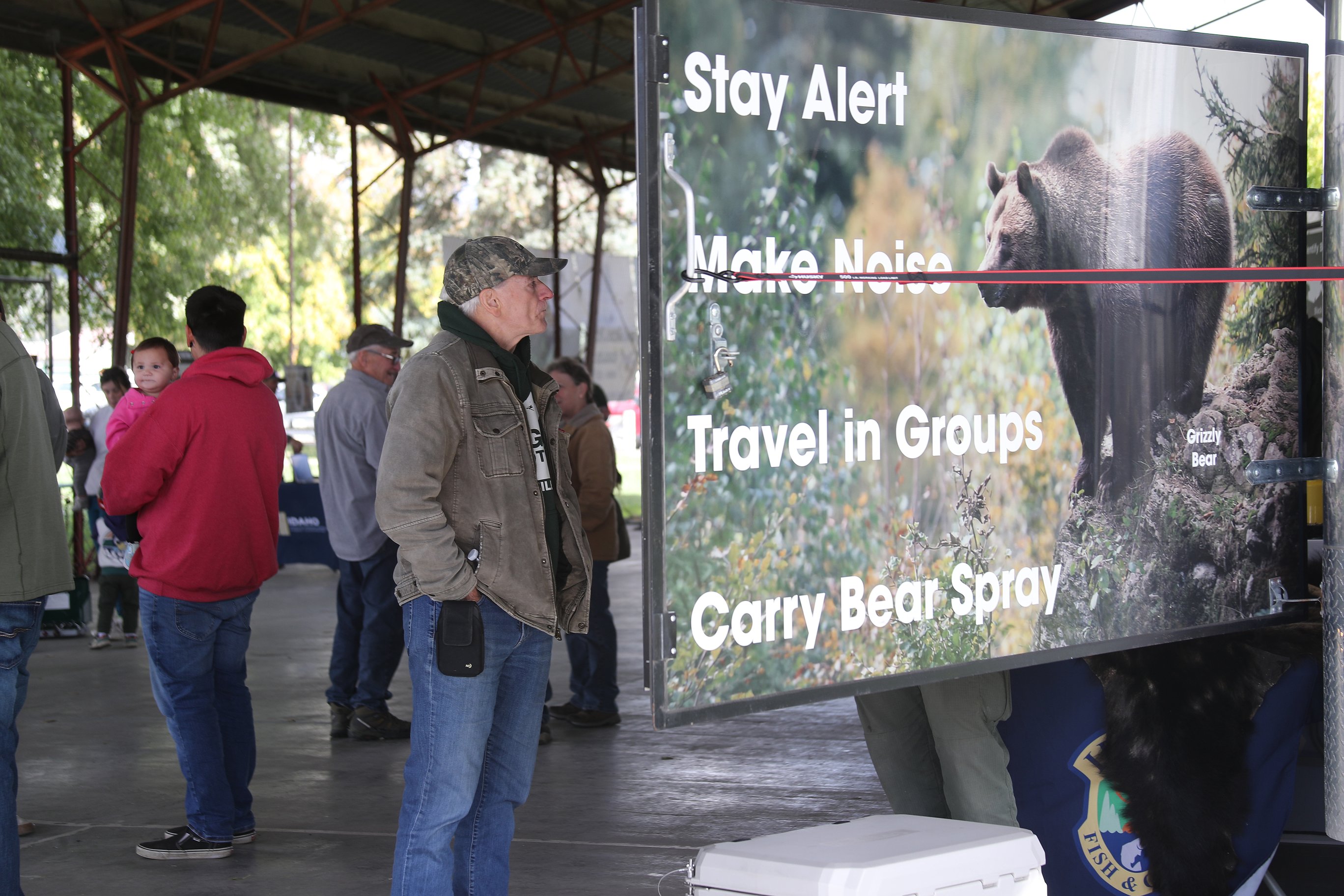 A Boundary County resident explores information on black bears and grizzly bears at the 2026 Bear Fair, held this year in Boundary County. The fair offers bear spray training, bear identification, and information on how to live and recreate safely in bear country.