
Best night sky events for October
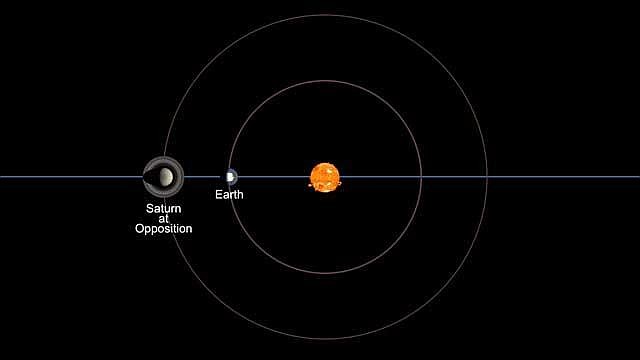
Because Saturn is “up” all night long during October, this is the perfect time to view Saturn through your telescope (if you have one). Even a small telescope will show Saturn’s rings. At 50x you’ll see it has rings and 120x you can see detail in those rings (atmospheric turbulence permitting). Be advised though that the rings, at this time, are oriented nearly edge on making it little more difficult to see detail in those rings, Have fun.
Image courtesy of NASA
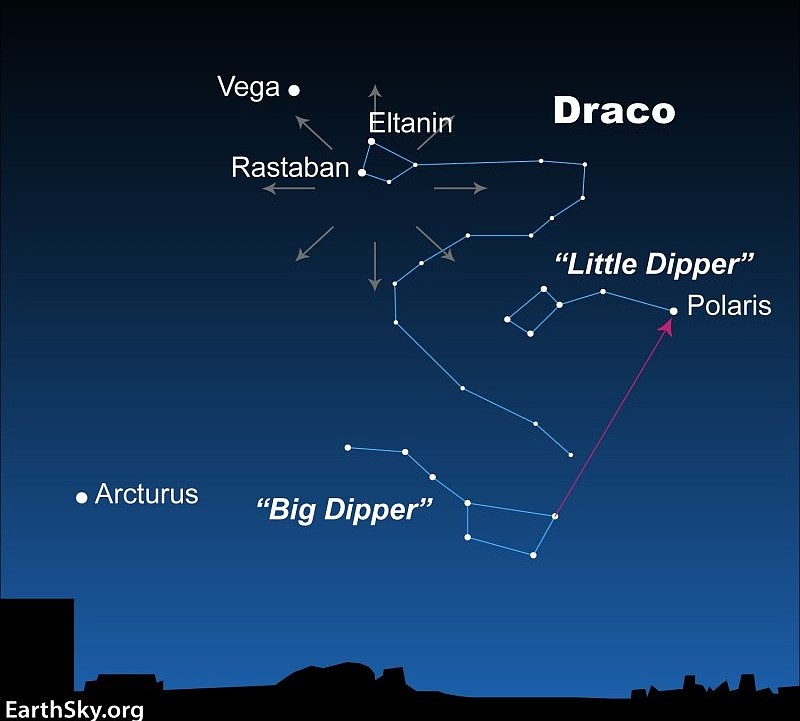
Image courtesy of EarthSky.org
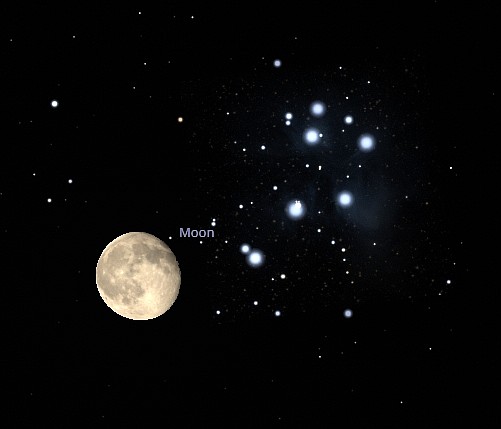
Image courtesy of John Taylor and Stellarium
October 2026 delivers an incredible lineup of stargazing highlights for night sky enthusiasts. The month begins with Saturn reaching opposition. Following this spectacular planetary event, observers can look forward to watching three distinct meteor showers light up the darkness.
The Draconids arrive early in the month, on its heels are the Southern Taurids both offering a modest but potentially very bright “shooting stars.” Later in the month, the fast and bright Orionids meteors stream across the sky, produced by debris left behind by Halley's Comet.
Our normal lunar phases, and planetary conjunctions, plus potentially amazing meteor showers combine to create an unforgettable October. Now, if we can just get the adverse weather to hold off for just a bit longer.
Oct. 3 — Third Quarter Moon
The third (or last) quarter phase, at 6:25 a.m, shows the moon appearing half-illuminated on its western, or left side. It rises before midnight local time, and then remains visible until it sets in the western daytime sky in the early afternoon. The dark, moonless evening skies that follow this phase gives you an opportunity for observing deep sky targets, like the Andromeda galaxy!
Oct. 4 — Saturn at Opposition
On this day at 5:13 a.m., Earth will pass directly between Saturn and the sun. This perfect alignment is known as opposition, meaning Saturn will sit exactly opposite the sun in our sky. Because of this, Saturn will rise at sunset, and set at sunrise, making it visible all night long. Saturn will also be at its brightest during this period. So, look to the east just after dark to see this bright yellow star-like object.
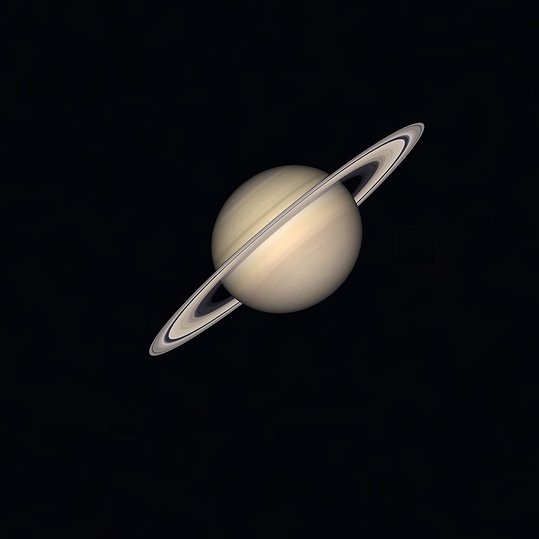 Image courtesy of John Taylor and Stellarium
Oct. 5 — A Conjunction of the Moon and Mars
For early risers or night owls, starting at 2:30 a.m. all the way to dawn’s twilight, look to the east to see the waning crescent Moon less than 3 degrees from the planet Mars (3 degrees is two fingers extended at arm’s length). Mars will be easy to spot because it is very red!
Oct. 6 — A Conjunction and Close Approach of the Moon and Jupiter
A slender waning crescent moon and Jupiter will make a very close approach, passing less than 1 degree of each other. This event is actually called an Appulse. Look to the east horizon at or near 3 a.m. on this morning to see these two solar system objects appear visually very close to one another. One degree is a pinky finger held at arm’s length.
If you still have your telescope out from two nights ago, both of these celestial bodies will fit within the field of view at 30-40x. You’ll be able to see lunar craters, plus all four Galilean moons of Jupiter.
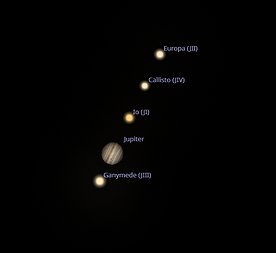 This image shows Jupiter (second from the bottom) and its four brightest moons on this night. Image courtesy of John Taylor and Stellarium
Oct. 8 — Draconid meteor shower
Your best viewing hours for the Draconids are just after dusk (roughly 7 to 9 p.m). The radiant point in the constellation Draco sits highest in the northwest sky right as night falls, making this a rare early-evening event. You could see up to about 10 meteors per hour. Because Draconid meteors hit Earth's atmosphere at a slower velocity than other showers, they tend to burn slowly, creating bright, elegant streaks across the sky. With the new moon just two days away, your viewing opportunities will be optimal.
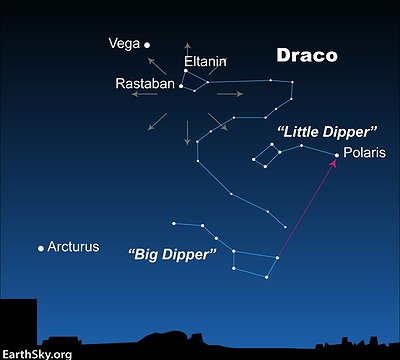 Image courtesy of EarthSky.org
Oct. 10 — New Moon
On Thursday, at 8:50 a.m., the moon will officially reach its new moon phase. The moon is now between Earth and the sun, and the side of the moon facing toward us receives no direct sunlight, making it hidden from view from anywhere on Earth for about a day or two. This is a weekend new moon, so it is your best opportunity to get away from city lights putting you out under very dark skies to see what there is to see. One of the things to see in the early fall is the Milky Way. It is still prominent nearly directly overhead starting around 8 p.m. Another prominent object in the eastern sky is the Pleaides Star Cluster. Look toward the eastern horizon after 9 p.m. to see this very visible and famous star cluster. Why famous? In Japanese, this star cluster is called Subaru!
Oct. 10 — Southern Taurid meteor shower
The Southern Taurid meteor is known for producing 5 to 10 meteors per hour at its peak. This shower though is known for producing bright fireballs. These meteors also strike the Earth's atmosphere at a relatively leisurely pace, meaning they can be visible longer than most meteors and leave glowing trails called trains. Look east after 10 p.m., just south of the Pleiades star cluster. With the moon in its “new” phase tonight, there will be no interference from that bright orb.
Oct. 18 — First Quarter Moon
When the moon completes the first quarter of its journey around Earth at 9:13 a.m., its 90-degree angle between us and the sun will cause us to see the moon half-illuminated — on its eastern side, the right side.
At first quarter, the moon always rises around mid-day and sets around midnight, so it is also visible in the afternoon daytime sky. The evenings surrounding first quarter are the best evenings to use a telescope or even a pair of binoculars for seeing the lunar terrain which will be dramatically lit by low-angled sunlight, especially along the terminator, the pole-to-pole boundary that separates the light and dark hemispheres.
Oct. 21 — The Orionids Meteor Shower
The Orionids are considered to be one of the most beautiful meteor showers of the year. They are quick and they are bright. Because they are quick, they have the potential to turn into bright fireballs. You might see prolonged explosions of light from these meteors. These meteors are produced by debris left behind by Halley’s Comet, yes, the famous Halley’s Comet.
Look to the east after midnight toward Betelgeuse the bright red star that is Orion’s left shoulder. Remember, these meteors can appear anywhere in the sky. The moon will set at 1:53 a.m., because it is a waxing gibbous moon, it will interfere a bit until it sets.
Oct. 25 — Full Moon, The Hunter’s Moon
The moon will be located on the opposite side of the Earth as the sun and its face will be fully illuminated. This phase occurs at 9:12 p.m. Because September’s full moon was closer to the autumnal equinox than the October full moon, September got the Harvest Moon moniker and October gets the Hunter’s Moon. Other cultures traditional October Moon names include: Drying Rice Moon, Falling Leaves Moon, Freezing Moon / Ice Moon, and the Migrating Moon.
Oct. 27 — Close Approach of the Moon and the Pleaides Star Cluster (M45)
On this night, look toward the eastern horizon at 7:30 p.m. to see the moon and the Pleaides nearly touching each other. The moon is only two days past its “full” phase so it will be very bright making the Pleaides a bit difficult to see. A pair of binoculars will make the Pleaides easier to see but you’ll also be blinded by the moonlight.
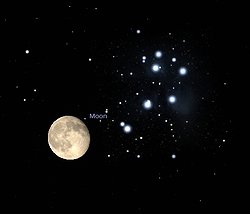 Image courtesy of John Taylor and Stellarium
Lastly, whether you’re choosing your first telescope, setting up gear, tracking down night sky objects, or diving into astrophotography, just ask at:
http://ncmrrimrockobservatory.space/contact/
• • •
John Taylor is an amateur astronomer who lives in Hayden.