
WSD closes parking area amid auditorium concerns
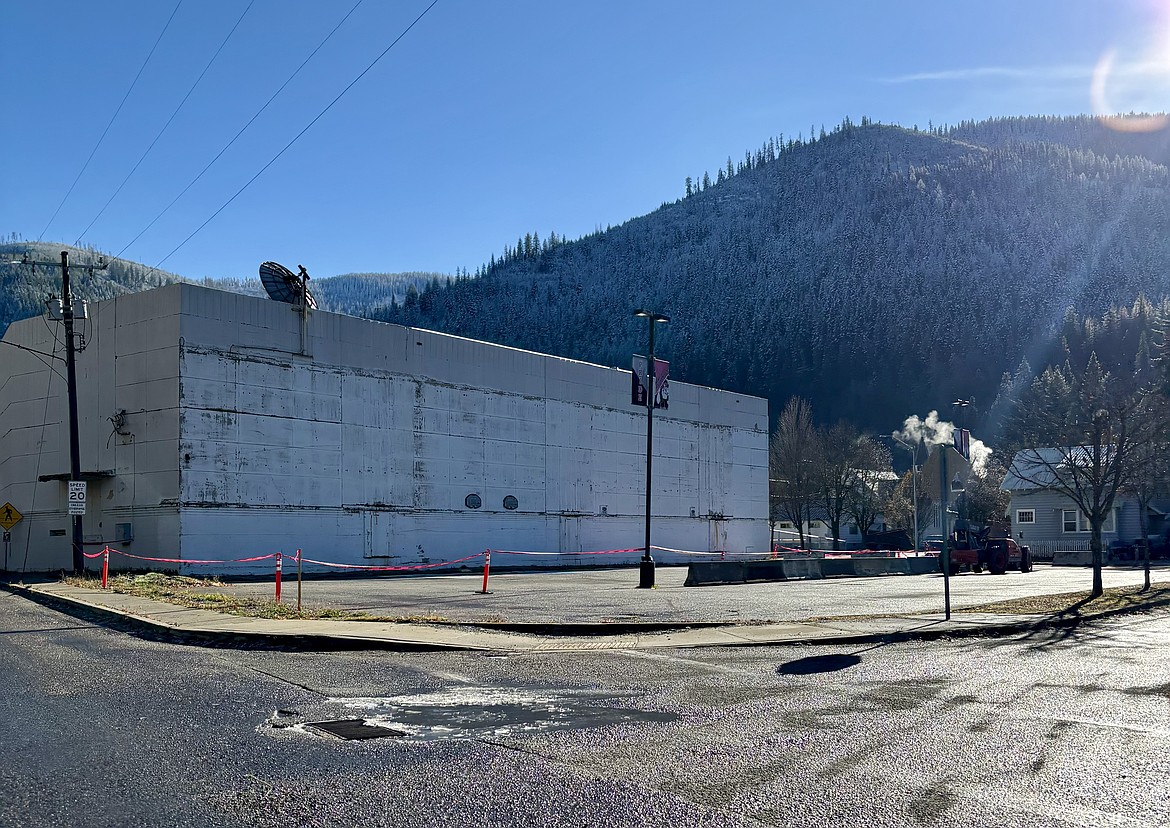
The student parking lot at Wallace Jr.Sr. High School has been partially closed due to growing concerns over the neighboring civic auditorium building, which is reportedly showing signs of structural failure.
Rad McDonald
WALLACE — Students at Wallace Jr./Sr. High School are being forced to park elsewhere as ongoing deterioration at the nearby Wallace Civic Auditorium has escalated.
Wallace School District Superintendent Todd Howard said the building has shown "significant signs" of structural failure during the past two weeks, particularly in the roof and truss system supporting the gymnasium's distinctive arched roof.
The student parking lot sits immediately west of the aging structure, prompting district officials to close most of the area as a precaution.
"From the outside of the building you can see where the north end of the room has started to collapse and the interior ceiling has begun to sag," Howard said. "The failure is occurring along the west wall that faces the student parking lot. To ensure student/public safety, we want to keep everyone out of that area and out of the facility itself."
The latest deterioration adds another chapter to a yearslong struggle over the future of the Civic Auditorium, one of Wallace's most recognizable historic buildings.
The auditorium is the last major remnant of the former Wallace High School complex. Most of the original school was demolished in 2003 to make way for the current Wallace Jr./Sr. High School, but community members successfully pushed to preserve the gymnasium and auditorium through a 20-year lease agreement that kept the building available for public use.
For years, the facility hosted concerts, class reunions, boxing cards and other community events. But district officials say maintenance issues began mounting in the late 2010s, eventually leading to extensive water damage, mold and structural deterioration. The building has since been deemed unsafe for public use.
The structure's decline has left the district facing difficult decisions. While many residents view the auditorium as an important part of Wallace's history, officials have said the cost of restoring the building has become prohibitive.
In 2023, consultants estimated that renovating the facility and bringing it into compliance with modern building codes would cost roughly $5.4 million, a figure district leaders said has likely increased in recent years. The auditorium, which can hold approximately 3,000 people, is also listed on the National Register of Historic Places.
The district has spent the past several years exploring potential solutions, including renovation, demolition and redevelopment of the site for community use. Last year, trustees approved pursuing demolition of the auditorium and the adjacent east academic wing, with estimated demolition costs hovering around $1 million.
Hoping to offset those costs, the district sought funding through the Environmental Protection Agency's Brownfields program. However, officials announced earlier this year that the application narrowly missed the funding cutoff by a single point, leaving the district without the resources needed to move forward.