
PF mayor unveils 20-year vision for a growing Post Falls in State of the City
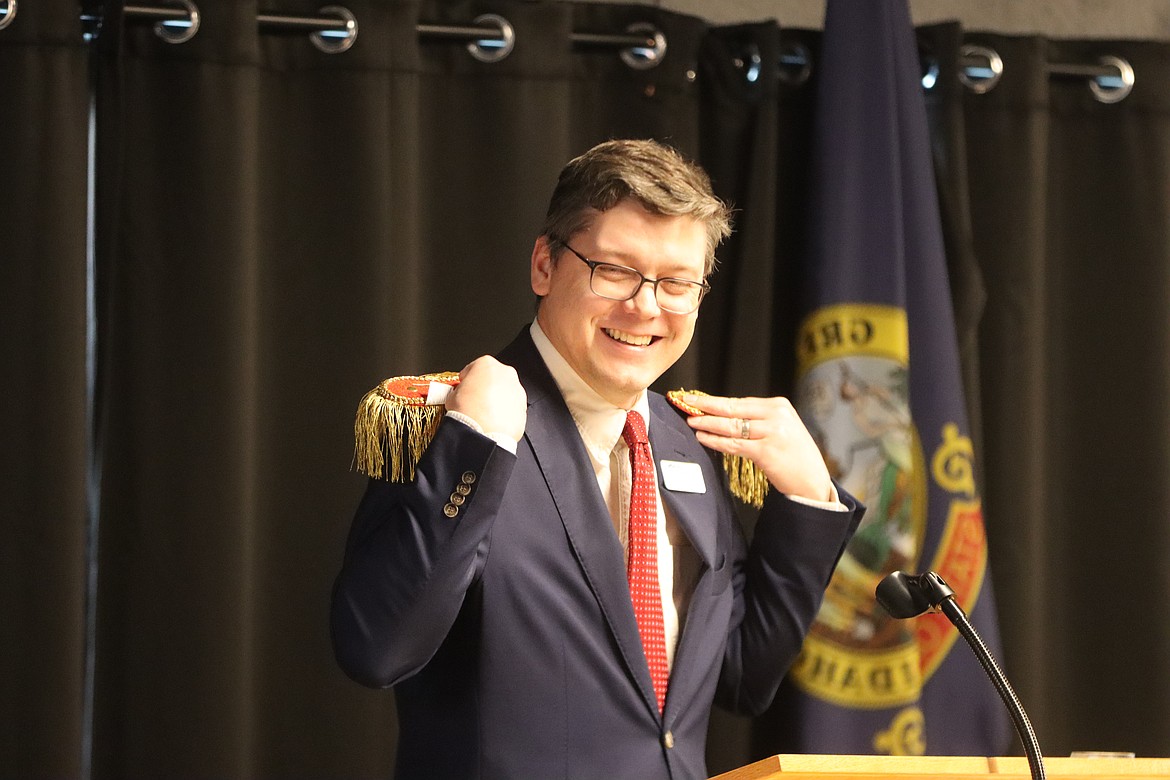
After a mix-up with promotional materials dubbed Mayor Randy Westlund as "Major" Randy Westlund, the Post Falls City Council purchased two military-style epaulettes for Westlund as a gag.
JACK DeWITT/PRESS
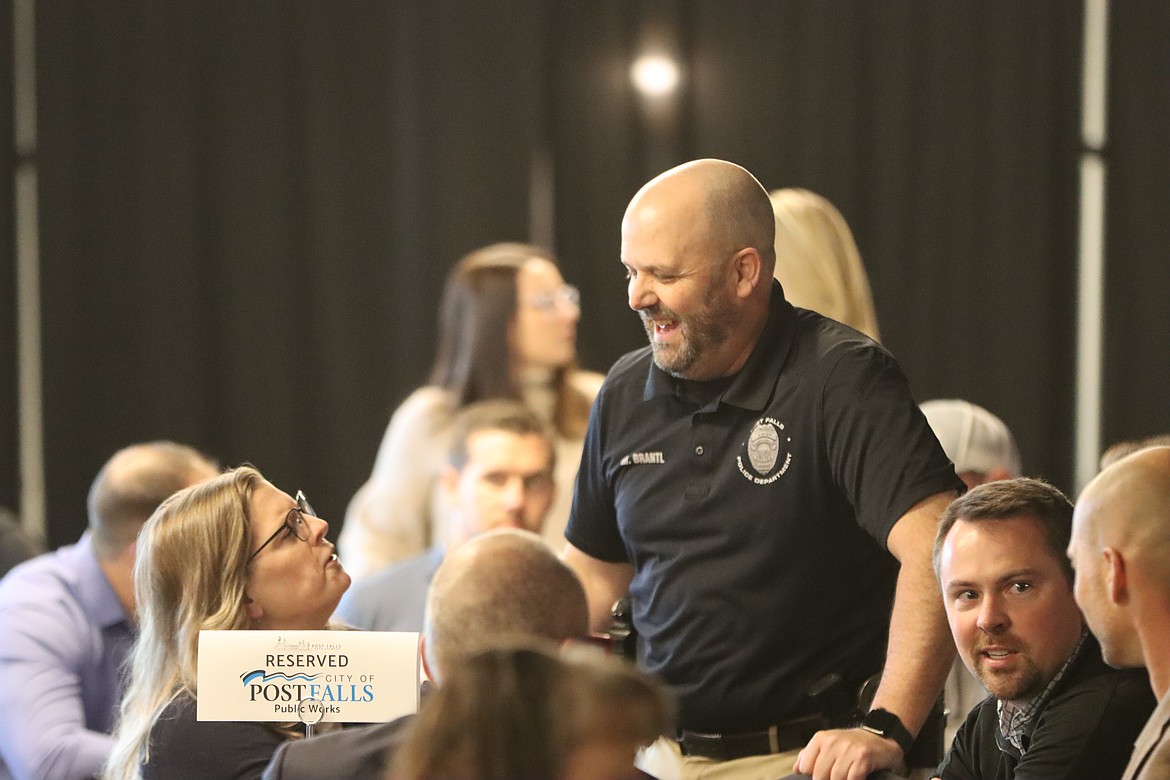
Post Falls Police Chief Mark Brantl mingles with the Post Falls Public Works Department table before Mayor Randy Westlund's "State of the City" speech on Tuesday.
JACK DeWITT/PRESS
POST FALLS — Mayor Randy Westlund cast a vision for the city’s next two decades during his State of the City speech Tuesday.
He said the city is on track to double in population by 2045. That growth, he said, demands intentional choices now. He also highlighted downtown development, nuclear energy and financial discipline.
“What are we building? What are we leaving behind?” Westlund asked the crowd of about 150 at the Club at Prairie Falls. “These are the really important questions, because if you don’t know where you’re going, you’re never going to get there.”
Establishing a downtown in Post Falls topped his list of priorities. Westlund described a future in which the vacant land in downtown is filled with coffee shops, facades and outdoor dining.
“In 20 years, we are going to have the most amazing downtown,” he said during the Connect4Lunch hosted by the Post Falls Chamber of Commerce.
He spoke about filling in rail lines with walking trails, adjustments to the North Idaho Centennial Trail, and establishing more “3rd Places.”
“When we have downtown that has spaces like this, whether it’s a courtyard, or a pub, or a coffee shop, people go and build a community, they build a culture,” he said. “That’s what creates the social fabric that we’re trying to build.”
To accelerate the process, the city is moving forward with an urban-renewal effort, aimed at installing sidewalks and street parking in advance of private development.
“Right now, you can’t walk from Spokane Street to the new Millworks development along Fourth,” he said. “We’re going to put in the sidewalks.”
Energy capacity was also important to Westlund. He talked about the Pleasant View industrial corridor, now a federal Opportunity Zone, as the logical place for a small modular nuclear reactor within the next decade.
“What I would like to see there is a small modular reactor within the next 10 years,” he said.
He said some units are the size of a shipping container and could be installed simply, or are “park and plug in.”
He framed nuclear power as essential to supporting manufacturing growth without driving up residential utility rates.
He said conversations with the University of Idaho and the Idaho National Laboratory have already taken place. Even a simple pairing of a reactor with a single industrial power user could free up existing hydro power for other needs, he said.
On housing, Westlund pointed to the city’s cottage and tiny-home ordinances and new state law that limits cities’ abilities to regulate or block “starter” homes. He said the goal is to restore the lower rungs of the housing ladder so young families can buy smaller, more attainable homes rather than being priced into perpetual renting.
Financial pressure was a recurring theme of his speech. Westlund said Post Falls faces no immediate crisis but must act now to avoid future shortfalls, driven by inflation and Idaho’s unique property-tax system that caps revenues by dollar total rather than a percentage.
“If things continue as they are, we are not going to be in a good position,” he said.
Westlund said he and the City Council reject the notion that tomorrow’s problems should be saved for tomorrow’s administrations.
“We’re unanimous in the commitment to actually do what is the right thing to do for the community, to not leave a mess for our children,” he said.
Westlund highlighted recent operational changes, including the addition of prayer to council meetings, a privately funded nativity scene at City Hall and more. He spoke about the recent removal of a utility assistance program in favor of a partnership with St. Vincent de Paul North Idaho.
“We can’t really walk alongside people in a way that a nonprofit can, and to me, this speaks to the importance of partnerships between nonprofits and the government,” he said.
Residents and businesses, he said, are merely customers of government, but “co-creators” of the community.
“We’re all working together on a broad project,” he said. “We’re all on the same team here.”
The speech closed with a short question-and-answer period in which Westlund elaborated on his nuclear ideas, downtown design preferences and the city’s comprehensive plan update.
He expressed gratitude to the business community for its contributions to the city.
“You are the ones who are building up the community and elevating us from maybe just a suburb, a bigger city, or a bedroom community to an area where we actually have industry and culture and business and interesting things happening,” he said.
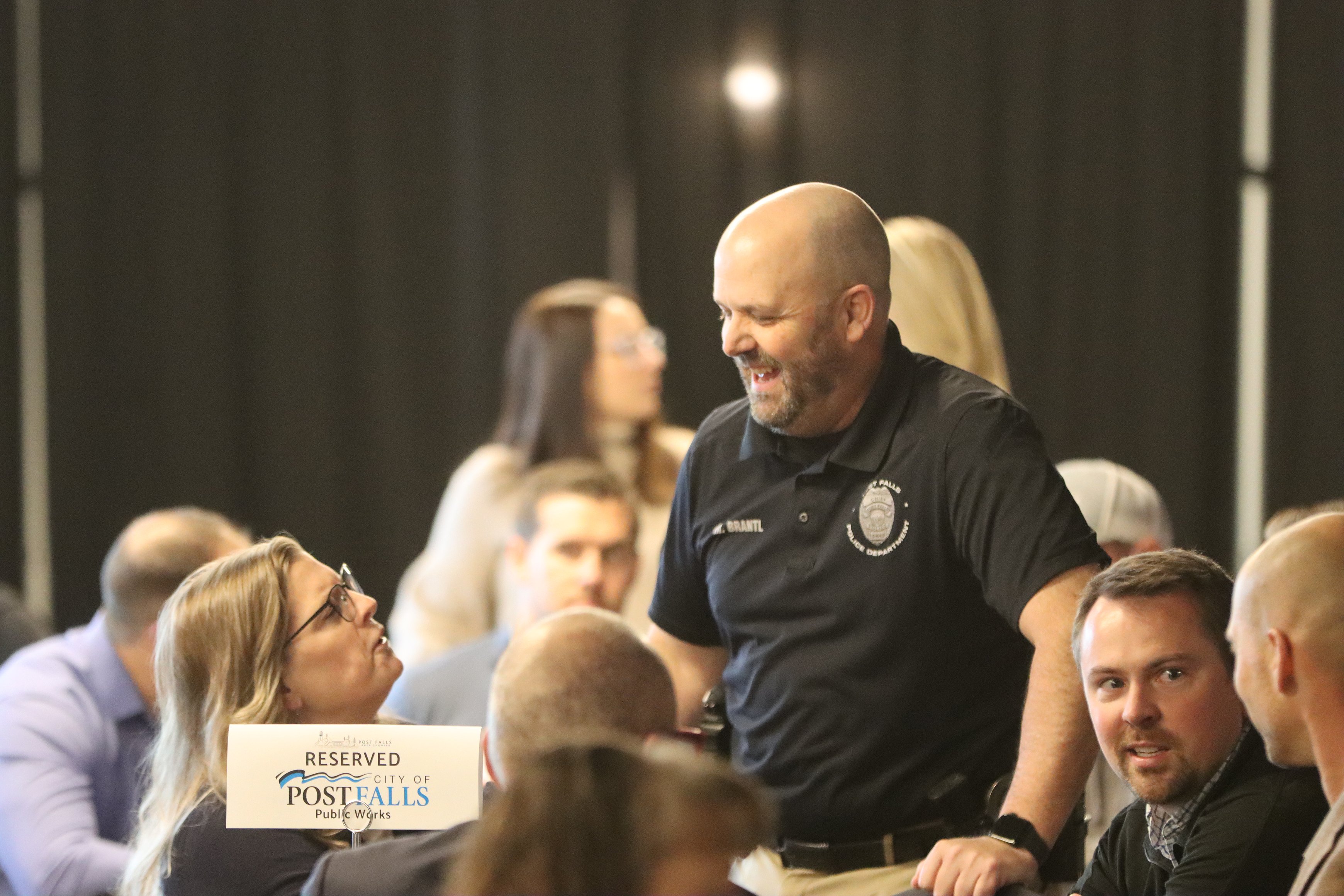 Post Falls Police Chief Mark Brantl mingles with the Post Falls Public Works Department table before Mayor Randy Westlund's "State of the City" speech on Tuesday.