
OUR GEM: Hold your ground! Don’t let your soil loose this fall.
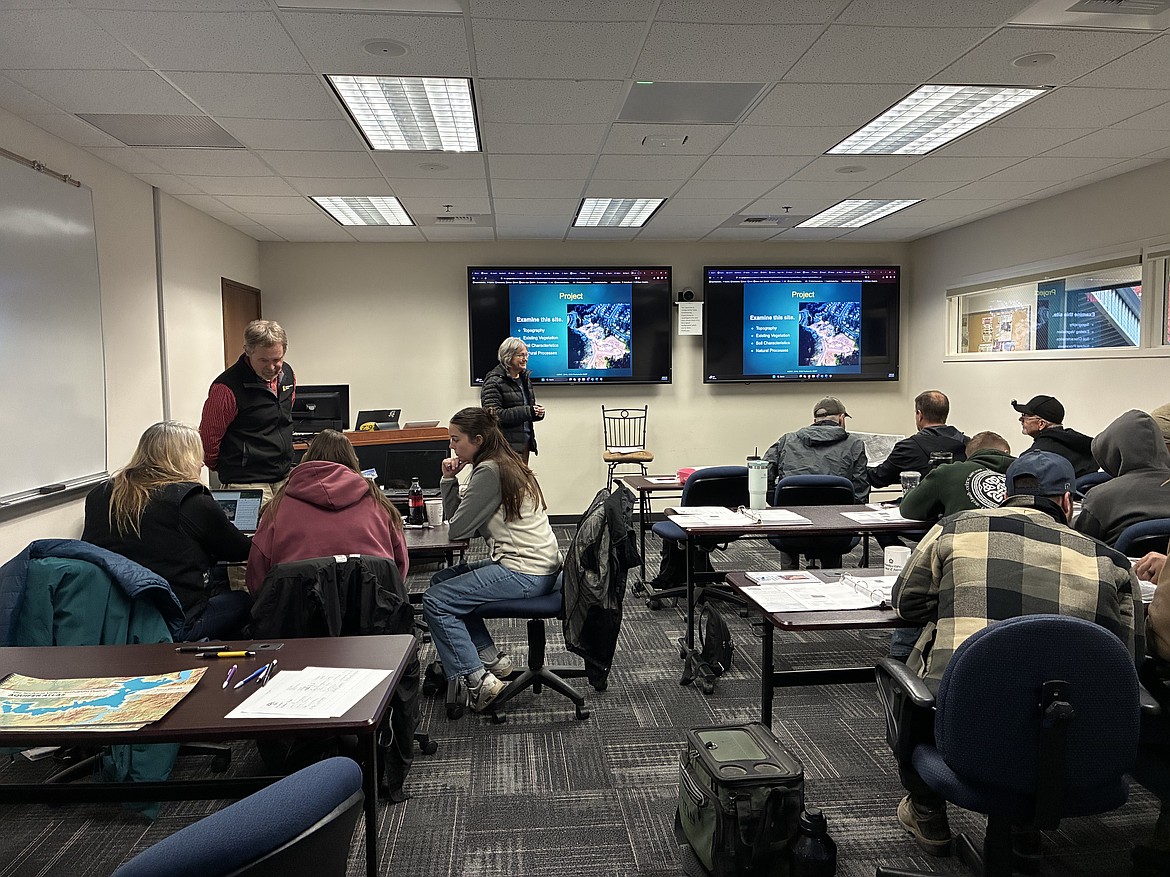
Photo courtesy of Our Gem.
Erosion and sediment control are critical aspects of responsible land management, especially in areas with sloping terrain and heavy precipitation, which is often the case in North Idaho.
With the return of fall rain, it’s important to cover and stabilize soils. This applies whether you are working on a construction site or simply putting your garden to bed for winter. If loose soil is on your property, gravity, wind, rain runoff, and snowmelt can move it elsewhere. Valuable topsoil is worth keeping in place. Loose soil can end up where we don’t want it.
The Problem
Anyone who has tried to grow vegetation, whether it’s grass, trees, a vegetable garden, or potted plants, knows the quality of the soil is important. To grow healthy plants, soil needs the right nutrients. Some areas are blessed with good topsoil containing rich organic matter and associated nutrients. This is often not the case, however and achieving rich, fertile topsoil takes effort. Methods such as composting or adding other amendments are often necessary. Because this takes money and effort, it makes sense to keep the soil where you want it, right?
Another reason to keep soil in place is that we can all benefit from it. Rain and snowmelt runoff, along with anything it picks up, drains somewhere and that somewhere is often a stream, lake, or river. Sometimes it goes through ditches and culverts first. The impacts of polluted runoff entering water bodies are well documented. Sediment alone can damage water quality, aquatic habitat and fish survival, and it is one of the largest pollutants impairing surface water in Idaho. Other pollutants, including nutrients, stick to sediment and can get carried into the water with it.
Nutrients attached to soil do the same thing in water as they do on land — they grow plants! This plant material then decomposes, using dissolved oxygen from the water in the process. Aquatic organisms, such as fish and the smaller organisms they feed upon, rely on healthy levels of dissolved oxygen to survive. Low dissolved oxygen in water bodies can also lead to conditions where nutrients previously bound to sediment can dissolve more readily, perpetuating the cycle of overfeeding the aquatic plants and algae. Coeur d’Alene Lake has millions of tons of metal-contaminated soil resting on the lakebed; low oxygen can also release these metals (lead, arsenic, cadmium and zinc) into the water column above.
The Solution
Keep soil in place to protect your hard work and investment while protecting the shared water resources we all enjoy. A variety of best management practices (BMPs) exist to prevent erosion and capture sediment that may become loose when erosion does occur, and proper BMP selection depends on your scenario. Here are a few examples:
• Reduce erosion by covering soil with vegetation, mulch, tarps, or other appropriate materials.
• Break up slope length and the erosive forces of surface runoff by using BMPs like straw wattles at intervals along the length of the slope.
• Install sediment control BMPs, such as straw wattles, silt fence, or gravel berms at the base of slopes to capture sediment before it enters drainage ways and waterbodies.
Of course, BMPs need to be appropriate for the scenario, installed correctly and inspected/maintained to be effective. Not everyone is an expert in this field, but plenty of experts are out there. Programs like the Panhandle Stormwater and Erosion Education Program (SEEP) provide education on the basic concepts of erosion, sediment and runoff control; commonly used BMPs; and proper BMP installation.
Panhandle SEEP
Panhandle SEEP is an education program offered in the Idaho panhandle since 2007. It’s a resource for contractors, planning professionals, landowners and anyone interested in learning more about BMPs to prevent erosion, contain sediment and manage stormwater runoff during and after soil-disturbing activities. The SEEP committee just held the last Basic SEEP class of this year on November 5th and 6th in Coeur d’Alene, but more Basic classes will be offered in the spring. An Advanced SEEP class is scheduled for December 11th and will focus on wildfire-related issues: forest management and home protection, as well as how to stabilize and rehabilitate soil after a fire has denuded it.
For more information about Panhandle SEEP, check out this website: https://iwrri.uidaho.edu/education-seep/. Whether you're planning a small dig on your property, a significant reshaping of the land, or need help buttoning up an area for winter, you can also visit the SEEP website to find your next certified contractor. Access a list of SEEP-certified individuals on the website: https://iwrri.uidaho.edu/wp-content/uploads/2026/09/SEEP_Certifications_20260925.pdf.
The Our Gem Coeur d’Alene Lake Collaborative is a team of committed and passionate professionals working to preserve lake health and protect water quality by promoting community awareness of local water resources through education, outreach and stewardship. Learn more about the Our Gem Collaborative at: https://iwrri.uidaho.edu/outreach-our-gem/