
A legacy fit for a King
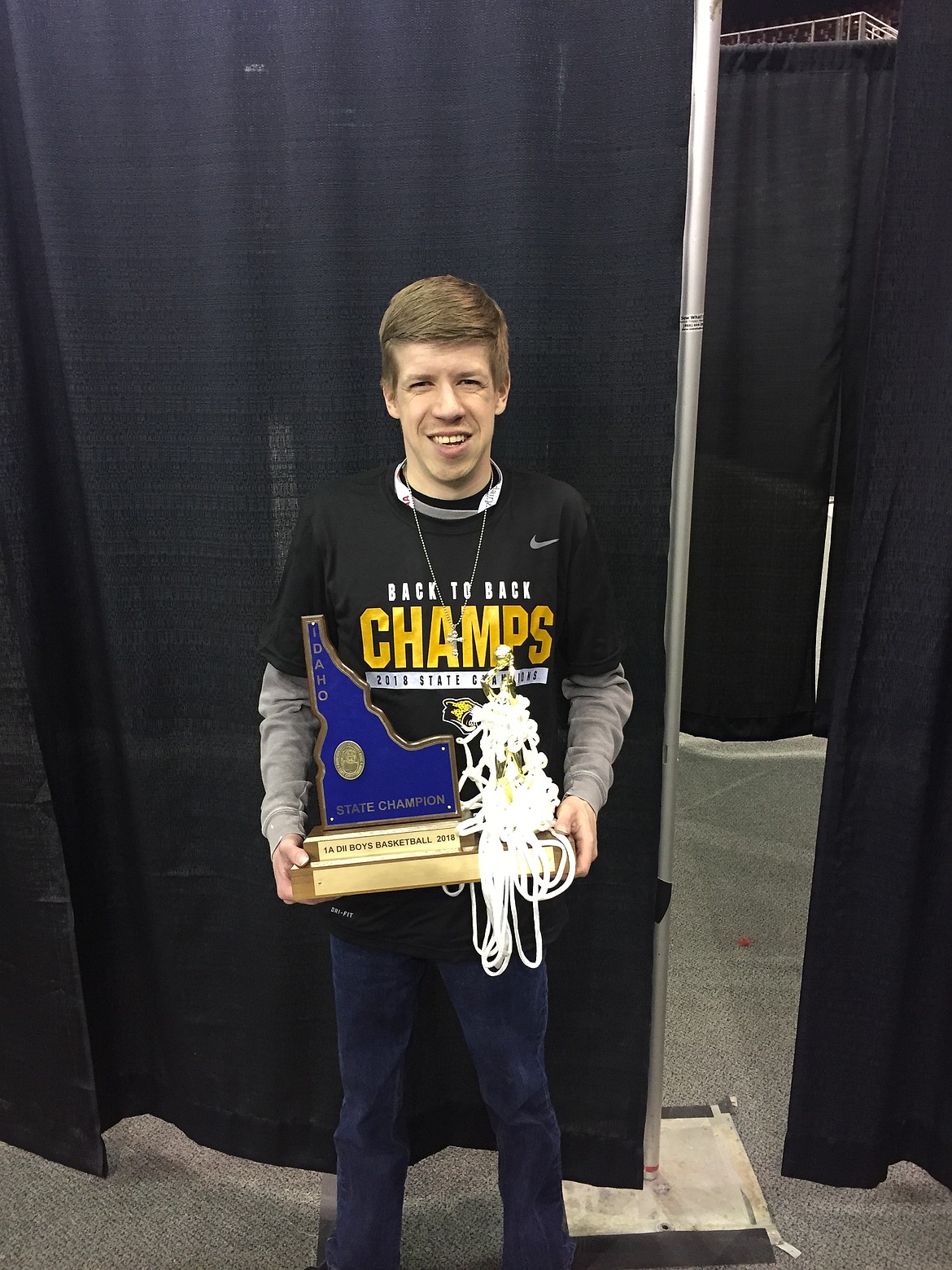
Anthony "A-Train" King holds the 2018 Idaho 1-A State Championship Trophy after traveling with Genesis Prep to Boise for the state tourney. A-Train has a hand in several state championships from schools across North Idaho.
Courtesy of Brandon Haas
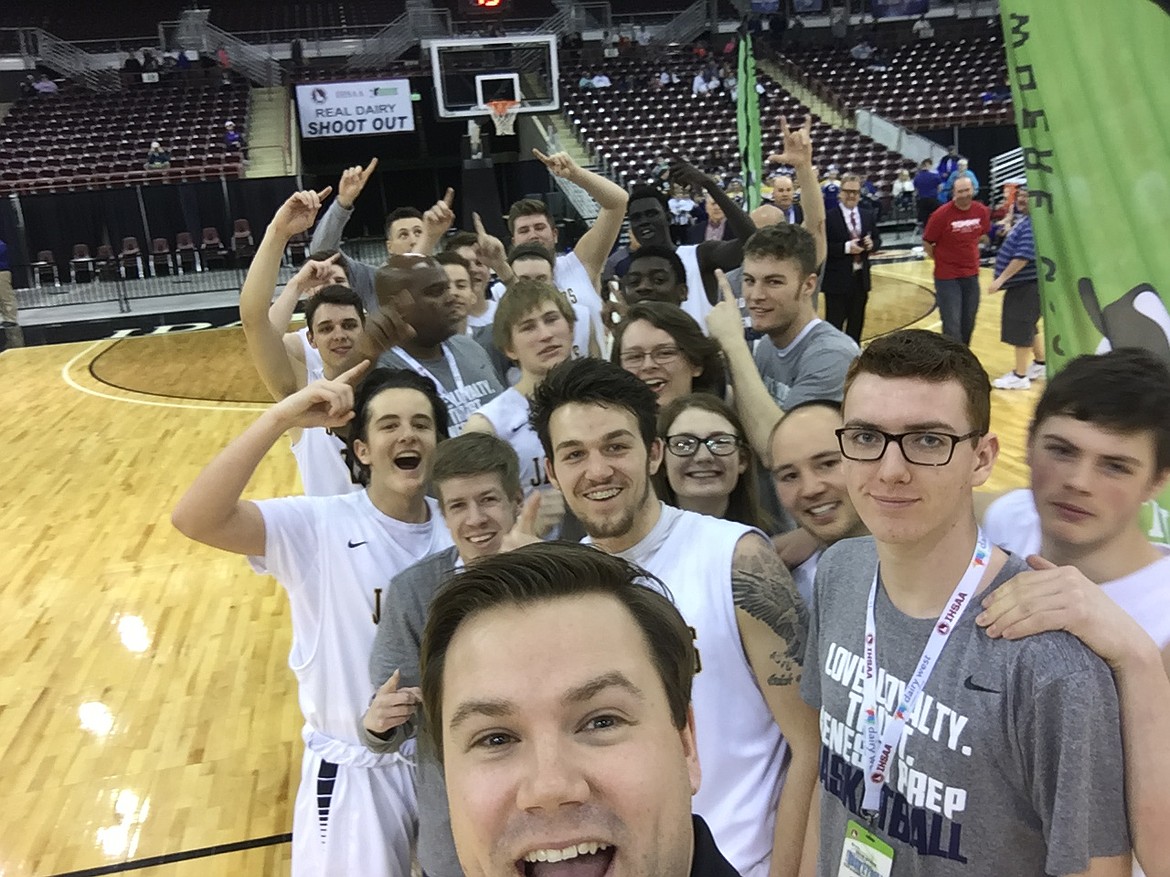
Coach Brandon Haas (bottom) snaps a selfie of the 2018 1-A State Champion Genesis Preparatory Academy Varsity Boys Basketball Team as they huddle around A-Train to celebrate their victory.
Courtesy of Brandon Haas
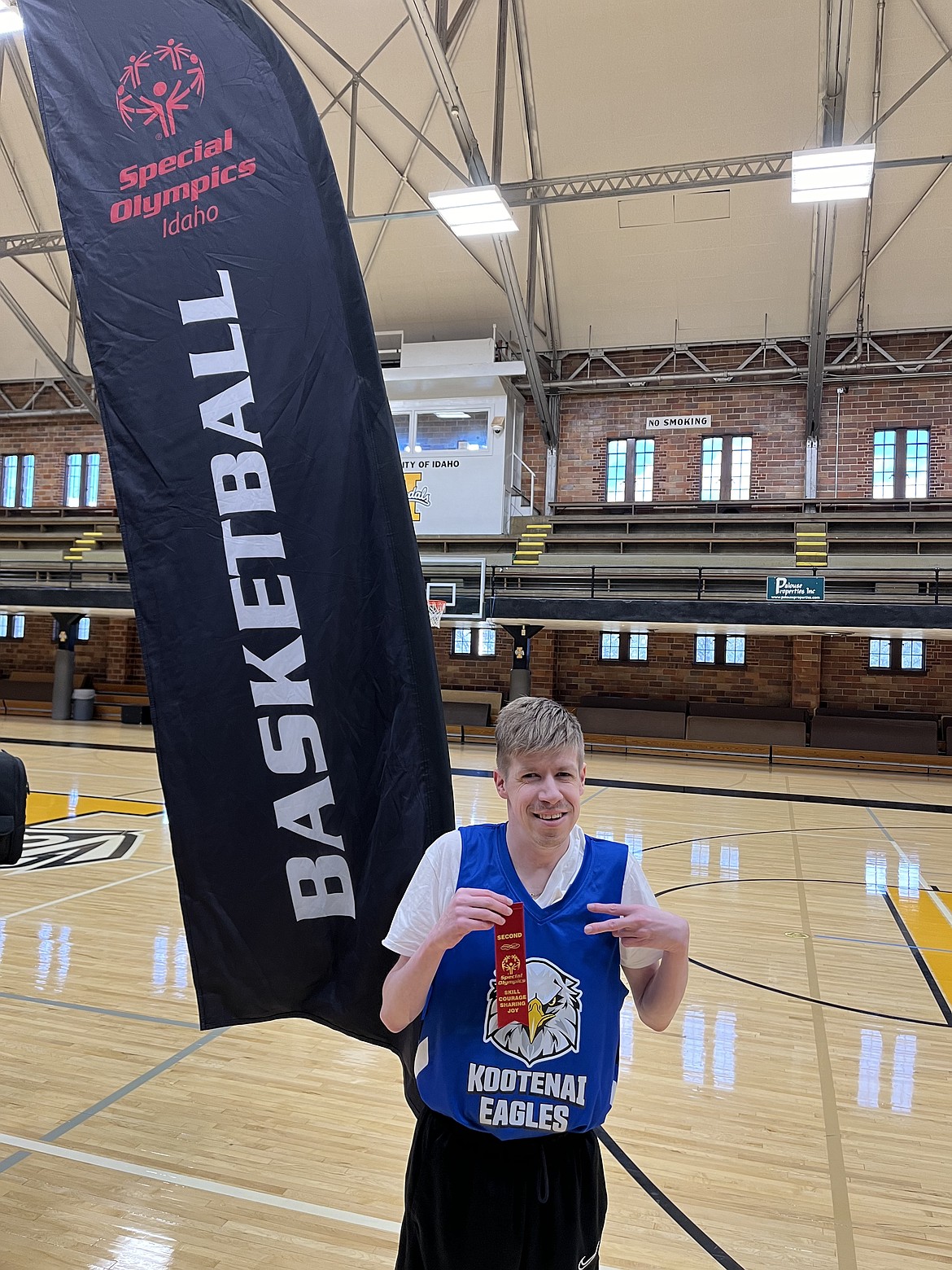
Later in life, A-Train got very involved in the Idaho Special Olympics. Close friend Brandon Haas said A-Train saw the opportunity to compete "as a blessing."
Courtesy of Brandon Haas
Former Post Falls High School girls varsity basketball head coach Marc Allert first noticed Anthony King while teaching first grade. Born with a diaphragmatic hernia, doctors gave King a life expectancy of two years. By the time Allert first saw him, King had already defied that expectation several times over.
King couldn’t compete in athletics the way the other kids could, but even then, the skinny boy stood behind fellow competitors and cheered them on.
That impulse never left him.
“He would be involved in the game without being involved in the game,” Allert said.
Over three decades, Allert watched King become a fixture at sporting events across North Idaho.
“There wasn’t a sporting event that he wasn’t at,” Allert said. “He was just so passionate about sports.”
Anthony King, known to most as “A-Train,” left a mark on North Idaho. Not through stats or scoring, but through an unrelenting love of competition that made him a fixture at hometown sports programs for more than a decade.
On Oct. 21, Anthony “A-Train” King passed away at 39. He is survived by his father, Bob King; his siblings, Ryan, Katie, and Madison; and his grandparents, Bob and Karen King, Mary Eastman, and Terry Eastman.
A public celebration of life for Anthony will be held Saturday, Nov. 14 at 11 a.m. at Real Life Ministries in Post Falls.
In honor of A-Train’s love for sports, his family asks anyone who wishes to attend to do so in their hometown or favorite sports team apparel.
Vice Principal Mike McLean, former head boys varsity basketball coach for the Trojans, grew especially close to A-Train. Over the years, they spent countless hours together, shared heartbreak and victory, and broke bread after games.
At a high school basketball tournament at Climate Pledge Arena in Seattle, Centennial High School had hosted the event. After a game, Post Falls headed to a nearby P.F. Chang’s. McLean was on the phone with a reporter, calling in the results, when he returned to the table, A-Train had already made his move.
“My lettuce wraps had come,” McLean said. “So A-Train had helped himself and ate all of them while I was actually on the phone — just classic A-Train.”
McLean said he was initially irritated at the move, but after seeing his wife, Jessica, and A-Train react to the joke, he eased up.
“I was like, you know, like, what the heck, man? Eating my food,” McLean said. “And then, of course, my wife, Jessica, laughed and the staff all laughed and A-Train laughed.”
That comfort and belonging grew from A-Train’s deep investment in the program. McLean eventually gave him the title of director of basketball operations, and the role gave him credentials and access at tournaments.
The title stuck because it matched the role he had already made his own.
“He actually had a lot of influence within the program,” McLean said.
That influence came from an authentic competitive drive McLean described as both “pure and intense.” A-Train celebrated wins hard, took losses hard, and held players accountable in the locker room while demanding the same effort he brought every day.
“I think A-Train was very authentic, which is one of the character traits that I think are the most sought after to be successful: being authentic and resilient, and he is the epitome of both,” McLean said.
McLean saw that competitive edge as a reflection of how A-Train valued his time. He would not waste it on mediocrity.
“There was a level of expectation that he brought to the program,” he said. “I only like it when we’re winning too. So we fit right in there.”
While a fierce competitor, A-Train never let the heat of competition get in the way of his kindness.
Genesis Preparatory Academy varsity girls head basketball coach Brandon Haas first met A-Train in sixth grade: a smaller kid with thick glasses, spiked hair, a deep voice and “a boatload of confidence.”
Their friendship grew as Haas continued to play sports, and A-Train continued to manage and support Haas’ teams. Haas said the only person who may have spent more time with him than his wife was A-Train.
What stood out to Haas was the way he made people feel.
“He just loved to be a part of the culture of good people,” Haas said. “What I can do is I can love on people and I can be a part of something bigger.”
Haas shared a story that reminded him of A-Train’s kind spirit. At a Spokane Indians game years ago, on A-Train’s birthday, a foul ball came their way. Instead of keeping it, A-Train and Haas handed it to a little girl sitting behind them.
“Just another way of being selfless,” Haas said.
A-Train’s positivity was consistent even through personal hardship. When Haas faced Achilles surgery, A-Train reframed the moment by noting he had already undergone two. The perspective stuck, and Haas later watched A-Train coach alongside him at Genesis Prep, always closing practices with encouragement rather than critique.
Allert said A-Train’s ability to connect with people, inspire them and encourage them is what made every interaction with him special.
“When A-Train was there and A-Train was coming to you, you’d done something,” Allert said.
“It was special to him, but it made the other kids feel really special too.”
Players and fans returned the loyalty because they knew he had their backs. His presence became synonymous with success.
“If A-Train was consistently on your sidelines, you knew your program was doing pretty well,” Allert said. “If he was on your sideline, you were good.”
McLean, Haas and Allert made it clear that, despite health struggles, A-Train couldn't be kept off the court for long. Allert called him “tougher than nails.” He repeatedly beat poor prognoses, returned from hospital stays, and kept showing up.
“He just had a will to live and he’d just beat the odds over and over again,” Allert said.
His legacy, they all said, rests in the rare combination of traits that defined him: a competitive fire that accepted no excuses and, at the same time, a kind, joyful presence that made everyone around him better.
Allert called him the icon of the North Idaho sports world: universally loved by parents, coaches, referees and fans, and, most importantly, he loved them back.
 Coach Brandon Haas (bottom) snaps a selfie of the 2018 1-A State Champion Genesis Preparatory Academy Varsity Boys Basketball Team as they huddle around A-Train to celebrate their victory.
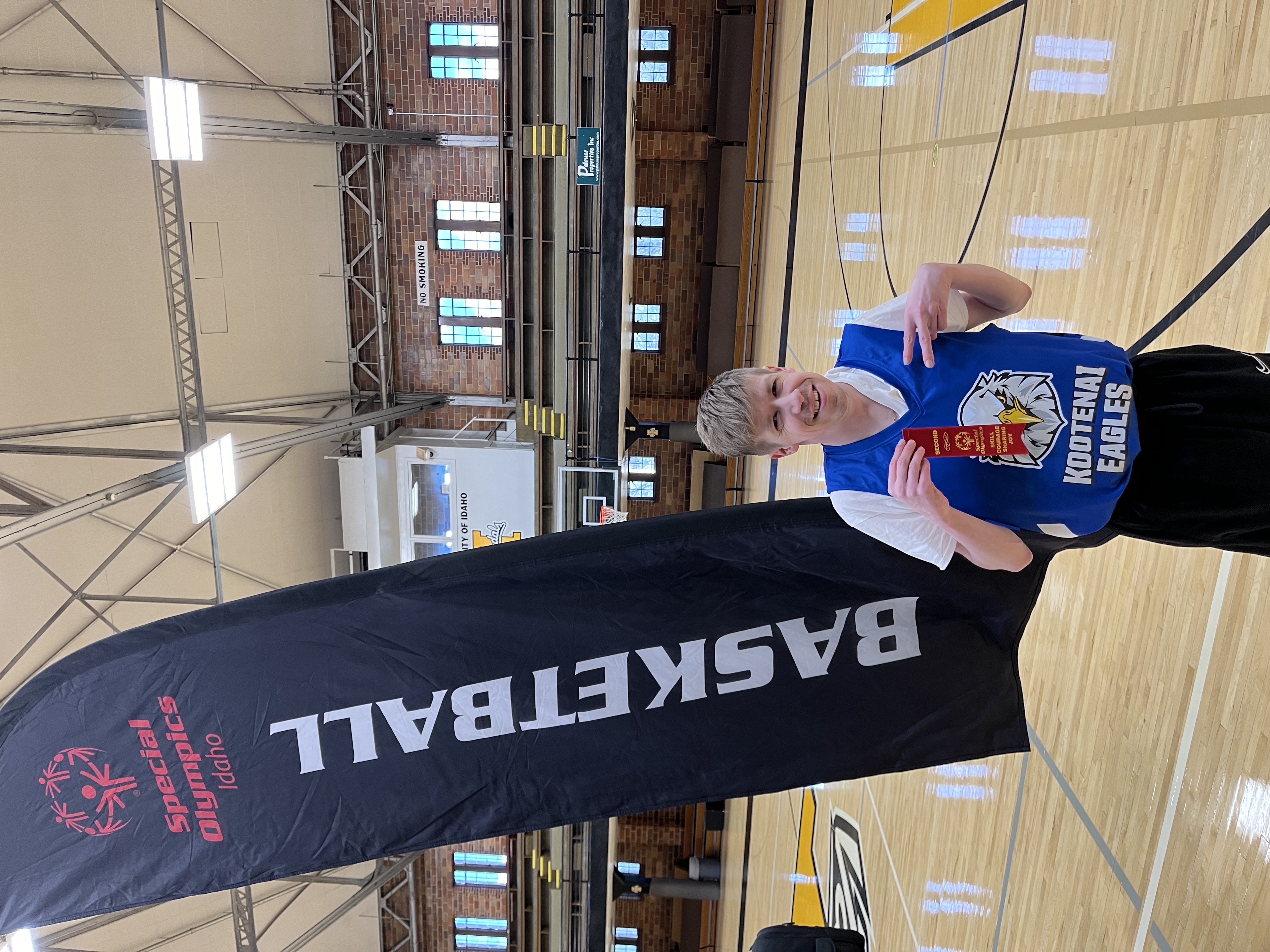 Later in life, A-Train got very involved in the Idaho Special Olympics. Close friend Brandon Haas said A-Train saw the opportunity to compete "as a blessing."