

OUR GEM: Leaves fall: Why we pick them up
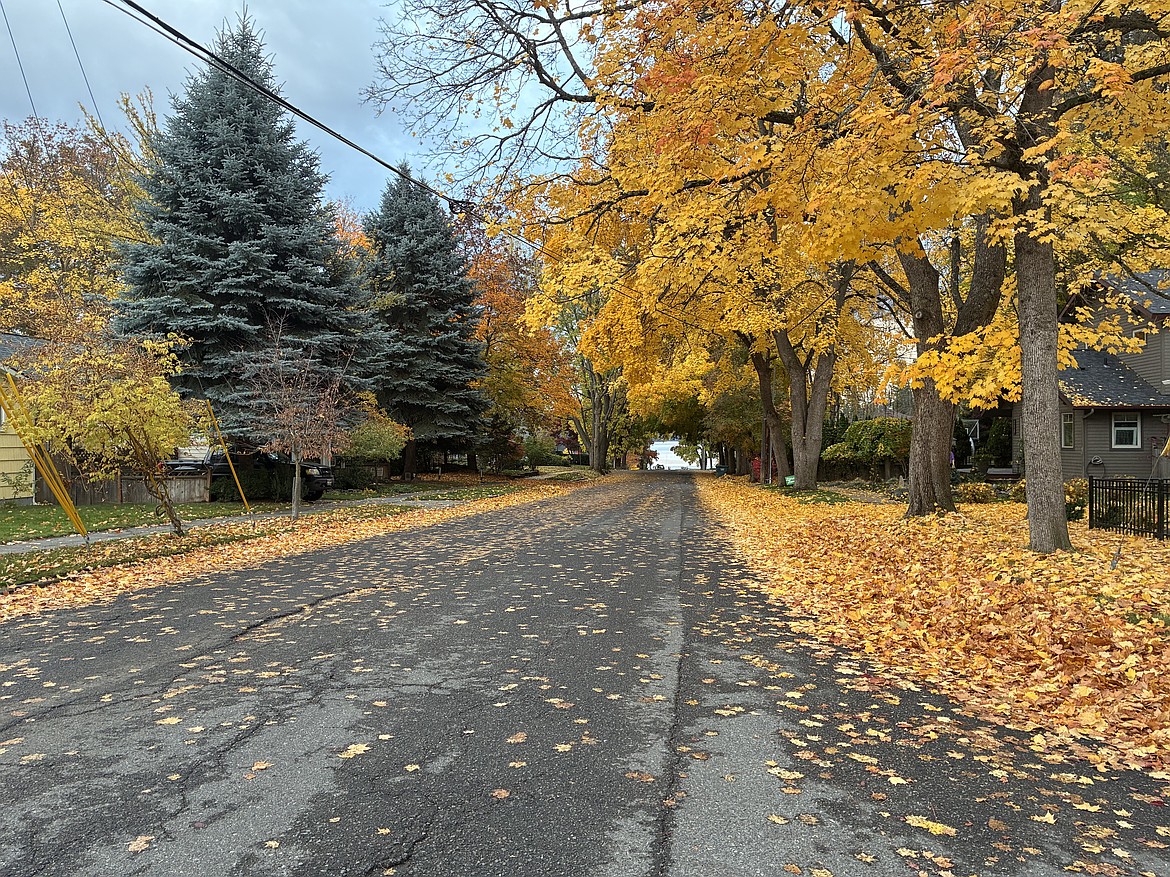
Leaves piled properly in the street for pickup, leaving space along the gutter for stormwater to pass. Photo courtesy of Our Gem.
The vibrant colors of fall mark the end of summer and our region’s transition into winter. Fall also marks the end of the growing season. What follows is mass decomposition and the subsequent release of nutrients into our ecosystem. This is a natural process and perpetuates the cycle of life. It supports the food web we all rely on.
If incorporated into the soil, decomposing plant matter provides vital components for life and growth in the spring. However, if not incorporated into soil (or compost for future soil application), the nutrients can reach local streams, rivers and lakes. Just like on land, nutrients promote biological growth in waterways. This is also a natural and vital process that supports the aquatic food web. However, there can be too much of a good thing and keeping balance in our aquatic environments is key to healthy water.
Excess nutrients in our streams, rivers and lakes contribute to algae blooms and can deplete aquatic environments of dissolved oxygen. Aquatic organisms need dissolved oxygen to survive. Low dissolved oxygen levels can also cause nutrients from lake and riverbed sediments to dissolve into the water column, perpetuating the problem. In the case of Coeur d’Alene Lake, the lakebed sediments contain metals from legacy mining activities, including lead, arsenic, cadmium and zinc. In low oxygen conditions, the solubility of these metals changes and they can migrate into the overlying water, where people and wildlife can be exposed.
A significant nutrient load comes from yard waste such as leaves. A 2016 United States Geological Survey (USGS) study in Madison, Wisconsin found that stormwater nutrient levels peak during fall months when large amounts of organic detritus litter streets. Even if the leaves themselves don’t reach the water, rain and snowmelt percolate through the detritus left behind after leaves have fallen, carrying nutrients through the streets and gutters and into storm drains. Thanks to the city of Coeur d’Alene’s Stormwater Volume Reduction Program, more storm drains are now directed into treatment systems to filter out pollutants before entering ground or surface water. However, there is still a large volume of stormwater that does not receive treatment before entering Coeur d’Alene Lake, the Spokane River and Fernan Creek.
Another beneficial program offered by the city of Coeur d’Alene is the annual leaf pickup program, or “Leaf Fest,” as the city refers to it. This program not only provides a valuable service to city residents. It also protects water quality in Coeur d’Alene Lake and the Spokane River and provides organic matter and nutrients to land in need of it. The city picks up about 900 dump truck loads of leaves per year that would otherwise wash through the stormwater system into our waterways or get bagged and sent to the landfill. Through a partnership with Kootenai County, the leaves are taken to the Coeur d’Alene Airport, where they are worked into ground that was deprived of its topsoil many years ago for use in yard remediation projects in the Silver Valley.
Join Leaf Fest!
Starting Nov. 1, residents can begin to rake their leaves and needles into the street for the city to remove, making sure to leave space between the leaf piles and the curb for stormwater to drain freely. This year the city will begin picking up leaves that are piled in the streets Nov. 12 at 7 a.m. They will start south of Sherman and move north.
Unfortunately, weather doesn’t always cooperate. City staff do their best to wait long enough for leaves to fall but not so long that they start freezing to the ground. It’s a delicate balance and a bit of a gamble.
There is only enough time for one pass through each neighborhood, so be sure to rake your leaves into the street in the next couple of weeks. Don’t miss your chance! Keep an eye on the city’s website to see when pickup will occur in your neighborhood. Once the city has completed pickup in your neighborhood, crews will not return. Do not put additional leaves in the street after pickup has occurred.
Here are some tips for Coeur d’Alene residents to participate:
• Move vehicles, trailers, basketball hoops, etc. off the street during pickup.
• Keep leaves one foot from the curb to allow for stormwater flow.
• Keep leaves away from storm drains.
• Do not mix branches, yard waste, debris, or other trash in with the leaves.
You can find more information and track the city’s progress here: https://www.cdaid.org/government/departments/streets-and-engineering/leaf-pickup/.
Learn more about the Our Gem Collaborative at uidaho.edu/OurGem