
ADVERTISING: ADVERTORIAL: Why an 'I Love You Will' may not be enough
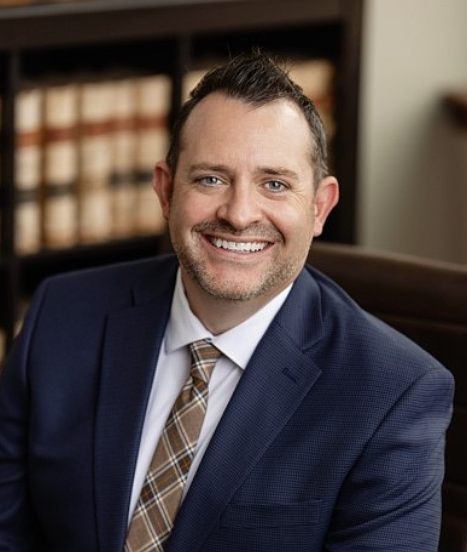
Robert J. Green
Most married couples write what estate planning attorneys call an “I Love You” will. It’s exactly what it sounds like: I leave everything to my spouse. If my spouse doesn’t survive me, then everything goes to our children. Simple. Loving. Logical.
And it works well — most of the time. The problem is the scenario almost no one plans for: what happens if you both die at the same time, or within days of each other?
What Idaho Law Says About Simultaneous Death
Idaho follows the Uniform Simultaneous Death Act. Under Idaho Code Section 15-2-613, if two people die in a common disaster and there is no clear evidence of who survived longer, each person is treated as having predeceased the other. In practical terms, your estate is distributed as if your spouse never existed — going directly to whoever is next in line under your will.
That sounds clean, but it can create serious complications depending on how your documents are written, who those alternate beneficiaries are, and whether your estate must now go through probate twice.
The 120-Hour Rule
Idaho law also includes what’s sometimes called the 120-hour rule. If a beneficiary dies within 120 hours — five days — of the person whose estate they were set to inherit, they are treated as having predeceased that person. The purpose is to prevent assets from passing to someone’s estate only to immediately go through probate again a few days later.
Well-drafted estate planning documents can include their own survival requirements that mirror or modify this rule. Many attorneys include a clause requiring a beneficiary to survive by 30 or 60 days before they inherit. If they don’t, the alternate plan kicks in. Without this language, you’re relying entirely on the default statutory rules.
Why This Especially Matters for Parents
If you have minor children, a common disaster scenario raises two urgent questions that go beyond asset distribution:
• Who will raise your children? A will should name a guardian. If both parents die without naming one, a court decides.
• Who manages their inheritance? Children cannot receive significant assets outright. Without a trust or a carefully named custodian, a court-supervised conservatorship may control your children’s money until they turn 18 — at which point they receive it all at once, with no guidance.
A trust that activates upon the death of both spouses can hold assets for your children’s benefit, distribute funds over time, and ensure the money is used the way you would have wanted — rather than handed to an 18-year-old in a lump sum.
The Fix Is Straightforward
A common disaster clause, a survival requirement, and a contingency trust are standard tools in a well-drafted estate plan. They don’t add significant cost or complexity, but they provide a complete answer to the question most couples haven’t thought to ask: what happens if we both go at once? And, a revocable living trust can address all these same issues in a way that will ensure no formal probate process is necessary after your death.
If your current will simply says “everything to my spouse, then to my kids” — with nothing more — it’s worth a conversation. The scenario may be unlikely. But the people it affects most are your children, and they deserve a plan that accounts for it.
My law firm is currently offering free telephonic, electronic, or in-person consultations concerning probating estates or creating estate planning documents.
• • •
Robert J. Green is an Elder Law, Trust, Estate, & Guardianship Attorney and the owner of Kootenai Law Group, PLLC in Coeur d’Alene. If you have questions about estate planning, probates, wills, trusts, powers of attorney, guardianships, Medicaid planning, or VA Benefit planning, contact Kootenai Law at 208-765-6555, [email protected], or visit www.KootenaiLaw.com.
This has been presented as general information and not as legal advice. Do not engage in legal decision-making without the advice of a competent attorney after discussion of your specific circumstances.