
Toews tries again to ease housing costs
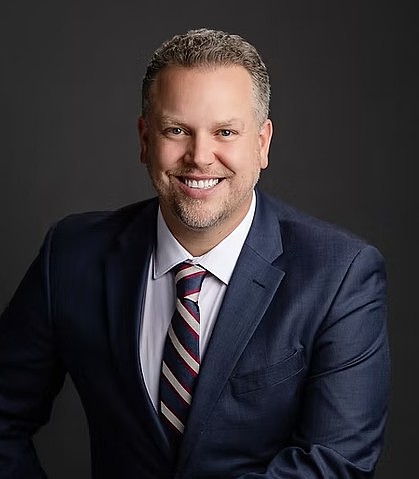
Toews
In February, state Sen. Ben Toews saw a suite of his bills aimed at Idaho’s ailing housing stock die in committee before ever receiving a full vote.
Not long after, the Coeur d’Alene Republican decided to regroup and then rebuild his legislative agenda.
That work paid off as two of the revamped proposals recently passed the Idaho Senate in what could become 2026’s biggest reform to juice the state’s straggling home supply.
The Senate now sends to the House bills designed to override local rules restricting duplexes and accessory dwelling units in Idaho cities, a move Toews hopes will help young buyers gain a foothold in the housing market and help older property owners better leverage their homes.
Both bills were co-sponsored by Sen. Tammy Nichols, R-Middleton.
If passed into law, the measures would:
• Legalize duplexes and twin homes on lots where single-family homes are already permitted. (S.B. 1353aa)
• Lift bans on accessory-dwelling units — smaller, secondary homes attached or adjacent to a primary residence — and allow homeowners to build them by right, providing the project meets health, safety and infrastructure standards. (S.B. 1354aa)
The bills, which emerged from a 2025 discussion in the Interim Committee for Land Use and Housing, had detractors, including many in Toews’ own party.
Some are worried about the impact on infrastructure, like sewer and water, in single-family neighborhoods. Others chafed at the idea of pre-empting local rules. And, as always, parking was a concern. Those issues led the Senate Committee on Commerce and Human Resources to vote 5-4 to keep all of Toews’ bills in committee on Feb. 18, potentially killing them.
But Toews reworked the language to assuage some of those concerns and submitted new versions in early March. The amended legislation cedes some authority back to local planners, who could determine whether an area is safe to add density and whether it can handle more people. The new text also details setback and parking rules, and it now exempts very small towns: Both laws would apply only to towns with 10,000 people or more, raised from 5,000 in the initial draft.
Toews: Idaho housing prices demand reform
Some cities, like Boise, already allow all this. But Toews felt it was important to extend the same rights across the state. He pitched both ideas as deregulation — a free-market approach to opening up more land for housing and pushing back against local regulations, he says, that have gone too far and stalling growth.
“The concept that you move into a neighborhood and everything stays the same is unreasonable,” he said on the Senate floor Friday. “There’s no way you can expect that.”
A bipartisan coalition agreed on both bills, though for different reasons.
Some senators viewed the bills as a restoration of property rights, which they said cities had trampled on through restrictive zoning.
“It doesn’t seem like it’s taking away local control, but restoring it,” said Sen. Brandon Shippy, R-New Plymouth. “What I mean by that is restoring it to the most local you can get, which is the property owner.”
But Friday’s debate further highlighted a growing worry among Idahoans: housing for the state’s next generation. The median list price for a house in Idaho has more than doubled in the past 10 years, according to data from the Federal Reserve Bank of St. Louis, reaching $565,000 in January. That’s roughly double what you would have paid in March 2017.
Sen. Jim Ruchti, D-Pocatello, said his constituents are worried about whether their children can stay in the state. He called housing affordability the concern he hears most often. “We’re not fixing it,” he told his colleagues during a debate over the ADU bill.
“We’re not even trying, frankly.”
While he said Toews’ approach wasn’t perfect, he was eager to try.
“We’ve been found,” Ruchti said. “We hear that all the time on this floor: People have figured out what a great state this is. I’m actually one of the people who wish we’d been found a little less, because I worry we’re losing some of what makes us so special.”
Nichols, a co-sponsor, acknowledged the limitations of the bills she voted for on Friday, but said they are a start.
“This won’t be the be-all and end-all,” she said. “I’m sure we’ll revisit this in the future."