
‘Harmful materials’ law advances
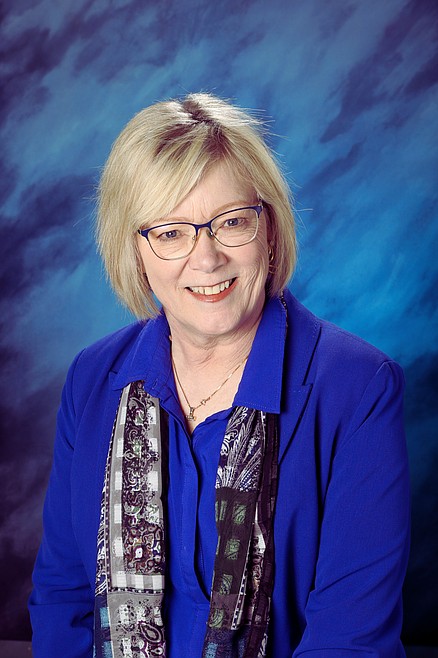
Lippert
BOISE — The House State Affairs Committee advanced two bills Thursday seeking to amend restrictions surrounding what books libraries can make available to minors.
The committee’s decision came after public testimony from individuals representing libraries across the state, who voiced overwhelming opposition to the legislation.
Michelle Lippert, who spoke on behalf of the Library Alliance of North Idaho, said there was concern that the bill’s introduction of the term “sexually explicit,” which applies to materials containing “erotic depictions of nudity, depicts sexual conduct or sado-masochistic abuse,” lacks clear legal precedent.
“As a result, each library or librarian could be forced to interpret the law themselves,” Lippert said. “A book considered acceptable in Coeur d’Alene could be considered illegal in Post Falls — laws should be clear and consistent.”
The pair of bills sponsored by Rep. Jaron Crane, R-Nampa, seeks to amend the Children’s Schools and Library Protection Act, enacted in 2024. Under this law, public and school libraries were required to make a request form available to have materials moved to the adults-only section if they possess content considered “harmful to minors."
Crane said the new legislation seeks to address both pending and past decisions in U.S. courts, with one applying to Idaho’s current law and another addressing what Crane framed as an adjacent law in Texas.
In the case of Idaho’s law, the U.S. Ninth Circuit Court of Appeals ruled in January that the Children’s Schools and Library Protection Act’s “context clause” was “overly broad” as a work would have to be determined to be obscene with respect to both “minors of different ages” and the material's content as a whole.
That decision returned the matter to a lower court to consider a preliminary injunction, as reported by Idaho Education News.
Idaho Solicitor General Michael Zarian said to respond to this ruling, the proposed legislation makes amendments so that material with “serious literary, artistic, political or scientific value” is not considered “in the context in which it is used.”
Additional changes distinguished public schools from private schools, a change Zarian said was prompted by public schools, as an extension of government, having different speech standards.
Zarian argued that, since the state already dictates much of what is taught in public schools by setting the public school curriculum, choosing which materials are in public libraries and public school libraries is an extension of the government speech doctrine. This concept, established by the U.S. Supreme Court, holds that the Free Speech Clause of the First Amendment does not restrict the government from speaking for itself.
As a result, Zarian said that neither public schools nor public libraries are subject to the 1973 U.S. Supreme Court decision California v. Miller, which held that the First Amendment does not protect certain forms of speech. Private schools, however, would be subject to this decision, Zarian said.
Under what is now known as the “Miller test,” materials are harmful to minors when they appeal to the “prurient interest of minors," are "patently offensive” to adult community standards and lack “serious literary, artistic, political or scientific value for minors."
Several other changes in HB 810 revise existing definitions or newly define terms not present in the current statute. These include:
• Changes to the definition of “sexual conduct,” excepting depictions of breastfeeding, childbearing, medical procedures and other “nonerotic physical contact.”
• A new definition for “adolescent minors," at or over 13 years of age and under 18 years of age. That contrasts with the current law, which defines minors of all ages the same.
• A new definition for “sexually explicit” includes any material with erotic depictions of nudity, depictions of sexual conduct or sado-masochistic abuse. Exceptions to this definition apply to religious books, anatomical diagrams, and classical works of art.
Crane said these changes are a response to a 2025 U.S. Supreme Court decision on Texas’s age verification law, which blocked children from online pornography. In that case, the court upheld the Texas law, ruling in a 6-3 decision that age verification does not impede on adults’ First Amendment rights, as was reported by the Associated Press.
Public testimony on Thursday expressed overwhelming opposition to the changes, with the core argument among members of the public being that the legislation takes reading decisions out of individuals' hands and instead vests them in the government.
Kathy Griesmyer, director of policy affairs for the city of Boise, voiced opposition to the proposed legislation and, differing with Zarian, said the bill “abandons” the Miller test by introducing a broad “sexually explicit” standard on top of this precedent. She also contested Zarian’s assertion that governments can restrict public library materials as they see fit.
“Applying the government speech doctrine to public libraries would fundamentally undermine the role of the public library and society, and instead allow the legislature to decide what is suitable reading material,” Griesmyer said.
Jenny Emery Davidson, executive director of the Community Library in Ketchum, argued against the legislation, highlighting the cost the state has already incurred in litigating its current law.
“This has been a big mess for the state,” Davidson said. “It has created confusion for libraries and dissatisfaction for Idaho citizens who were not, in fact, clamoring for books to be removed from their access.”
After the vote to hold the bill failed, a motion from Rep. Joe Palmer, R-Meridian, to send the bill to the House with a “do pass” recommendation passed 10-2.