
The mysterious time capsule: A glimpse back to 1926
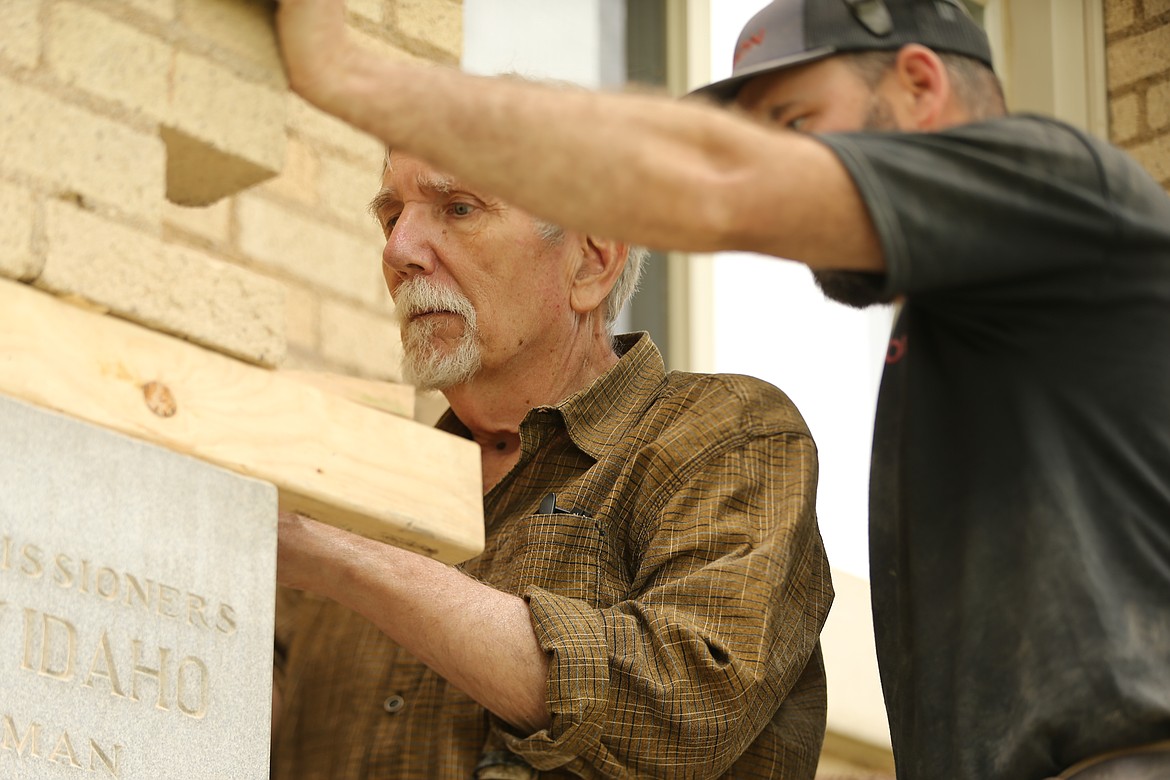
Walter Burns, chair of the Coeur d’Alene Historical Preservation Commission, examines the space where a time capsule was hidden inside a cornerstone of the old Kootenai County courthouse.
KAYE THORNBRUGH/Press
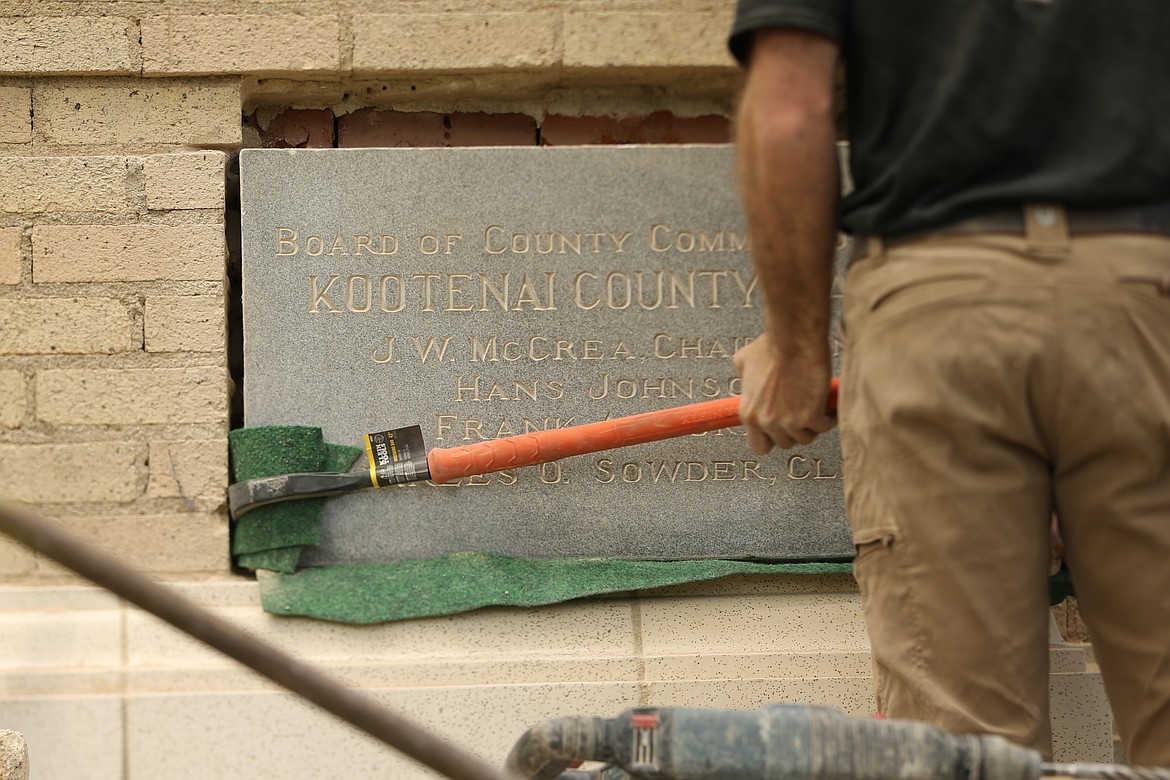
Masons remove bricks from around a cornerstone at the old Kootenai County courthouse.
KAYE THORNBRUGH/Press
Not long ago, I stood with others on the lawn of the Kootenai County Courthouse, watching the experts from Dobson Chimney and Masonry carefully remove a time capsule that was placed in the building’s cornerstone when it was dedicated in 1926.
As we waited, I looked around to see what other bits of history from a century ago surrounded me.
Across Government Way, I could see the old Roosevelt School. That had certainly been there in 1926. A block away, I could see the Hamilton House, the home of Coeur d’Alene’s second mayor. That had been there too. I knew that neighborhoods like the Fort Grounds, Garden District and Sanders Beach were around in 1926. Old Coeur d’Alene City Hall, the Masonic Temple and other buildings along Sherman were there, too. Ditto some of the old farmsteads scattered throughout the county.
In what is now a below-surface-level parking lot across Government Way, you can still see a portion of the long-sealed entrance to the tunnel where the old Milwaukee Railroad had become a subway. In 1926, nearby Government Way had not yet been constructed, and the rail tracks diving below-ground were surely a prominent feature across from the new courthouse site.
But these surviving pieces of history only tell part of the story.
By 1926, Coeur d’Alene had moved past its Wild West origins. The soldiers, saloons and brothels were long gone. Coeur d’Alene was now a respectable city. The stately new county courthouse bore witness to that.
The “Roaring Twenties” were in full swing, but Kootenai County wasn’t like the urban landscape of gangsters and wild Gatsbyesque parties that we see in the old movies. But there were bootleggers. Prohibition was in effect, and the county’s proximity to Canada, which was still “wet,” and the area’s dense forestation, made it an ideal locale to smuggle liquor and avoid the law.
When the courthouse was built, Kootenai County was still quite rural, home to approximately 19,000 people. Coeur d’Alene was a blue-collar town of around 7,000 souls. There were six major timber mills and four railroads. With the growing popularity of automobiles, tourism was becoming more of an economic driver.
But those cars were still sharing the roads with horses, and those roads were still largely unpaved. You could buy a new Model T touring car for roughly $295, but that was still out of reach for many folks. A new house would set you back less than $5,000. Or, if you were on a budget, you could buy a house much cheaper by ordering it from the Sears Catalog. The only catch was that it would arrive in thousands of pieces that you would have to assemble yourself.
You heated your house with wood or coal and kept your food fresh with blocks of ice cut from a local lake and delivered to your door by the ice man. Most homes had electricity, but home telephones were rare, and outhouses still dotted the landscape.
There were still steamboats on Lake Coeur d’Alene then, but they were in decline. Some had already been scuttled, and 1926 would be the last full year of operation for the Georgie Oakes, the “Queen of the Lake.” In 1927, that grand old boat would be set ablaze to celebrate the Fourth of July. Its remains still lie at the bottom of the lake.
So here we are, 100 years later, wondering what other glimpses of the past are hidden in the sealed copper time capsule that has lived in the dark of the Courthouse cornerstone for 100 years. The answers will come July 3 on the Courthouse lawn.
One mystery solved. Another awaits.
• • •
Walter Burns is Chair of the Coeur d’Alene Historic Preservation Commission as well as a member of the Kootenai County Historic Preservation Commission.
Inset Box:
The contents of the 1926 time capsule will be revealed at a July 3 community celebration on the Courthouse lawn. The event will begin promptly at 1:30.
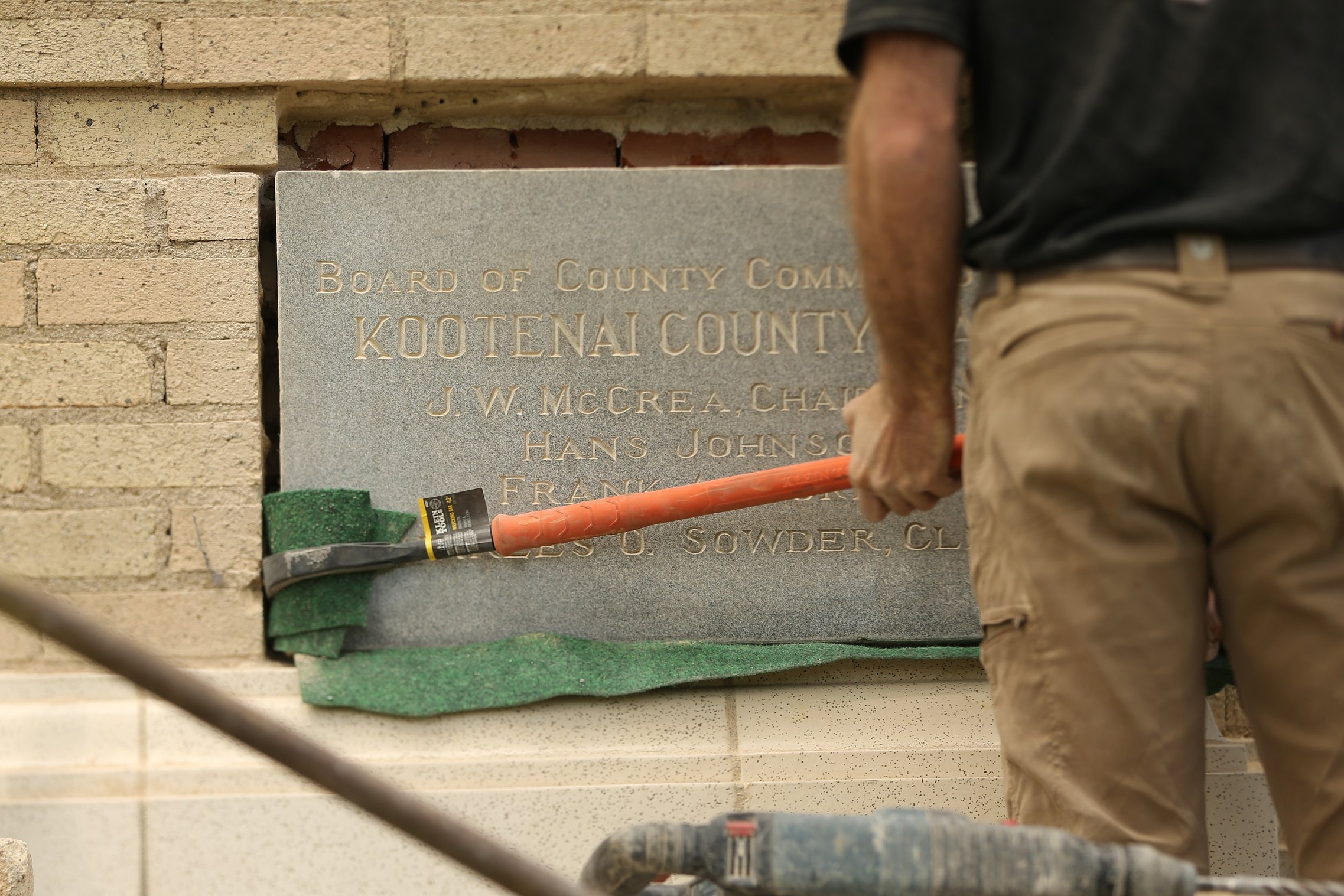 Masons remove bricks from around a cornerstone at the old Kootenai County courthouse.