

MY TURN: Are you a patriot?
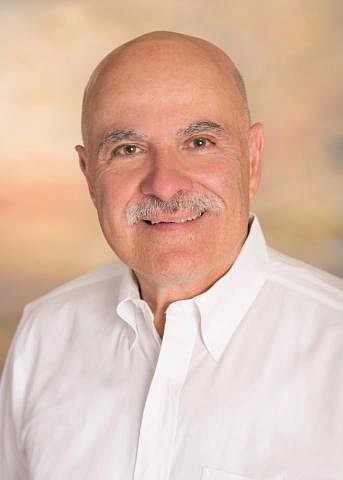
Fillios
Over the past 10 years, I’ve often asked myself, “Am I a patriot?” I’ve even wondered what a “patriot” is. Are we re-fighting the Revolutionary War? Is our nation under assault by a foreign adversary, or even a domestic one?
I was inspired to write as I recently listened to a broadcast interview with Dominic Erdozain, a visiting scholar at Emory University (a Brit), author of To Love a Country: The Problem of Patriotism in America. Listeners to the broadcast responded to the question from different walks of life. As one might expect, the responses varied as follows:
Savannah: As a mixed race Alaskan native woman, I will not call myself patriotic.
Tim: I’m a patriot because of my long-held belief in the idea of America…that we believe in equality.
Jim: I would describe myself as a reluctant patriot, a principled patriot, a pained patriot.
Lori: I don’t call myself a patriot. Even though as a middle-ages middle-class white woman, the U.S. has always been really good to me and my family, I just can’t believe in a country that talks about justice, equality, equal rights, but whose actions say the opposite.
Daniel: I think Patriot has almost become a dirty word in a lot of circles. When I hear Patriot, I think of January 6th rioter.
Eric: My parents came here after the fall of Saigon…I can honestly say that I owe the United States a debt of gratitude that goes beyond patriotism, in that the United States literally saved my family’s lives.
Upon having listened to the broadcast, I found myself asking, “Where do I stand?” So, I thought it best to consider our founders’ notion of patriotism and its benefits and dangers. It’s fair to say that most of our founders were anti-imperialists, generally opposed to the idea of professional armies, whose sentiments were probably best described by William Jennings Bryan during his presidential campaign of 1900 where he said, “…this doctrine of imperialism, of conquering other countries, is monarchy.” He also viewed the Declaration of Independence as “inherently internationalist because it says all people are created equal…”
What would he say about our current president’s overtures toward Canada and Greenland?
In his book, Mr. Erdozain reveals a different patriotism based on skeptics and radicals that is based on a comfort with dissent. He views American patriotism as “unfinished business.” He goes on to say that the founders believed in a “special destiny for America and used that belief to cover the cracks and the divisions in these 13 colonies. And of course, the biggest division of all, over slavery.”
Erdozain considers “… the Civil War as perhaps the strongest example…of how the concept of patriotism is literally played against itself depending on what side of the Civil War you were on.” He concludes that the Civil War “…created a Southern patriotism that didn’t actually exist before.” Erdozain believes that Southerners would be able to argue that they were patriotic for preserving the institution of slavery. Brings to mind my pastor’s having asked his wife’s southern family what they thought of the Civil War, only to having been met with the response, “You mean the war of northern aggression?”
So where does this leave me? My grandparents fled Bolshevik Russia in 1922, the end of the Russian Revolution, on horse drawn sled, through the Russian winter. They traveled for 40 days and nights, after a brief incarceration of my grandfather, to catch a freighter destined for their original homeland, Greece. My mother was two years old, accompanied by several of her siblings, less three who died of later preventable diseases — diphtheria, whooping cough and scarlet fever. They eventually emigrated to the U.S. in the 1930’s. I was raised to love this country and my biological dad (whom I never met) served in the U.S. Army for several years, in combat, in North Africa and Europe.
While attending undergraduate school in NYC, in arguably one of the most activist campuses in the country, I was somewhat ambivalent toward the Vietnam War. I was deferred until graduation then served in the Army National Guard until 1976. Having studied global politics, I concluded that it is my patriotic duty to confront my government, peacefully, when I feel it is heading in the wrong direction. I also realize that as a Christian, I must acknowledge that I am under authority, and unless that authority violates the Word of God, I am to obey.
So, I ask you, “Who are American patriots?" Is it those who substitute fealty to an individual, or, to the Constitution? Is it those who gave all in the service of our nation, and those who thankfully returned, and to the families that gave their sons and daughters in the service of our nation? How about our first responders? Our medical professionals? Our educators? Our neighbors who spend countless hours in their places of worship and community, helping others? The many Americans who speak up against injustice, facing unwarranted prosecution?
The oft quoted inscription on our Statue of Liberty says it best:
‘Give me your tired, your poor,
Your huddled masses yearning to breathe free…’
Emma Lazarus, 1883
Those tired, poor huddled masses fought in our World Wars, Korea, Vietnam, Iraq, and Afghanistan; today, our service men and women are on call for duty. Many were, and are not citizens, yet they loved this country for the freedom they never had. They loved it so much, they gave it their all. To all of us, citizens and immigrants, who grow our food, staff our medical and rest homes, and even create job opportunities, are grateful for the opportunity to be free. We are all patriots!
• • •
Chris Fillios lives in Coeur d'Alene.