
OUR GEM: IWRRI funds strategic Idaho water research
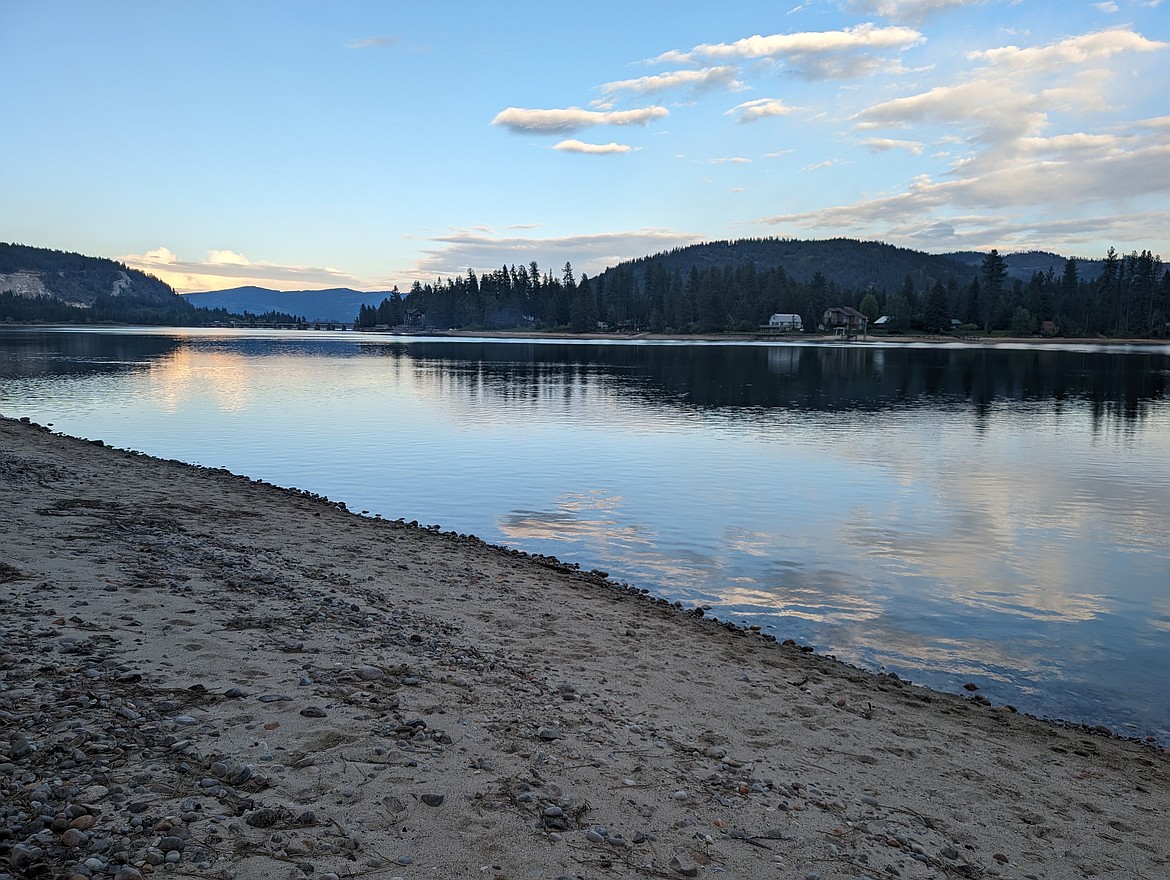
A view of the Pend Oreille River between Dover and Laclede.
Photo courtesy LINDSEY BEACHAM
New investments support collaborative science across Idaho’s public universities to improve water data, quality and long-term resource management statewide.
The Idaho Water Resources Research Institute (IWRRI) has prioritized and is backing several research projects involving the state’s three public research universities to address Idaho’s pressing water challenges.
Established in 1964, IWRRI is one of 54 U.S. water research and technology centers, conducting and directing research to support the water resource needs of the state and the entire Northwestern U.S.
In fall 2025, IWRRI allocated more than $580,000 for eight faculty-led research projects proposed by scientists with Idaho’s research institutions — University of Idaho, Boise State University and Idaho State University. In addition, state funds will support nine projects led by IWRRI’s staff scientists, covering priority research topics that are critical to the state but are not addressed by faculty proposals.
IWRRI’s Research Advisory Committee (RAC) identified and ranked water research needs across the state, and the Institute’s Executive Board gave final approval.
In North Idaho, the Research Advisory Committee identified three priority projects. One project will be led by university faculty, while two will be led by IWRRI staff scientists, reflecting a coordinated approach to addressing regional water challenges.
The faculty-led project, “Differentiating Recharge Zones and Primary Flowpaths in the Rathdrum Prairie Aquifer through Traditional and Nontraditional Groundwater Tracers,” will be led by University of Idaho faculty members Jeffery Langman, Eric Asten and Tim Link. The study will collect samples from 40 wells and use naturally occurring age-dating tracers to map groundwater recharge areas and flow paths. Results will help improve groundwater models used to sustain this critical aquifer.
The two additional projects will be led by IWRRI staff scientists. The “Pend Oreille Adaptive Lake Management Case Study” will use Lake Pend Oreille as a test-bed system to advance understanding of how operational hydrologic forecasting can be integrated into reservoir management, while also improving transparency and public communication around lake operations and decision-making.
The third study, “Sensitive Aquifer Recharge Area (SARA) Toolbox,” will integrate geospatial datasets into a decision-support tool to identify and prioritize sensitive aquifer recharge areas, supporting groundwater quality protection, recharge enhancement, and informed land-use and water management decisions.
Other, state-wide research projects such as the “Comprehensive Integration and Evaluation of Idaho Water Quality Monitoring” led by research faculty Angel Monsalve, Emily Bedwell, Gregory Moller, Clifford Swanson, and Casey Bartrem of the University of Idaho will also have direct impacts in North Idaho. The study will evaluate and, where possible, merge Idaho’s water quality databases to identify monitoring gaps and create accessible visual tools for agencies, researchers and the public.
“Idaho’s water future will be shaped by strong, collaborative science, and this year’s funded projects showcase what our universities and partners can achieve together,” IWRRI Director Kendra Kaiser said. “Researchers across the state are tackling challenges that affect every corner of Idaho, from aquifer recharge and snowpack monitoring to water quality and improved access to water data. By investing in this work, we’re equipping Idaho with the knowledge, tools and partnerships needed to make informed decisions and safeguard our water resources for generations to come.”
Funded research projects address the following themes:
• Water scarcity: Studies on consumptive use, new remote sensing products to monitor snowpack conditions, new snow data visualizations, adaptive lake management and evaluation of aquifer conditions.
• Water quality: Integrating statewide monitoring and aquifer recharge monitoring.
• Technology and data: Assessing Idaho’s hydrometeorological observation network.
• Water hazards: Modeling flood risks under uncertain precipitation futures.
• • •
Visit iwrri.uidaho.edu to learn more about all the projects and IWRRI’s progress on Idaho’s water research needs.
The Our Gem Coeur d’Alene Lake Collaborative is a team of committed and passionate professionals working to preserve lake health and protect water quality by promoting community awareness of local water resources through education, outreach and stewardship. Our Gem includes local experts from the University of Idaho — Idaho Water Resources Research Institute, Coeur d’Alene Tribe, Idaho Department of Environmental Quality, the Basin Environmental Improvement Project Commission, Kootenai Environmental Alliance, Coeur d’Alene Regional Chamber of Commerce and Kootenai County.