
Chief justice highlights loss of peer support services
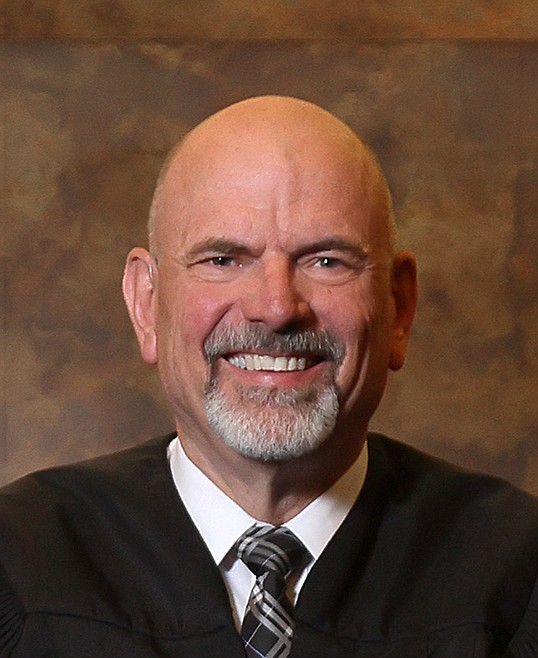
Bevan
BOISE — Idaho Supreme Court Chief Justice G. Richard Bevan went before the Idaho Legislature on Wednesday, painting a picture of a court system facing rapidly growing demand for its services.
In the court's annual update, known as the State of the Judiciary Address, Bevan first highlighted that the judicial branch's responsibilities remain varied and complex, with Idaho’s court systems handling matters ranging from criminal procedure to land use and civil litigation.
“We see people at some of the most difficult moments of their lives,” Bevan said, “where personal, legal and societal pressures intersect.”
He said demand for meeting Idahoans at these difficult moments has increased “unexpectedly” in the past two fiscal years. The 93,000 civil cases Idaho judges oversaw in fiscal year 2025 represented a 17% increase from the previous two years. The state’s court system has similarly seen a 60% increase in “high-value cases,” such as personal injury and medical malpractice, compared to two years ago.
What has been crucial for the court in meeting its increasing burden is the development of treatment court programs that divert individuals with substance abuse issues away from prison and jail and into treatment programs.
A critical component of these courts has been the availability of peer support services, which employ individuals who have experienced mental illness or recovered from substance abuse and are now able to offer encouragement to others in sharing their own experience.
Bevan spoke of a past graduate from one of Idaho's treatment courts, and of the impact peer support services had in turning their life around. In the individual's case, a mental health disorder paired with substance abuse led to his arrival in felony court.
Participating in Ada County's mental health court allowed the individual to achieve sobriety and receive consistent mental health treatment, leading him to graduate from school and succeed after hospitalization and prior treatment efforts had failed.
The Idaho Department of Health and Welfare ended funding for these same services last year in what was part of a series of behavioral health cuts in the state, an action that prompted a letter from members of the Idaho Sheriffs Association opposing the cuts and voicing concern for the increased burden law enforcement agencies would face with these services now gone. The letter described the loss of peer support services specifically as one that "will result in unfortunate outcomes for many."
Bevan said the state’s judicial branch has allocated resources within its existing budget to sustain peer support services through the fiscal year, but the June 30 end date is fast approaching.
“What happens beyond that point remains uncertain,” Bevan said, "and we are approaching that question deliberately.”
Bevan said the coming months would see the judiciary meet with mental health court judges and professionals to understand better what losing these services would mean and to determine “whether these courts can continue to operate as intended without them.”