

JFAC sets higher revenue number
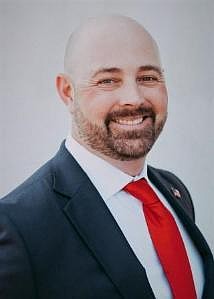
Tanner
BOISE — It was a scattered meeting, with committee members at times visibly and vocally confused, before the Joint Finance-Appropriations Committee arrived at a unanimous vote Monday to set the state revenue number.
The decision comes far earlier in the session than last year. It is just a few days after the Economic Outlook and Revenue Assessment Committee advanced a more optimistic revenue projection when compared to the one used by Gov. Brad Little for his budgetary recommendations at the start of the legislative session.
While an initial vote to "accept" the EORAC revenue report without setting a revenue number failed, an "adoption" vote to implement the report and the revenue numbers therein passed unanimously at the close of the meeting.
Moving forward, JFAC will operate around revenue projections of $5.7 billion for this fiscal year and $5.9 billion for fiscal year 2027. Compared with Little’s projections, EORAC's settled revenue numbers were 2.8% higher for fiscal year 2026 and 2.4% higher for fiscal year 2027. Though small in percentage terms, the state’s general fund budget exceeding $5 billion results in a difference of $152.5 million for this fiscal year and $137.4 million for the next.
JFAC co-chair Rep. Josh Tanner, R-Eagle, said EORAC's projections being higher than the governor’s, coupled with recent budget reports showing an uptick in corporate tax revenues, was indicative of the state having ample room in its budget. A sharp contrast with the state’s economic picture in recent months, prompting Little to order 3% executive agency holdbacks and recommend additional spending cuts for this fiscal year and the next.
A few Democratic members of JFAC said that if the projections hold, some of the cuts proposed by Little may not be needed to balance the state budget.
Sen. Janie Ward-Engelking, D-Boise, urged the committee to look at Little’s recommendation that public school teachers and state employees not receive a change in wages this year, a position that could change if revenues remain strong.
Sen. Melissa Wintrow, D-Boise, similarly said proposals for broader program cuts could be reduced or eliminated.
“I do appreciate the number that has been put forward because it’s an indication to me that we won’t probably have to make these deep cuts, that the money is there,” Wintrow said, adding the improvement could mean the state wouldn’t need to make the tens of millions of dollars in cuts to Medicaid that Little has proposed for this fiscal year and the next.
Tanner responded that an improved revenue outlook for the state wasn’t necessarily indicative of a reversal on Little’s recommendations or a lack of desire for cuts beyond what Little has proposed. Instead, it reflects the committee's view of the state's economic picture.
Tanner has notably expressed support for deeper Medicaid cuts in recent months and, while serving on the Legislature’s Department of Government Efficiency Committee during the off-season, he put forward a motion urging the Legislature to repeal Medicaid expansion in the state.
Rep. Chris Bruce, R-Kuna, said more thought should be given to those who aren't using state-funded programs scheduled for cuts but are still struggling with their current tax burden. Though stopping short of calling for tax cuts outright, he said the state “should not continue to spend what we’re bringing in,” with the burden of the average taxpayer in mind.