
JFAC's co-chair pushes back on Little's budget proposals
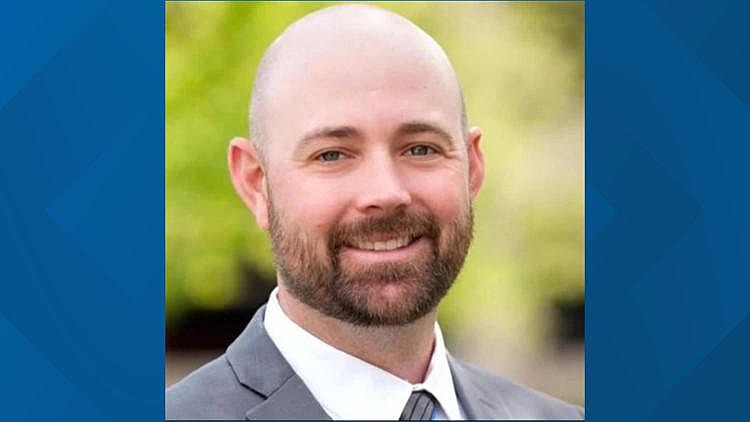
Tanner
BOISE — The newly composed Joint Finance-Appropriations Committee met for the first time Tuesday for an overview of the budget proposals laid out during Gov. Brad Little’s "Enduring Idaho” address Monday.
Little’s proposed budget features several large spending cuts and revenue transfers in order to meet Idaho’s constitutional requirement to not run a deficit, but members of JFAC from across the political aisle — including the body’s new co-chair Rep. Josh Tanner, R-Eagle — voiced concerns ranging from how state services would be impacted to whether a deficit could truly be avoided without further spending reductions.
In her walkthrough of these recommendations, Lori Wolff, the Idaho Division of Financial Management’s administrator, said the general philosophy of the budget did not represent instilling “new values for Idaho,” but was responding in a sustainable manner to wider developments in the state including a tapering off of the significant growth observed in the last few years as well as the hundreds of millions in tax relief provided to Idahoans, which reduced state revenue.
She highlighted continued improvements in Idaho’s economy in the areas of job growth and personal incomes, the latter of which is a trend that will not extend to state employees if Little’s proposals are adopted as is.
Sen. Janie Ward-Engelking, D-Boise, broached this particular aspect of the budget, highlighting how Little’s proposal that state employee compensation remain unchanged arrives as rising health care costs will be paid by these same employees.
Wolff responded that while employers and employees are paying for the same percentage share of insurance costs, these costs rising 14.5% means state employees will still see their insurance expenses increase by this percentage.
“Not only are we not giving our state employees or teachers an increase (in pay) … they’re going to be looking at more money out of their pocket for their health care,” Ward-Engelking said, adding this effectively functions as a reduction in their pay for the year.
Sen. Melissa Wintrow, D-Boise, questioned whether this change and others will result in “cost-shifting” for the state, where expenses in one area are cut only to show themselves in another part of the state budget. In the case of flat state wages and rising insurance costs, this could mean increasing costs for recruitment and retention. In the case of Medicaid behavioral health cuts, these could increase the burden on law enforcement responding to mental health crises or up the frequency of costly ER visits at hospitals in the state, Wintrow said.
Several JFAC members asked about the confidence level in the current revenue projections, given Little’s budget recommendations come with relatively low margins of $32 million for this fiscal year and $25 million for fiscal year 2027.
These numbers are well below the typical $200 million budget buffer in a “spending year,” but Idaho is in a “reduction year,” Wolff said. Rather than implementing deeper cuts, the state is betting that revenues will be strong in the future and lower margins can hold, she said.
As for indicators the state is looking at to project strong revenues, Wolff said one of the key improvements has been corporate tax revenues. While these revenues lagged for several months last year, she cited a new report from the Division of Financial Management showing the existing corporate deficit has been made up. As of December, the 2026 fiscal year year-to-date for corporate income tax returns improved to $328.8 million from the predicted $218.9 million.
Even with these revenues improved, the cost of conforming to the tax changes within the One Big Beautiful Bill Act is still unknown. Little’s budget recommendations put this number at $155 million, a middle ground of estimates from the Idaho State Tax Commission, which range from $115 million to $190 million.
Tanner said the selection of this number for conformity, improved revenue projections for the next year and thin margins within Little’s budgetary recommendations amounted to “balancing on hope.” If conformity costs ended up at the higher end of the Tax Commission's estimates, Tanner noted, the governor's budget would be in the negative.
Wolff said the budget recommendations and the numbers therein were the product of consultation with economists and tax experts. Even with their expertise informing the recommendations, it remains up to the Legislature whether it implements some of the proposed cuts that will require statutory changes, including those for Medicaid and the state’s Supplemental Learning Funds that have been offered to online schools.
If these weren’t adopted by the Idaho Legislature, the forecasted bottom line would naturally not align with the governor’s forecast, Wolff said.
Tanner followed JFAC’s first committee meeting of the year with a press release saying Little’s proposed budget “places Idaho’s long-term fiscal stability at serious risk.” Though not explicitly calling for Medicaid cuts beyond the $45 million Little proposed for fiscal year 2027, Tanner stated the program’s growth “is crowding out every other priority."
Wolff cautioned in the meeting, however, that more drastic cuts in this area and others could prove costly for Idaho long term, making the state less able to respond to growth when the need for reduction budgets passes.
“Sometimes cutting too deep makes it so that we cannot grow out of it,” Wolff said. “If we start cutting too deep into these budgets, we will not have the opportunity for continued growth and meeting some of the needs that we have around the state.”