

My Turn: Islamic State in Iraq and Syria (ISIS) raises its ugly head
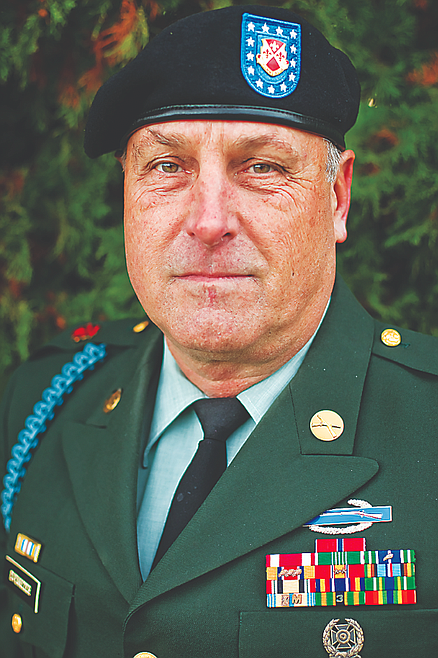
Evensizer
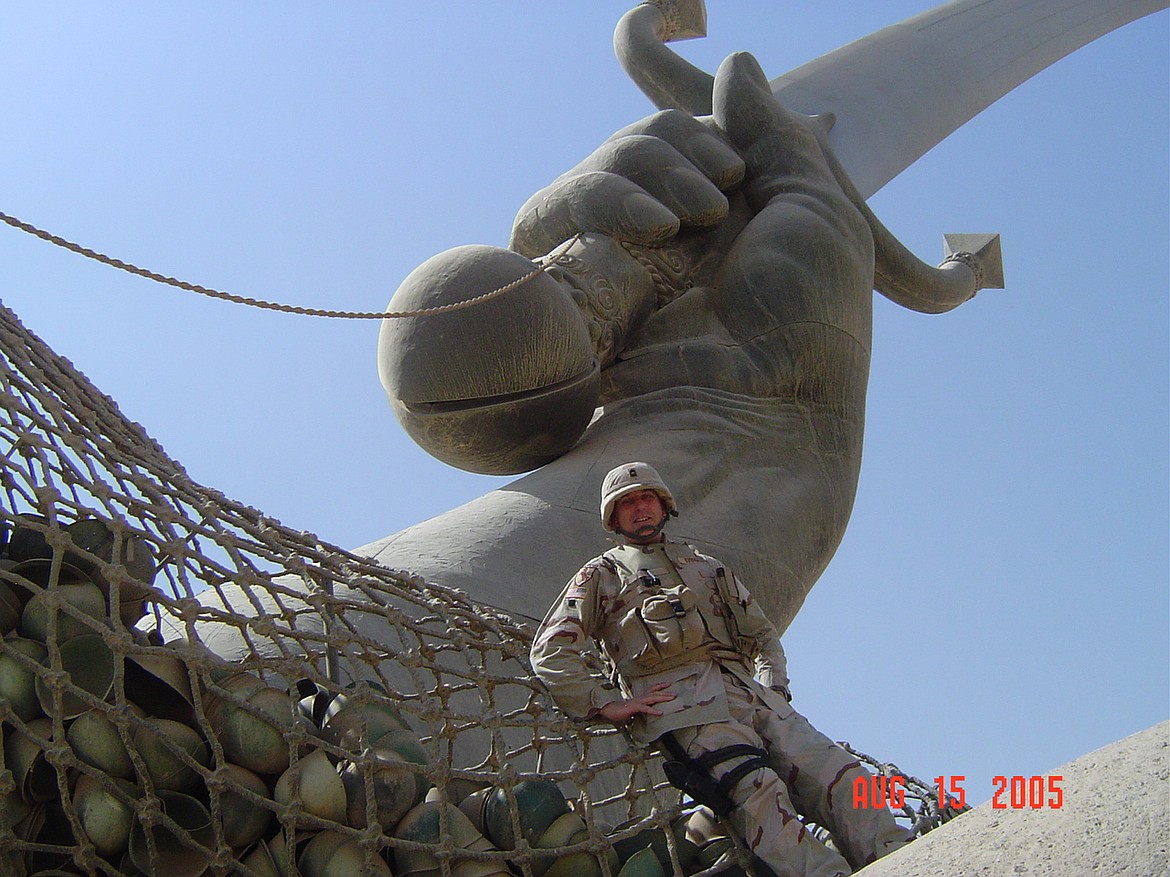
Jack Evensizer stands at the "Crossed Swords," officially known as the "Hands of Victory." It is a monumental arch in Baghdad, commemorating the Iran-Iraq War and symbolizing Iraq's military triumph.
Courtesy of Jack Evensizer
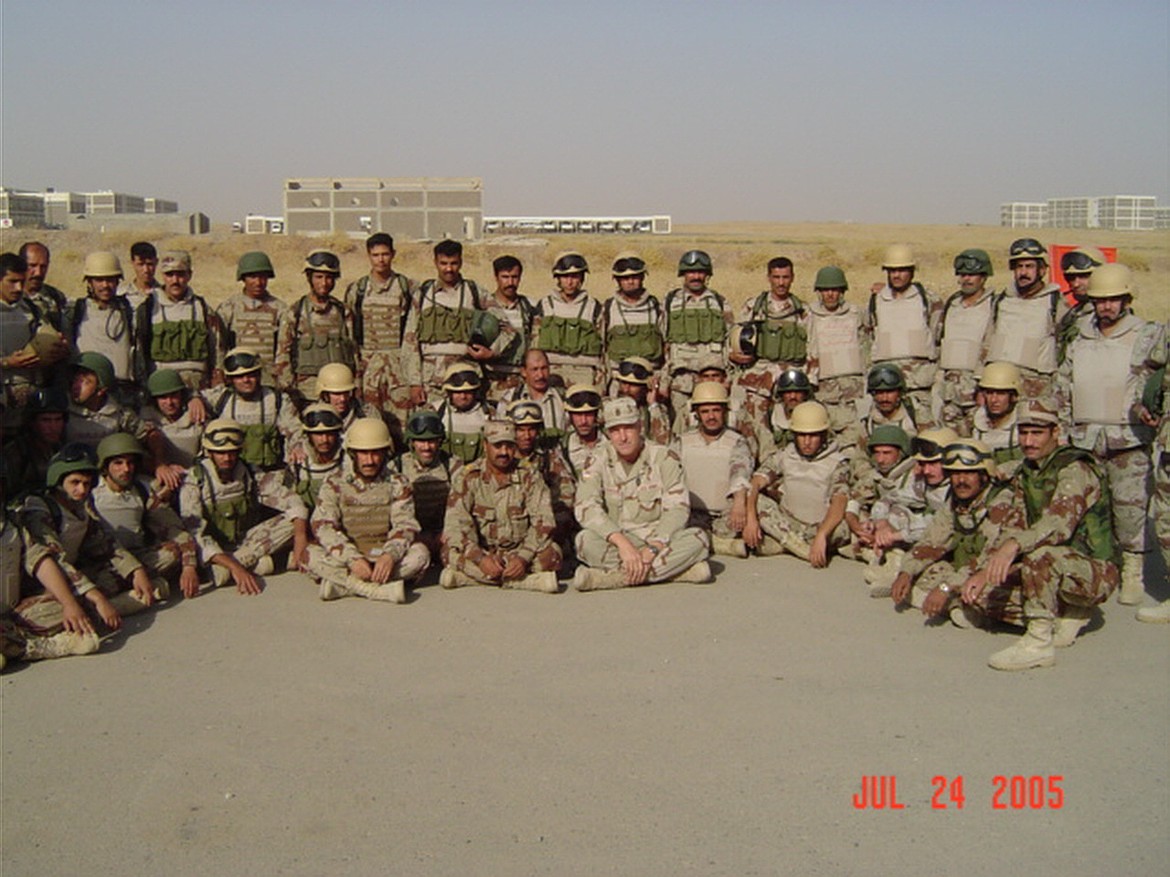
Jack Evensizer, in front middle, with his infantry company.
Courtesy of Jack Evensizer
On Dec. 13, 2025, the Iowa National Guard reported that two soldiers were killed in an apparent ISIS attack in Syria, along with a U.S. civilian interpreter, who was killed in the ambush. The shooter, who was serving as an interpreter, is believed to have been an Islamic State infiltrator working as part of a local security force, multiple sources told CBS News. Two members of Syria's security force were also wounded.
NBC News reported Dec. 15 that at least 15 people were killed in a shooting at a Hanukkah event at Australia’s Bondi Beach in Sydney. The police are formally describing it as an ISIS-inspired terrorist attack.
New South Wales Police confirmed the attacker’s vehicle contained IEDs and two homemade ISIS flags, evidence authorities said points directly to extremist inspiration.
Australian Prime Minister Anthony Albanese said the gunmen were inspired by "Islamic State ideology."
Terrorist groups ISIS, al-Qaeda, and the Taliban are prominently in the news again. They are rivals in control of the Muslim people and their governments, and they have ideological differences.
ISIS wants to have worldwide control of Muslims. The Taliban wants to be the government of Afghanistan and enforce strict Sharia law. Al-Qaeda, on the other hand, is a terrorist organization and has established terrorist training camps to bring together terrorists from all over the world, train them in tactics and methods and send them back to their home countries to overthrow non-Muslim governments.
In 2014, ISIS proclaimed itself as a caliphate after capturing large swaths of land in Iraq and Syria. As a worldwide caliphate, it was a concept of a one-world government that claimed authority over the military, religious, and political governance of Muslims. ISIS follows the doctrine of Sunni Islam. Before that, in 2011, Syrian President Bashar al-Assad (president of Syria from 2000 to 2024) and the Syrian government conflicted with groups that wanted to overthrow it. With demonstrations by these groups held in other Arab countries, this uprising was called the “Arab Spring.”
Here’s where religion comes in. The groups that supported al-Assad were Shia, the branch of Islam that Muslims believe that the Prophet Mohammad was a messenger from Allah (God).
Groups that opposed al-Assad were Sunni. They also believe in Mohammad. It is the largest branch of Islam and was founded following Muhammad's death in 632 A.D. It was an empire controlled by a Caliph, a leader, who gave command to their Generals to bring the Muslim religion to captured lands.
Shias believe successors to Mohammad have to belong to the family of the prophet to become the leader of Muslims. Sunnis believe the successor can be anyone who has a base in the Muslim community and is capable of being their leader. This appears to be the source of friction between the two groups. The current President of Syria is Ahmed Hussein al-Sharaa, who is a Sunni.
History informs us that religious factions dominate the formation of societies. Consider what occurred in Great Britain. In 1620, the Puritans left to maintain their religion and live without being challenged about their restrictive lifestyle.
King George III reigned from 1760 until his death in 1820. During his reign, liberty, religious freedom and taxation without representation were among the reasons the Colonies sought independence from Great Britain. The Revolutionary War ensued, and independence was secured with the promise of “liberty and justice for all.”
So, here we are all these years later, still in the throes of religious wars. The ideology of deism seems to be the fulcrum of society. Who’s to say what is right? In the Middle East, wars have dominated the historical record. Today, we observe the same phenomenon, but it has now spread worldwide. ISIS still has pockets of insurgent activity. The Taliban wants Sharia law to govern their land. Al-Qaeda continues with its terrorist training camps. Is this really about religion, or is it about the control of civilization?
Beam me up, Scotty.
• • •
Jack Evensizer is a resident of Dalton Gardens and is a veteran of the U.S. Army Infantry.
 Jack Evensizer stands at the "Crossed Swords," officially known as the "Hands of Victory." It is a monumental arch in Baghdad, commemorating the Iran-Iraq War and symbolizing Iraq's military triumph.
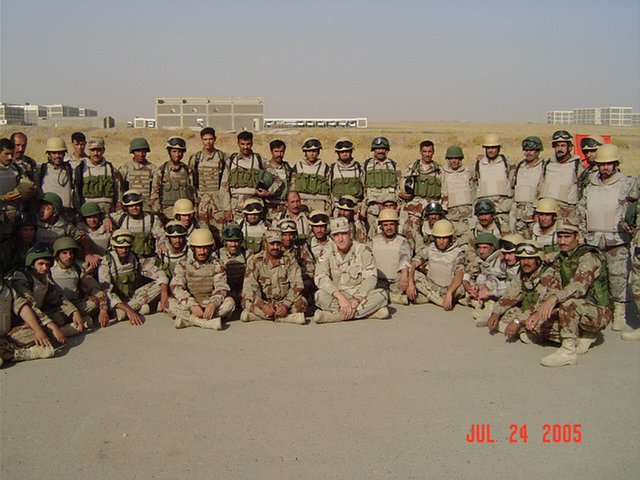 Jack Evensizer, in front middle, with his infantry company.