THE DIRT: Historic pollution study of the Coeur d’Alene Basin — Pt. 2
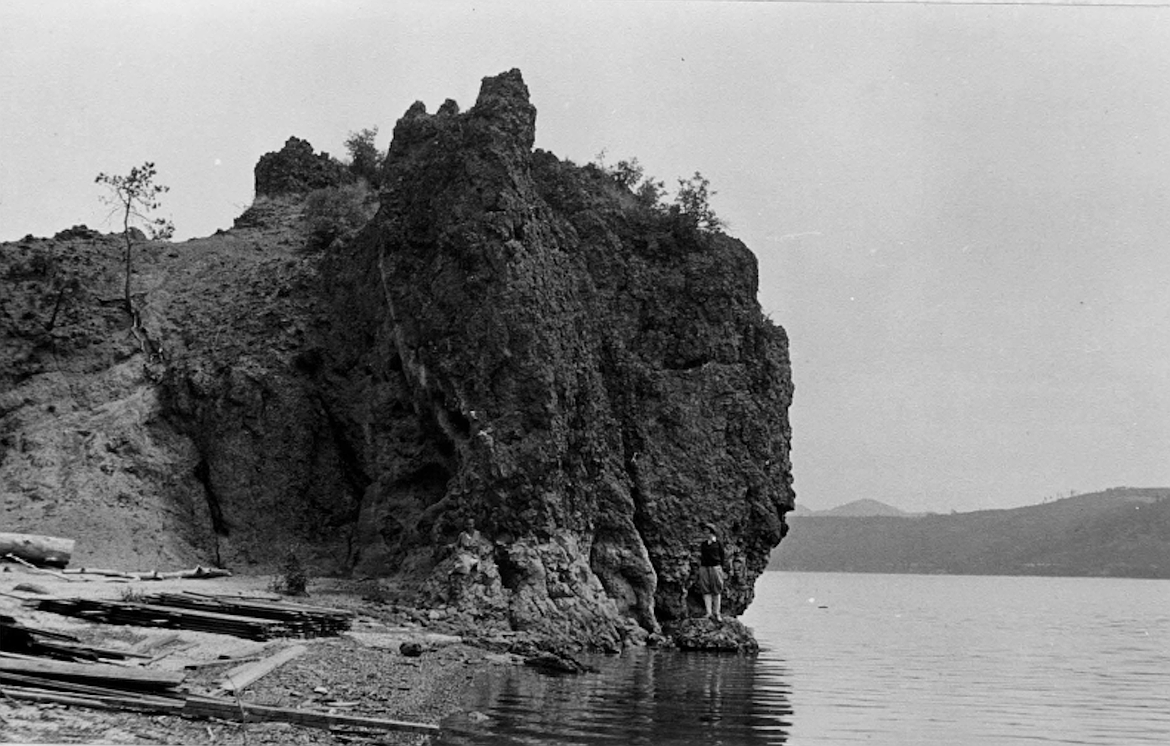
The area on Coeur d'Alene Lake known as Black Rock. If you look near the base of the rock, you can see the high water mark where contaminated lake water effectively removed the coloring from the base.
Courtesy photo
After mounting local and political pressure, the Idaho state legislature authorized a study of the pollution problems caused by Silver Valley mines that directly discharge waste into the area's water bodies. The Coeur d’Alene River and Lake Commission conducted the study. They requested the assistance of the United States Bureau of Fisheries, which authorized a survey and a team of four fisheries scientists to investigate the issue. The study was to take place during the summer months of 1932, with results reported back to the Idaho State Legislature in 1933. Commissioner Cathcart, as the acting Secretary of the Coeur d’Alene River and Lake Commission, began preparing for the Bureau’s research team in the spring of 1932. Cathcart had a fully functional field laboratory constructed inside a boathouse in Harrison. He also secured a small boat and a vehicle for the team’s day trips and hired a local man familiar with the area's waterways to guide them. The team, led by Dr. M.M. Ellis, arrived in Harrison on July 9 and started work the next day.
Ellis and his crew began by surveying the river system and learning about the mines' disposal practices. He discovered that for the first 40 years of operation, the mills in the district used the jig table method to process their ores. This method was relatively inefficient, as he and his crew lost considerable quantities of lead and zinc ore with these tailings as they were being dumped in the river. The jig method produced larger rock particles and a finer rock powder. Due to their larger size and heavier weight, the jig tailings did not travel as far and completely settled out by the time they reached the Mission Flats in Cataldo, where the river widened slightly and created a natural sedimentation area. Ellis noted that the entire Mission Flats area, consisting of several thousand acres, was now entirely covered with mining tailings and slimes that had settled out there. He interviewed several steamboat captains in the area who told him that 15 to 20 years ago, they could drive their steamboats and tugboats to the Old Mission. But the channel and the mainstream became so obstructed by large bars of mine waste and tailings that it could no longer be done. Inundated with so much waste, the river continued to carry enormous amounts of finer tailings into the Lower Basin, miles downstream and into Lake Coeur d’Alene.
Become a Subscriber!
You have read all of your free articles this month. Select a plan below to start your subscription today.
Already a subscriber? Login