
Points for the cinematic big swing
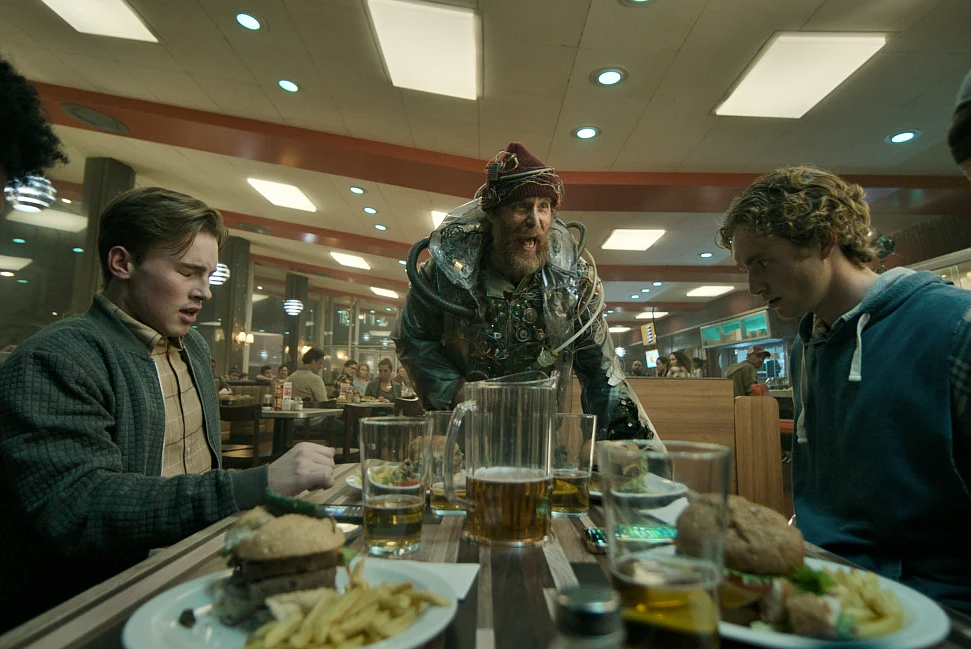
This image released by Briarcliff Entertainment shows Sam Rockwell, center, in a scene from "Good Luck, Have Fun, Don't Die."
Briarcliff Entertainment via AP
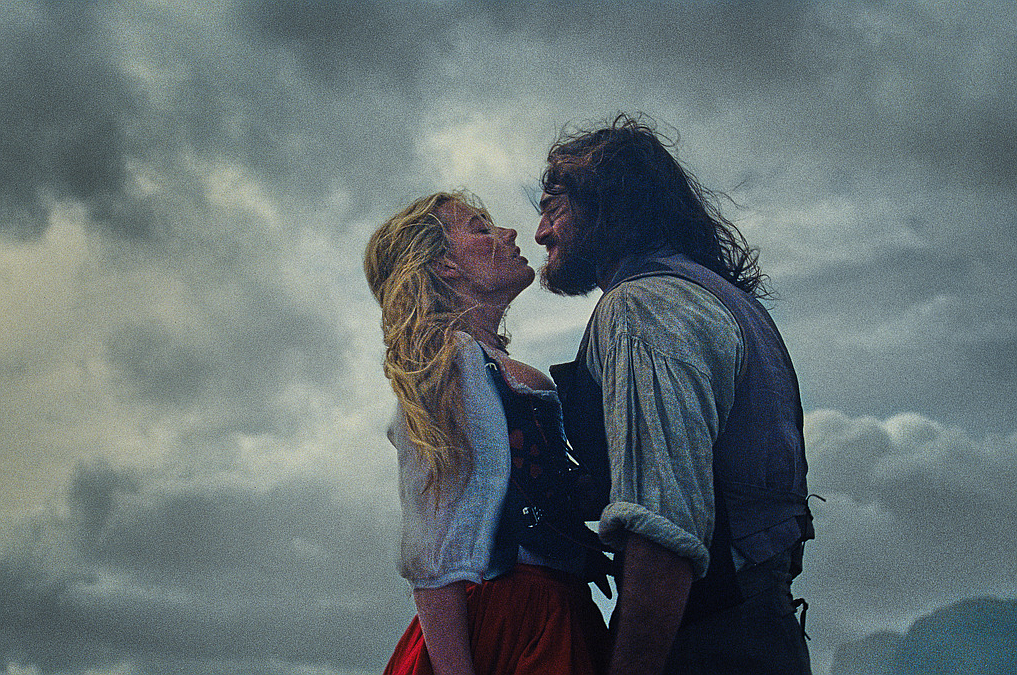
This image released by Warner Bros. Pictures shows Margot Robbie, left, and Jacob Elordi in a scene from “Wuthering Heights.”
Warner Bros. Pictures via AP
With all the talk about the lack of originality in movies, it always surprises me when I see audiences revolt against big creative risks.
I must remind myself that most people go to movies for entertainment. Occasional moviegoers don’t want to be “challenged” by movies, particularly by ones engineered to provoke and/or make people uncomfortable.
As an avid moviegoer, I like to be surprised, and often I find myself enjoying movies with crazy creative choices over the ones that do a straightforward story objectively well.
The last three movies I saw in the theater provide a case study in my appreciation for the “big swing” movie.
Take “Crime 101,” a well-executed and finely acted cops-and-robbers drama that takes a little too much from the Michael Mann/”Heat” playbook. The movie clicks together in predictable ways, though I would be far more inclined to recommend the movie to a casual viewer compared to my other two moviegoing experiences. To me, “Crime 101” was a perfectly fine but lesser version of a well-worn narrative. If “Heat” exists, what makes me want to return to “Diet Heat?”
Compare it to the bonkers approach to Gore Verbinski’s sci-fi dark comedy, “Good Luck, Have Fun, Don’t Die.” It has 15 original ideas about technology’s violent grip on humanity … and about five ideas on the topic that fall completely flat. It sells it all, thanks in no small part to its star, Sam Rockwell, a performer that can take any role and make it delightfully off kilter.
Verbinski is most known for making the first “Pirates of the Caribbean” movie and its first two sequels. The first movie is still universally loved, while the others … umm … made a bunch of money. To this day, I admire how far Verbinski strayed from what made the first movie so across-the-board popular. In contrast, “Dead Man’s Chest” and “At World’s End” are extremely weird movies that work to subvert audience expectation while still delivering massive set pieces. They’re overlong and strange, and that’s exactly why I love them.
Verbinski ultimately landed in “director jail” for his non-“Pirates” efforts, particularly the ill-conceived “Lone Ranger” and the flashy-but-convoluted drama “A Cure for Wellness.” Neither works as a whole, but each contain some incredible, bold choices (that train sequence in “Lone Ranger!”) that deserve at least begrudging respect.
Verbinski worked with a significantly scaled-down budget for “Good Luck, Have Fun, Don’t Die,” yet still managed to keep the bold swings and striking visuals. It won’t be for everyone, but give me the weird, uneven movie over just another police procedural any day.
Then there’s Emerald Fennell’s “Wuthering Heights,” a movie that probably would have earned more fans had it gone by any other title. Sure, some elements of the classic novel remain, but it seemed abundantly clear from the film’s marketing that Fennell would be taking some saucy liberties with the source material.
To be fair, general audiences probably didn’t know they would be getting THAT “Wuthering Heights” from a Valentine’s Day broad theatrical release. But Fennell’s core modus operandi is to use bombastic creative choices to poke audiences into discomfort.
Those who don’t like the in-your-face dramatic provocation contained in her first two films, (the Oscar-winning “Promising Young Woman” and the somehow even more divisive “Saltburn”) definitely won’t warm to “Wuthering Heights,” a movie that would be more accurately titled “Horny, Awful People.”
Fennell never set out to recreate the book’s narrative. Why bother? We have plenty of other versions of “Wuthering Heights.” Now we have this sicko version where Margot Robbie and Jacob Elordi are hooking up in carriages and ruining the lives of basically everyone else around them. Because lust … errr … love makes you do powerfully terrible things!
Fennell has a vocal collection of “haters” on the internet, which I suspect might be more than just disliking her creative choices. Because even if you don’t care for her loud screenwriting choices, all three of her directorial efforts are superbly crafted in their cinematography, art direction and sound design. These movies pop from the screen with a vibrancy and precision that rarely come in such a commercial package.
When I see a movie as intentionally made as “Wuthering Heights,” I’m more inclined to engage with it even when the narrative choices themselves don’t necessarily work. Fennell’s choices deliberately don’t combine to form a unified whole. It wouldn’t be as interesting or entertaining if it did everything right.
Does that mean I’ll always love a Gore Verbinski or Emerald Fennell movie? Probably not. Some crazy movies just don’t work for me, no matter the bold, creative intentions of its filmmakers. I understand that it’s completely subjective and mood dependent. I could even see myself returning to “Wuthering Heights” six months later and asking myself, “What did I ever see in this movie?”
So let this article be my reminder, because part of the enjoyment I had in “Wuthering Heights” was watching about half of a crowded theater walk out in utter disbelief. Not everything needs to be uniform. Not everything needs to be for everyone.
• • •
Tyler Wilson can be reached at [email protected].
 This image released by Warner Bros. Pictures shows Margot Robbie, left, and Jacob Elordi in a scene from “Wuthering Heights.”