
Monday, September 28, 2026
62.0°F

Best Night Sky Events for March 2026
by JOHN TAYLOR / Press Contributor
| February 28, 2026 1:00 AM

It’s almost spring! As the days lengthen and temperatures rise, the world brings forth the buds and blossoms that chase away the winter blahs. March unfolds as a celestial spectacle, ushering in the first Equinox of the year and a subtle shift in seasons. We will witness a total lunar eclipse on March 3, a need to change our clocks, two lunar conjunctions, and a potential Messier Marathon! Lastly, Jupiter is still dominating the night sky as the brightest “star” out there. Look high in the southern sky after sunset to see this dominating neighbor. 


March 2 — Conjunction of the Moon and Regulus 


Look low in the western sky around 5 a.m. to see Leo’s brightest star, Regulus, a mere ½ degree (less than one finger at arm’s length) from the very nearly full moon. This event is for all you early risers out there. 

March 3 — Full Moon 

The moon will be on the opposite side of the Earth from the sun, with its face fully illuminated. This phase occurs at 3:38 a.m. Early Native American tribes knew this full moon as the Worm Moon. This moon has also been called the Crow Moon, the Crust Moon, the Sap Moon and the Lenten Moon. The best part of this full moon is that we will see a total lunar eclipse! 


March 3 — Total Lunar Eclipse 


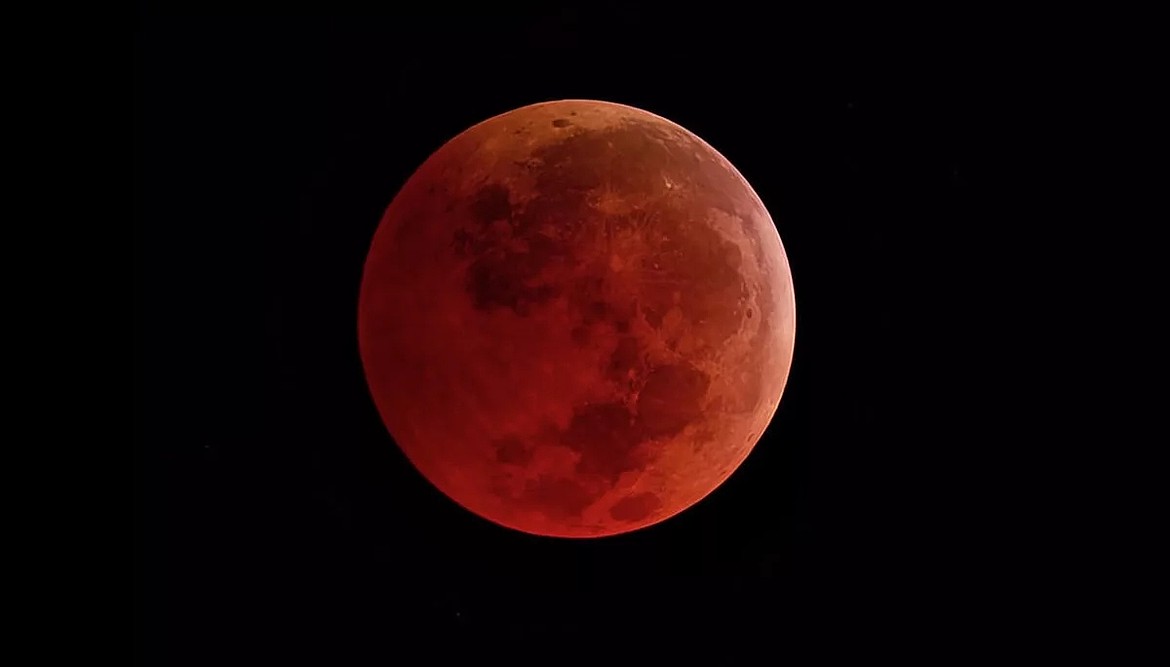
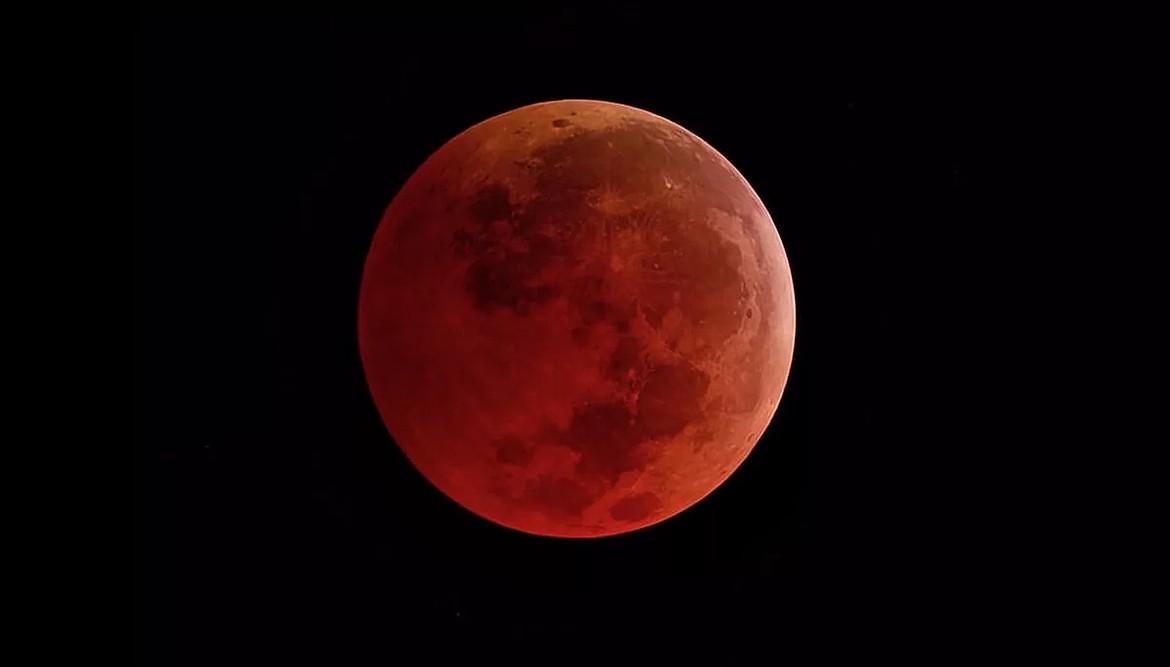
A total lunar eclipse occurs when the moon passes through Earth's shadow, turning blood red. The eclipse will be visible throughout North America. Totality begins at 3:04 a.m. and ends at 4:02 a.m. The greatest eclipse occurs at 3:33 a.m. Look to the southwest for this spectacle. Yes, I know it’s an inconvenient time, but it is worth viewing and photographing if possible. 


    Total Lunar Eclipse – Image courtesy of NASA


March 8 — Daylight Saving Time Starts 


Time to groan and advance those clocks forward by one hour on Sunday morning. 


March 11 — Last Quarter Moon 


The Last Quarter Moon is the third and final quarter phase of the moon during its monthly cycle. At this point, at 2:38 a.m., the moon appears half-illuminated, with the left half visible from the Northern Hemisphere and the right half visible from the Southern Hemisphere. This moon is visible after midnight and throughout the morning. 


March 18 — New Moon 


The New Moon is the beginning of the lunar cycle when the moon is not visible from Earth. It occurs when the moon is between the Earth and the sun. It occurs at 6:23 p.m. Since the illuminated side of the moon is facing away from us, the night sky will be especially dark, making it an excellent time for stargazing without moonlight interference. 


March 20 — March Equinox 


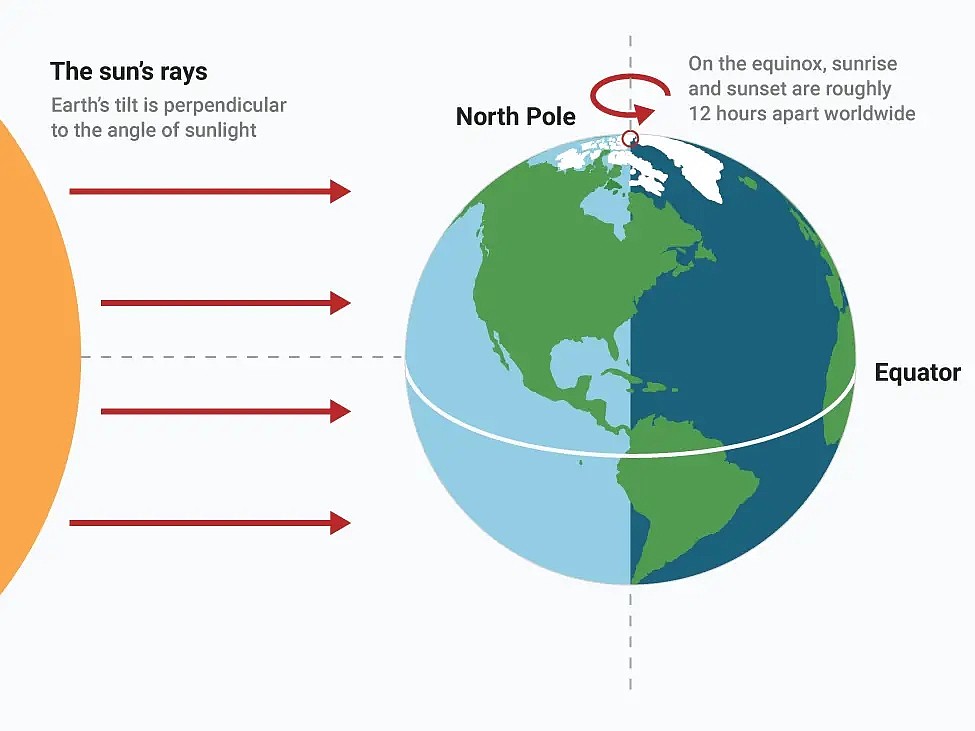
The March equinox occurs at 2:01 a.m. On this date, the sun will shine directly on the equator, and there will be nearly equal amounts of day and night throughout the world. It's also the first day of spring (vernal/spring equinox) in the Northern Hemisphere and the first day of fall (autumnal Equinox) in the Southern Hemisphere. 


    This image shows the conditions that occur during the Equinox.


March 20-21 — A March Event — The Messier Marathon 


This weekend, after the new moon, when the skies are at their darkest, conditions may allow for a Messier Marathon. What is that, exactly? A bit of history helps. 


Charles Messier was a French astronomer in the late 18th century and an avid comet hunter. During his searches, he repeatedly encountered fuzzy objects that were not comets. To avoid future confusion, he began cataloging these impostors in 1760. Over the next 24 years, he compiled a list of 103 deep-sky objects, including galaxies, star clusters, and both diffuse and planetary nebulae. His catalog, published in 1784, remains famous and is still widely used by amateur astronomers. The modern version, expanded in 1967, contains 110 objects. When you see an object labeled with an “M,” it refers to Messier’s catalog. 


Now for the marathon. Because Messier objects are scattered across the sky, observing all of them in a single night is nearly impossible. However, during a brief window from late March to early April, it becomes just barely feasible to view all 110 objects in one long all-night session. Hence the name: Messier Marathon. With a telescope with an aperture of 4 inches or larger, observers under good conditions can often spot 100 or more catalog objects. 


For more information, you can go here:  

www.messier.seds.org/xtra/marathon/marathon.html


March 22 — Moon and the Pleiades Close Approach 


At 10 p.m. on this night, look to the west to see the waxing crescent moon a mere 3 degrees (three fingers at arm’s length) from the star cluster the Pleiades (M45). 


March 25 — First Quarter Moon 


The First Quarter Moon marks the halfway point between the New Moon and the Full Moon. It occurs at 12:18 p.m. It appears as a half-illuminated disk, with the right half visible from the Northern Hemisphere and the left half from the Southern Hemisphere, and is visible in the afternoon and evening sky. 


And finally, if you’re choosing your first telescope, setting up gear, tracking down night sky objects, or diving into astrophotography, you can go here to ask your questions. ncmrrimrockobservatory.space/contact

• • •

John Taylor is an amateur astronomer who lives in Hayden.