

HUCKLEBERRIES: Rising on high
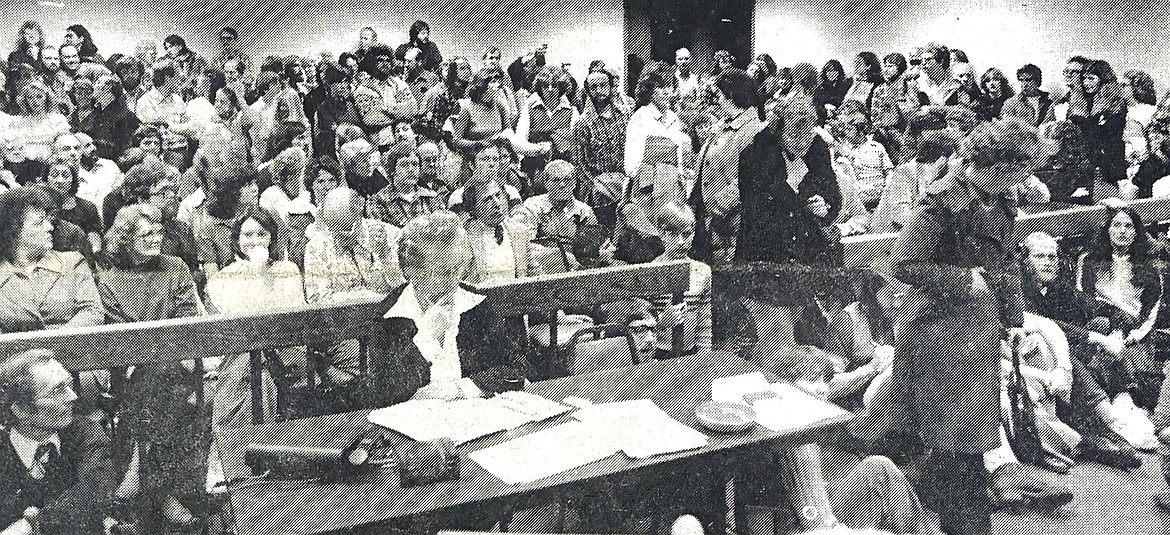
A huge crowd jams the Coeur d’Alene City Council chambers to discuss a proposed high-rise on the waterfront in 1981.
Photo courtesy of the Coeur d'Alene Press archives
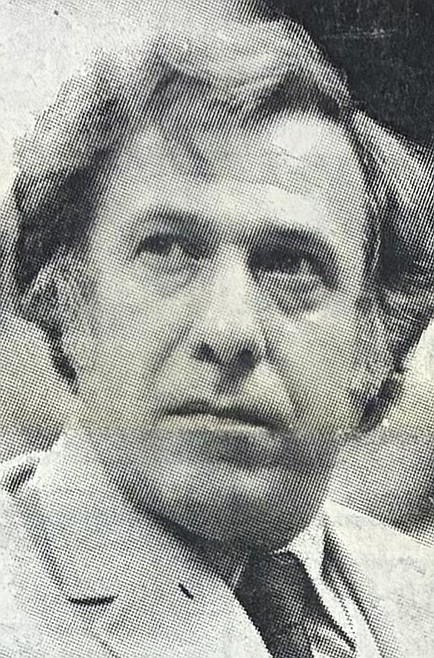
Developer Terry Phillips listens to residents who oppose his proposed Marina Place tower in 1981.
Photo courtesy of the Coeur d'Alene Press archives
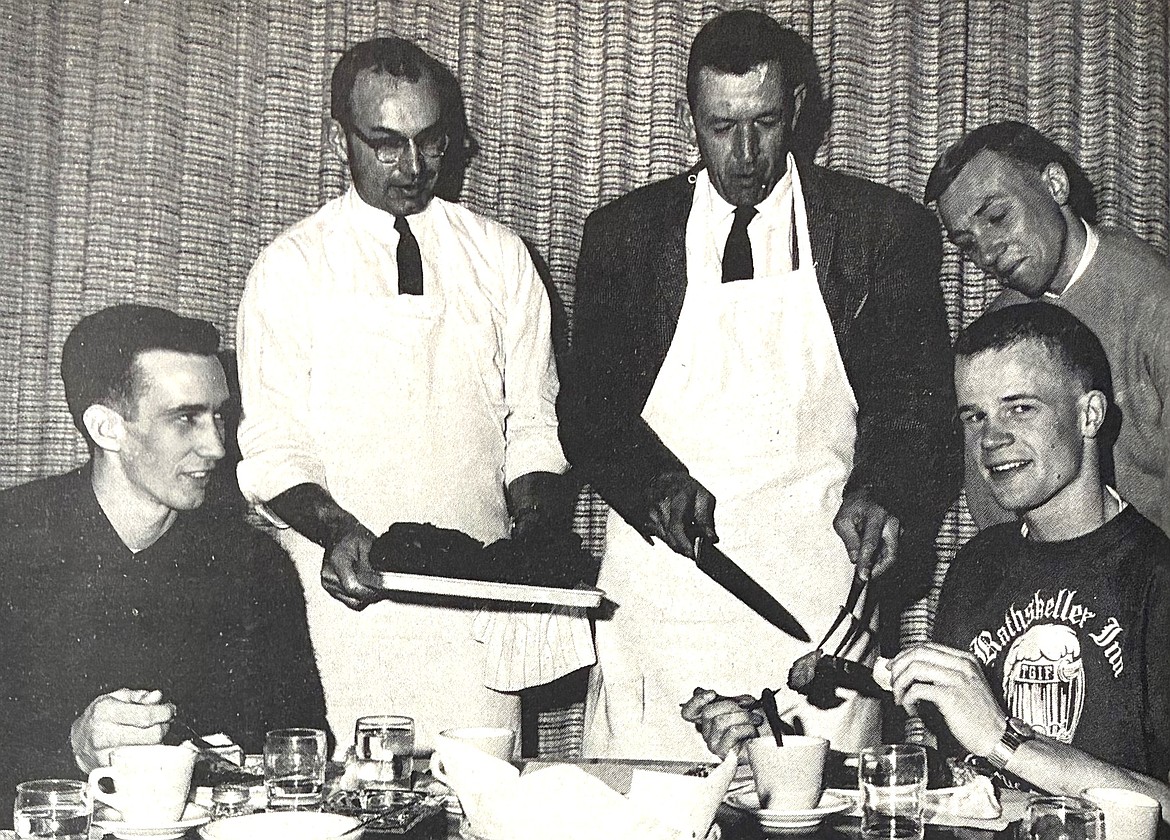
Seated, from left, NIJC players Dick Schultz and Stan Oberg dine on cougar prior to a game with the Washington State frosh in 1966. The Cardinals are watched by, from left, Wes Hatch, Frank Evans and Dan Carney.
Photo courtesy of the Coeur d'Alene Press archives
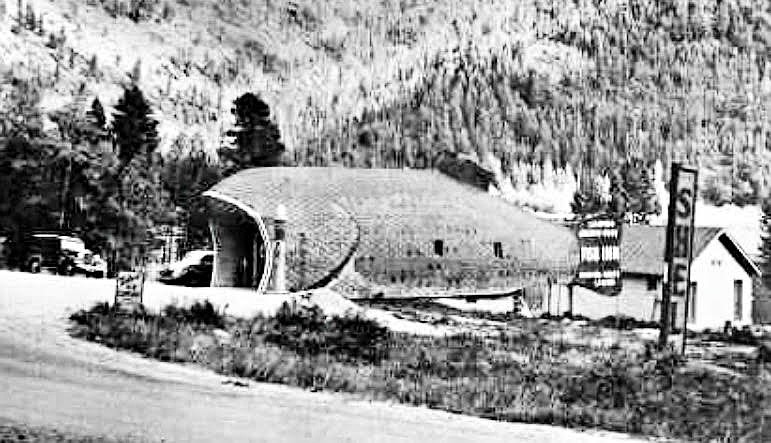
The iconic Fish Inn, shown circa 1940, once was considered one of the top roadhouses in the country.
Photo courtesy of Museum of North Idaho
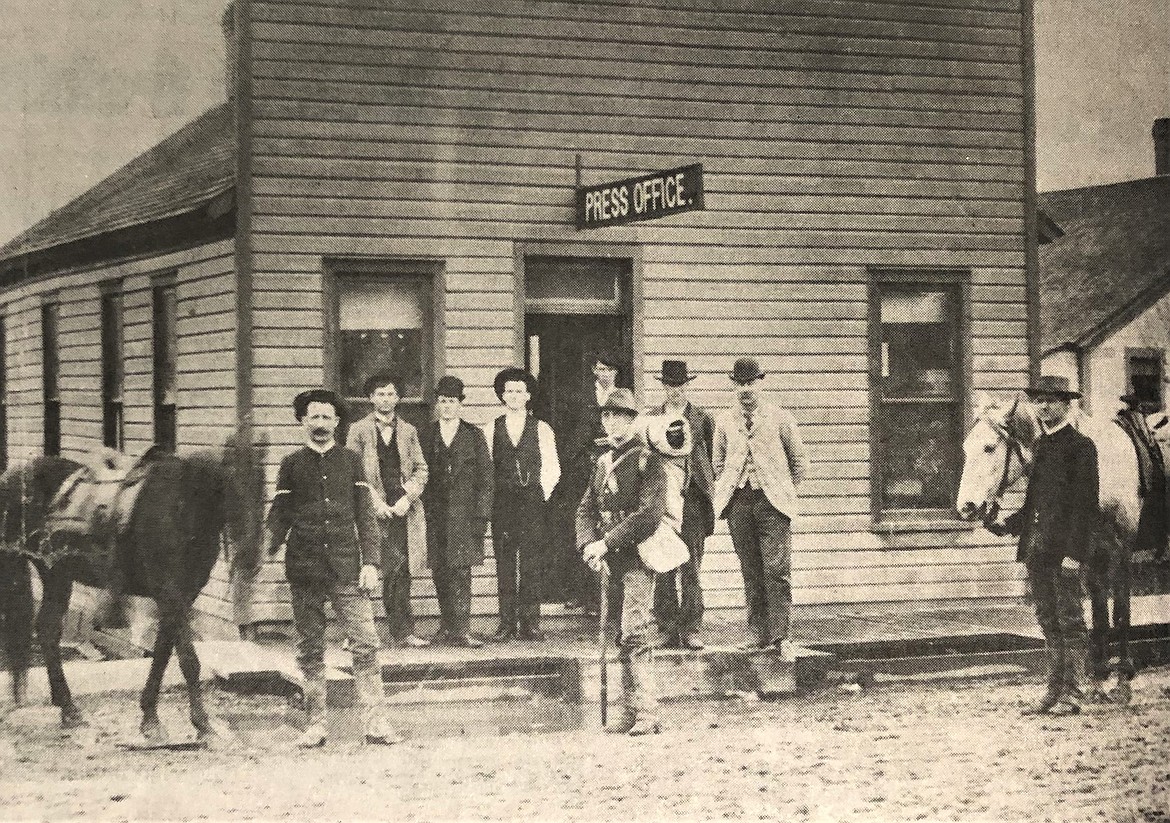
The first edition of the weekly Coeur d’Alene Press was published Feb. 20, 1892.
Photo courtesy of Museum of North Idaho
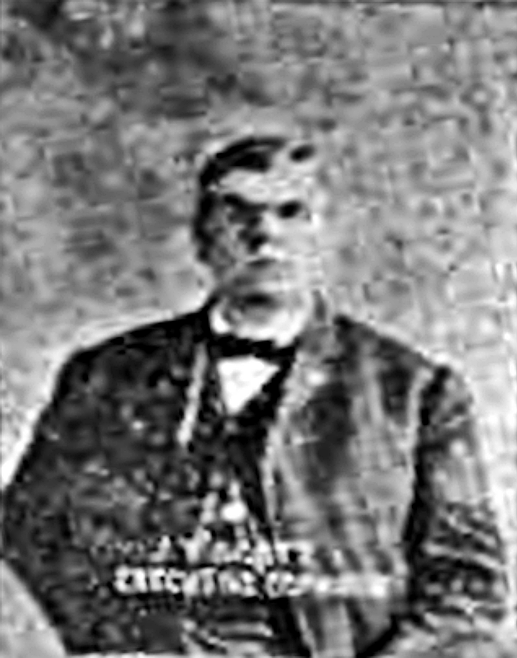
Editor J.T. Scott founded The Press in 1892.
Photo courtesy of the Coeur d'Alene Press archives
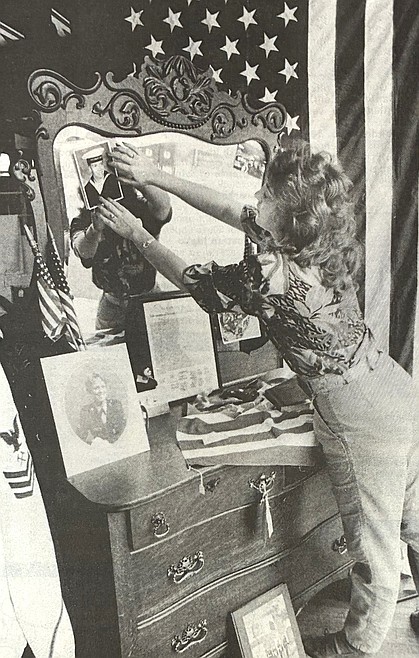
Manager Penny Swanlund of the Wiggett Antique Mall designs a window display to honor Operation Desert Storm warriors in 1991.
Photo courtesy of the Coeur d'Alene Press archives
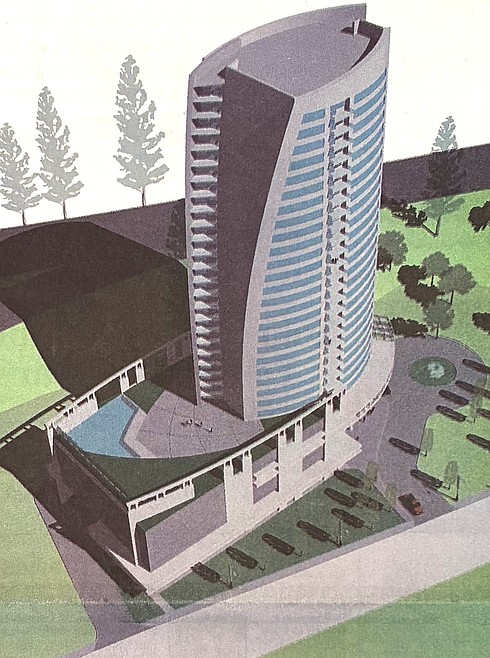
Proposed in 2006, the 25- to 30-story Fernan Tower on Coeur d’Alene Lake Drive never left the drawing board.
Photo courtesy of the Coeur d'Alene Press archives
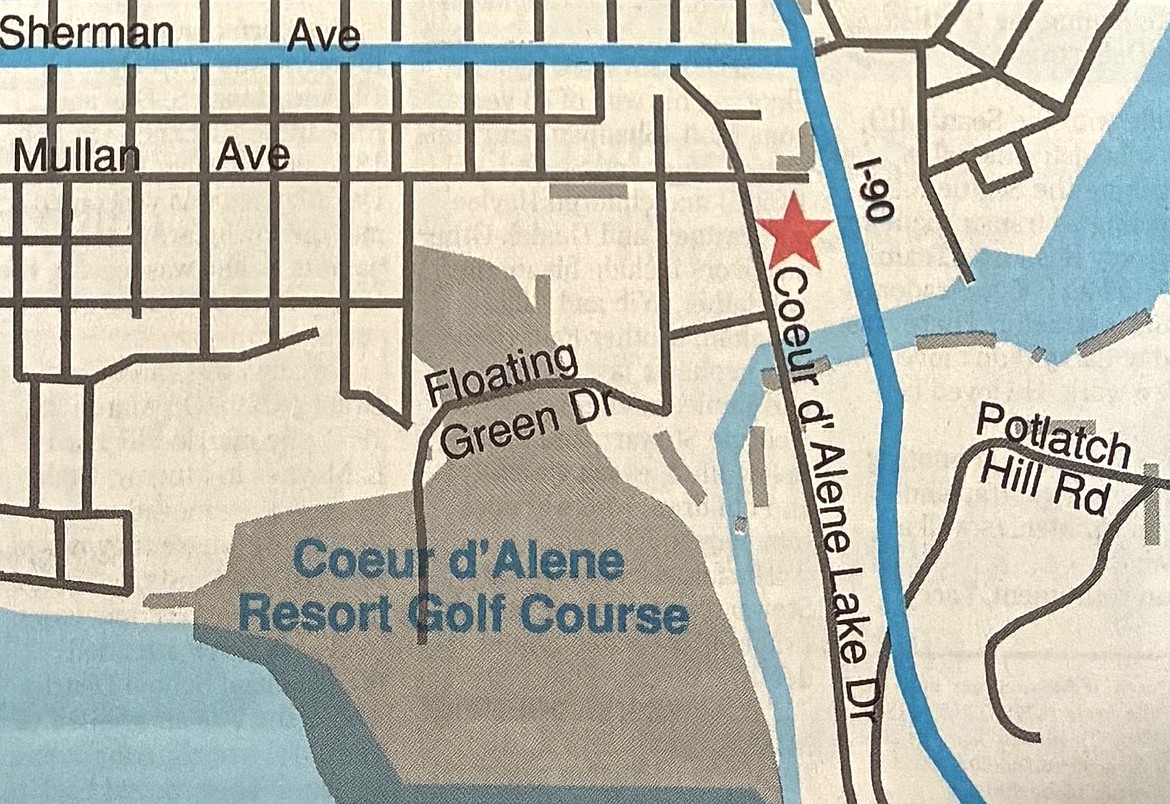
Fernan Tower location map.
Photo courtesy of the Coeur d'Alene Press archives
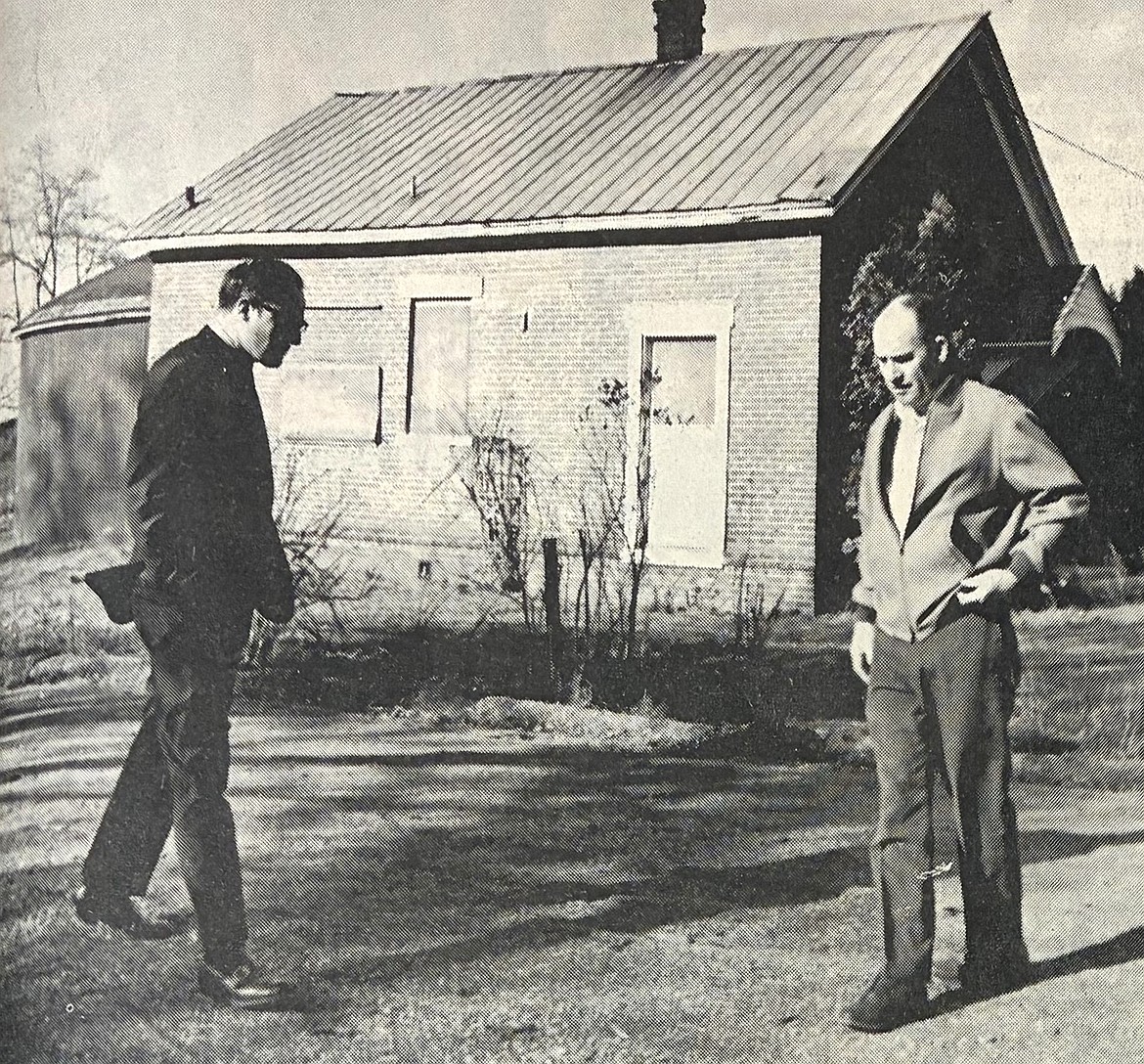
President Barry Schuler of North Idaho Junior College, left, and Gardner Teall of the North Idaho Museum discuss plans to convert the old Fort Sherman powder magazine behind them into a museum.
Photo courtesy of the Coeur d'Alene Press archives
High-rises in downtown Coeur d’Alene sprout like spring snapdragons today.
But there once was a time when a proposed 11- to 14-story condominium project on the lakeshore ignited local furor.
On Feb. 17, 1981, Terry Phillips’s plan to build a $10 million tower, dubbed Marina Place, attracted an overflow crowd to City Hall. Dozens of residents challenged the developer’s proposal for a 48-unit building east of the North Shore Convention Center.
“It’s the biggest turnout I’ve ever seen,” veteran observer Leonard Butterfield told The Press.
Phillips wanted permission that night to build a 91-foot seawall for the project.
But the implacable crowd fixated on the overall plan. It was led by the new Committee to Save Our Shoreline and Skyline and armed with 4,000 signatures in opposition.
Opponents feared the high-rise would block views of Lake Coeur d’Alene and Tubbs Hill.
Attorney William Brown testified that he enjoyed propping his feet on his office desk in the Elder Building and looking out at the lake.
Forty-two of the 53 speakers opposed the plan, nine were in favor, two sought a compromise.
After three hours of testimony, the council rejected the seawall application and imposed a 120-day moratorium on building permits for lakeshore development.
On July 21, 1981, the city finally granted a building permit to Phillips. But Judge Dar Cogswell of the 1st District Court ordered that action rescinded six weeks later. The judge ruled that the project violated the city’s comprehensive plan.
Ultimately, Phillips fought the decision all the way to the Idaho Supreme Court, sued the city for $11 million, and sold his property to businessman Duane Hagadone. Meanwhile, a Save Our Shoreline ticket of four men, led by Mayor Jim Fromm, swept into office that fall.
In 1983, Hagadone acquired Bob Templin’s North Shore and transformed it into the 18-story Coeur d’Alene Resort. Now, The Resort is one of nine downtown high-rises, including three under construction: Sherman Tower, The Thomas George and a Marriott Hotel.
Man eats cat
The side dishes were Green Giant Corn Niblets, baked potatoes, hot rolls and fruit salad.
The entrée was cougar – you know, mountain lion.
Two days before their 1966 game with the Washington State Frosh “Coubabes,” North Idaho Junior College basketballers devoured cougar flesh, furnished by hunter Stan Sweet of Bonners Ferry.
Some Cardinals were squeamish, reported The Press. But most asked for seconds after tearing into the exotic fare in the NIJC Student Union.
The Lions Club and NIJC Boosters hosted the special dinner. But chef Wes Hatch did the heavy lifting.
First, for a week, Hatch marinated large cuts of cougar in a “secret sauce” provided by Frank Evans. Then, stuffing was added. Finally, the steaks were rolled and put into an oven, heated to 275 to 300 degrees, for three hours.
The main dish was served in thick slices with mushroom gravy.
Players compared the taste to roast veal.
Said player Dick Schultz: “The Cougar Frosh basketball team would probably have rather ended up on the platter than face (us).”
Schultz wasn’t bragging.
On Feb. 19, 1966, the host Cardinals feasted on the “Coubabes” — figuratively. Before a full house, the Cardinals chomped WSU 98-76. The victory avenged a 90-89 overtime loss to WSU in Pullman on Jan. 7 that some thought was decided by biased hometown referees.
Fish Inn fries
The iconic Fish Inn near Wolf Lodge burned quickly 30 years ago because it was made of wood, filled with alcohol and lined with $1 bills.
On Feb. 17, 1996, an early-morning fire destroyed the landmark, deemed by Road and Track magazine as one of the best roadhouses in the land.
“It went fast,” Dean Opsal told The Press.
Opsal and his family were staying in a nearby cabin when awakened by firemen at about 5.
In 1932, according to The Press, Kenneth and Mamie West opened the Fish Inn and a gas station along old Highway 10, the main east-west corridor of the day.
The Wests designed their building after the large-mouth bass that neighbor Selmer Molsted gave them as a welcoming gift. The inn featured a gaping mouth that doubled as an entrance, scales and cartoonish eyes.
Early customers were construction workers for Farragut Naval Station and the interstate highway system.
According to lore, a customer started a tradition when he handed his girlfriend a wedding proposal written on a dollar bill. She wrote “yes” on the note and pinned it to the wall.
An estimated 4,000 one-dollar bills went up in smoke the night the Fish Inn burned.
Huckleberries
• Poet’s Corner: Great warrior leaders of the free/(who fight from Washington, D.C.)/perhaps will note at some late date/they're armored like a paper plate — The Bard of Sherman Avenue ("Iraq Humvees").
• Happy 134th: On Feb. 20, 1892, the weekly Coeur d’Alene Press began with this notice from Editor Joseph T. Scott: “If you are satisfied with this issue of the Press, help the enterprise along by dropping two dollars in the slot — the editor’s pocket — and receive the paper for a year.” The Press still values all subscribers.
• USA! USA! Few places are as patriotic as this one. As the U.S. prepared for a ground assault to end Operation Desert Storm (Feb. 24-28, 1991), Coeur d’Alene was festooned with yellow ribbons and mementos. At the old Wiggett Antique Mall at Fourth and Lakeside, for example, manager Penny Swanlund decorated the front window to honor the friends and relatives of employees in harm’s way.
• Did You Know? In February 2006, Charter Builders of Meridian proposed a high-rise of 25 to 30 stories along Coeur d’Alene Lake Drive at Fernan. Fernan Tower would be up to 300 feet high, the tallest building in North Idaho. By comparison, The Coeur d’Alene Resort stands 216 feet. But Fernan Tower never got off the ground.
• Down the Drain: In February 1971, Coeur d’Alene police disposed of illegal beer the old-fashioned way. They dumped it at the city landfill. The beer was confiscated from underage minors and from public drinkers with open containers. Seems quaint today when illicit drugs that kill can be found everywhere.
Parting shot
The Museum of North Idaho has come a long way since 1971, when promoters scraped together $11,000 to buy and restore its original home. Under the capable guidance of Director Britt Thurman, MONI is now ensconced in J.C. White's/Mary Bjorklund’s 1903 mansion at the base of Tubbs Hill. Fifty-five years ago, however, museum boosters launched a fundraising drive to purchase the old powder magazine at Fort Sherman. Built in the 1870s, the brick powder magazine was owned by Idaho Forest Industries but hidden from public view until the removal of surrounding buildings. Today, the structure faces the Student Union Building at North Idaho College. In 1971, college President Barry Schuler noted Kootenai County’s “especially rich” history. And he voiced concern that ties to “our colorful past are rapidly vanishing.” His passion for local history is alive and well today.
• • •
D.F. (Dave) Oliveria can be contacted at [email protected].
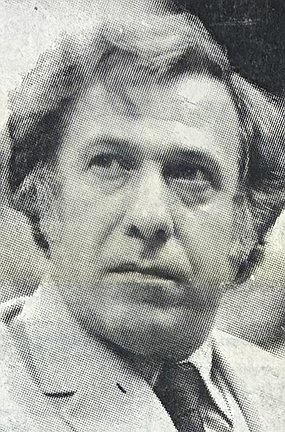 Developer Terry Phillips listens to residents who oppose his proposed Marina Place tower in 1981.
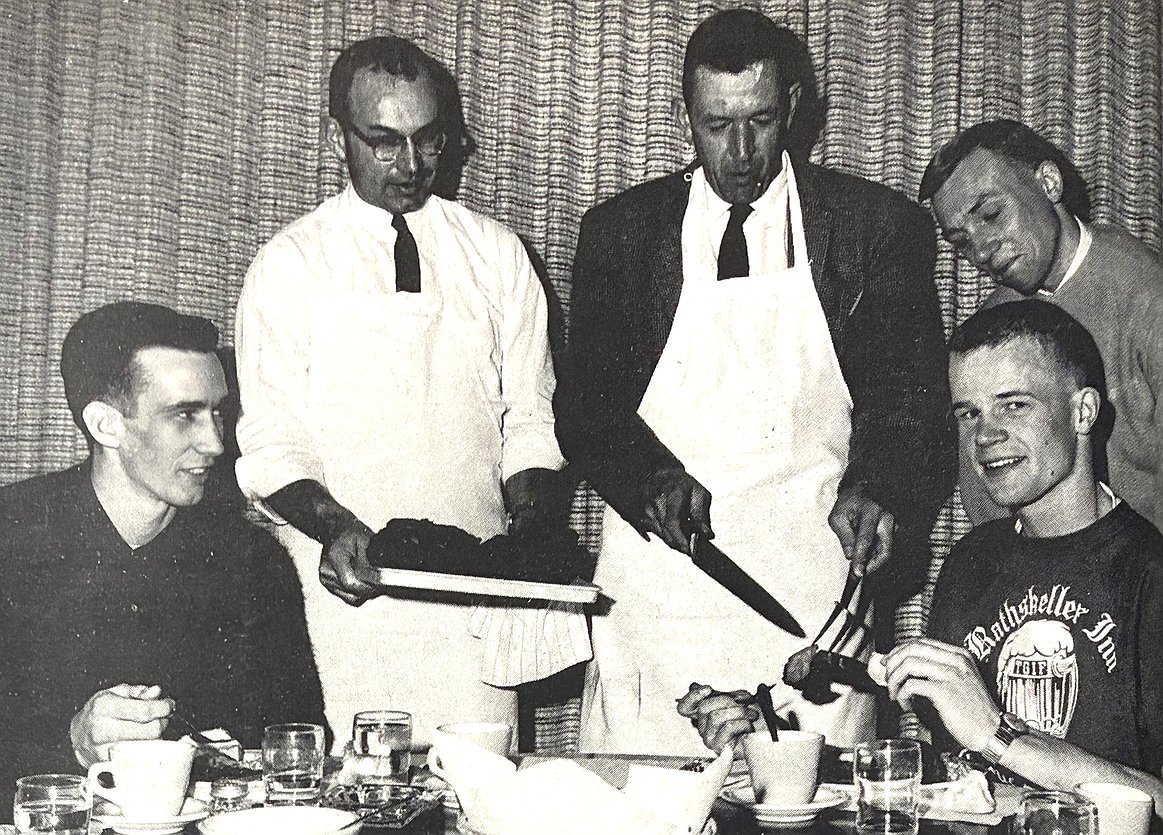 Seated, from left, NIJC players Dick Schultz and Stan Oberg dine on cougar prior to a game with the Washington State frosh in 1966. The Cardinals are watched by, from left, Wes Hatch, Frank Evans and Dan Carney.
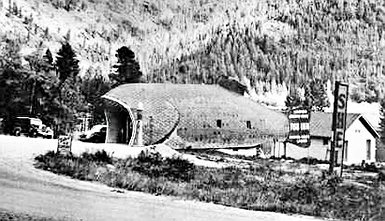 The iconic Fish Inn, shown circa 1940, once was considered one of the top roadhouses in the country.
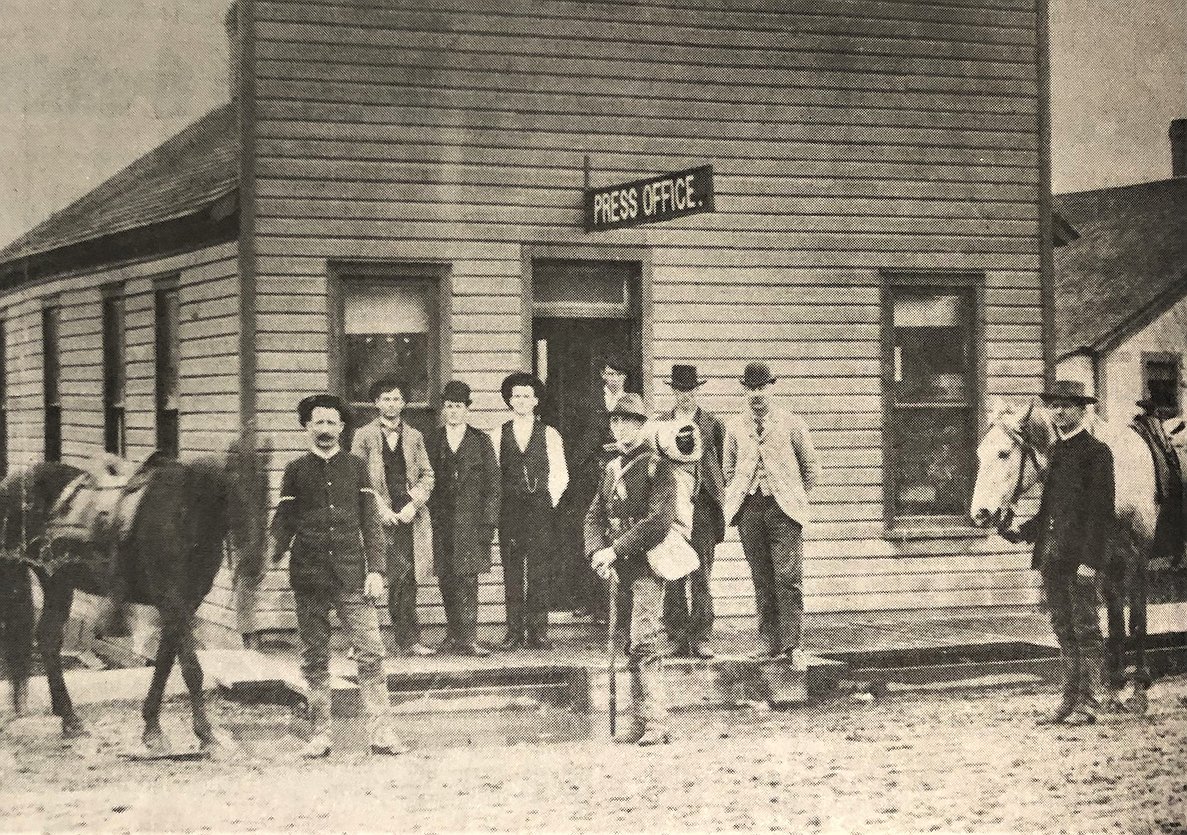 The first edition of the weekly Coeur d’Alene Press was published Feb. 20, 1892.
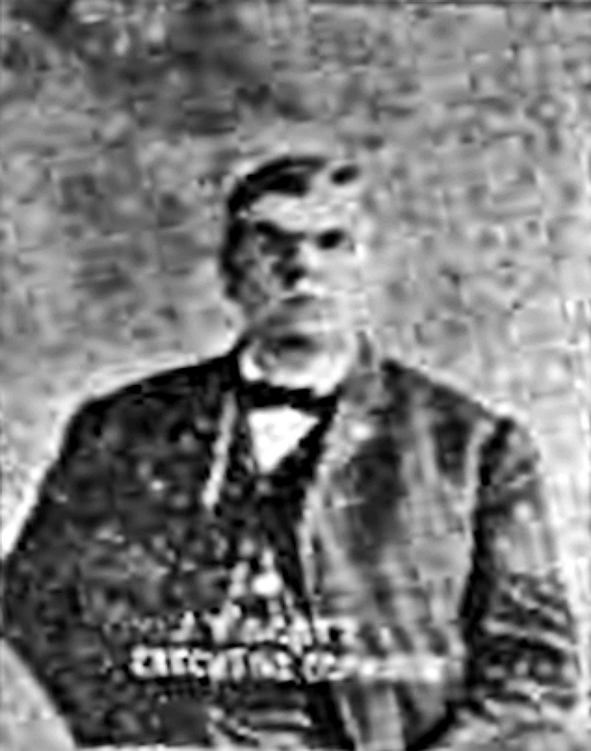 Editor J.T. Scott founded The Press in 1892.
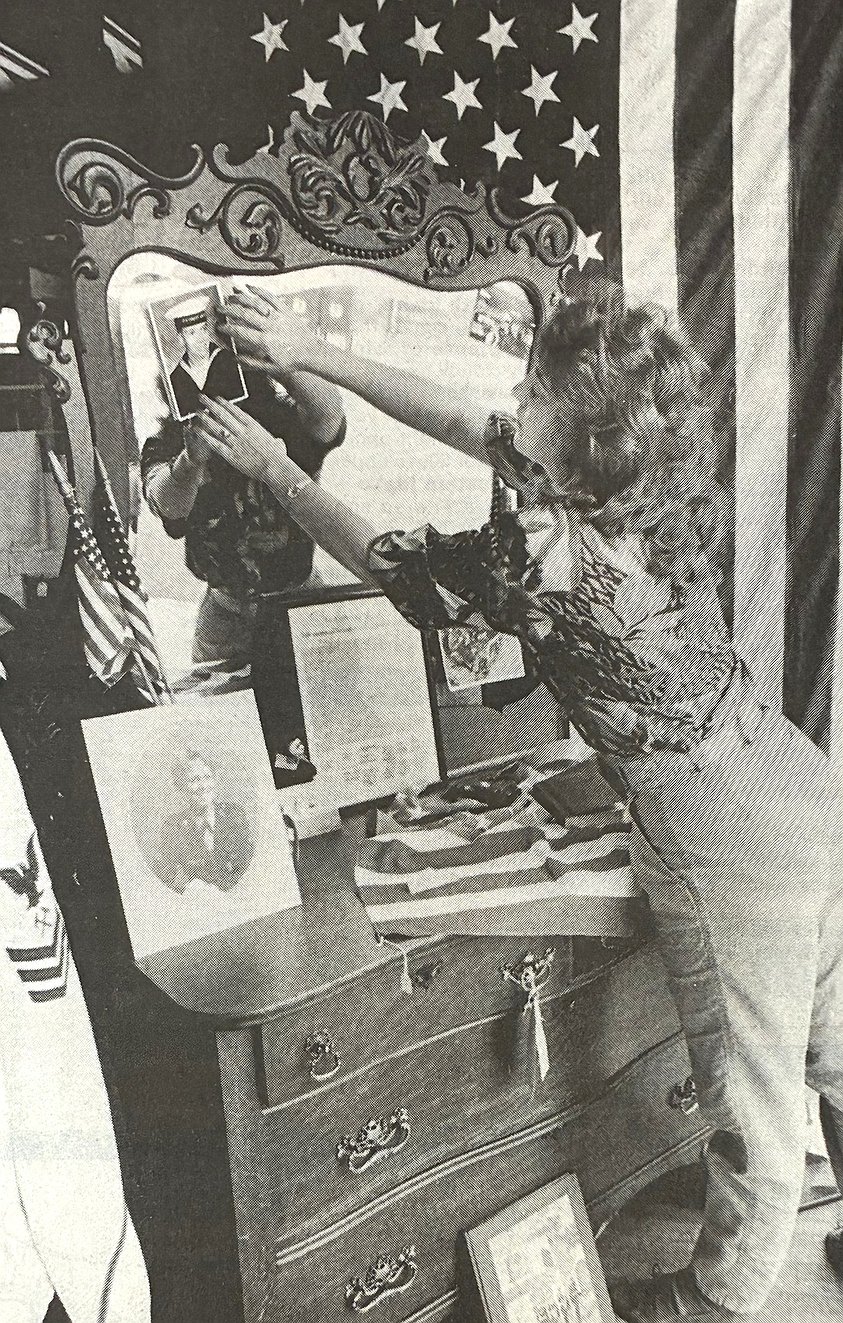 Manager Penny Swanlund of the Wiggett Antique Mall designs a window display to honor Operation Desert Storm warriors in 1991.
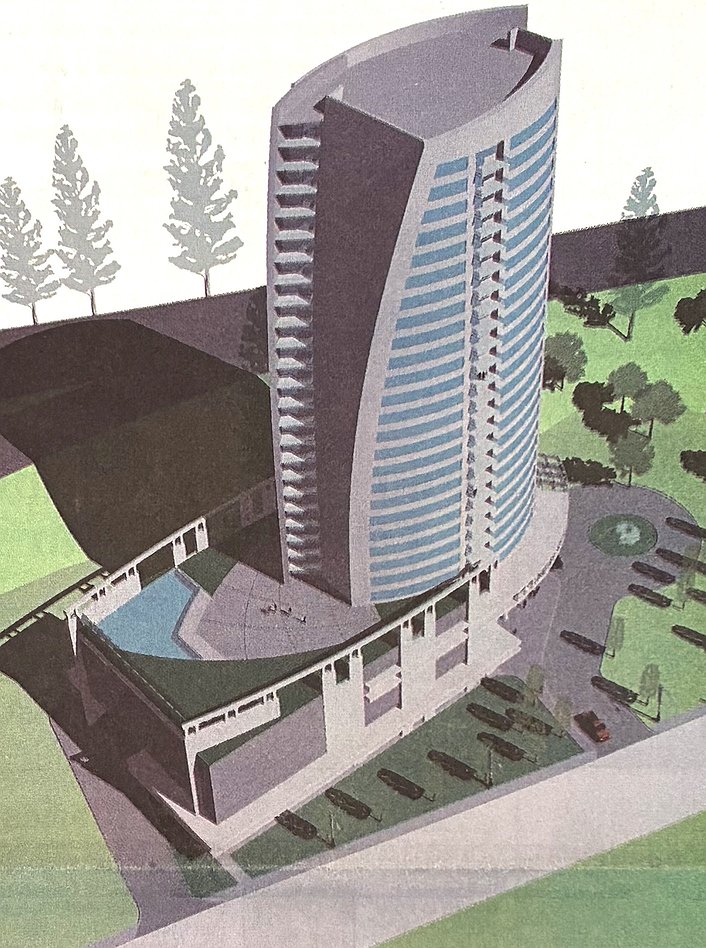 Proposed in 2006, the 25- to 30-story Fernan Tower on Coeur d’Alene Lake Drive never left the drawing board.
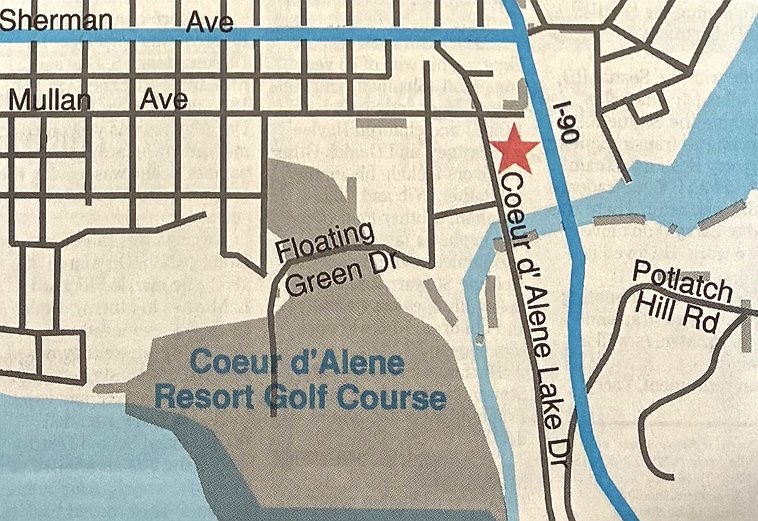 Fernan Tower location map.
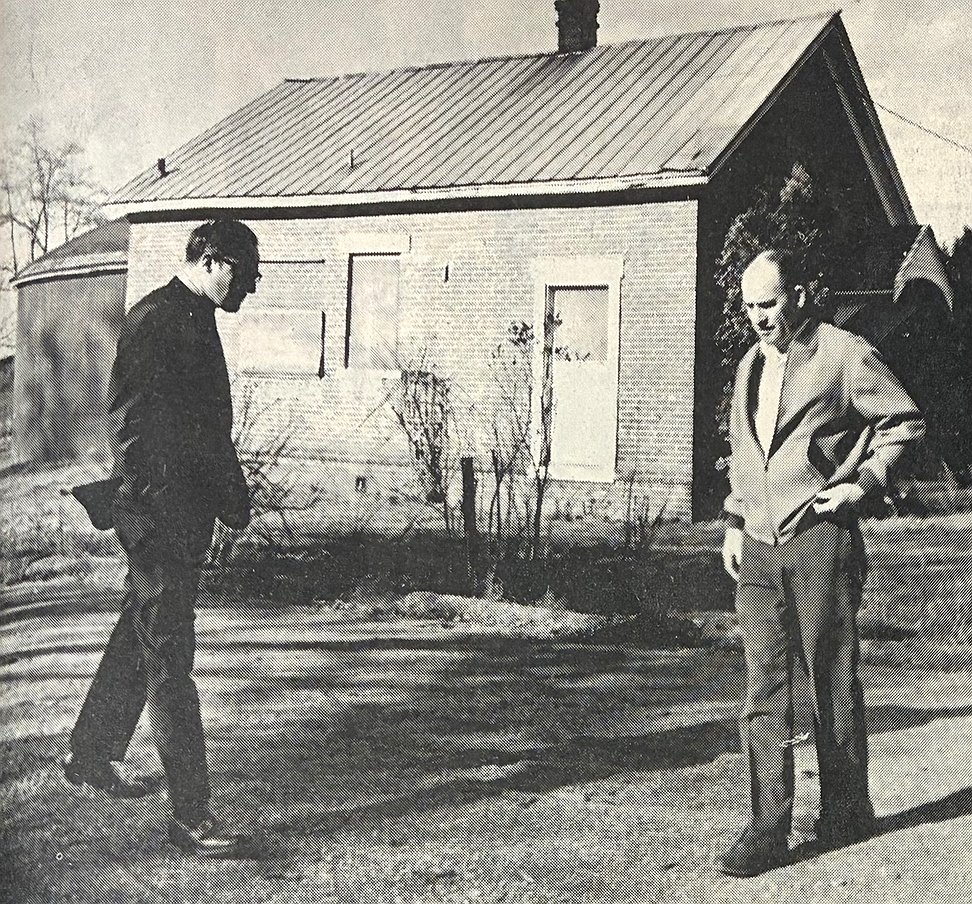 President Barry Schuler of North Idaho Junior College, left, and Gardner Teall of the North Idaho Museum discuss plans to convert the old Fort Sherman powder magazine behind them into a museum.