

MY TURN; Strengthening Idaho’s physician pipeline starts with medical education
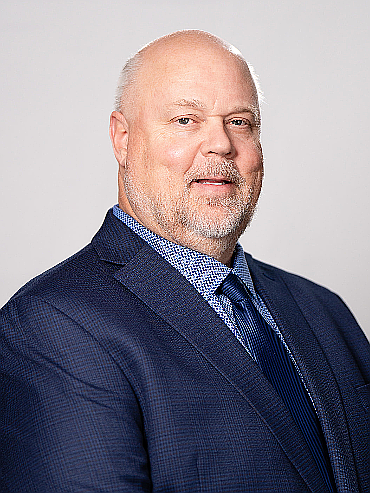
Rasmussen
Idaho’s physician shortage is not a distant or abstract problem. Families across our state experience it every day through longer wait times, limited access to primary care and difficulty accessing specialists, particularly in rural and growing communities like North Idaho. If we want to change that trajectory, we must focus on the foundation of our health care workforce: medical education.
As a Coeur d’Alene native, Coeur d’Alene High School graduate, CEO of Northwest Specialty Hospital and an elected member of the Coeur d’Alene School District board, I see this issue from multiple perspectives. The conclusion is clear: Idaho must expand undergraduate medical education by building on what already works.
To understand why this matters, it helps to clarify the medical training pipeline. Undergraduate Medical Education (UME) is the period of study at medical school when students earn their M.D. or D.O. degree. Graduate Medical Education (GME) is residency training in which physicians complete hands-on clinical training before practicing independently. Both are essential. Without enough UME seats, Idaho cannot produce enough future physicians to meet demand.
For more than 50 years, the University of Idaho has been the cornerstone of public medical education in our state. Through its long-standing partnership with the University of Washington School of Medicine, known as Idaho WWAMI, U of I has helped educate generations of physicians while keeping students closely connected to Idaho communities. WWAMI was designed specifically for states like ours, and its success is measurable.
Graduates of Idaho WWAMI are more likely to return and practice in Idaho than the national average. The program has built a robust statewide network of clinical training sites, including rural and underserved areas. Here in North Idaho, that impact is personal: 20 Kootenai County public high school graduates are currently enrolled in Idaho WWAMI, preparing to become the physicians our communities will rely on in the years ahead.
During the 2025 legislative session, Idaho lawmakers passed House Bill 368, reflecting a shared recognition that our state must expand medical education to address the physician shortage. That goal is the right one, but how we expand matters.
It's important to make clear that the University of Idaho is the common thread and the right partner in Idaho’s future of medical education. U of I partners with the University of Washington through WWAMI and will partner separately with the University of Utah Spencer Fox Eccles School of Medicine to expand undergraduate medical education capacity. These are distinct partnerships, but they share a common anchor: the University of Idaho, which has supported medical education in Idaho for more than five decades.
The Utah partnership does not replace WWAMI, nor does it involve the University of Washington. Instead, it offers a complementary pathway, adding medical school seats for Idaho students while preserving the experience, relationships and outcomes U of I has built over 53 years of medical education leadership.
That should not be an either-or decision. Idaho can — and should — pursue a “both — and” approach: continue supporting Idaho WWAMI while expanding opportunities through the University of Utah partnership, with the University of Idaho at the center of both.
If we want more doctors practicing in Idaho, we must educate more doctors with Idaho roots. Our future physicians are already graduating from Idaho high schools. The responsibility now is to ensure they have strong, stable pathways to train and to stay right here at home.
• • •
Rick Rasmussen is CEO of Northwest Specialty Hospital, a Coeur d’Alene High School graduate, and a Coeur d’Alene School District trustee.