
Little warns against deeper cuts
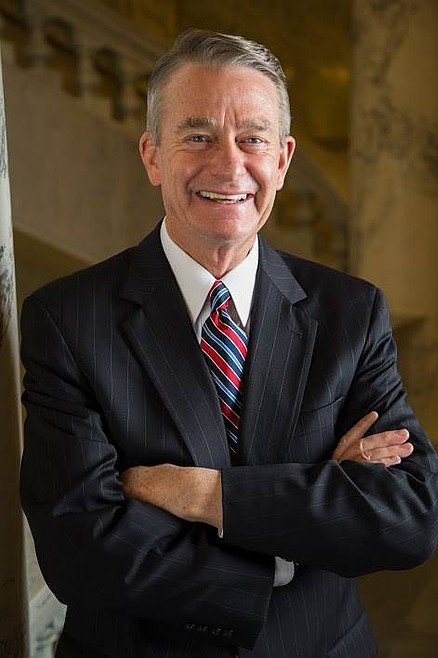
Little
BOISE — Gov. Brad Little met with members of the press Tuesday for an annual breakfast at Beside Bardenay. Though repeatedly outlining differences between himself and the actions of the Legislature, he said his options to oppose reductions to programs he has championed in recent years were limited.
Reflecting what has characterized much of this year’s legislative session, Little’s focus was on the budget constraints the state was facing for this fiscal year. Little outlined that his “Enduring Idaho” plan was premised on the understanding that years of record surpluses and one-time federal funding were ending.
“We wanted to make sure that, as we went forward — presented our budget, presented our legislative package — that the trajectory of Idaho would continue,” Little said, “but it also meant making some tough decisions.”
These decisions came first in the fall, after Little ordered state agencies to enact 3% holdbacks to right the state’s bottom line, with notable exceptions for K-12 education and Idaho’s LAUNCH program, which provides high schoolers with funding for education and career training.
With some members of the Legislature contending these cuts don’t go far enough, debate on further cuts could continue deep into the session.
Additional budget cuts
With his recommendations already brought forward, Little said the ball was in the Legislature’s court. To this point, they have indicated openness to deviating from his recommendations.
This has manifested most notably in the Joint Finance-Appropriations Committee’s approval of additional state agency cuts and in both the House and Senate approving a bill that makes federal tax changes retroactive to the 2025 tax year, changes Little recommended not apply until tax year 2026.
Little, lacking law-making authority, said his role now was to “talk about the intended and the unintended consequences of what’s taking place.” When asked about these consequences, Little deferred to a letter provided last week by Lori Wolff, administrator of the Division of Financial Management, outlining the impact of cuts approved by JFAC.
The letter highlighted a variety of reductions, including for adult and child mental health services, Idaho’s Career Technical Education program, and the seasonal firefighters employed by the Idaho Department of Lands, each of which was poised to see significantly reduced operations.
As Little’s budget director, Wolff has repeatedly sounded the alarm on the anticipated fallout of cuts deeper than those recommended by the governor. Little echoed this sentiment, noting with just a few months before the close of the fiscal year June 30, many agencies “have little or no flexibility at all.”
The impact is partly visible in the Department of Lands’ wildfire suppression fund, which, after repeated years with a balance over $70 million, has fallen to under $3 million as annual fire-season costs to the state have steadily risen.
Little said he was “not a big fan” of the Legislature moving to fund wildfire suppression in the previous session through deficiency warrants, which allows Idaho to draw from its general fund when costs exceed the budgeted amount. Though contractors would still get paid even without “cash in the bank,” the Legislature would need to appropriate funding in the following session to make up the difference, Little said.
With limited funds in the fire suppression fund at present, this could become a reality as early as this fire season.
“We don’t have enough money there to pay our fixed costs to start the season,” Little said, “even if we have zero fires.”
Little also spoke about cuts to Idaho’s treatment courts and state mental health services. Citing conversations with Idaho’s justices, he said they were “very concerned” about the future of Idaho’s treatment courts tasked with diverting individuals away from incarceration for legal issues about substance abuse, mental health and veterans.
“Our problem-solving courts have been the envy of the judicial system in the West, and we sure don't want to throw that out," Little said, adding that the alternative of incarceration was both less effective and more costly for the state.
Directly related to these concerns are cuts the state has made to its behavioral health services after the Idaho Department of Health and Welfare ended funding for a variety of mental health programs last year. The Idaho Sheriffs Association previously issued a letter opposing the cuts and the burden they would leave on law enforcement services in the state, as law enforcement increasingly responds to those in a mental health crisis.
Invoking veto power
Though Little himself opposed several of the proposed cuts, he said Tuesday that state statute prevents action to halt certain agency budget bills.
The Idaho Constitution gives the governor limited authority to veto portions of appropriation bills, known as a line-item veto. Little’s first line-item veto arrived in the previous session when he struck a part of a bill eliminating the governor’s emergency fund, as was previously reported by the Idaho Press.
Little said Tuesday that there is a “narrow window” of opportunity to assert this authority. In some cases, “the things that I am not delighted about are embedded in other things that we absolutely have to have.”