
Former Idaho Supreme Court Justice eyes governorship
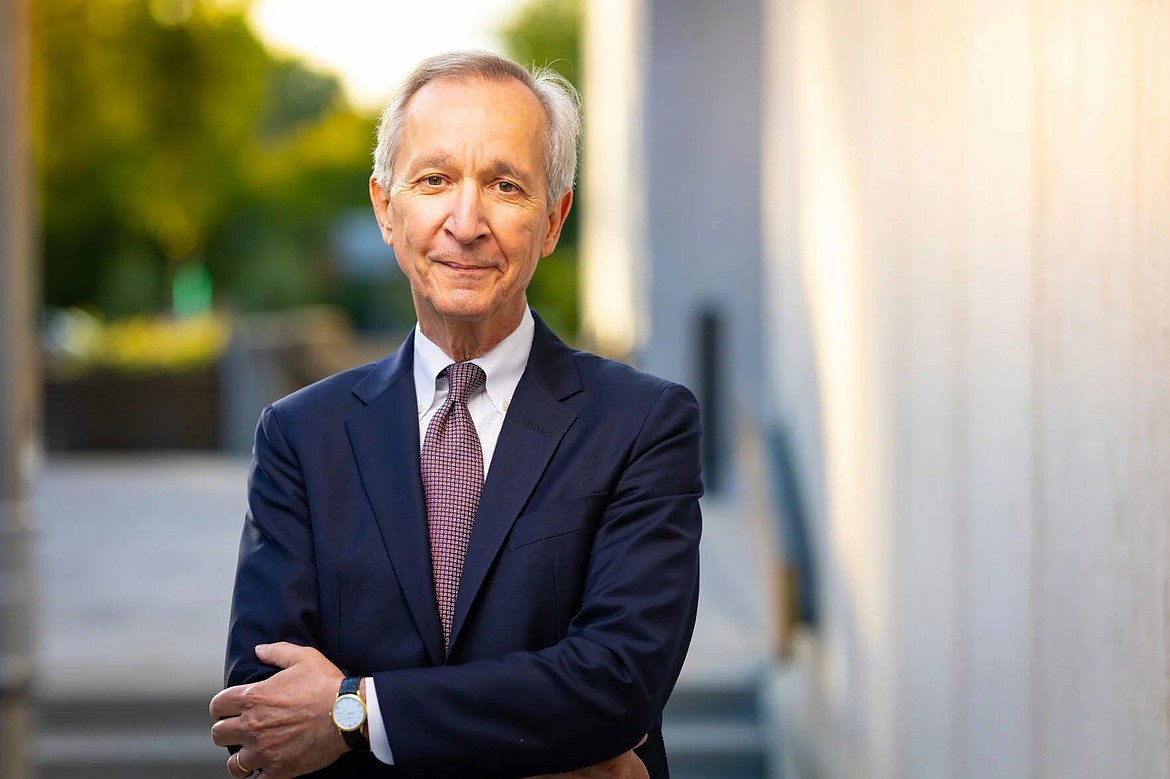
Stegner
After a career spent serving in Idaho’s courthouses, including as justice for the Idaho Supreme Court, John Stegner is now seeking a spot on the ballot as an independent candidate for Idaho governor.
Stegner, a lifelong Idahoan, was born and raised in Grangeville. He went on to practice law in Lewiston before serving for 21 years as a district judge in Moscow. This experience led him to serve as a justice on the Idaho Supreme Court, a position he held from 2018 through 2023.
As for what led him to shift from the bench to a run for the statehouse, Stegner told the Idaho Press he felt his independent bid was not too dissimilar from decades of work as an adjudicator.
“I think running as an independent is akin to being a judge,” Stegner said. “I am eager to pursue what I think are good ideas and I don’t care whether they’re Republican or Democrat ideas, as long as they’re good ideas.”
In the same way he did as a judge, Stegner said he intends to take the facts and the law “and move in the direction it takes (him).” With this in mind, he said one of the key issues inspiring him to run is the state’s loss of 35% of its OB-GYNs in the wake of the Supreme Court’s 2022 Dobbs decision overturning Roe v. Wade, which for 50 years protected the constitutional right to an abortion.
Stegner said he felt there was no end in sight to these losses, as Idaho ranked 50th in the nation in OB-GYN practitioners before this decision. With the state also losing over half of its maternal-fetal medicine specialists, Stegner said change was necessary.
Continuing on the issue of health care access, Stegner also voiced support for maintaining the state’s Medicaid expansion program.
“To reduce Medicaid or to defund Medicaid is to take health care opportunities away from some of our less able citizens to procure medical care,” Stegner said. “I don't think that's what a society should aspire to. I want to live in a society that aspires to help those less fortunate in that way.”
With an extensive background in the judicial branch, Stegner said he was also seeking to address Idaho’s standing as having among the nation’s highest per-capita incarceration rates despite a low crime rate.
Stegner said this was not the case before 1986. After that year, judges gained greater discretion to set fixed minimum terms in sentencing under the Idaho Unified Sentencing Act. A young judge at the time, Stegner said he suggested to Idaho’s district judges that sentencing guidelines would provide a fairer framework than judges having “unfettered discretion.”
Stegner said this law also reduced the opportunity for inmates to receive a reduction in their sentence for good behavior, known as “good time.”
“One of the things you get with good time is an incentive for persons in the prisons to do well and to do better than they did when they weren't incarcerated. We've taken that incentive away,” Stegner said. “Good time is now only available if, for instance, you saved a jailer's life during a riot,” and in other limited circumstances.
“I think, from a psychological and societal view, it makes sense to give inmates incentive to do well and to do good while in the prison,” Stegner said, “and we don't have that now.”
Looking at another crucial state institution, Stegner said he was a proponent of public schools, declaring himself, his wife and his three daughters the products of public education.
He said improvements were needed in the state's mathematics and language arts proficiency, at 42.3% and 53.2%, respectively, citing numbers from the Idaho Department of Education. Stegner said if the state had $50 million to spend — in reference to the cost of the private school voucher program — it would be better off spent on improving these public school outcomes.
As for the issue he is questioned about most, Stegner said it was public lands, a topic that has come under increased scrutiny after failed federal proposals sought to put vast swaths of public lands in western states up for sale.
“I would be vehemently opposed to selling the public lands to billionaires who could then take it away from those of us in Idaho who enjoy access to public recreation,” Stegner said.
Though he has a platform seeking to address a wide range of ongoing issues in the state, Stegner noted there is still work to do to get himself on the ballot for the upcoming election. Under Idaho law, each independent candidate must collect 1,000 signatures from registered voters to appear on the general election ballot.
After obtaining signatures, county clerks must validate them and submit them with a declaration of candidacy to the Secretary of State, who conducts a separate validation process. Since signature invalidation rates tend to run between 25-30%, expectations are that he would need 1,300 signatures to get on the ballot, he said.
Stegner said he initiated his campaign “in earnest” the Friday before last, aiming to file a petition for candidacy by the state’s filing window between Feb. 23-27.