
CONTRIBUTED CONTENT: What actually gets a will overturned in Idaho
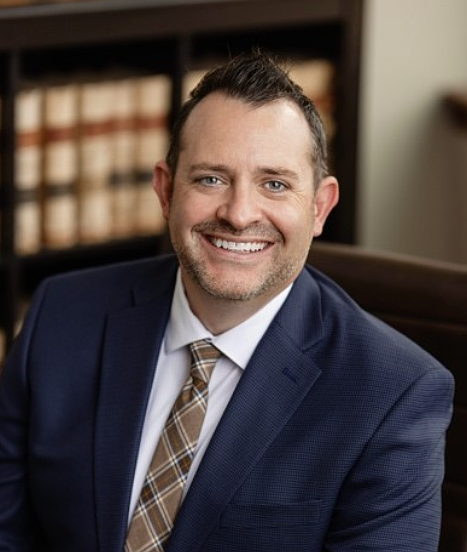
Robert J. Green
“I'm going to contest the will” gets said far more often than it gets done, and most challenges that do get filed go nowhere. Being surprised by a will is not a legal claim. Neither is being treated unequally, or believing your parent would never have chosen that on their own.
But the challenges that succeed follow a recognizable pattern — and so do the plans that invite them. It's worth understanding both, because nearly everything that protects a plan has to happen while the person signing it is still alive.
The Bar for Capacity Is Lower Than People Assume
Testamentary capacity is not the same as sharp. To sign a valid will, a person generally needs to understand what they own, recognize the people who would ordinarily inherit, and grasp how they want their property distributed. That is a lower standard than the one required to sign a contract.
A diagnosis is not the test. Plenty of people with early dementia retain capacity to sign a will, and capacity is measured at the moment of signing — not the week before, and not two years later. This is why “Mom had Alzheimer's” is an argument that loses in court far more often than families expect.
Undue Influence Is Where Cases Are Actually Won
The stronger claim is usually undue influence: the idea that the testator's free choice was overcome by someone else. Idaho courts look for four elements — a person susceptible to influence, someone with the opportunity to exert it, a disposition to exert it, and a result that reflects it.
Direct proof almost never exists, since no one exerts pressure in front of witnesses. Idaho courts therefore weigh circumstances: whether the person had independent advice, how unusual the gift was in relation to the whole estate, active solicitation, and — the two facts that come up again and again — whether the beneficiary isolated the testator and worked to alienate them from the rest of the family.
The Presumption That Flips the Burden
Ordinarily the contestant carries the burden. Idaho Code § 15-3-407 places the obligation to prove lack of capacity, undue influence, fraud, duress, mistake, or revocation squarely on the person attacking the will.
There is an important exception. When a beneficiary also stood as a fiduciary to the testator — serving as personal representative, or acting as agent under a power of attorney — Idaho recognizes a rebuttable presumption of undue influence. The burden shifts, and the person defending the will has to produce evidence that no undue influence occurred.
That matters for ordinary families, not just litigious ones. The adult child who manages a parent's finances and also receives the larger share is exactly the fact pattern that triggers it.
What Actually Protects a Plan
• Sign earlier than feels necessary. Every year between signing and death makes a capacity argument weaker.
• Keep the beneficiary out of the process. A child who schedules the appointment, drives the parent, sits in the meeting, and relays the instructions has handed a future contestant three of the four elements.
• Insist on independent counsel. The attorney should meet with the client alone. Every time.
• Document capacity when there's reason to. A physician's contemporaneous note costs little and is worth a great deal five years later.
• Use a self-proving affidavit. It establishes due execution without hunting down witnesses years afterward.
• Avoid the sharp turn. A plan that stayed consistent for a decade and then changed dramatically in the last months invites scrutiny. If the change is genuinely what you want, make it and then live with it in place for a while.
The Best Protection Isn't Legal
Most contests are filed by someone who was blindsided. A family that heard the reasoning from the person themselves — in plain words, while everyone could still ask questions — rarely ends up in front of a judge arguing about what that person really meant.
Documents can be attacked. A conversation your children actually remember is much harder to argue with.
My law firm is currently offering free telephonic, electronic, or in-person consultations about creating estate planning documents.
• • •
Robert J. Green is an Elder Law, Wills, Trusts, & Estate Attorney and the owner of Kootenai Law Group, PLLC in Coeur d’Alene. If you have questions about estate planning, wills, trusts, powers of attorney, Medicaid planning, or VA Benefit planning, contact Kootenai Law at 208-765-6555, [email protected], or visit www.KootenaiLaw.com.
This has been presented as general information and not as legal advice. Do not engage in legal decision-making without the advice of a competent attorney after discussion of your specific circumstances.