

SEPT NIBJ: The power of community presence
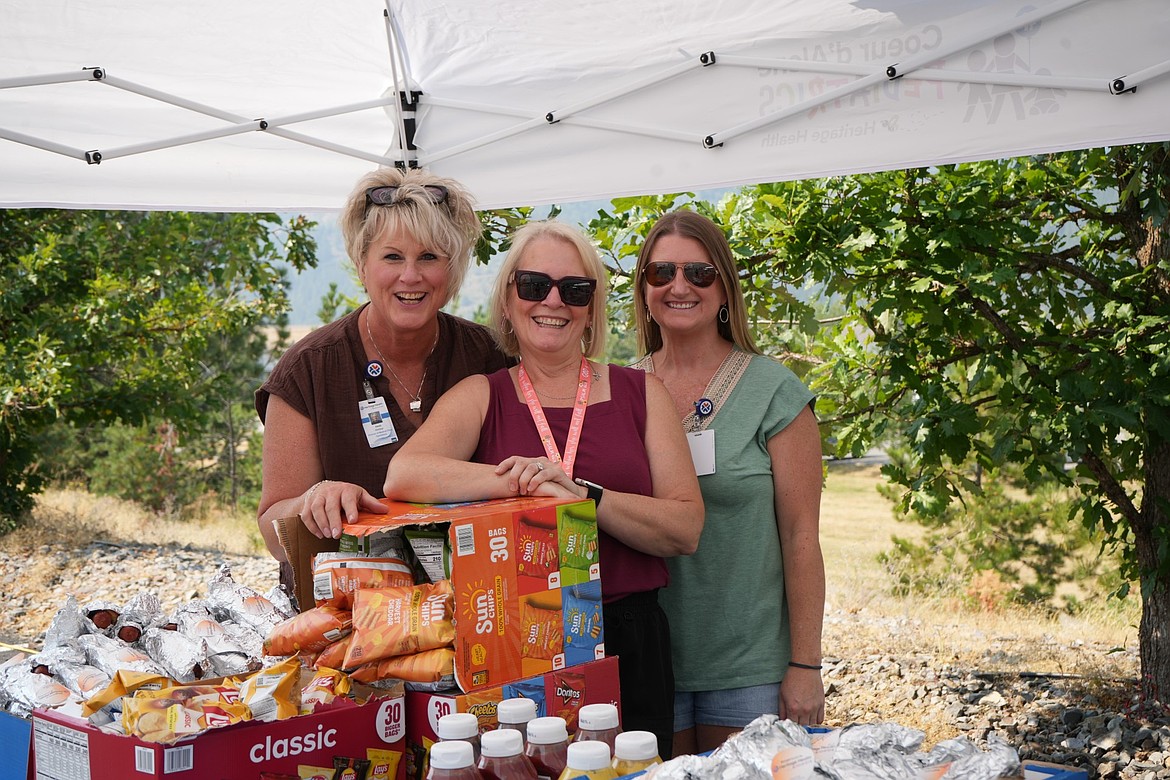
Heritage Health recently hosted a community outreach event at its Kellogg office, where members of the Federally Qualified Health Center organization’s leadership joined in the activities. Pictured, from left, are Heidi Webber, Director of Medical Clinic Operations; Richelle Brown, Coding Supervisor; and Shannon Holland, Coding Auditor.
Courtesy photo
Community outreach has become more vital than ever for rural medical facilities working to bridge the gap between healthcare providers and the populations they serve.
Rural communities often face unique challenges, including geographic isolation, transportation barriers, provider shortages and limited access to health information.
For many residents, getting sick involves more than managing symptoms. It can mean weighing the cost of care, questioning whether local providers can address their needs and figuring out how much time and travel will be required to reach a doctor.
Those realities help make access to comprehensive healthcare one of the most significant challenges facing rural communities across North Idaho.
While larger communities often have multiple healthcare options available, residents of smaller and lower-income communities frequently have fewer choices. Organizations such as Heritage Health are working to close that gap.
Heritage Health is North Idaho's largest nonprofit provider of integrated medical, dental and behavioral health services, serving communities across Kootenai, Shoshone and Benewah counties. Founded in 1985, the community-focused Federally Qualified Health Center, or FQHC, provides healthcare regardless of a patient's ability to pay.
As an FQHC, Heritage Health is required to provide care regardless of a patient's ability to pay and offer income-based discounts through a sliding-fee scale program. The designation also requires community-based governance, with patients serving on the organization's board to help ensure services reflect local healthcare needs.
For Francine Ungarten, who recently was hired as clinic manager for Heritage Health's Kellogg office, those obligations make community outreach a natural extension of the organization's mission.
One of her first priorities was strengthening the clinic's ties to the community it serves.
"As someone who has been part of this community for many years, I think outreach is incredibly important in a rural area," Ungarten said. "In smaller communities, trust is built through relationships and through people seeing that the organizations serving them are truly invested in the community."
Earlier this month, the Kellogg clinic hosted Heritage Health Days, an afternoon of family activities, food and information designed to connect residents with local healthcare resources. Kohal Pharmacy and BioPerformance Institute North Idaho Physical Therapy, both of which share space with Heritage Health, also participated.
"When we can get outside the walls of the clinic and participate in the community, it gives people an opportunity to meet our staff, ask questions, and get to know us in a completely different environment," Ungarten said. "They get to see that we aren't just a healthcare organization, we're their neighbors; we're part of this community, and we genuinely care about the people who live here."
Heritage Health CEO Mike Baker also attended the event and reflected on the clinic's history, from its beginnings as Mountain Health Care under Dr. Fred Haller to its current role within the Heritage Health network.
While Baker said he is proud of the services Heritage Health provides throughout the Silver Valley and North Idaho, he acknowledged community outreach can sometimes receive less attention as healthcare organizations focus on expanding services and resources.
Still, he shares Ungarten's belief that maintaining a visible presence in the community is critical.
“Healthcare is so crazy and chaotic right now, and if you don't have relationships with the community, it gets even harder,” he said. “As we've grown, there's never been an intention of not being present in the community, but I think everyone has just gotten so busy. We’ve got to double down and bring it back.”
That commitment recently led Heritage Health to hire Rachel Peterson as the organization's director of people and community advancement.
Peterson said Heritage Health's role as an FQHC makes community engagement central to its mission.
“As the FQHC that serves these communities, community outreach is our business,” she said.
Peterson said outreach is about more than promoting services. It is about identifying community needs and ensuring residents know affordable healthcare options are available close to home.
“This is why we exist – to fill that gap for our community,” Peterson said.
For Baker, Peterson and Ungarten, the message is ultimately a simple one: Heritage Health wants residents to know help is available and that staff members are willing to work with patients to find solutions.
"Rural communities rely on organizations that are willing to show up, build relationships, and support the community beyond the services they provide every day," Ungarten said. "That visibility helps build trust, and ultimately, I think that trust can make people more comfortable reaching out when they need healthcare or other resources. In a small community, simply being present and showing people that you care can make a tremendous difference."