
Residents, city officials examine diverse future land use in Post Falls
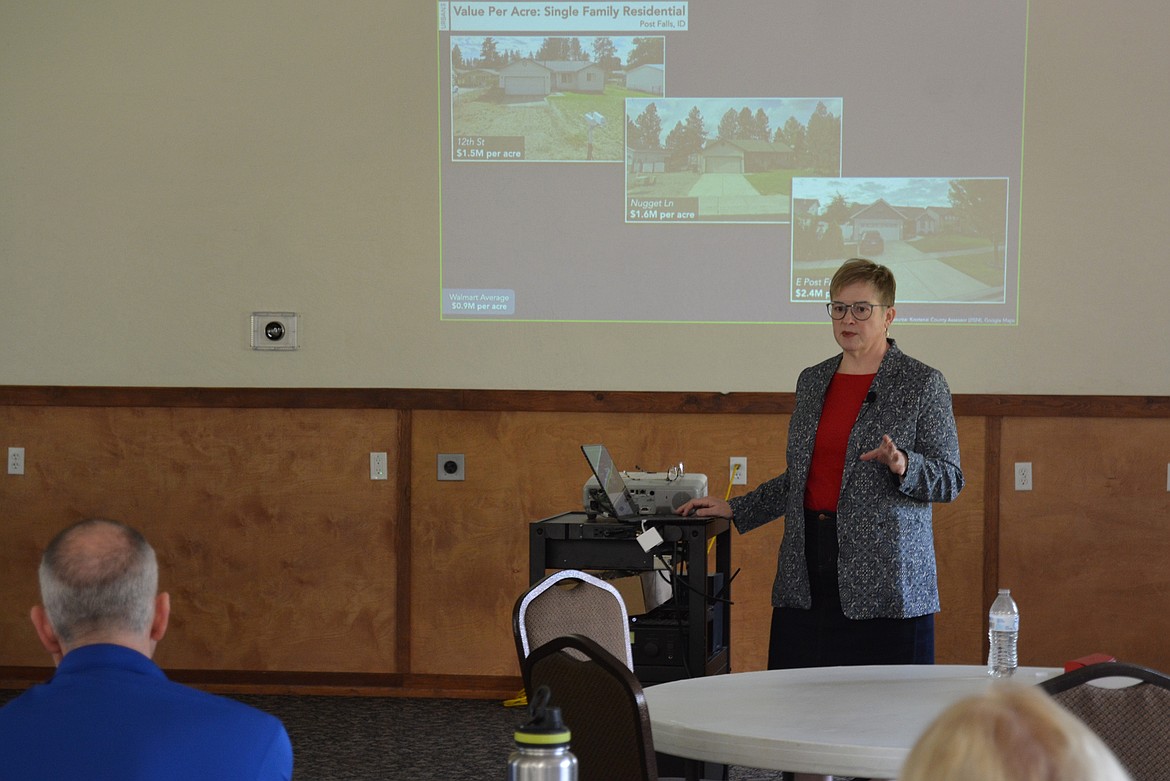
Heather Worthington of Urban3 presents information about future land use options for Post Falls to better ensure the city can pay for necessary upkeep of infrastructure. About 25 people attended the midday session at Q’emiln Trailhead Event Center.
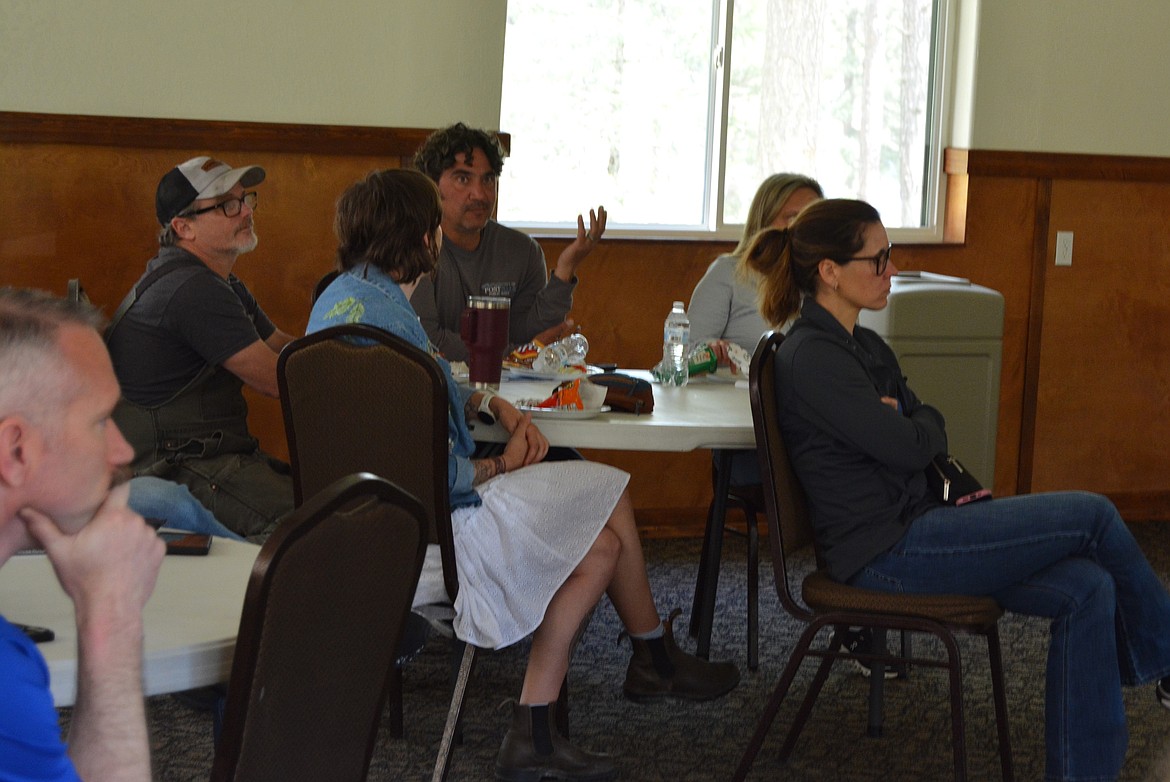
Justin Williams asks about population density during a future land use presentation on Wednesday for the city of Post Falls.
CAROLYN BOSTICK/Press
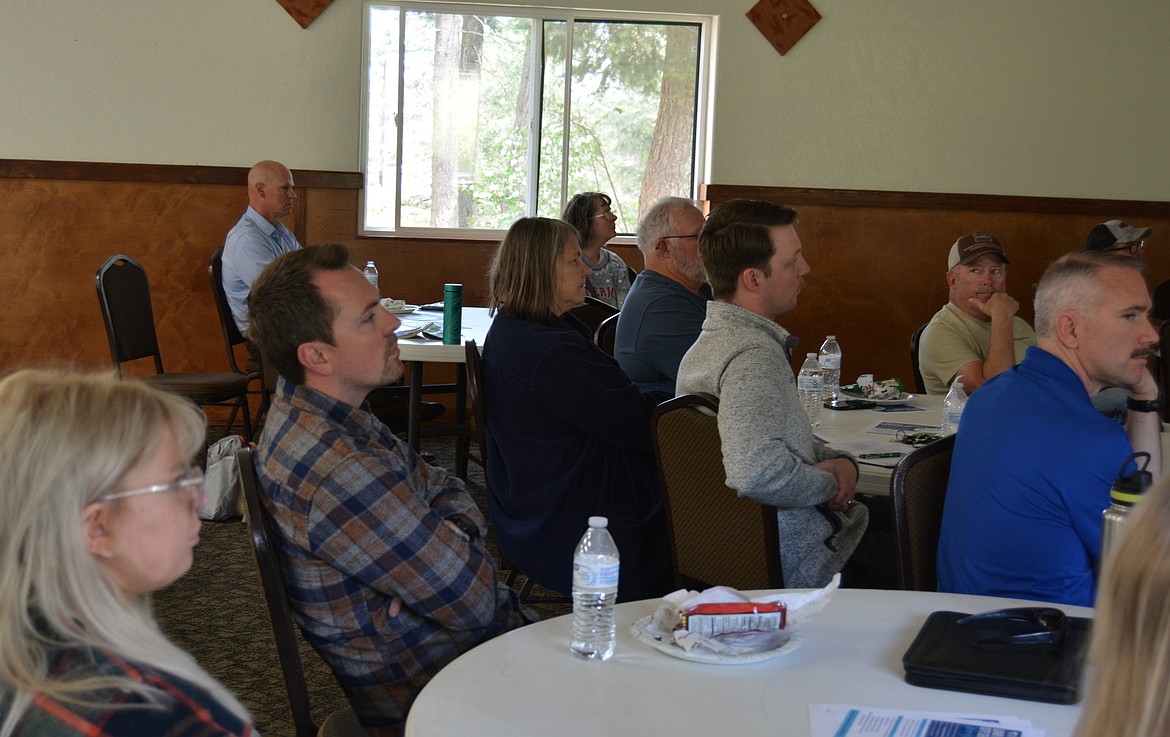
About 25 people attended a future land use presentation on Wednesday about how Post Falls can better keep up with infrastructure costs.
POST FALLS — The numbers didn't favor infrastructure costs for the city of Post Falls during a presentation on land use valuations.
Heather Worthington of Urban3 shared that the city currently has about $26 million available to spend, but needs about $62 million to maintain roadways and other utilities.
She said growing more densely is an option for diversification. Still, if the city grows too fast, residents may experience a lower quality of life and face elements they don’t like or want.
“What’s right for Post Falls?” Worthington asked the audience. “What are the tradeoffs you’re making?”
Although Post Falls fits within the norm for American cities struggling to meet infrastructure costs, Worthington said recent city data show the city’s net position is a $36 million deficit in lifecycle funds.
Lifecycle value is the total estimated cost of building and maintaining an asset over its entire period of use.
Post Falls de-annexed some of its city footprint in 1964 to shrink its boundaries to fit the current population, and then gradually grew through 1980. After 1980, rapid growth accelerated.
The average property valuation for an acre of land in Post Falls is $1.6 million, but further diversifying the land-use portfolio would mean adding denser areas to the city that are better suited to generate taxable value and put more money into local infrastructure.
Several people in attendance voiced concerns about straying from the policy of adding only single-family residences.
Post Falls planning manager Jon Manley said the city is looking for fiscally sustainable options that preserve Post Falls' character.
City Councilor Samantha Steigleder sometimes pushes back against denser land use, but she acknowledged that some measures are necessary to maintain critical city infrastructure.
She has looked into the tax valuations where she lives and found that her street, full of single-family homes, doesn’t adequately support the city in keeping up with road maintenance costs.
Steigleder said the city needs to identify places in Post Falls where residents will feel comfortable building and developing more to boost revenue.
“We need to find out how much we can tolerate while maintaining what we like and our way of life,” Steigleder said.
The suggestion Worthington put to residents was to think of land use as a safer investment as you're nearing retirement, as opposed to having a portfolio of risky stocks.
"Be dependent on yourself as a city and rebalance the land use portfolio from time to time," Worthington suggested.
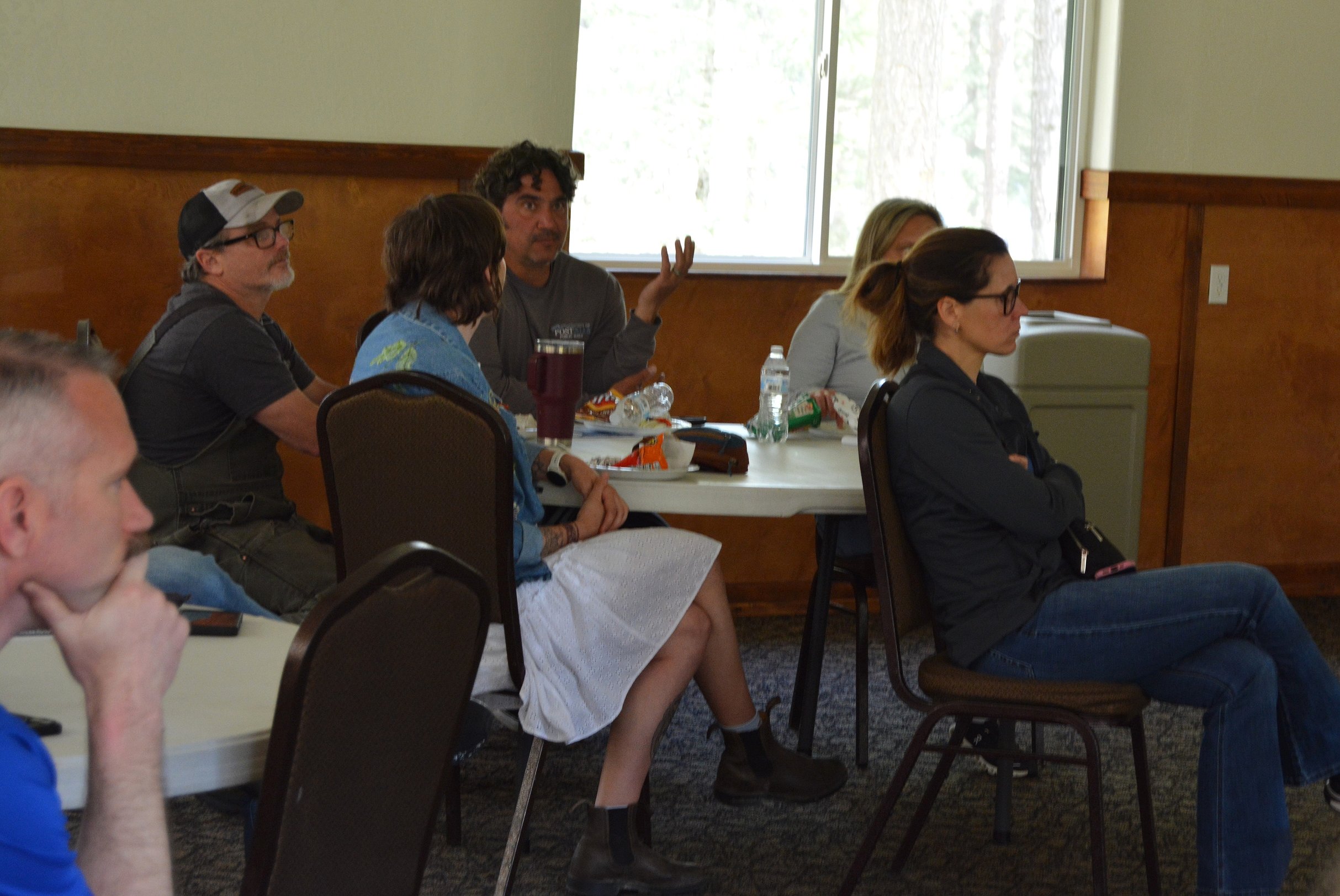 Justin Williams asks about population density during a future land use presentation on Wednesday for the city of Post Falls.
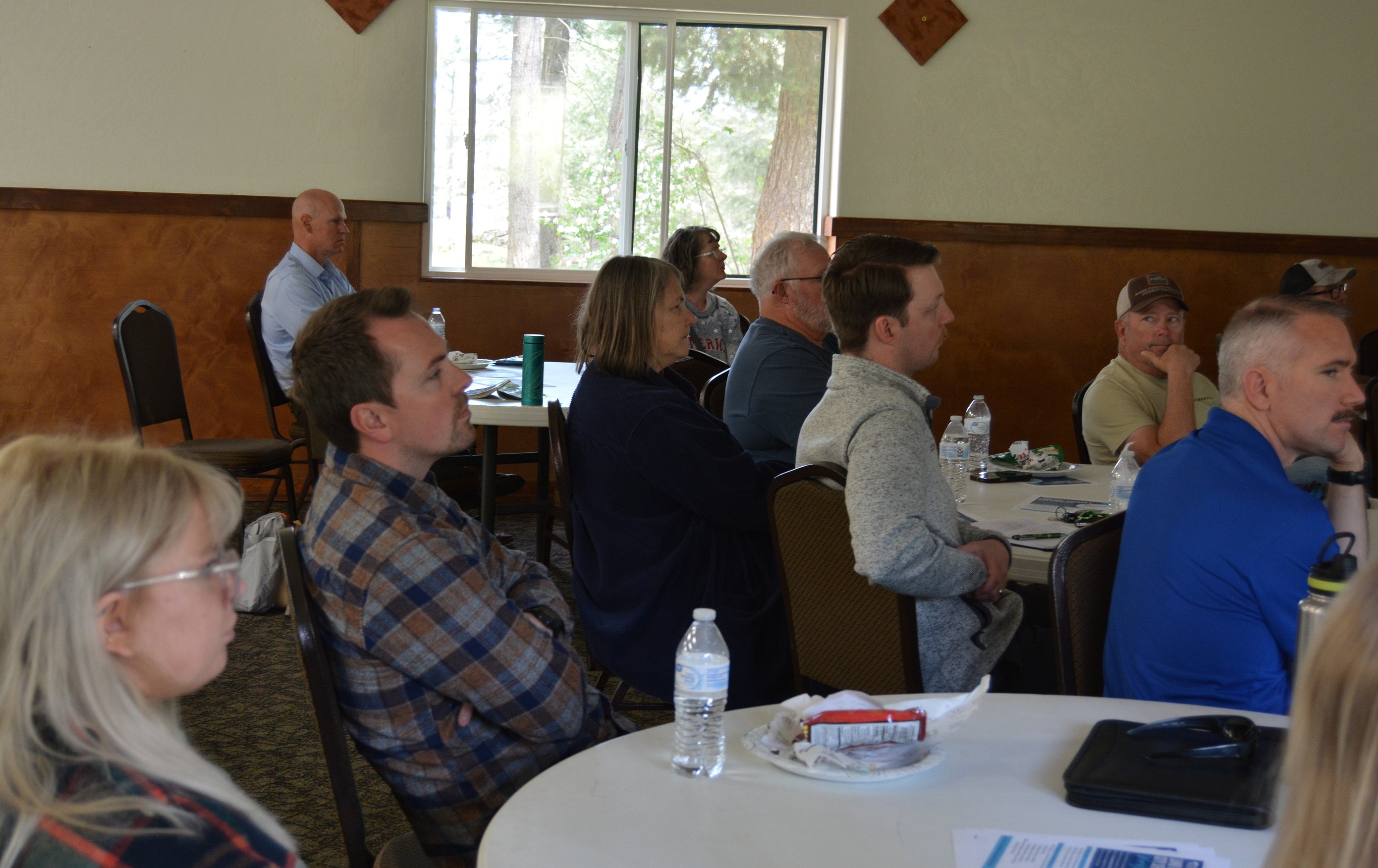 About 25 people attended a future land use presentation on Wednesday about how Post Falls can better keep up with infrastructure costs.