
Choosing the perfect 3D scanner for your business needs
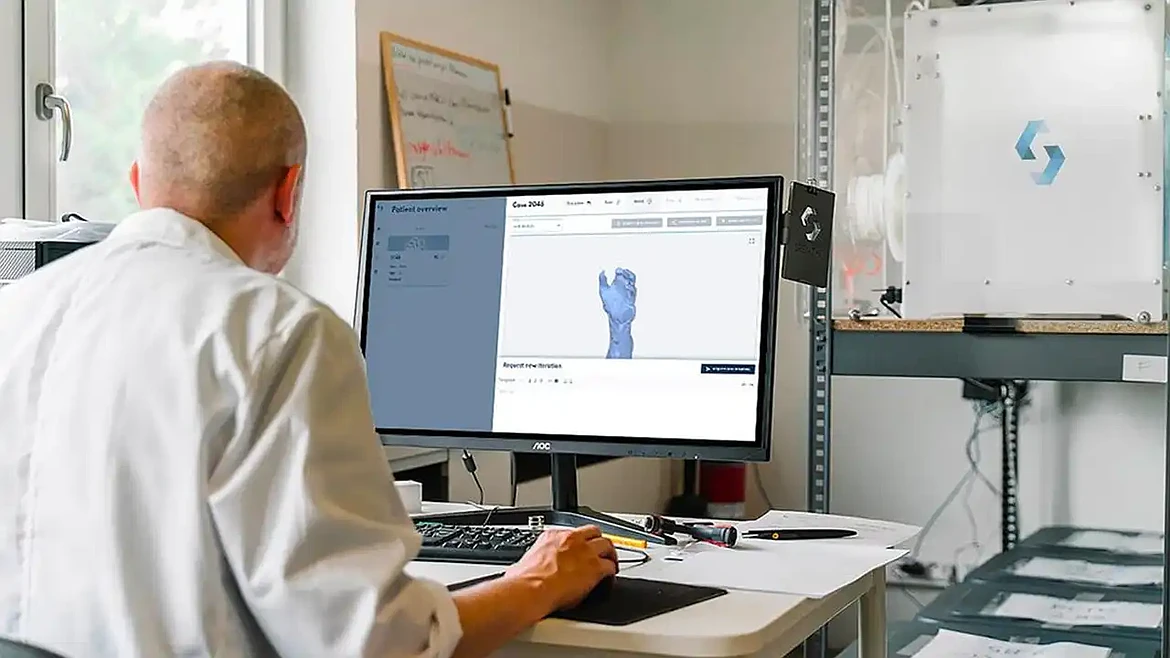
Before we jump into comparisons, the quick and easy answer is that the best 3D scanner for you and your business will depend on your application, industry, and budget. When it comes to making a choice, companies should think about precision, speed, portability, and software compatibility. By taking these into consideration, companies can decide on 3D scanning technology that improves performance and scales with the business.
Today's competitive environment compels businesses to continuously innovate and provide more value. State-of-the-art tools are no longer just a benefit. They are a matter of survival.
One such tool is the 3D scanner, which has revolutionary potential. Organizations are using business 3D scanners in product development, quality control, or to create precise digital replicas that previously required a myriad of man-hours to achieve the same result.
The right decision can change workflows for the better and increase profitability. Choosing the wrong one can waste resources and restrict company growth.
Read on to learn how to choose wisely and make your investment drive tangible business impact.
Is It Worth Getting a 3D Scanner?
3D Scanning technology will change the way people think about design and manufacturing. When companies take real-world objects and precisely digitize them, corporations gain new options.
Key benefits include:
- Faster prototyping and product development
- Better quality control and defect detection
- Enhanced reverse engineering capabilities
- Streamlined inventory and asset management
- Aid for customized manufacturing and innovative industries
Those advantages of 3D scanner technology are important to industries, such as:
- Health
- Aerospace
- Automotive
- Consumer products
How Does a 3D Scanner Work?
The way 3D scanning works is by scanning an object and creating a digital replica of it. Various approaches can be found for specialized purposes:
- Laser scanning: High accuracy for industrial applications
- Structured light scanning: Uses projected patterns that result in some of the fastest and most detailed 3D scans available
- Photogrammetry: Creates 3D models from photographs, which is often budget-friendly
- Contact scanners: Measure objects by touch, which is good for metrology
Understanding these methods helps technology to be aligned with the application.
Scanner Features Comparison
You need to compare scanners before you decide on one. Businesses should weigh the following:
- Accuracy: A need for industries requiring fine tolerances
- Speed: Essential for high volume or time-sensitive jobs
- Portability: Useful when scanning larger equipment or on-site items
- Ease and simplicity: Cuts down training costs and enhances adoption
- Software integration: Compatible with existing CAD and design systems
- Data output: Ensure the formats are compatible with your workflow
Every feature contributes to business productivity. Ignoring them can result in expensive setbacks.
3D Scanner Benefits for Businesses
The benefits of implementing business 3D scanners are more than convenience-based. Some of the advantages include:
- Efficient operations: Bottlenecks by design-to-production are reduced
- Cost savings: Finding mistakes in the early phase prevents rework and a waste of material
- Innovation enhancement: Opens the door to creativity and personalization
- Customer experience: Consistency in quality creates trust and brand loyalty
These advantages can be a reminder for companies that they need to consider investing in advanced scanning.
Industries Using 3D Scanners
These are new tools that industries are using and developing quickly to solve specific problems and open up new opportunities. Each industry, from heavy manufacturing to creative design, has its own advantages.
These industries use 3D scanning technology:
- Engineering and construction: Product analysis, quality control, and process optimization
- Medical: Making implants, prosthetics, and models in the healthcare industry
- Architecture and construction: Recording structures, renovations, and site analysis
- Automotive & aerospace: Component checking and adherence to safety regulations
- Arts and design: Saving artifacts while fostering digital creativity
The first step to making a choice is knowing the requirements of your industry.
Advanced Scanning Solutions on the Market
There are a variety of high-tech scanning solutions available on the market today. Entry-level to industrial-class machines are available with an astounding array of applications.
Some popular options include:
- Handheld scanners for flexibility
- Desktop scanners for small, intricate objects
- Industrial-grade scanners for large-scale precision
One of the standout devices is the EinScan Rigil, which combines user-friendliness with professional precision. Solutions like these demonstrate to companies how they can tap into useful technology based on what they need.
Common Mistakes to Avoid
There are certain risks that individuals should be aware of when they are considering making a purchase. Some mistakes to avoid when choosing a 3D scanner include:
- Overlooking compatibility with existing software
- Not considering portability requirements for on-site usage
- Opting for less accurate but cheaper alternatives
- Not planning for training and integration
The path to adoption is smoother, and the ROI is achieved faster when avoiding mistakes.
Frequently Asked Questions
What should you look for in a 3D scanner?
First and foremost, precision, resolution, and reliability are critical to the quality of design and production results. Beyond those basics, consider how the scanner handles reflective, dark, or transparent surfaces, as not all models deal with those situations equally well.
Test out the setup process, scan rate, and observe whether the device fits into your workflow so your projects are not delayed. Ensure the scanner is compatible with CAD, CAM, and design software to avoid potential compatibility headaches and added expense.
These are all clearly differentiated factors that distinguish the professional quality devices from the consumer level. This allows businesses to achieve dependable and predictable results.
What is the best 3D scanner for small details?
The fine details require high-resolution structured light or desktop scanners with high-grade optics. Even models with micron-level accuracy are best suited for applications requiring high-level replication of small features.
These scanners are ideal for jewelry, dentistry, small parts manufacturing, and other research applications that require the most accurate measurements. Look for scanners that offer high resolution matched with stable platforms, vibration management, as well as advanced software to process and clean complex data collections. Units with automatic rotation tables or multi-angle scanning capabilities can also offer greater uniformity in the scanning process of small or highly detailed targets.
Choosing the Perfect 3D Scanner for Your Business Needs
Picking the perfect 3D scanner is not all about tech. It is also about meeting solutions and objectives. Innovative companies that invest well get efficiencies, innovation, and long-term success. The ideal scanner helps companies grow, improve quality, and reach new opportunities.
Continue browsing our website for the latest news updates and more helpful articles.
This article was contributed by Next Net and published on cdapress.com as part of our contributed content program. Contributed content provides perspectives from businesses and organizations. These contributions help support local journalism through financial support, ensuring we can continue delivering trusted local reporting to our readers.