
Volunteers band together to restore pioneer cemetery
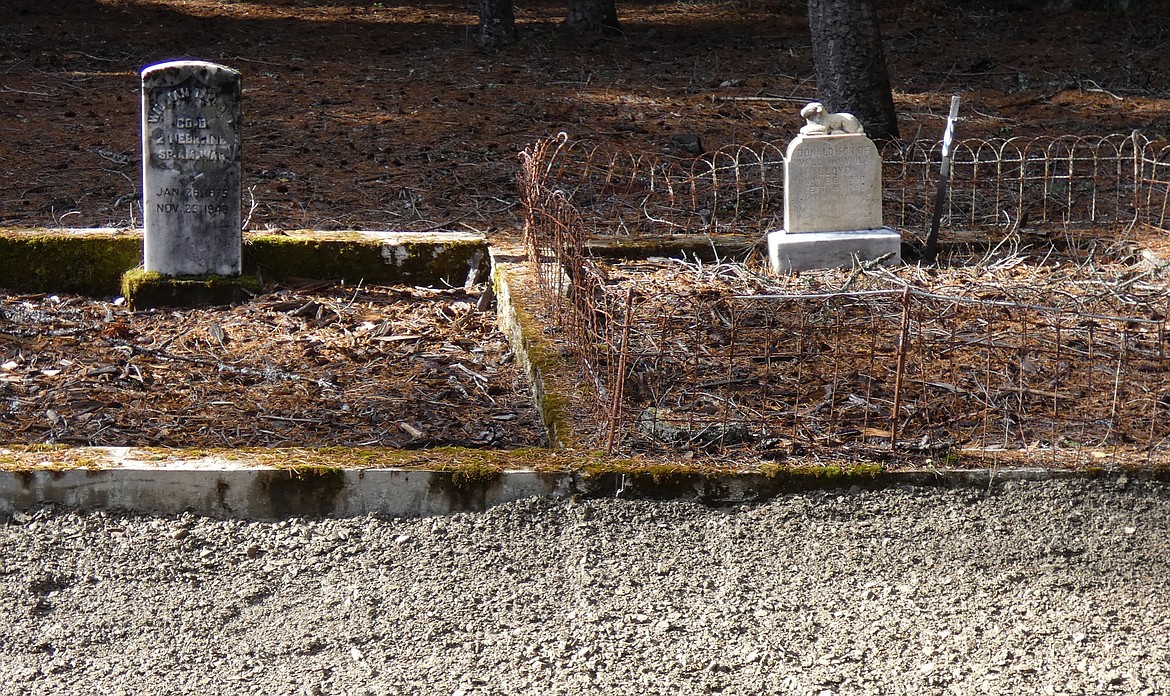
A gravestone at the Cabinet Cemetery showing the final resting place of Donald Lloyd, the son of Will and Viola Lloyd.
Photo courtesy CRAIG NELSON
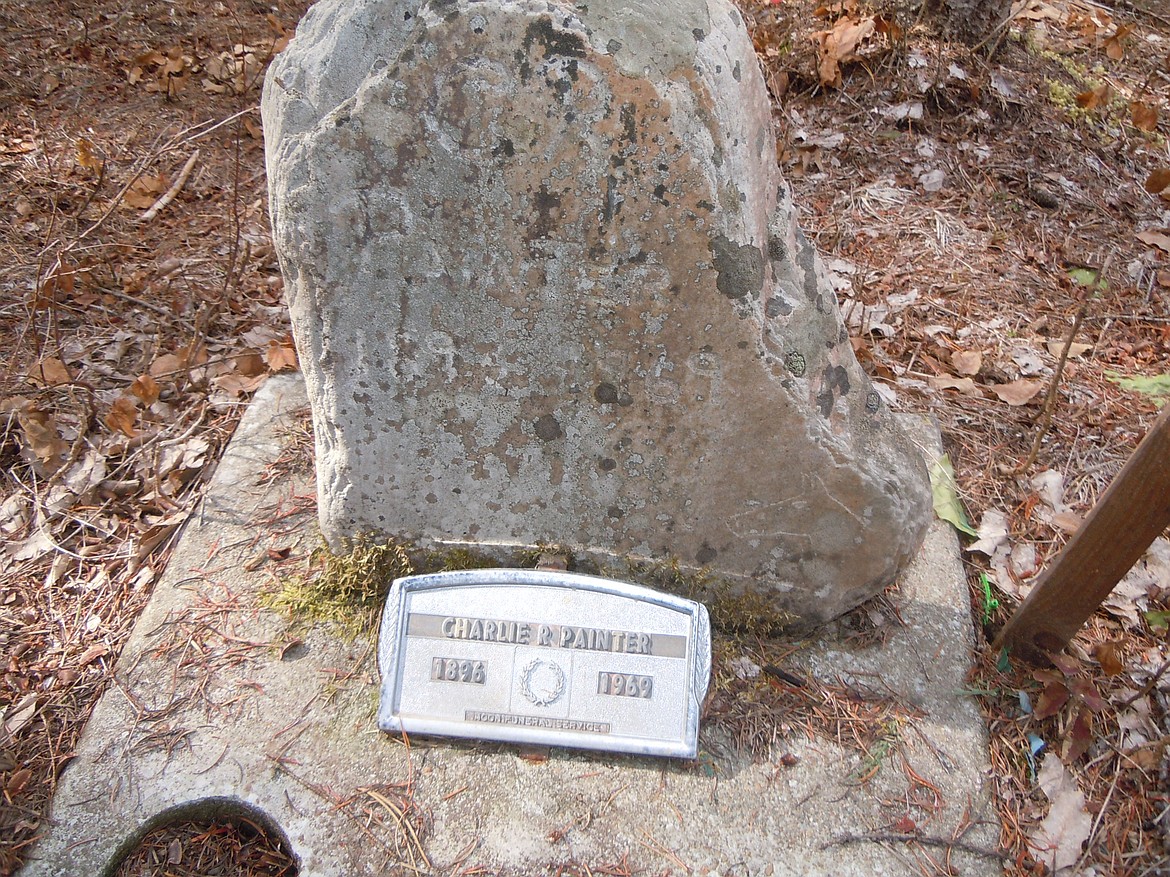
A gravestone showing the final resting place of Charlie R. Painter.
Photo courtesy CRAIG NELSON
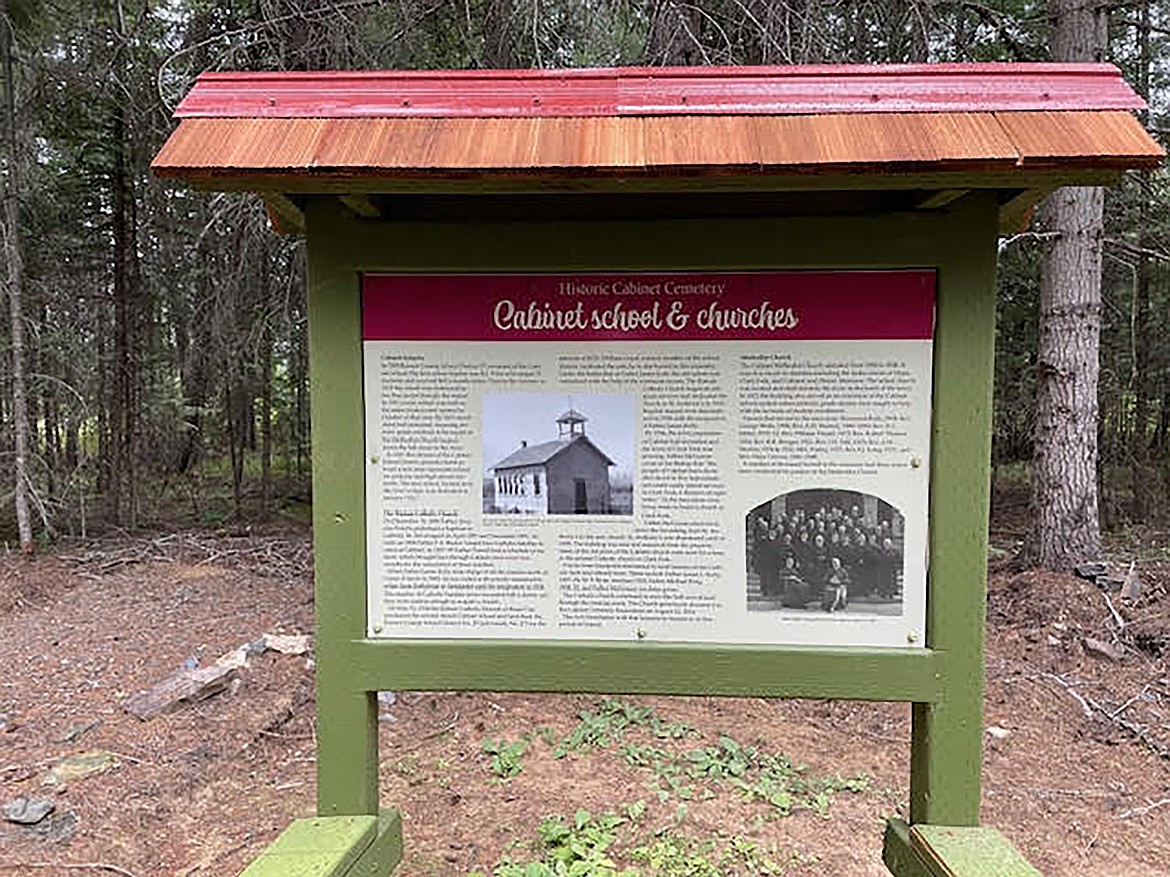
An information kiosk sits by the foundation of the old Cabinet School, near the once-abandoned cemetery of the former townsite in eastern Bonner County.
Photo courtesy CRAIG NELSON
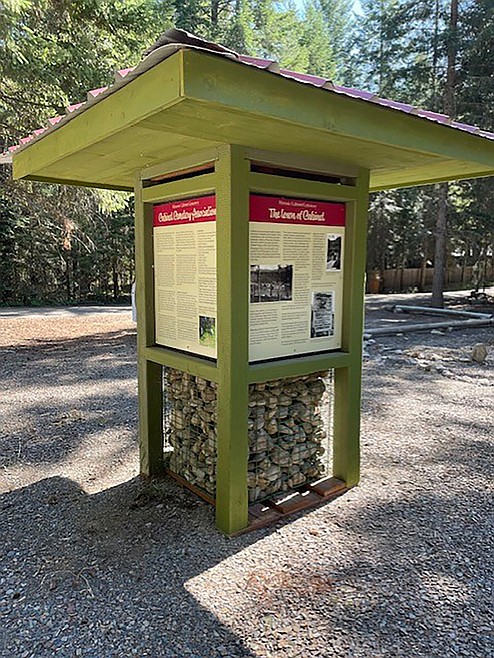
An information kiosk sits near the old Cabinet Cemetery, a site rescued and now maintained by a group of volunteers.
Photo courtesy CRAIG NELSON
Back in October of 2014, a group of volunteers began working to preserve some dignity to the final resting place of earlier inhabitants of eastern Bonner County, specifically the cemetery located near the faded town site of Cabinet, a once-bustling community that "clung tenaciously to its existence," Mona Leeson Vanek said in her book, "Behind These Mountains."
Cabinet took hold in 1883, shortly after the arrival of the Northern Pacific Railroad. The cemetery sits about a mile upstream from Cabinet Landing, a historic river bench land utilized by Native Americans, fur trappers, explorers, settlers and travelers for centuries.
The cemetery took root near the Montana border along the south side of the Clark Fork River in 1923 when a local landowner, Michael Edward Mulvihill, purchased a 1-acre plot from the Union Pacific Railroad and later donated the land to the Cabinet Cemetery Association.
Prior to the restoration, the main influencing forces on the cemetery were neglect and decay.
Over the next several years, Delores Matthews, Craig Nelson and members of the Cabinet Cemetery Association began the tasks of restoring some grace to the burial ground.
“Our main goal is to bring back respect to the people who are buried there and preserve the history of the area. Many of those buried in the cemetery were part of the original homesteaders to the community," Nelson said.
In the beginning, there was so much that you could not see, prompting dozens of work parties to clear the brush and trees that had engulfed the grounds. The dense overgrowth of trees, weeds, brush and dense fern patches dwarfed the modest headstones.
With the help of many volunteers, including consultation with the University of Idaho archeology section, burial sites that lacked headstones were found. Further research of death records held on file at Coffelt Funeral Services' Moon Chapel, discussions with family members of the deceased and, using developed genealogy records and burial plot information helped identify who was buried and the location of their graves.
Not all of the gravesites had grave markers. In fact, it is believed some were stolen during the cemetery's 100-year existence. However, some of the plots are well-defined by small enclosures.
During the first few years of preservation, it was found that the Roman Catholic Diocese in Boise owned an adjacent half-acre site. This plot was originally owned by Bonner County School District No. 20 and a small schoolhouse was erected. This schoolhouse had quickly outgrown itself, requiring a larger schoolhouse to be built further inside the town of Cabinet.
The Diocese acquired the half-acre in 1924 from Bonner County School District No. 20 for $125, according to Matthews' research.
The Catholic Church operated St. Anthony’s Catholic Church for about four years at the site before, faced with a declining congregation, it relocated the church to the city of Clark Fork. The original rock foundation for the Cabinet church still exists on this land.
Now, the preservation work has been completed, except for yearly maintenance of cleaning the grounds.
A four-sided information kiosk has been built to display information that depicts gravesite locations, an overview of each of the deceased that talks about their lineage, where they lived and what they did in the community. Another panel talks about the creation of the town of Cabinet and its fading into history and the last panel talks about the history of the cemetery and the association. The history includes how the association came into existence, the history of the property and the Chinese workers who built the railroad and recognition of the dozens and dozens of volunteers who helped and the business that donated materials to complete the project.
Over where the rock foundation exists is another information panel that talks about the school and the Catholic Church's presence in the area.
The cemetery is located at 348 Timber Ridge Trail Road outside Clark Fork. Leaving Clark Fork and driving south on Stephen Street, you cross the Clark Fork River, where the road changes to River Road. Drive east until you reach Cabinet Gorge Road, then turn left and proceed to the bottom of the hill, where you will be guided to turn right. You will also be headed toward the Cabinet Gorge Fish Hatchery. Before reaching the hatchery, you will see a sign that directs you to Timber Ridge Trail Road and driving up the road, you will encounter a sharp turn to the right, and just 300 yards farther, you will come to the cemetery on your right.
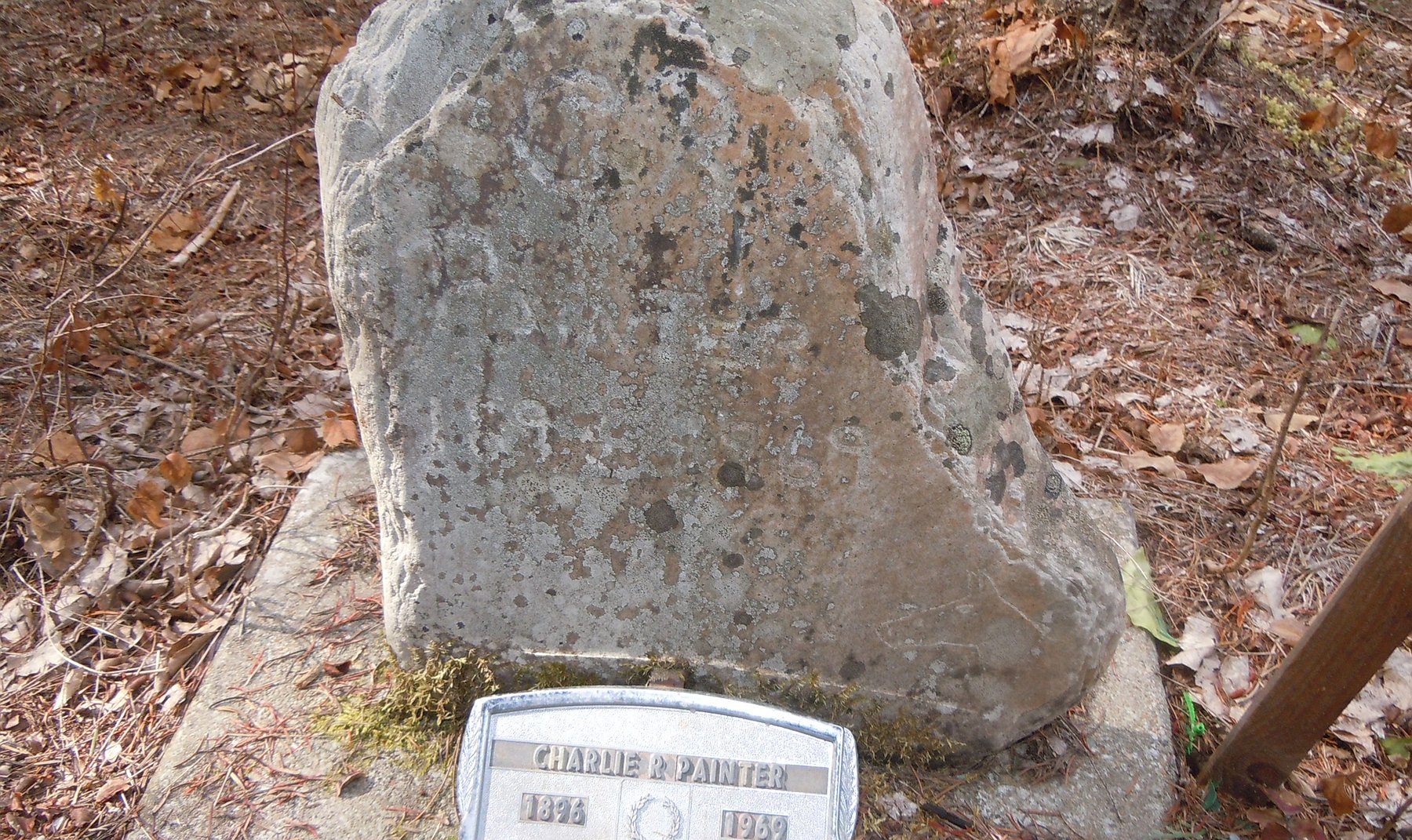 A gravestone showing the final resting place of Charlie R. Painter.
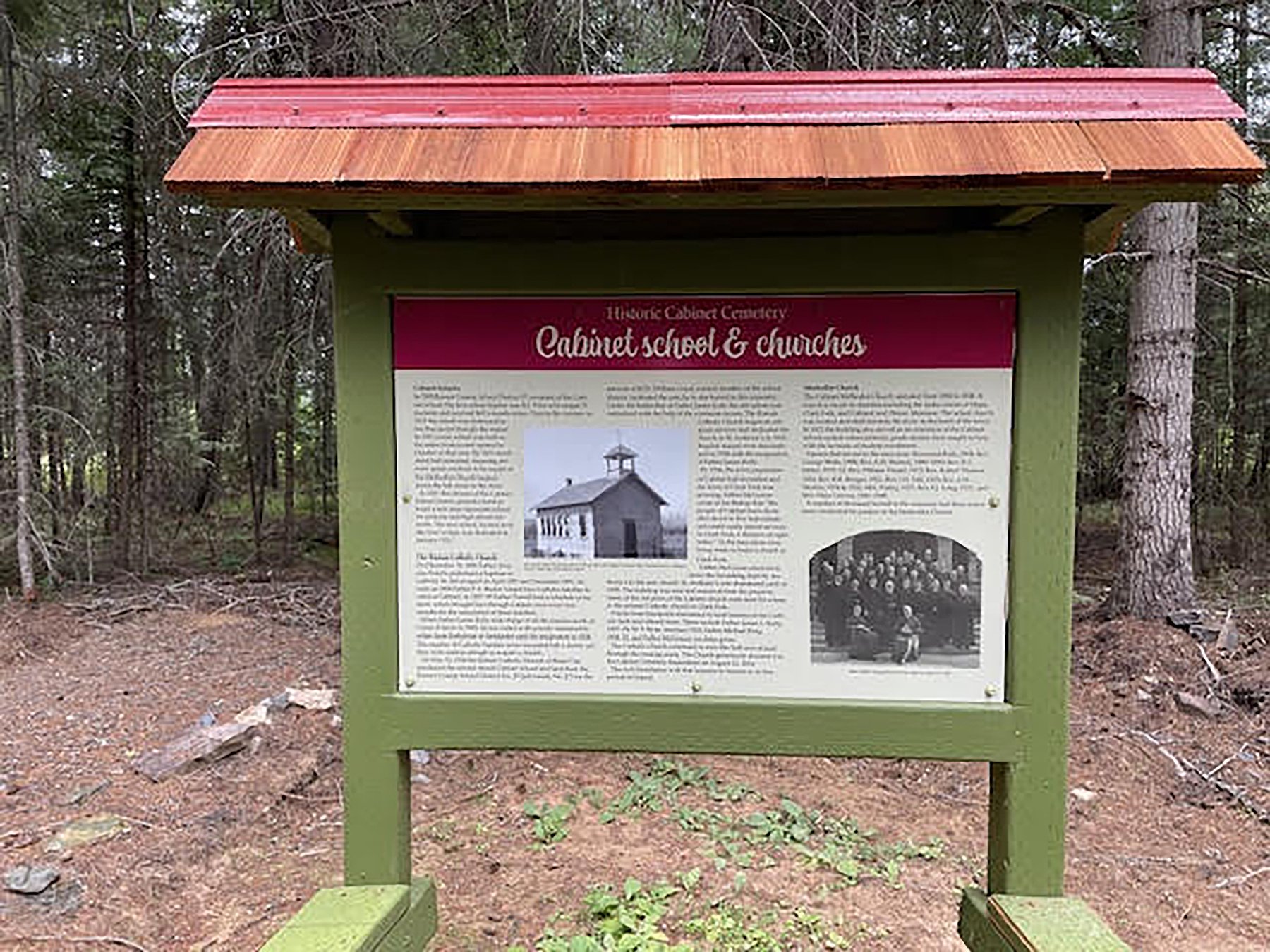 An information kiosk sits by the foundation of the old Cabinet School, near the once-abandoned cemetery of the former townsite in eastern Bonner County.
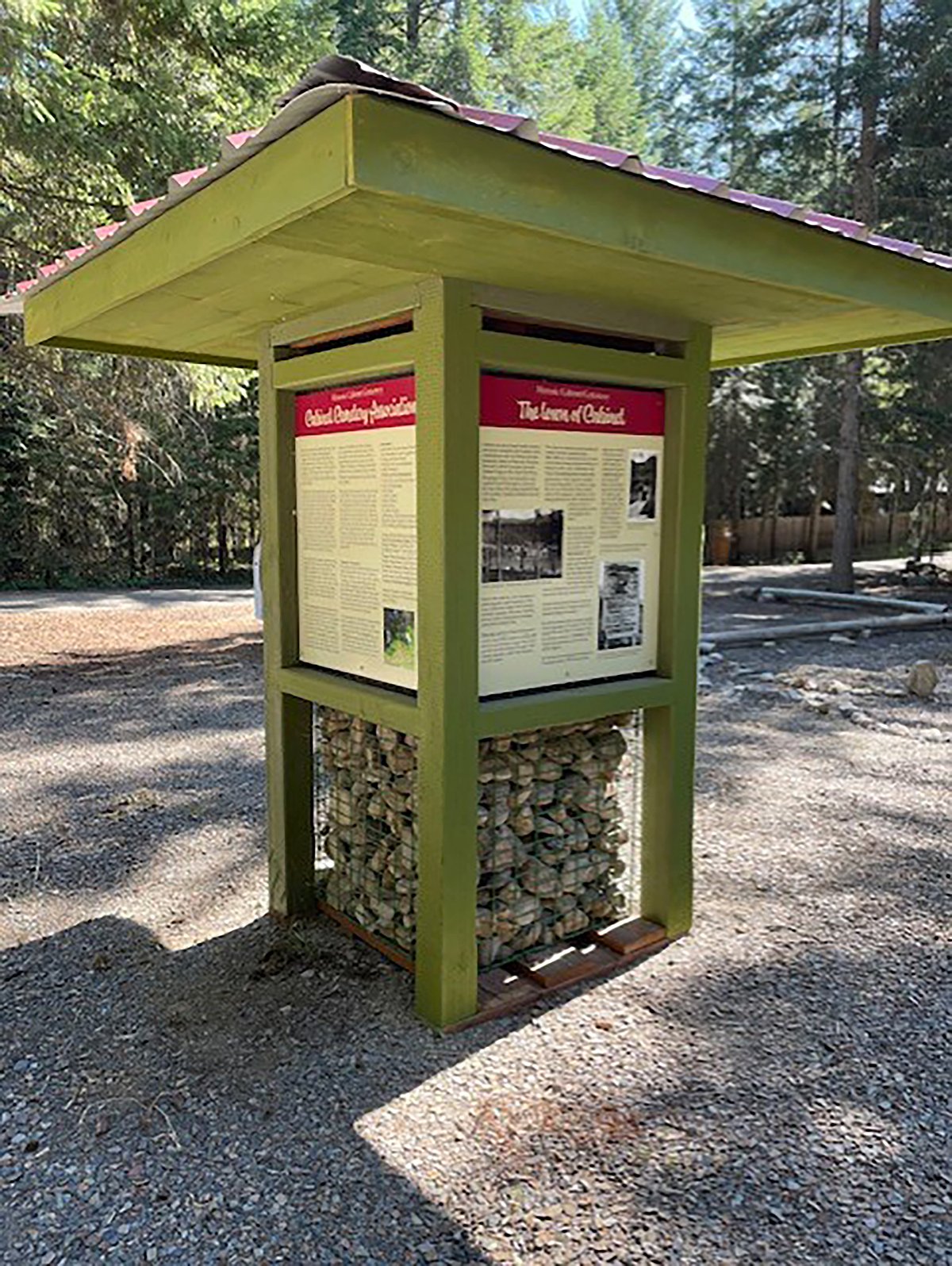 An information kiosk sits near the old Cabinet Cemetery, a site rescued and now maintained by a group of volunteers.