

OUR GEM: The hidden battle beneath Lake Coeur d’Alene
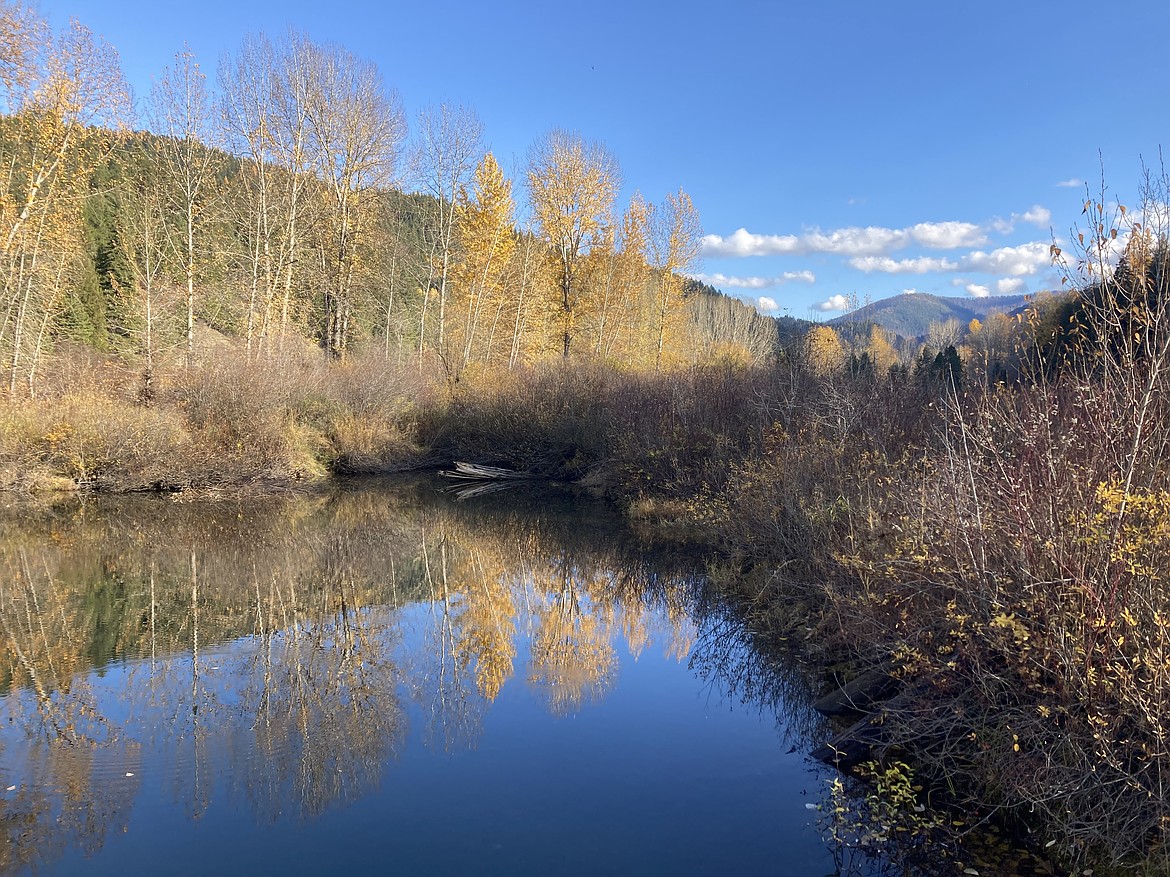
Fall leaves in the Coeur d’Alene watershed are just one of many sources of phosphorus to the lake. Courtesy photo.
Lake Coeur d’Alene is one of North Idaho’s signature natural treasures — a place for boating, fishing and lakeside living. Beneath its scenic surface lies a complex water-quality story, shaped by over a century of mining upstream in the Silver Valley and now challenged by nutrient loads and changing environmental pressures throughout the entire watershed.
Historic mining for lead, silver and zinc in the Silver Valley sent huge quantities of metal-rich waste downstream. Over time, this material settled into the lake, forming thick layers of sediment containing elevated levels of lead, cadmium, arsenic and zinc. Thanks to major cleanup efforts and modern discharge controls, the volume of new metals entering the lake each year has dropped dramatically. Historical material remains, however, millions of tons of contaminated sediment quietly resting on the lake bottom like a sleeping giant.
This legacy connects directly to another threat: nutrient loading — particularly phosphorus. Phosphorus binds to sediment through chemical processes, primarily by attaching to minerals like iron, aluminum and calcium or adhering to clay and organic particles. In oxygen-rich conditions, phosphorus remains attached to the sediment, acting as a sink. In low-oxygen conditions, however, those bonds can break, releasing phosphorus back into the water — along with some of those historic mining-related metals — effectively turning the lakebed from a storage vault into a potential source of contamination. The form of phosphorus released in this scenario is immediately available to the lake’s primary producers, acting much like lawn and garden fertilizer.
Phosphorus acts like fertilizer in a water body, similarly to how it does on land. A little is natural and necessary, but too much sets off a chain reaction. Excess phosphorus stimulates algae growth and increases biological productivity in the lake. When algae and other organisms die and decompose, they consume oxygen. If oxygen levels drop too far, metals locked in sediments can be remobilized. While low-oxygen events are still uncommon in the northern end of the lake, the southern end has experienced both low-oxygen conditions and algae blooms in recent summers.
Where is all this phosphorus coming from? Researchers point to a mix of sources: stormwater runoff from developed areas; lawn and garden fertilizers; failing septic systems; wastewater discharges upstream; erosion from roads, construction and forestlands; and natural inputs from across the landscape (such as decomposing plant and animal material). As the region’s population grows, so does the amount of nutrient-rich runoff flowing into the lake.
Stormwater is a major contributor. Every time it rains or snow melts, water flows across streets, parking lots, driveways and yards — collecting fertilizers, yard waste, pet waste and soil — before carrying phosphorus straight into the nearest storm drain. Those drains don’t lead to treatment plants; they often lead directly to the lake or another drainage way that leads to the lake. This is why the city of Coeur d’Alene performs its leaf pickup every year. Leaf pickup plays an important role in protecting the lake by keeping nutrients out of storm drains. Each year during leaf fest, the city removes roughly 3,000 pounds of phosphorus-worth of leaves that would otherwise wash directly into the lake. By participating in seasonal leaf pickup, residents help reduce nutrient runoff and support ongoing efforts to protect Lake Coeur d’Alene’s water quality.
To address nutrient concerns for Lake Coeur d’Alene, Gov. Brad Little’s Leading Idaho Initiative has provided $35 million in upgrades aimed at reducing phosphorus inputs. These funds have primarily supported stormwater improvements in Coeur d’Alene and Kellogg and upgrades to wastewater treatment plants, tackling some of the lake’s major point-source contributors (to a lesser extent, the funds also supported some nonpoint source streambank stabilization projects).
What remains are more diffuse, nonpoint sources that seem small individually but add up in a big way for the lake’s health. Addressing these sources will take collective effort from everyone in the watershed.
For residents, the takeaway is simple: phosphorus is driven by everyday actions across the basin. Small choices, multiplied by tens of thousands of residents, determine how much nutrients flow downhill and into waterways. Simple actions can make a difference: participating in leaf pickup programs, reducing or eliminating lawn fertilizer, picking up after pets, managing stormwater on private property, maintaining septic systems and preventing soil erosion during landscaping or construction. These may not be flashy solutions, but scientists say they are among the most effective tools available when the community acts collectively.
Lake Coeur d’Alene is a gem worth safeguarding — not just for today’s recreation and economy, but for long-term environmental health. The combined threat of phosphorus and legacy metal sediments is complex, but the science is clear: managing nutrients is one of our best tools for protecting this lake into the future. For more information on water quality and Lake Coeur d’Alene, visit: https://iwrri.uidaho.edu/outreach-our-gem/