

Best Night Sky events for November
This month, expect an impressive full beaver/hunter’s moon (which happens to be another super moon), fiery Taurid and Leonid meteor showers and the planets Jupiter, Saturn and Uranus putting on their best show. Starting this month, the constellations of Orion and Gemini are both above the horizon after 9 p.m. Since we are now in November and fully engaged in our “cloudy season," I realize that we all may or may not see any of these events due to clouds, but on the off chance we do get a clear night, maybe, just maybe, we’ll see one or two of the listed events below. And since it is November, don’t forget to bundle up. It’s hard to see anything when you’re shivering!
Nov. 2 — A conjunction between the moon and Saturn
The moon and Saturn will make a close approach, passing a little less than 3 degrees (three fingers held out at arm’s length) from each other. The moon will be approaching full, but its light should not interfere with seeing Saturn. Look to the west at 2 a.m. to see these two solar system objects close to the horizon.
Nov. 4, 5 — Taurids meteor shower
The Taurids are a minor meteor shower and at their peak only give us about 5-10 meteors per hour. It is unusual in that it consists of two separate streams. The meteors are produced by dust grains left behind by Asteroid 2004 TG10 and Comet 2P Encke. The third quarter moon may block most of the dim meteors, but it doesn’t rise until 11 p.m. Meteors will radiate from the constellation Taurus, but can appear anywhere in the sky.
Nov. 5 — Full moon, the “beaver moon” and the “hunter's moon,” another super moon
At this position in the moon’s orbit around us, it is on the opposite side of the sky from the sun. This occurs at 5:19 a.m.
This is why we see it fully illuminated. Usually, this full moon was known by early Native American tribes as the beaver moon because this was the time of year to set the beaver traps before the swamps and rivers froze. This month, we are also calling it the hunter’s moon because last month’s full moon was called the harvest moon, which can occur in either September or October, depending on when the moon becomes full in September. This moon is also a super moon, meaning that this phase of the moon occurs when the moon is closest to us in its orbit. A super moon can appear to be up to 14% larger and 30% brighter than a “normal” full moon because of its closer proximity to Earth.
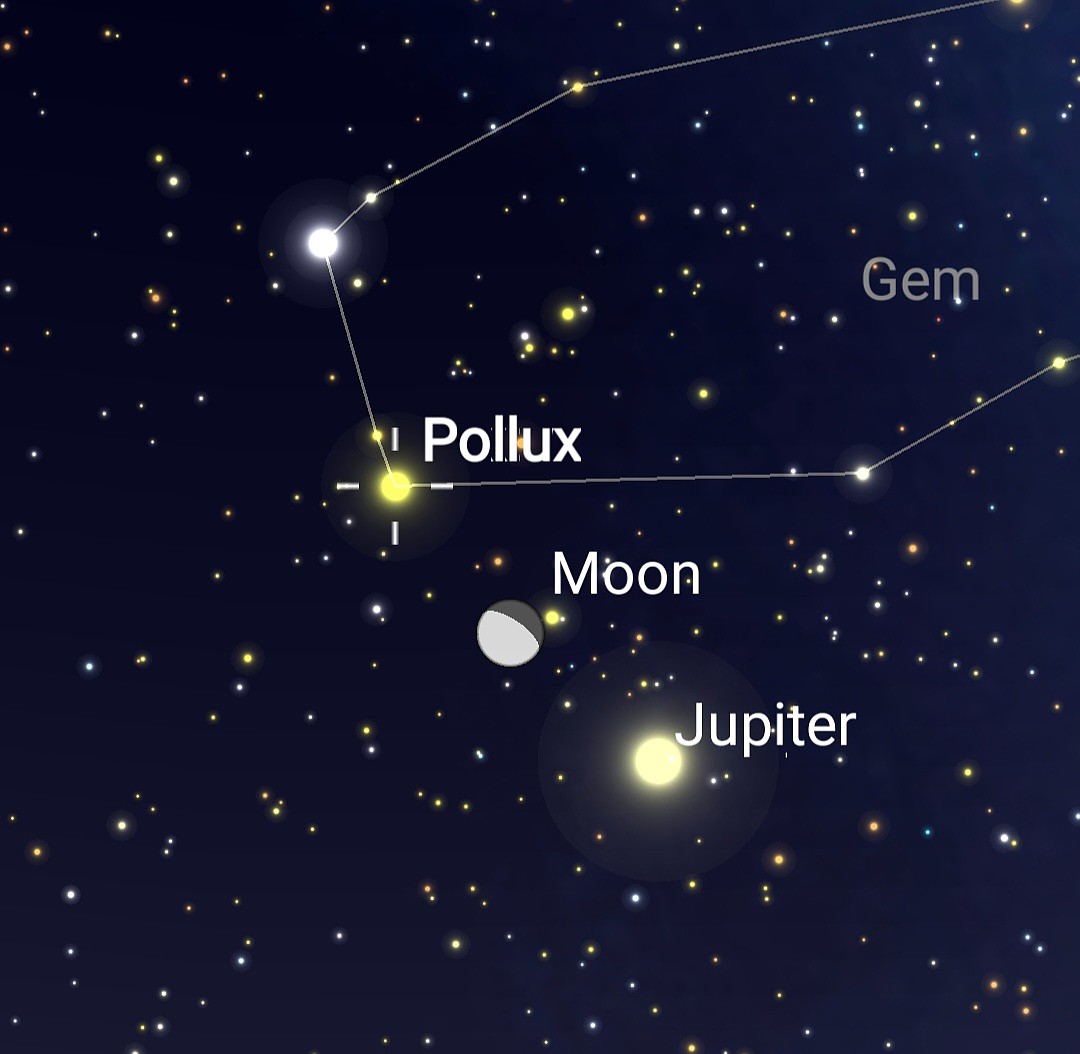
Nov. 9 — Double conjunction of the moon between the bright star Pollux and Jupiter
This night at 11 p.m., look to the east to see the waning gibbous moon nearly equidistant from Jupiter and the bright star Pollux in the Gemini constellation. The moon will be a little over 3 degrees (three fingers at arm’s length) away from both objects.
Nov. 11 — Last quarter moon
The last quarter moon is the third and final quarter phase of the moon during its monthly cycle. At this time, 9:28 p.m., the moon appears half-illuminated, with the left half receiving sunlight. This moon is visible after midnight and throughout the morning.
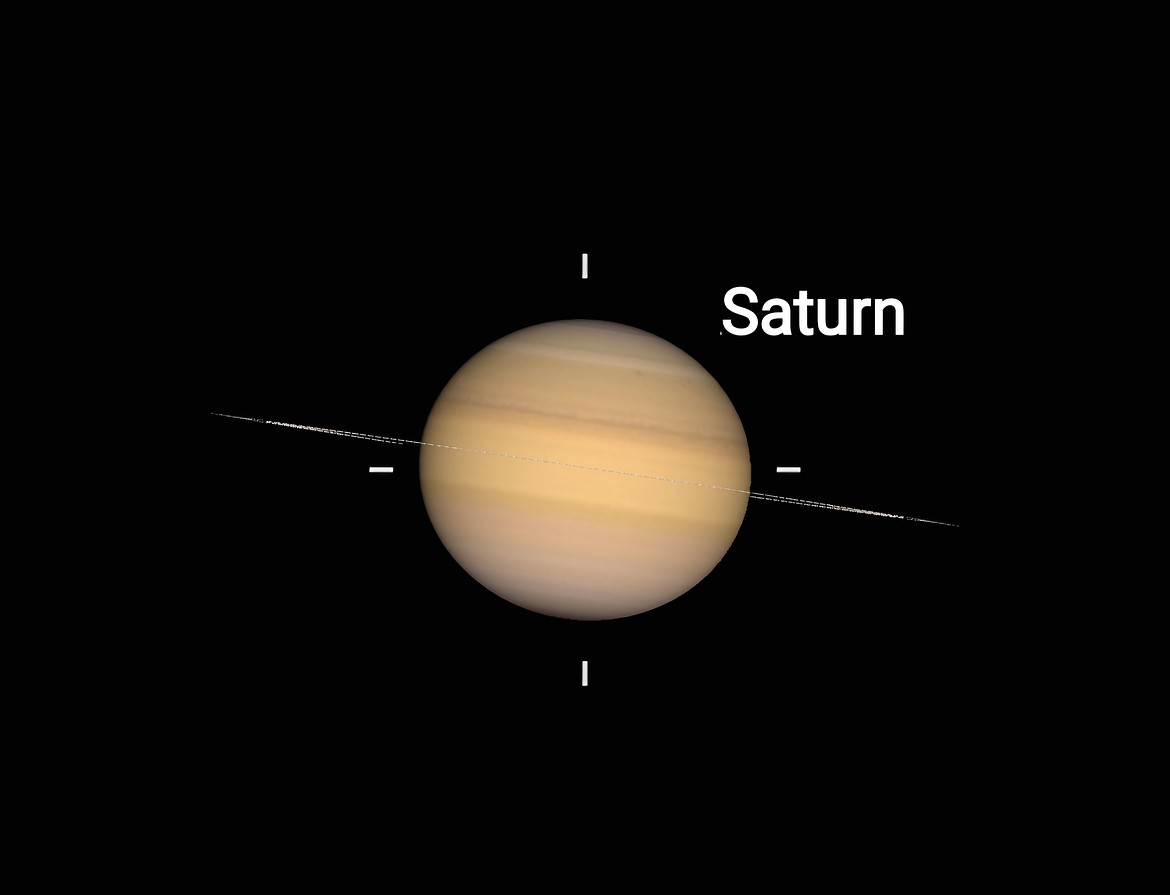
Nov. 13 — Saturn’s rings disappear
On the 13th and for the next 30 days, Saturn’s rings “disappear.” The rings aren’t actually going anywhere, but will be oriented edge-on toward Earth, making them difficult to see. So, if you have a telescope and the night is clear, give Saturn a look and see if you see the rings.
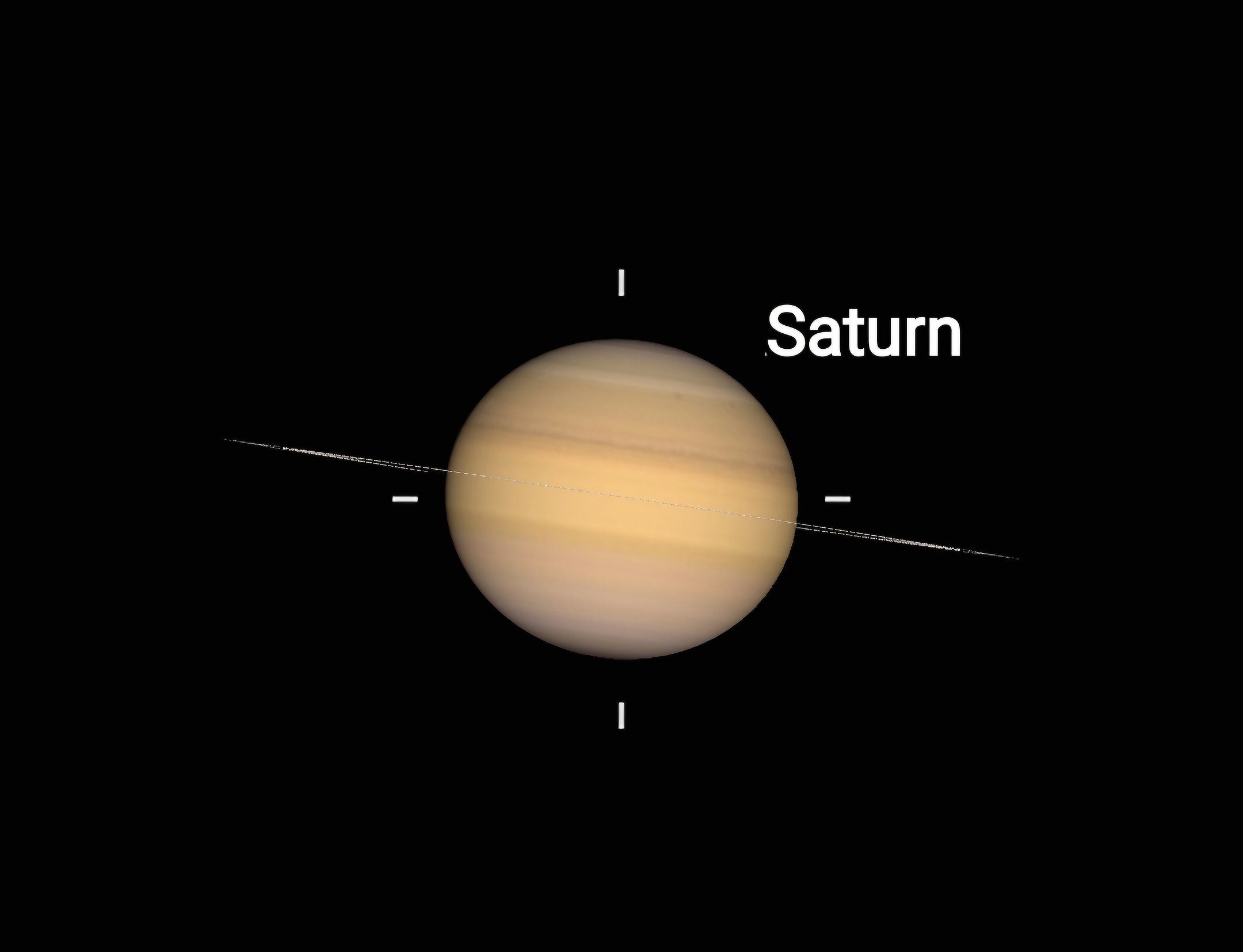 Image courtesy of John Taylor and Sky Safari Pro 7
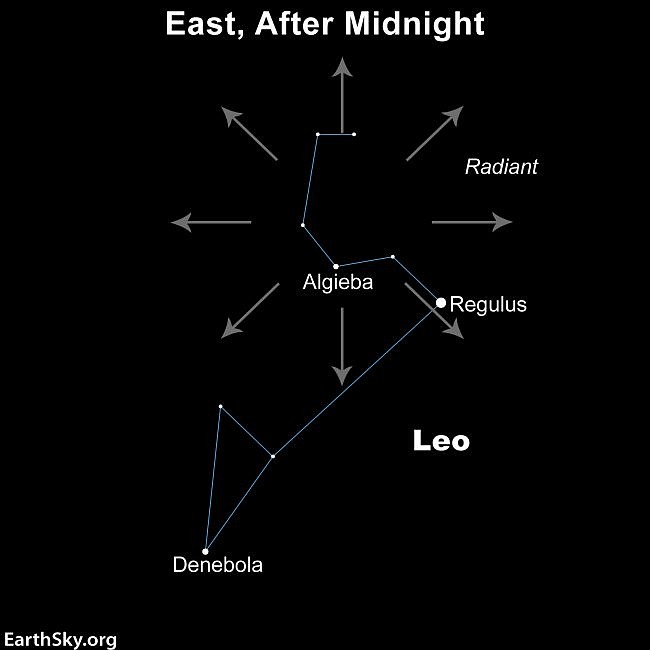
Nov. 16, 17 — Leonids meteor shower
The Leonid meteor shower is an average meteor shower, producing up to 15 meteors per hour at its peak. The Leonids are produced by dust grains left behind by comet Tempel-Tuttle. The shower occurs annually from Nov. 6 to 30. It peaks this year on the night of the 16th into the 17th. The last quarter moon may be a hindrance to fainter meteors after midnight. Best viewing will be from a dark location after midnight. Meteors will radiate from the constellation Leo, but can appear anywhere in the sky. Be advised that the constellation Leo does not rise until after midnight, but it does not need to be above the horizon to see the meteors.
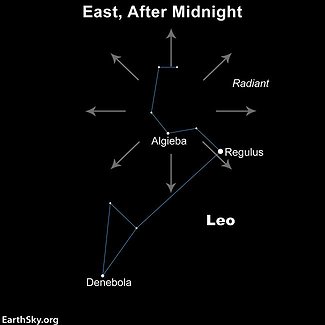 Image courtesy of EarthSky.org
Nov. 19 — New moon
The new moon occurs at 10:47 p.m. The days surrounding the new moon are excellent times for stargazing! The moon is not in the night sky because the moon is now between the Earth and the sun. So, tonight is a great opportunity to take out your binoculars or telescope and view the starry, moonless sky above you. The Andromeda and Pinwheel galaxies should be prime targets for tonight’s activities.
Nov. 21 — Uranus at opposition
Uranus (pronounced ˈyu̇r-ə-nəs) was formally discovered by Sir William Herschel in 1781. It is the seventh planet from the sun and the third-largest planet in the solar system. It is a giant ice planet known for its extreme axial tilt, giving it the nickname "the Sideways Planet." It has 28 known moons, a ring system and is composed of hydrogen, helium and methane. Uranus orbits the sun at an average distance of an astounding 1.8 billion miles, taking about 84 Earth years to complete one orbit.
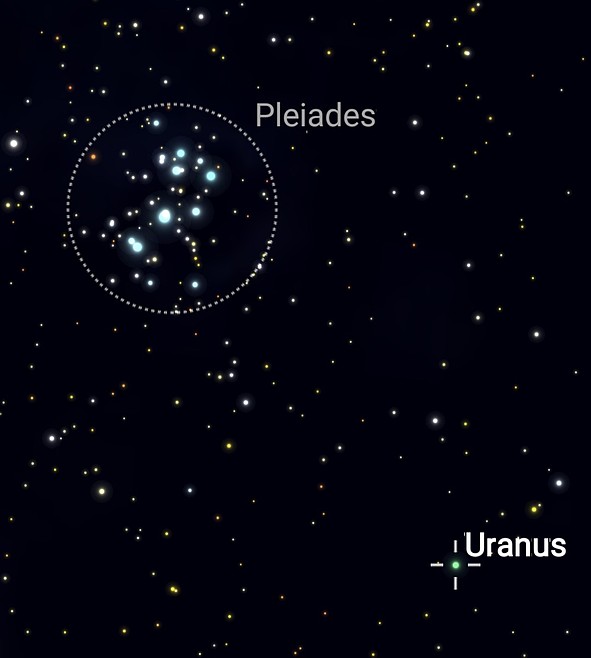
On this night, we are directly between the sun and Uranus, allowing us to view it all night. We are currently at our closest distance from this icy world and so it is at its brightest because of this. Brightest is kind of a misnomer here because you will still need binoculars to see it.
To find this large but distant planet, you will need at least a pair of binoculars. Start at the Pleiades star cluster. Now put that star cluster in the upper left corner of the field of view. Now look toward the lower right corner to see a small, fairly dim but turquoise colored star. If at first you don’t see it, move the Pleiades further up into the left corner of the field of view.
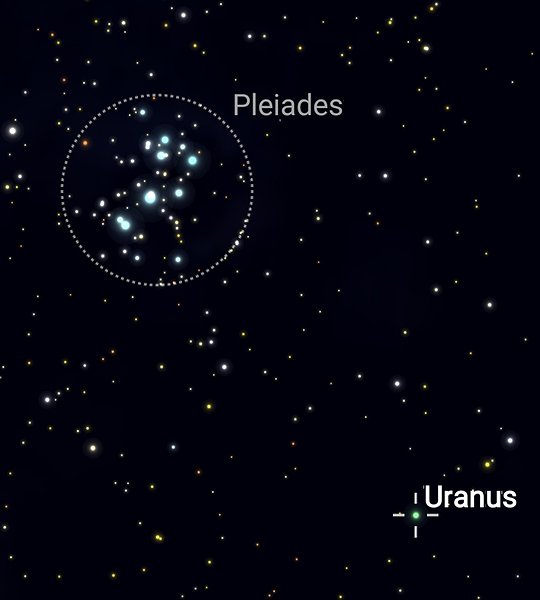 Image courtesy of John Taylor and Sky Safari Pro 7.
Nov. 27 — First quarter moon
The first quarter moon occurs at 10:59 p.m. This phase marks the first quarter of travel of the moon in its orbit around the Earth. This is the halfway point between the new moon and the full moon. So, the moon appears with the right half of the disk illuminated.
• • •
John Taylor is an amateur astronomer who lives in Hayden.