

HUCKLEBERRIES: Take a hike, Goat Trail
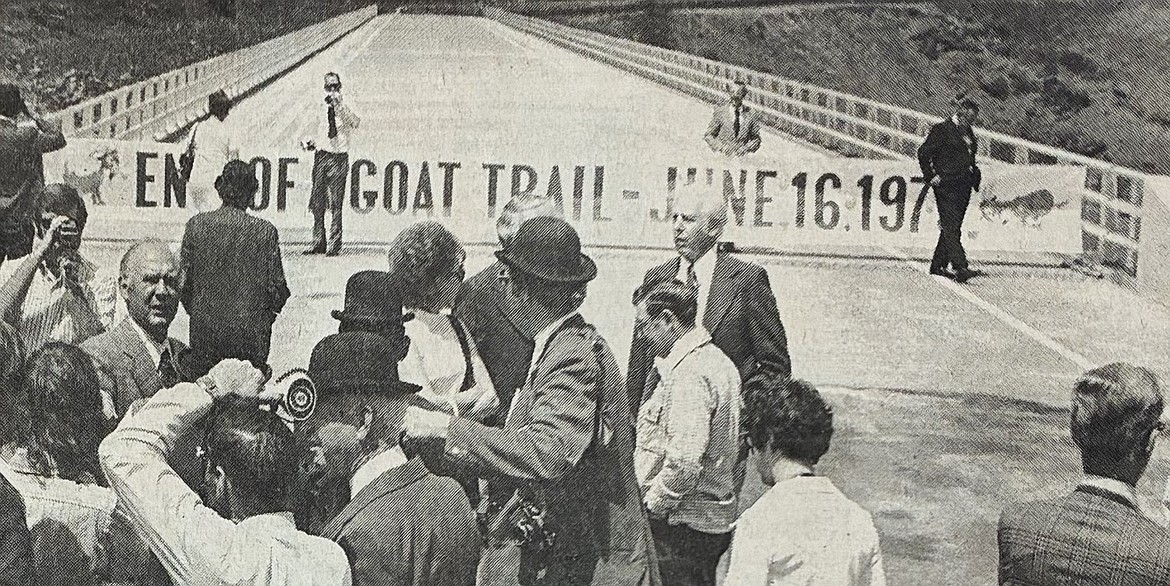
Idaho Gov. Cecil Andrus, center left, dedicated a new stretch of U.S. 95 up White Bird Hill in 1975.
Photo courtesy of the Coeur d'Alene Press archives
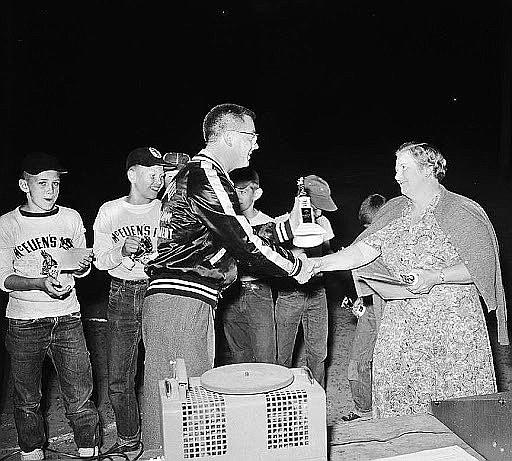
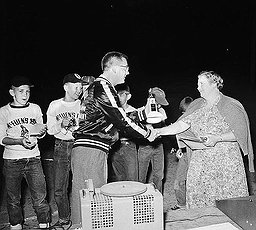
In this undated photo, Mae McEuen receives an award of appreciation from Parks & Rec director Red Halpern.
Photo courtesy of Museum of North Idaho
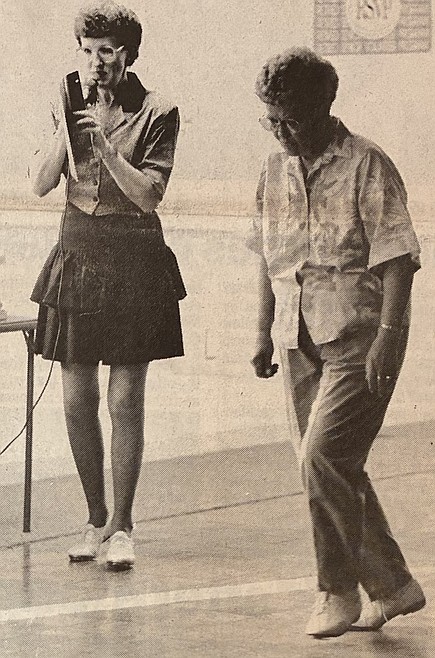
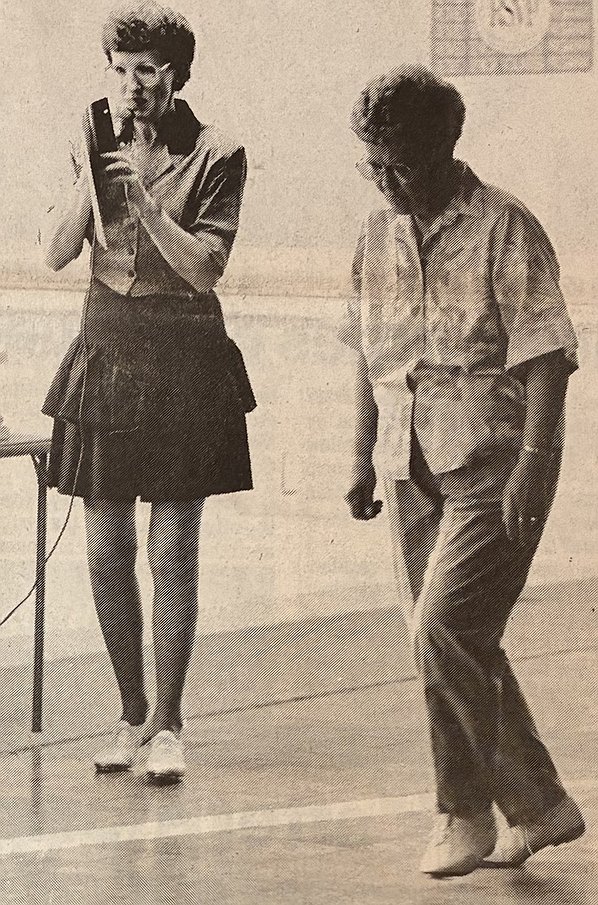
Instructor Judy Schenk, left, calls out clogging moves while Alma Coon dances in 1990.
Photo courtesy of the Coeur d'Alene Press archives
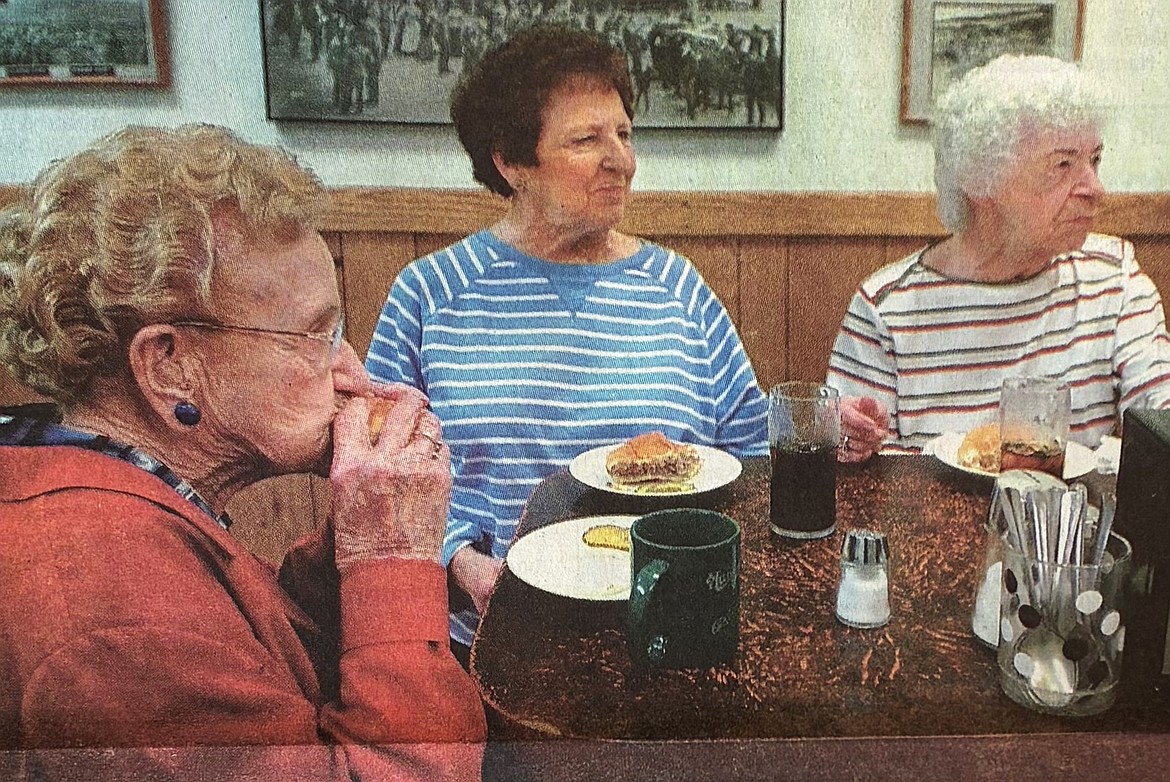
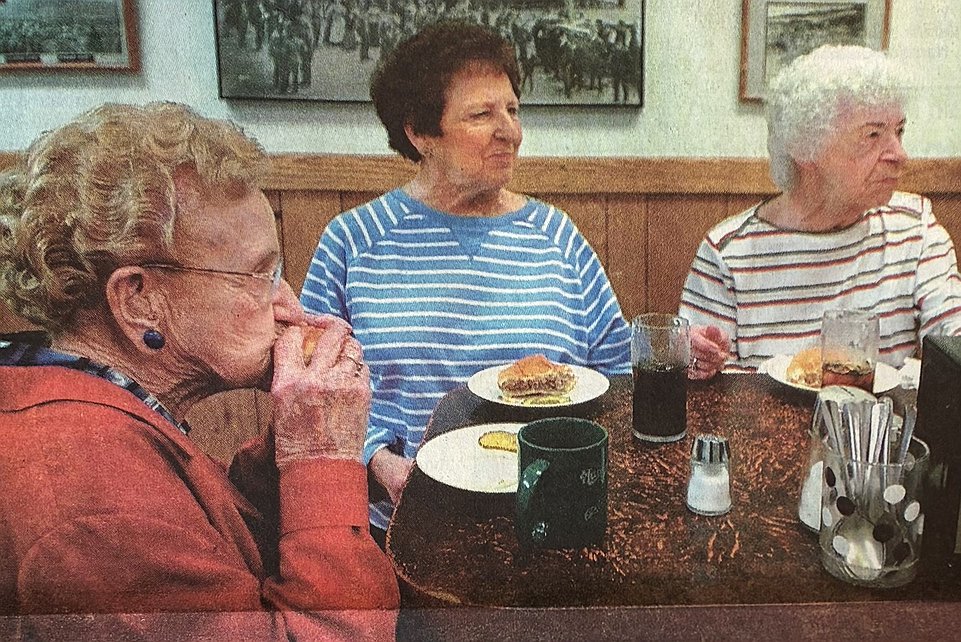
For her 100th birthday in 2005, Ruth Burch enjoyed a free Hudson’s hamburger with daughters Diane Higgens, center, and Donna Quane.
Photo courtesy of the Coeur d'Alene Press archives
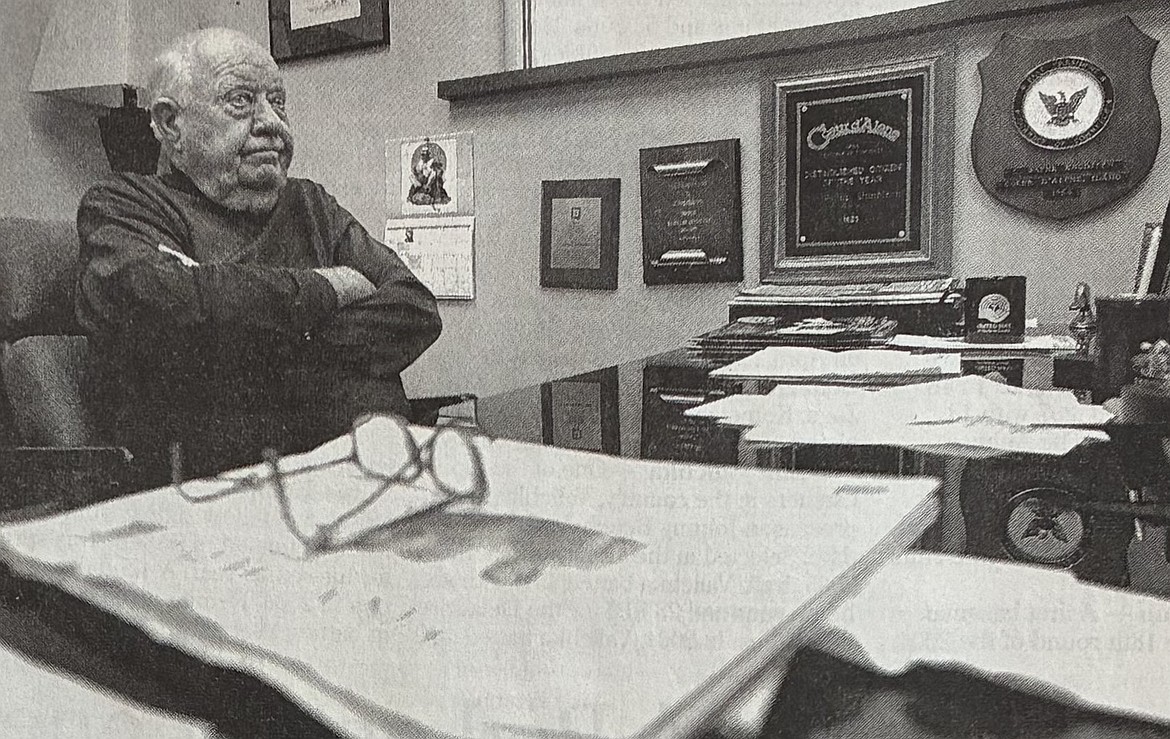
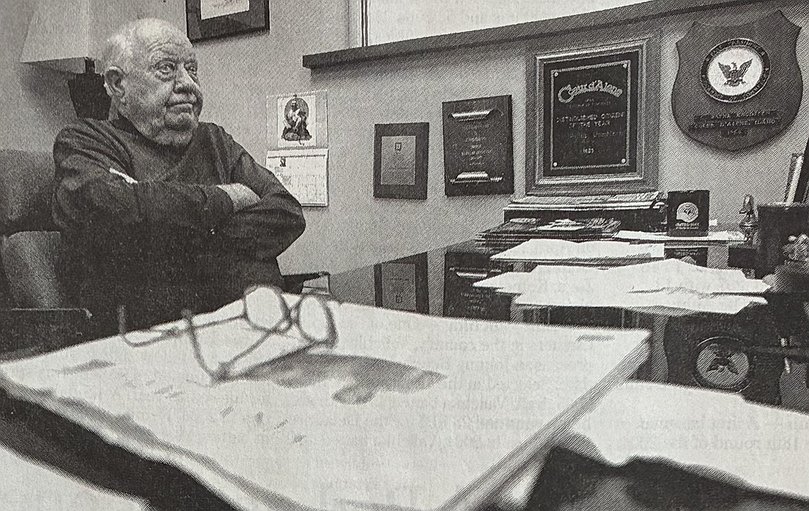
Wayne Knudtsen of Knudtsen Chevrolet was ready to retire in 2005, but that didn’t mean he was going away.
Photo courtesy of the Coeur d'Alene Press archives
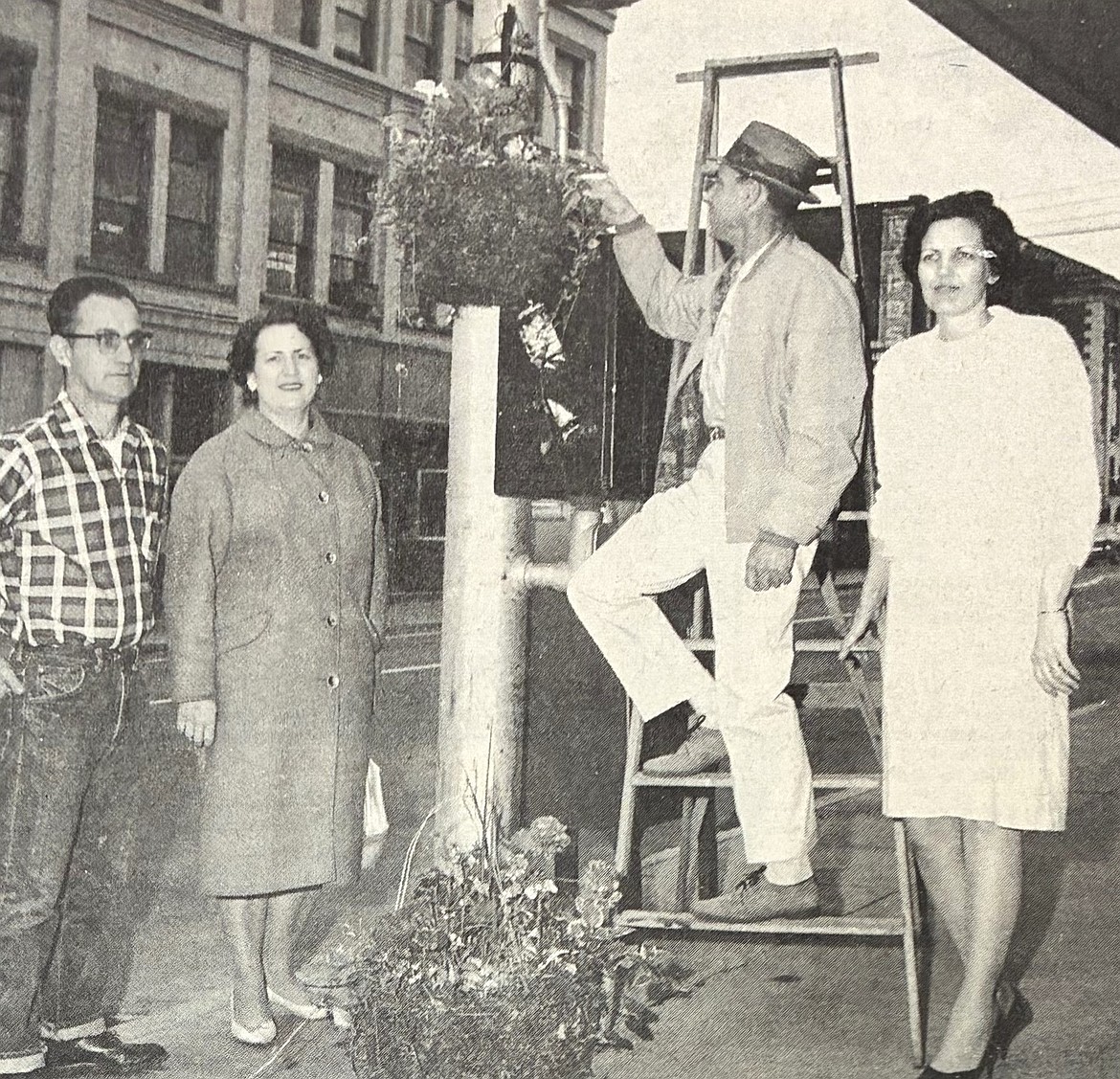
For the fifth straight year, the Xi Chi chapter of Beta Sigma Phi decorated the downtown with flower baskets in 1965. Pictured are, from left, Michael Holovka of Wilson’s pharmacy, coordinator Bonnie McDowell, George Louis of Louis Green House and chapter president Ella Dunn.
Photo courtesy of the Coeur d'Alene Press archives
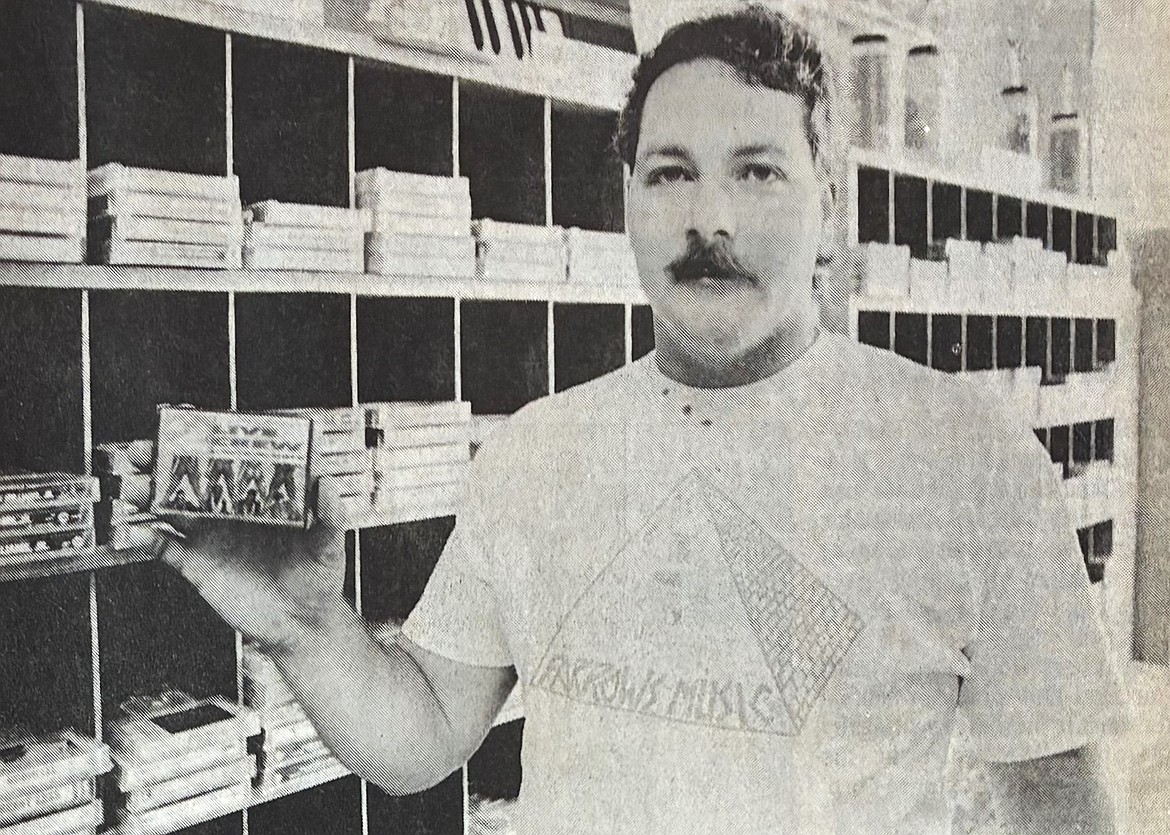
Gary Galbreath of Farrow’s Music holds the album, “As Nasty As They Wanna Be,” in 1990.
Photo courtesy of the Coeur d'Alene Press archives

The local Kroc Center was built on a 12-acre site formerly used as a construction disposal pit.
Photo courtesy of the Coeur d'Alene Press archives
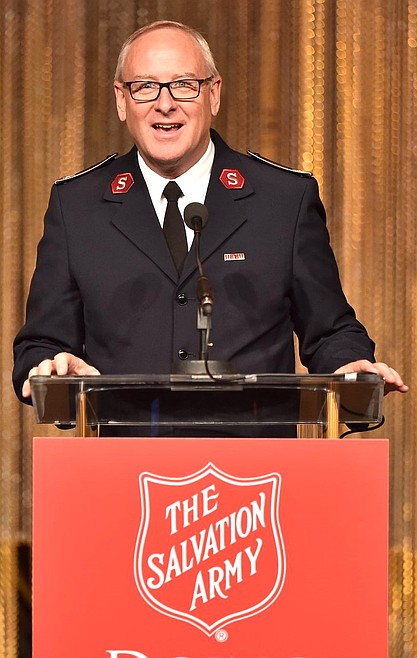
Major John Chamness of the Salvation Army, shown speaking at the Beverly Hilton in 2019, was the Kroc Center’s first director.
Facebook photo
Gov. Cecil Andrus was there for the beginning of the end of the “Goat Trail.”
On June 16, 1975, the Idaho Democrat and hundreds of others dedicated a 7-mile stretch of U.S. 95 on White Bird Hill, south of Grangeville.
Then-editor George Cecil of the Coeur d'Alene Press covered the event.
Some referred to the $8.5 million construction project as one of Idaho’s important events of the 1970s. Andrus, a former sawmill worker from Orofino, understood its importance.
As a state senator in 1969, he demanded on the Senate floor that something be done about the “Goat Trail” — the stretch of U.S. 95 from New Meadows to the Canadian border, particularly, White Bird Hill.
The name stuck.
Prior to reconstruction, editor Cecil said, drivers circled White Bird Hill for 20-25 minutes to reach the 4,245-foot summit via switchbacks and 37 complete circles, stretching 22 miles.
After the road work, the “Goat Trail” nickname still fit U.S. 95. The section south of Coeur d’Alene, for example, routed two-way traffic on narrow lanes around blind curves, teeming with logging and chip trucks.
The hazardous section prompted the saying: “There are no good roads to Worley.”
Now, U.S. 95 is straighter, wider and safer. And White Bird Hill is no longer a geographic obstacle, splitting Idaho.
As Andrus stated at the dedication 50 years ago: “This is the log that broke the jam.”
Then, with aplomb, the dapper governor jumped into a black limousine, beckoned the crowd to follow and roared through a sign stretched across the new White Bird Hill bridge that read: “End of a Goat Trail — June 16, 1975.”
Seven minutes later, he reached the top.
A nice name
The name McEuen was forever attached to the Coeur d’Alene waterfront at a ceremony June 11, 1965. On that Friday afternoon, Mayor Marc Souther officially changed the name of Mullan Park to Mae McEuen Playfield.
In electing to honor the Coeur d’Alene grocer and community activist, the City Council recognized the major role she played in launching recreation softball/baseball for the town’s youth — and for helping preserve the park from development.
Mae, 61, had died Sept. 1, 1964. At the time, she and her husband, Virgil, operated McEuen Foodliner at 12th and Sherman. She had served on the city’s parks and recreation board since 1957. And was named the outstanding volunteer recreation leader in Idaho for 1963.
In his concise paperback, “The Treasure Called Tubbs Hill,” the late environmental attorney Scott Reed of Coeur d’Alene said: “Mae had been a major player in stopping the shopping mall (proposed for McEuen Park in 1956) and in beginning the conversion of the mill (Coeur d’Alene Lumber Co.) into an outdoor recreational mecca.”
The name, “McEuen,” Scott said, spread from a single ballfield to blanket the former mill site. And then to the adjacent 14-story McEuen Terrace condos at Seventh and Front.
Scott concluded: “McEuen is a nice name.”
Clog or bust
If you blinked in spring 1990, you missed the clogging craze that swept the nation — and North Idaho. But the fad attracted local devotees from age 6 to seniors.
Former tap-dancing instructor Judy Schenk, the Pied Piper of the Kootenai County movement, taught four, 45-minute classes at the Rathdrum Senior Center, beginning with a single student May 3, 1990.
“I’m totally addicted,” she told the Coeur d’Alene Press.
Reporter Rita Hollingsworth described clogging as a multicultural blend of “lively stomps, fancy shuffles and fast taps.”
According to folklore, the American dance was unnamed until 1926 when folk dancers entertained the king and queen of England at the White House. Reportedly, the queen whispered to the king: “Why that’s just clogging.”
Clogging, The Press said, is “sort of a melting pot dance” with many influences. In 1990, young cloggers added another new rage to their routines: Rap music.
“I love it, too,” said Schenk: “It is lots of fun (to dance) to rap music because it’s really fast clogging.”
Huckleberries
• Poet’s Corner: It’s June/too soon — Bard of Sherman Avenue (“Speeding Toward”).
• Older Than Hudson’s: Ruth Burch knew exactly what she wanted when she celebrated her 100th birthday in 2005: a helicopter ride over Coeur d’Alene and a Hudson’s burger (courtesy of the downtown business). In 1907, Ruth was 2 when founder Harley Hudson set up his first burger shop. When asked about the secret to her long life, Ruth didn’t hesitate either: “Black Velvet” (If you please).
• Didn’t Go Softly: As Knudtsen Chevrolet approached its 66th anniversary June 12, 2005, the boss, Wayne Knudtsen, prepared to retire. He knew that kids Eve and Eric could fill his shoes. “I’d still maintain an office,” grumped Wayne, 77, and a Knudtsen employee for 55 years. “They’d better let me, anyway, because I own the building.”
• Downtown Color: The flower baskets hanging from light poles downtown are a great idea. But the baskets are not a new idea. In 1961, the Xi Chi chapter of Beta Sigma Phi began hanging modest baskets along Sherman Avenue, provided by George Louis of Louis Greenhouse. Merchants were responsible for watering them.
• Obscenity Sells: You may know that “As Nasty As They Wanna Be” was the first album declared obscene by the federal government. But did you know the 1989 album by hip-hopper 2 Live Crew was a hit in Coeur d’Alene? In June 1990, Garry Galbreath of Farrow’s Music downtown said he couldn’t keep the album in stock after it was banned earlier in the month. P’haps local youths were being as naughty as they wanted to be, too.
Parting shot
On June 10, 2005, the banner headline in the Coeur d’Alene Press shouted: “Red-kettle day for Cd’A: Salvation Army selects N. Idaho for Kroc center.”
The smallest city among 19 finalists, Coeur d’Alene, had landed $70 million to build and operate a Ray & Joan Kroc Center. In doing so, Lake City beat out nine other cities to represent Idaho — and then bested the two other Northwest finalists: Seattle and Tacoma.
“I think it’s one of those landmark events that will change the future of our community,” said chief fundraiser Jack Riggs.
In 2003, Joan Kroc, the late McDonald's hamburger heiress, gave the Salvation Army $1.8 billion — worth $3.15 billion today — to build Kroc centers around the country.
Riggs helped raise $1.3 million locally in six weeks to prove to the Salvation Army that Coeur d’Alene could sustain a Kroc Center. Meanwhile, Mayor Sandi Bloem deftly guided Coeur d’Alene’s application and thwarted naysayers who tried to sabotage the process.
Eight cities nationwide were selected for grants.
The Coeur d’Alene Kroc Center opened May 11, 2009.
• • •
D.F. (Dave) Oliveria can be contacted at [email protected].
 In this undated photo, Mae McEuen receives an award of appreciation from Parks & Rec director Red Halpern.
 Instructor Judy Schenk, left, calls out clogging moves while Alma Coon dances in 1990.
 For her 100th birthday in 2005, Ruth Burch enjoyed a free Hudson’s hamburger with daughters Diane Higgens, center, and Donna Quane.
 Wayne Knudtsen of Knudtsen Chevrolet was ready to retire in 2005, but that didn’t mean he was going away.
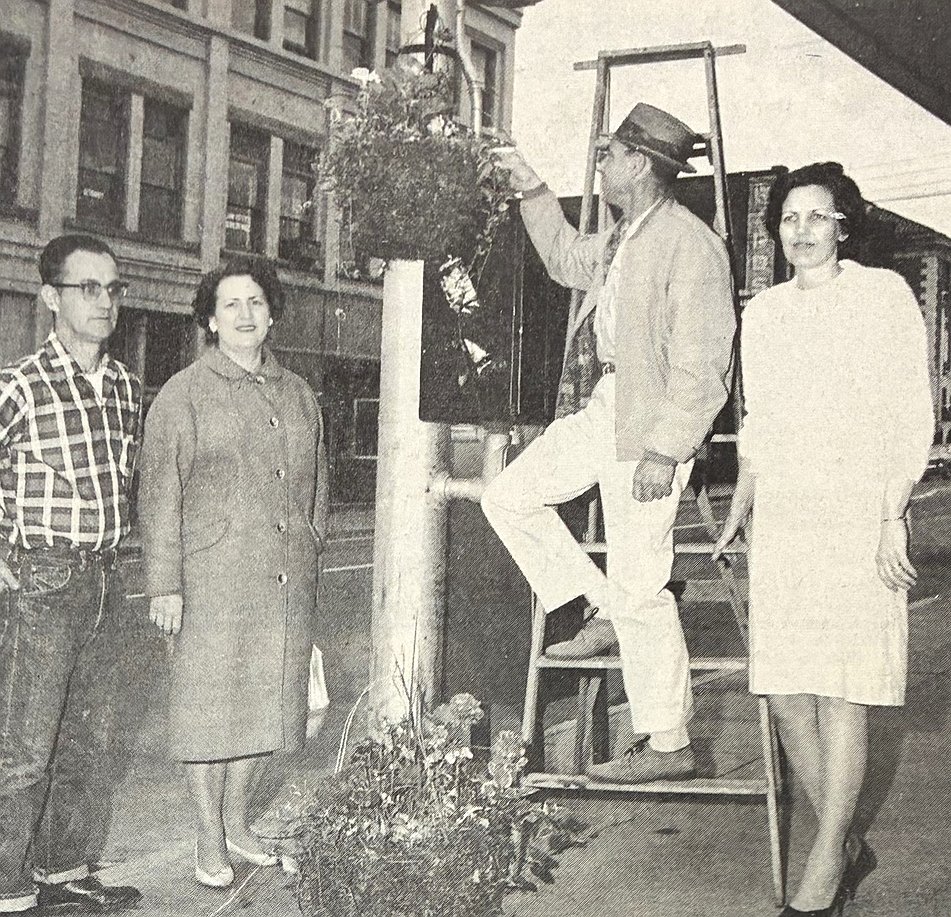 For the fifth straight year, the Xi Chi chapter of Beta Sigma Phi decorated the downtown with flower baskets in 1965. Pictured are, from left, Michael Holovka of Wilson’s pharmacy, coordinator Bonnie McDowell, George Louis of Louis Green House and chapter president Ella Dunn.
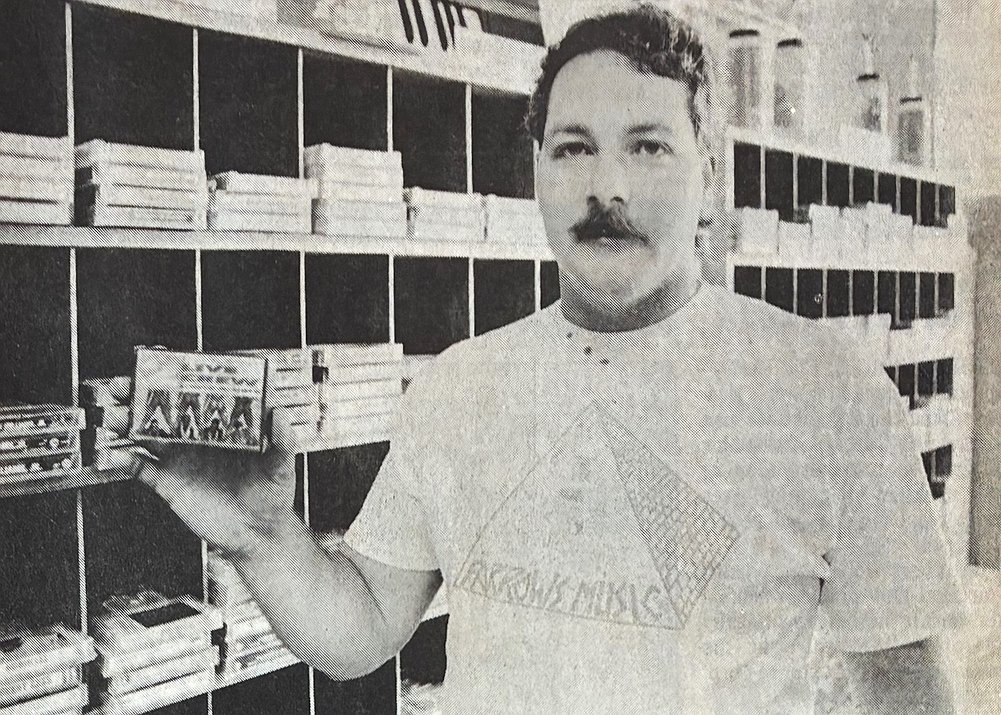 Gary Galbreath of Farrow’s Music holds the album, “As Nasty As They Wanna Be,” in 1990.
 The local Kroc Center was built on a 12-acre site formerly used as a construction disposal pit.
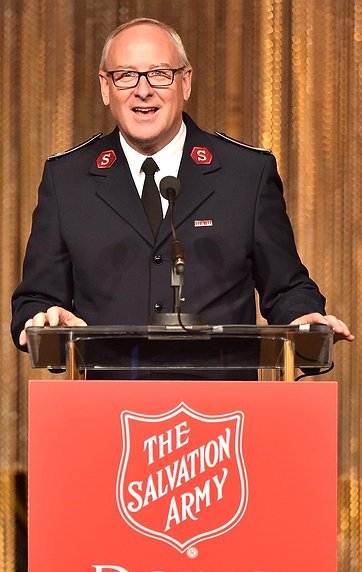 Major John Chamness of the Salvation Army, shown speaking at the Beverly Hilton in 2019, was the Kroc Center’s first director.