THE DIRT: Air quality monitoring
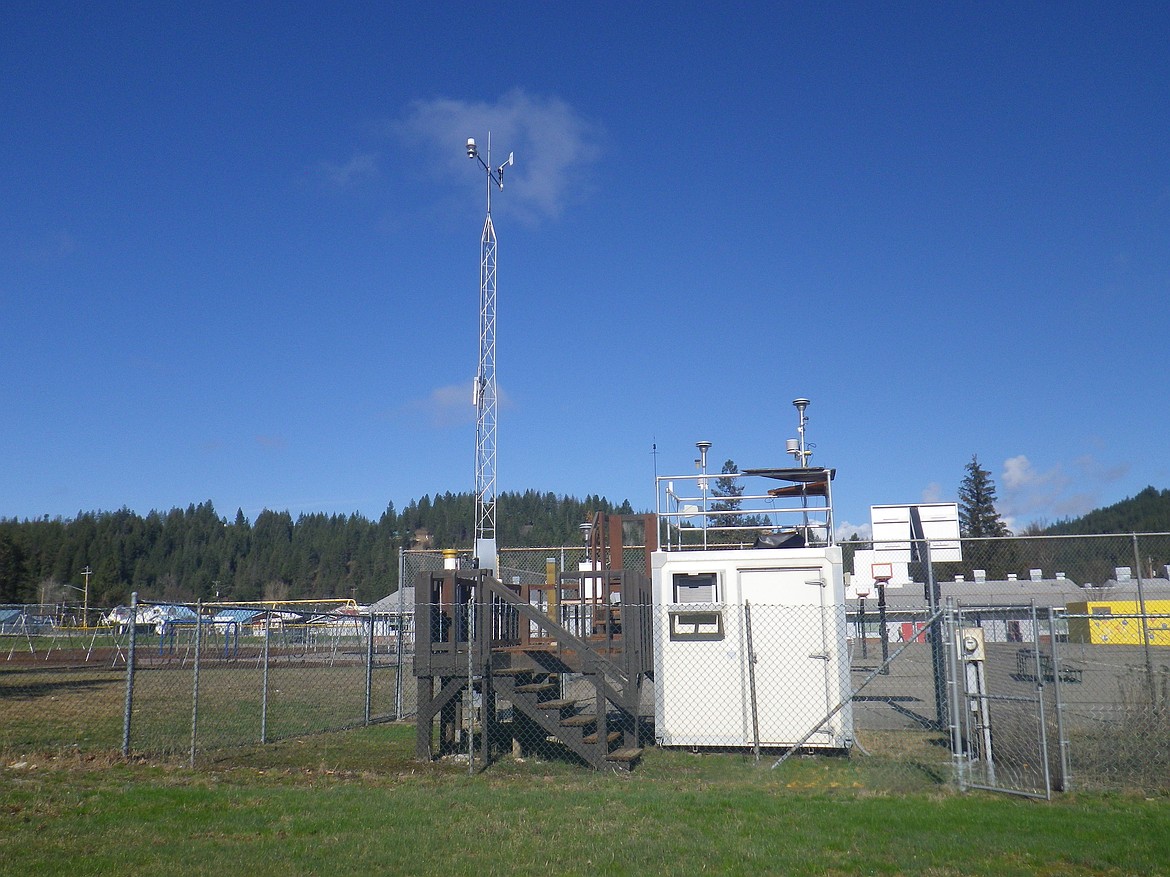
The air quality monitoring station near Pinehurst Elementary School.
Courtesy photo
Your family sledding trip should only leave your calves burning. But you feel it more in your chest after a smoky day in our narrow Silver Valley. Think back to the red AQI forecast on your phone. What information was it trying to convey? The Air Quality Index is a color-coded tool to relay air pollution threats. Starting at green, for good, colors warm to maroon, for hazardous. The AQI can represent a variety of pollutants. In North Idaho, two air pollutants are monitored — PM10 and PM2.5.
The air around us contains particulate matter. This term describes the microscopic solids and liquid droplets suspended in the atmosphere. These inhalable drifters can be pollen, dust or other harmful particles. PM10 is the subgroup of these particles smaller than 10 micrometers (µm). About the size of one-tenth a grain of salt, PM10 particles can often be coughed out. PM2.5, on the other hand are tiny, 2.5µm in size. Measuring about one-twentieth of a strand of hair, these particles can be breathed in so deeply that they cannot be expelled. They can build up with each exposure and lead to the most risks. Associated toxins can pass directly into the bloodstream causing adverse effects.
Become a Subscriber!
You have read all of your free articles this month. Select a plan below to start your subscription today.
Already a subscriber? Login