
OUR GEM: How a local treatment plant is improving our water quality
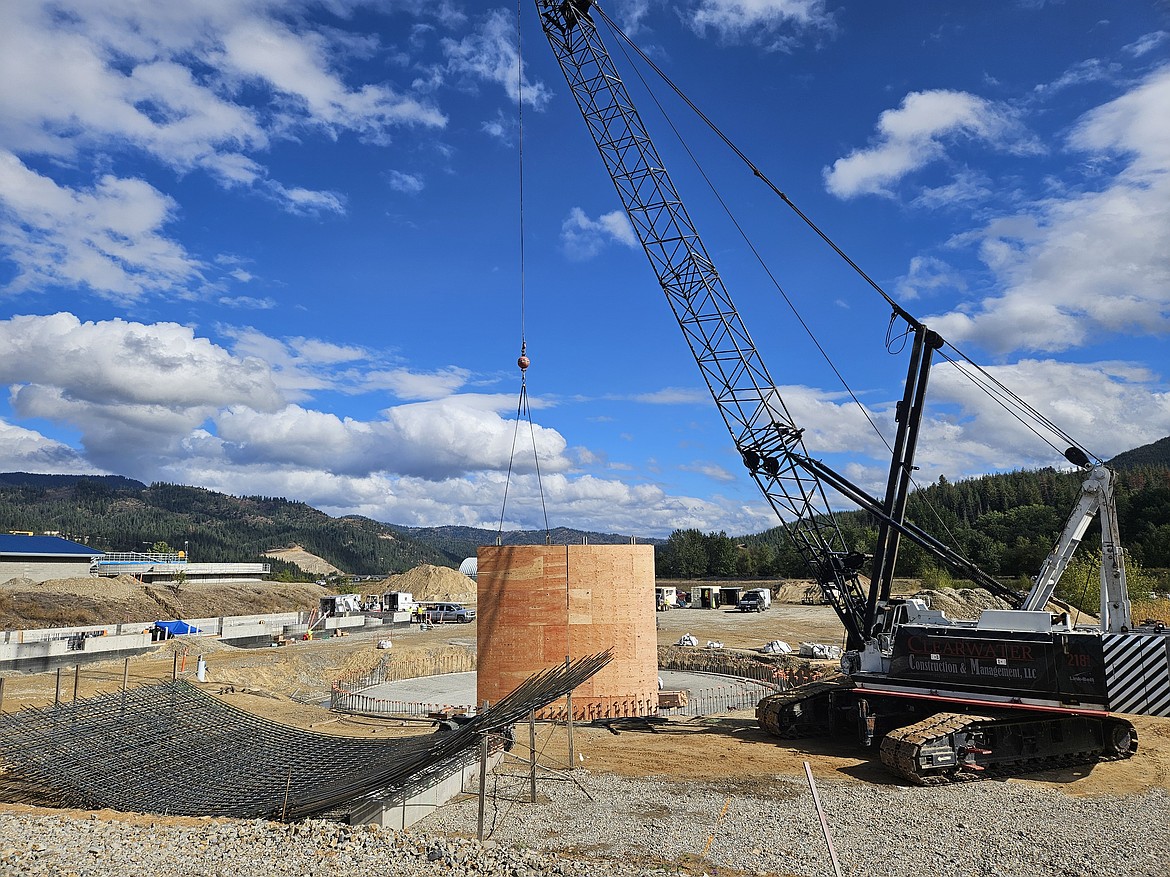
Photo courtesy of Our Gem.
When water from your home, whether from the toilet, sinks or shower, goes down the drain, it travels through a network of pipes to a wastewater treatment facility (unless you’re on a private septic system). There, it undergoes a series of treatment steps to become clean enough to return safely to the natural environment.
The process begins with pretreatment, where large debris like sticks and plastic, along with sand and gravel, are removed. Next is primary treatment. Here, the water enters the first clarifier, imagine a giant pot of stew being gently stirred. The oils and greases rise to the surface while solids settle to the bottom to be removed and processed separately. The clarified water goes to secondary treatment, which uses bacteria to break down organic matter and remove nutrients.
Finally, tertiary treatment, an advanced and optional step, further improves water quality through methods like filtration, UV radiation and chemical treatment. The treated water then exits the treatment facility, often into a water body.
The Page Wastewater Treatment Plant (WWTP) releases into the South Fork of the Coeur d’Alene River after treatment. This plant receives wastewater from homes and sewers in the Silver Valley from Kingston to Wallace, serving approximately 7,100 people. Since it began operation in 1973, this plant has not included tertiary treatment technologies, meaning that the water leaving the plant was clean but still discharged those extra nutrients and metals into the river.
These treatment technologies are starting to change thanks to funding from Idaho Governor Little’s Leading Idaho Initiative for Lake Coeur d’Alene. The Coeur d’Alene Lake Advisory Committee, with technical assistance from the Idaho Department of Environmental Quality (IDEQ), selected the Page WWTP as a top project due to its potential to significantly reduce phosphorus by up to 7,000 pounds per year! For perspective, just one pound of phosphorus, a natural nutrient in our human and environmental ecosystem, can support up to 500 pounds of algae. This contributes to water quality issues like algal blooms and other negative downstream water quality conditions.
For the past two and a half years, incredible progress has been made at the Page WWTP located between Smelterville and Pinehurst. This project began with the South Fork Sewer District and JUB Engineers completing a pilot study to determine design criteria as well as test technology and potential equipment.
In the fall of 2024, they began designing and procuring materials for the tertiary treatment facility, including a pre-engineered metal building and Solids Contact Clarifier (SCC). Once the design was completed, the project went out to bid and construction began in May 2025. Crews began by preparing the site for two new buildings: one to house the tertiary treatment chemical systems and another for the SCC. As of now, the tertiary building has a foundation and five-foot walls in place, with electrical and plumbing underway.
The SCC, a large circular concrete structure, is halfway through its wall installation. Building vertical concrete walls is no small task. It involves intricate wood forms and reinforced steel framing, as well as careful pouring. Vibration machines are used to release air bubbles – just like you might shake the pan if you want extra dense brownies.
Cold weather adds complexity, as concrete must stay warm enough to cure properly for strength and durability. However, the construction site is bustling with progress. Next steps include installing the treatment mechanism in the clarifier and finishing the tertiary treatment building. The full upgrade is expected to wrap up by July 2026, with final touches completed by September 2026.
• • •
The Our Gem Coeur d’Alene Lake Collaborative is a team of committed and passionate professionals working to preserve lake health and protect water quality by promoting community awareness of local water resources through education, outreach and stewardship. Our Gem includes local experts from the University of Idaho - Idaho Water Resources Research Institute, Coeur d’Alene Tribe, Idaho Department of Environmental Quality, the Basin Environmental Improvement Project Commission, Kootenai Environmental Alliance, Coeur d’Alene Regional Chamber of Commerce, and Kootenai County.
Pilar Deniston is the Coeur d’Alene Lake ARPA Project Coordinator for the Idaho Department of Environmental Quality.