
Deer/elk hunting outlook
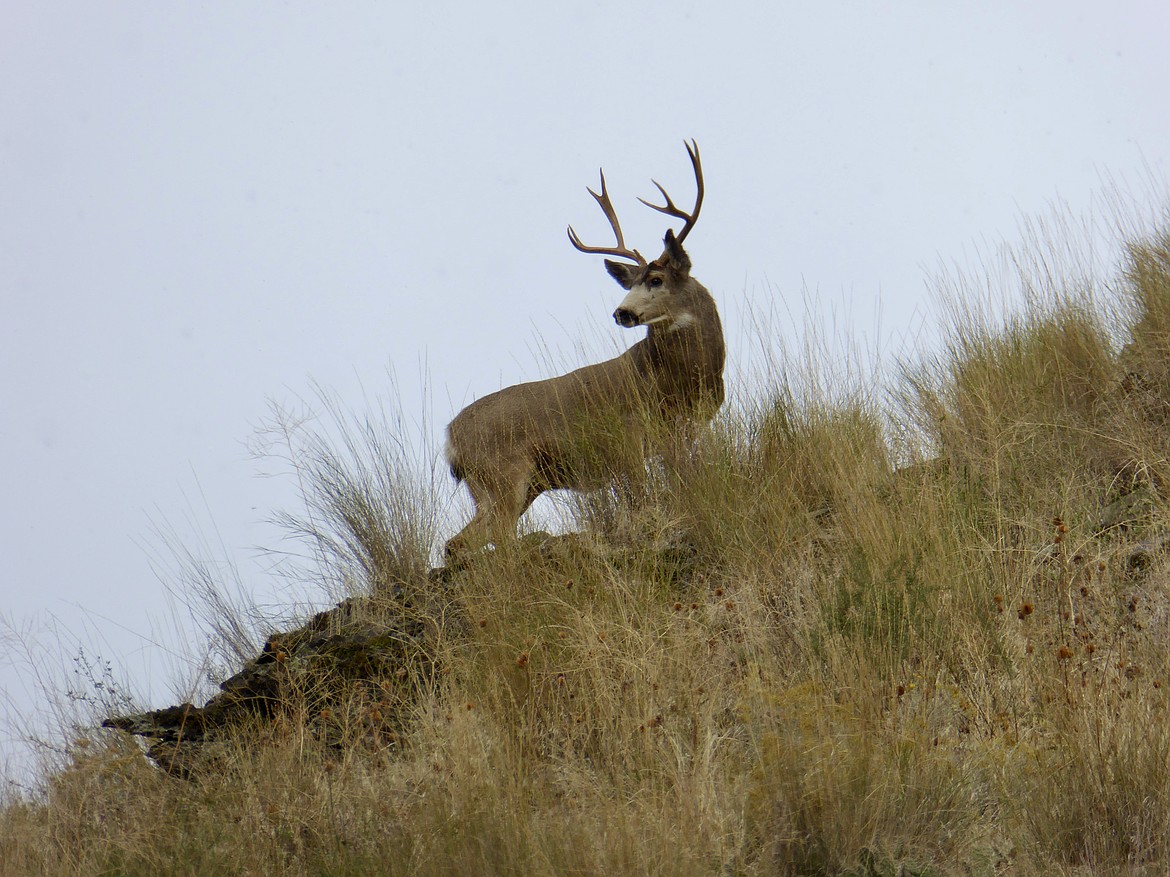
Units 1, 4, and 6 remain top-tier elk units in the state, promising hunters another productive fall season.
Idaho Department of Fish and Game
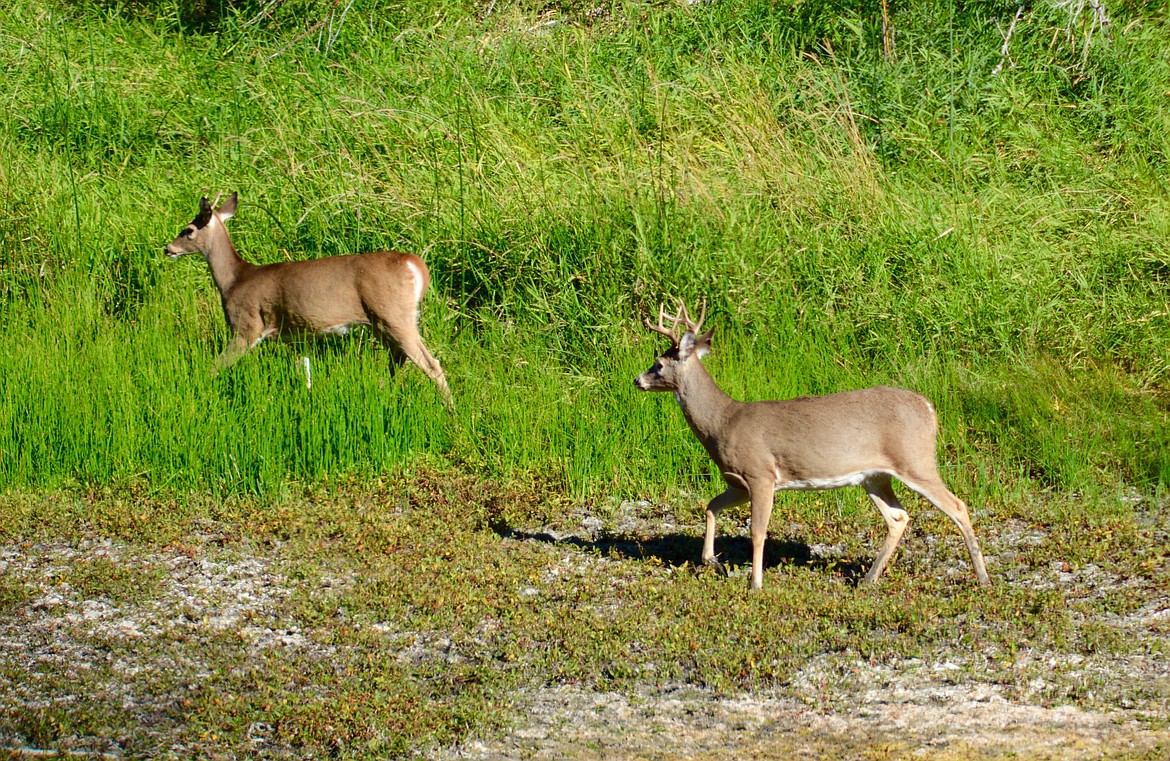
An estimated 48,766 white-tailed deer hunters hit the woods last year, with 40% of those successfully bagging a deer
Idaho Department of Fish and Game
For any of you headline skimmers out there, the takeaway of this year’s deer and elk hunting outlook is one of optimism; statewide, deer and elk hunting in Idaho looks positive heading into the 2025 big game season.
Now, the nitty-gritty, beginning with elk. By now, you’ve learned that mild winters are a winning recipe for building deer and elk herds. Typically faring better than deer, elk this past winter did particularly well.
Specifically, 82% of collared elk calves (statewide) survived the 2024-25 winter.
On the other hand, survival of collared mule deer fawns was around 58% — an uptick from the long-term average of 57% — and 91% of collared does survived.
“With 58% fawn survival, we’re growing mule deer herds,” the state’s Deer and Elk Coordinator Toby Boudreau said.
Before you rush down to the sporting goods store to buy a new, fancy rifle or bow, remember Idaho is a big state, and not every region has the same winter. Fawn survival also wasn’t uniform, and there are some troubling signs ahead, but more on that later.
Lastly, there’s whitetails. White-tailed deer aren’t tracked the same way throughout winter as muleys and elk. But biologists do look for many of the same ecological conditions heading into spring and summer before they can make a reliable estimate on what the fall/winter hunting season may look like.
But yet again, with white-tailed deer herds, it’s estimated we’re not only over the hump, but clearing that hump as if it were a downed Doug fir.
It’s usually at this point in the summer, however, that biologists begin looking for signs of epizootic hemorrhagic disease (EHD), which has a nasty track record of wiping out huge portions of white-tailed deer herds during the dog days of summer, as seen quite dramatically in 2021.
Wildlife staff in the Clearwater Region recently confirmed a case of EHD in a white-tailed deer in Unit 11, southeast of Lewiston. This is the first confirmed case of the season in the Clearwater Region.
It is still too early to determine how serious this EHD detection may or may not be. However, regional wildlife biologists will continue to monitor the situation and keep hunters up to speed as we head into the fall.
Last year’s harvest
Here’s a story worth celebrating.
Big game hunters apparently got after it in the fall of 2024, accomplishing a statewide hat trick of harvest increases — the first time since 2020 — of elk, mule deer and white-tailed deer. Hunters are no strangers to swings in populations and harvests, and Fish and Game wildlife biologists highlight that each year, there are a lot of contributing factors. But last year’s hunter harvest is a hopeful indicator that herds are once again back on track.
Not to harken back and beat a frozen horse, but it always helps to remember recent history in regard to the brutal winter of 2022-23. That winter didn’t just leave its mark in the record books; it greatly impacted mule deer herds in Idaho. The hunting season that followed some six months later came as no surprise, as statewide harvests dropped.
But fast forward to 2024 — a year that granted Idaho’s deer and elk some much-needed reprieve from harsh winter weather — and now we could be starting to see the dawn of greener pastures for both big game and big game hunters alike.
But the moral of this story? Increased hunter success across the board in fall 2024 should be chalked up as a win. After all, hunters can’t harvest animals that aren’t there.
There’s not too much to go over in the “lows” department since harvest of all three species increased, but let’s start with mule deer this time, since they were the tragic stars of the dramatic 2023 winter. After a 22% drop in harvest (remember, these numbers are statewide) from 2022 to 2023, it was enough to put a smile on any mule deer hunter’s face to see that number go from 18,568 to 23,898 in the fall of ’24.
And elk were no different. While the mountain bruisers didn’t necessarily see the same impacts of that brutal winter as their smaller, long-eared cousins, elk harvest in 2024 still rose roughly 13% from the previous year. Nearly a quarter of all general season elk hunters last year successfully hiked out of the mountains with an elk on their back, a statistic also slightly up from the previous hunting season.
This year’s harvest landed at 97.5% of the 10-year average, which makes it about as close to a “normal” harvest as you can get with fluctuating annual harvests.
What about whitetails? What were they up to last fall? Well, I’m glad you asked.
White-tailed deer represented the only “X” in the win column back in 2023’s hunter harvest report, where the primary “W” word was winter, not whitetails. But for the last two years now, white-tailed deer harvests have kept pushing the needle clockwise, accounting for roughly a 9% bump since 2022. In 2024, roughly 48,766 white-tailed deer hunters took home an estimated 20,908 whitetails statewide.
For the full 2024 deer and elk harvest stats, check out this earlier story.
Elk hunting
If you recall, the drop in elk harvest two seasons ago was a bit of a head-scratcher. Anecdotally, we heard reports from experienced elk hunters who were not finding elk in their usual spots during fall and suspected that maybe a combination of hot temperatures and scant precipitation might have been a significant factor. Boudreau stated that the dip in statewide harvest did not reflect a dip in the overall elk population, but it would possibly take another year to know for sure.
And now, a year later, that’s exactly where we’re at, and Fish and Game biologists believe the statewide elk population is healthy and relatively stable.
“While things vary from elk zone to elk zone, statewide elk populations tend to stay relatively stable from year to year,” said Boudreau.
Environmental conditions can sometimes have misleading observations when it comes to the perception of populations. For example, rain was plentiful in August 2023, which led to fantastic summer range conditions for elk. Combined with a mild fall, elk didn’t necessarily feel the need to lock up their summer vacation homes and head to cooler habitat, so the effect (in hunters’ minds, at least) was the perception of fewer elk on the landscape.
In reality, the elk were still there on the landscape in 2023, just not on the same landscape as you.
That’s all good and well. But what about this year?
Over-winter survival and collar data concluded in May, indicating excellent conditions for Idaho’s elk heading into summer. Remember that every year Fish and Game wildlife biologists collar and track deer and elk survival throughout the winter, paying especially close attention to that data in April and May when the animals are at the end of their rope nutrition-wise.
While elk, hardy as they are, tend to fare better than deer, it’s always cause for celebration when their survival numbers stay relatively high. With yet another mild winter in 2023-24, elk herds across the state will continue to grow, as Boudreau forecasts bigger herds this fall than last.
“Seasonal factors like mild winters and spring moisture are how you get healthy herds, as far as elk go,” Boudreau said. “This year, we’re anticipating earlier antler growth among bulls and fuller-bodied calves and cows.”
Factors, such as wildfire and dry conditions, could still shuffle the deck in the months and weeks leading up to the elk opener. Dry conditions, for instance, could mean fewer food options available on the hillsides, forcing herds to head for greener (and higher) pastures.
But, and I’ll leave you with this, the flipside to that is a mild summer. So far this summer, you can count the number of triple-digit days on one hand, with most days sticking to the 80s and 90s — depending on where you are in the state.
In years past, summers with higher average temperatures have noticeably played a role in elk distribution. Recall that head-scratcher season of '23? That’s exactly what can (and could) happen if we see an uptick in temperatures later this month and into September.
But for now, look forward to another average to above-average season in the mountains chasing after Rocky Mountain elk.
Last year’s numbers
Total elk harvest in 2024: 20,996
2023 harvest total: 18,568
Overall hunter success rate: 24%
Antlered: 12,610
Antlerless: 8,390
Taken during general hunts: 13,170 (19% success rate)
Taken during controlled hunts: 7,830 (42% success rate)
Mule deer hunting
Not to say we told you so, but we told you so. We predicted a bump in statewide mule deer harvest last fall, and it happened. That’s simply because mule deer population cycles are relatively predictable, and harvests tend to follow those cycles.
A total of 73,748 mule deer hunters successfully harvested 23,898 mule deer, which was nearly a 30% year-over-year increase.
Mild-to-normal winters typically grow Idaho’s mule deer herds, or more accurately, allow herds to grow, which boosted mule deer herds and led to this prediction in last year’s big game outlook:
The usual disclaimer
A boost in herds isn’t always followed by a boost in harvest. A hot, dry October can make hunting conditions difficult, cause animals to scatter over vast areas and decrease the harvest. The opposite is also true. Rainy or snowy fall weather can start migrations to lower elevations and put more deer in contact with hunters.
Not to overstate the obvious, but more deer in the fields and woods means better chances for a higher harvest. And things get better because consecutive normal winters also mean more bucks are likely reaching maturity, so there may be more large bucks available.
Last year’s numbers
Total mule deer harvest in 2024: 23,898
2023 harvest total: 18,329
Overall hunter success rate: 32%
Antlered: 20,515
Antlerless: 3,380
Taken during general hunts: 17,940 (28% success rate)
Taken during controlled hunts: 5,960 (53% success rate)
White-tailed deer hunting
Fall 2022 was a low spot for white-tailed deer harvest. The reason for that 10-year low was not bitter cold, but hot, dry weather and biting midges. Epizootic hemorrhagic disease (EHD) wreaked havoc on the Clearwater Region’s whitetails that summer, killing an estimated 6,000-10,000 deer. So, to see two consecutive increases in whitetail harvest is a good sign for wildlife managers and hunters alike that whitetail herds are moving back in the right direction.
An estimated 48,766 white-tailed deer hunters hit the woods last year, with 40% of those successfully bagging a deer. Who knows! Maybe the same 48,766 hunters went 2 for 2 during the past two years, as harvest success was identical. But I doubt it.
As predicted, though heading into the 2024 hunting season, overall harvest numbers for whitetails increased from 19,828 to 20,908.
Like with any species, and as mentioned countless times in regard to mule deer, it takes time for animals to rebound, but whitetails tend to rebound more quickly. Back in early 2023, Boudreau forecasted “another two to three years” before the Clearwater’s whitetail herds would be fully recovered, but optimistically pointed out that they were in fact “over the hump.”
And while the jury’s still out on east Idaho’s mule deer, the verdict on the Clearwater’s white-tailed deer is in: The herds have bounded right back.
Panhandle Region
Elk
Units 1, 4 and 6 remain top-tier elk units in the state, promising hunters another productive fall season. The past two winters in the Panhandle Region were relatively mild, with below-average snowfall across the winter range. This lighter snowpack likely made it easier for elk to travel and access forage throughout the season.
In Unit 4, overwinter elk calf survival was notably strong, holding steady at 90% during the past two winters. Winter ended early again, and spring arrived ahead of schedule in 2025, accelerating snowmelt at lower elevations and prompting an early green-up in the mountains. However, spring remained fairly dry, leading to forage drying out by July.
White-tailed deer
The Panhandle supports plentiful and diverse hunting opportunities for white-tailed deer, and hunters should expect a promising season ahead. Winter conditions have been mild in recent years, providing high over-winter survival of adults and fawns.
Timely rain events have helped alleviate some concerns over otherwise drought-like conditions, although much of the region remains below average for precipitation in 2025. Slight upticks in hunter success and the number of harvested deer in past seasons indicate that white-tailed deer have been benefiting from consecutive years of mild weather.
Mule deer
Hunters pursuing mule deer in the Panhandle this fall should expect similar conditions to previous seasons, but hope for additional precipitation in the forecast. Antlered mule deer harvest and hunter success have been improving in recent years. Like white-tailed deer, mild winters have benefited mule deer as of late, but the drought-like conditions of 2025 have been less favorable. Late summer and fall forage conditions will likely wane early, which may isolate deer into smaller pockets of more productive habitat early in the hunting season.
What hunters should be aware of this fall
Attention Panhandle Elk Zone B Tag Rifle Hunters: Due to the need to reduce Panhandle-wide cow harvest, the three-day rifle cow season Oct. 15-17 has been removed. Be sure to plan your hunt accordingly — no cow harvest is allowed during this time.
Fish and Game is collecting chronic wasting disease samples across the region. CWD testing is mandatory for all deer harvested in a portion of Unit 1, referred to as the CWD Management Zone. In addition, whole carcasses cannot be transported outside of the CWD Management Zone.
Fish and Game encourages all hunters participating in deer or elk hunts in the Panhandle to have their harvested animal tested. Hunters can submit CWD samples or deposit heads from harvested animals at drop-off locations around the region.
For those returning to or passing through the Panhandle from hunting in other states, remember that there are carcass transport rules in place from CWD-positive states and management zones. Check the regulations before moving your harvested animals.
Hunters across the Panhandle should remain vigilant in their bear awareness and identification skills as they are out and about in the woods. In the Panhandle, grizzly bears are mostly found in Unit 1, but have been infrequently documented in Units 2, 3, 4, 4A, 6, 7 and 9. Black bears are common throughout the region.
Hunters are also asked to observe all off-road and on-road travel restrictions and check for and abide by fire restrictions in their hunting area. Information concerning access and motorized vehicle restrictions on many of the region’s industrial forests can be found on Fish and Game’s website on the Large Tracts Program page.
Lands enrolled in the Large Tracts Program are privately owned, and rules governing access to these lands are established by the landowner. Respecting these rules will help ensure these lands remain available to hunters and recreators.
— Micah Ellstrom, Regional Wildlife Manager; Barb Moore, Regional Wildlife Biologist; Kenny Randall, Regional Wildlife Biologist
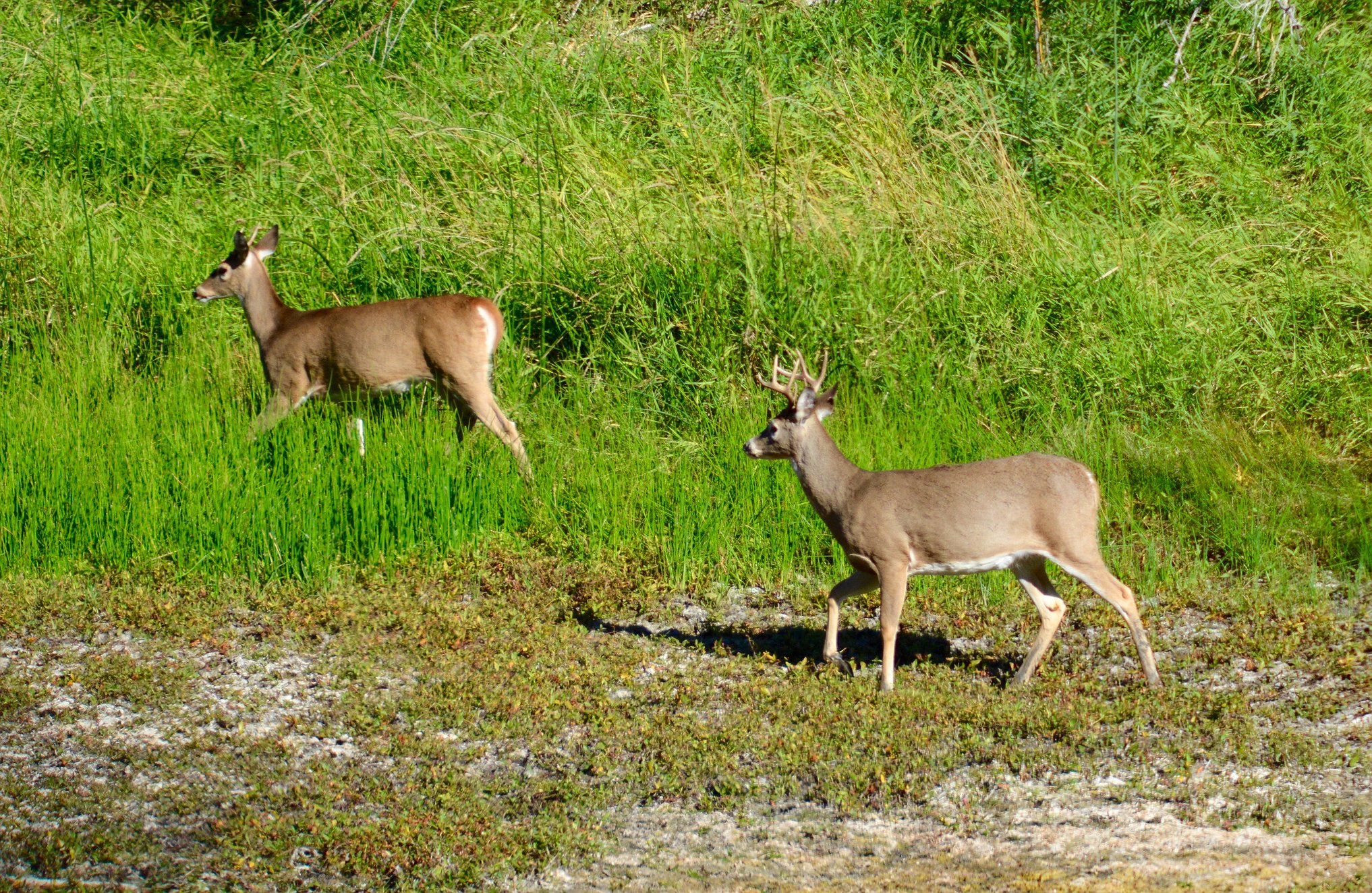 An estimated 48,766 white-tailed deer hunters hit the woods last year, with 40% of those successfully bagging a deer