

Volunteers, fireboats help battle Sunset Fire
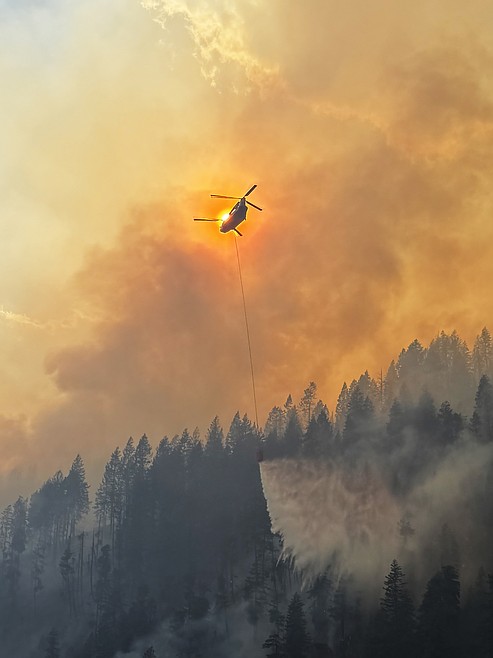
A helicopter drops a lot of water on the Sunset Fire on Thursday, Aug. 14.
Photo courtesy TODD WENDLE
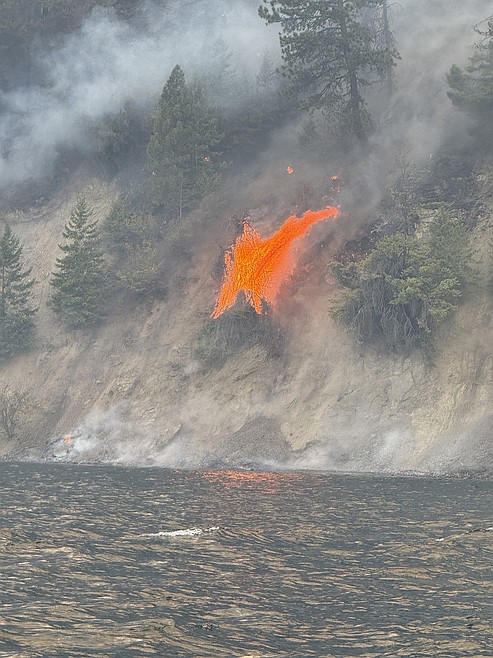
A tree is seen consumed in flames in this photo taken by Sam Owen Fire Department's Todd Wendle of the Sunset Fire in southern Bonner County.
Photo courtesy TODD WENDLE
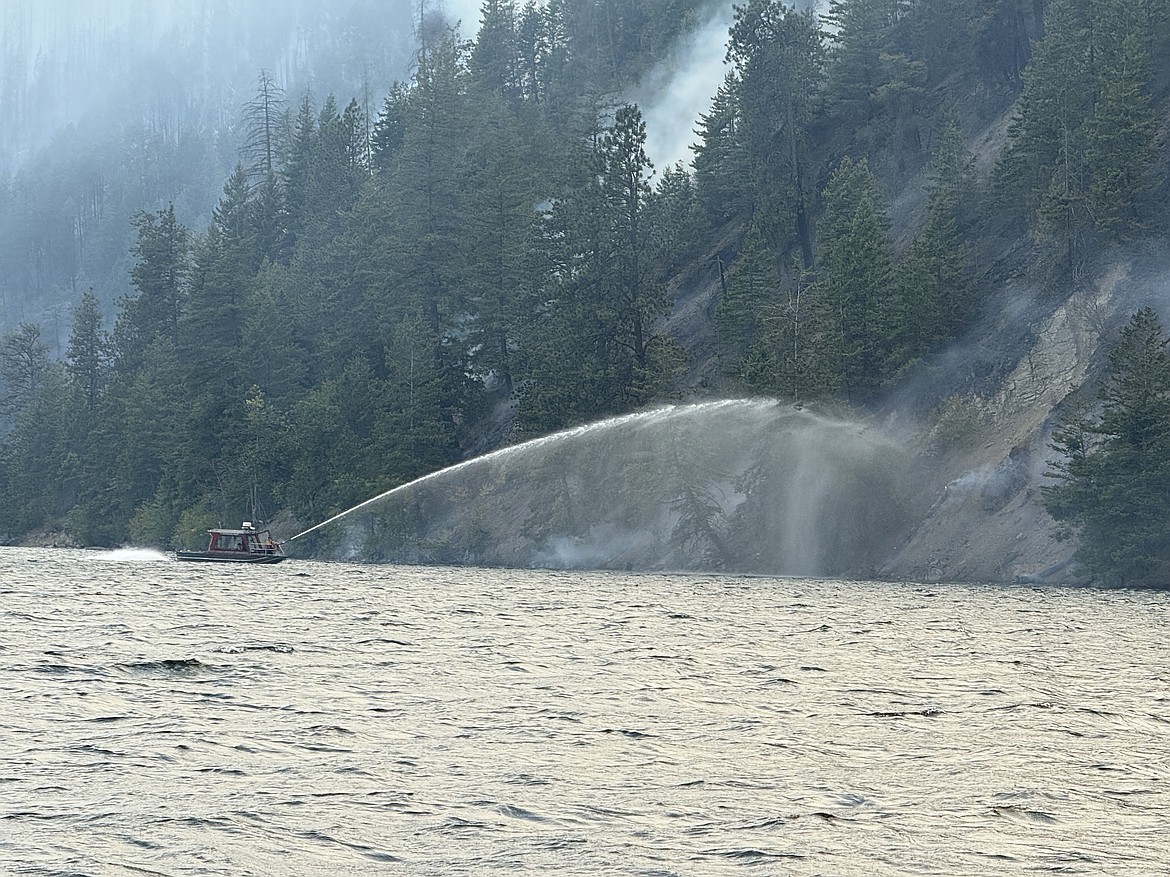
A fire boat shoots water onto the Sunset Fire on Thursday, Aug. 14.
Photo courtesy TODD WENDLE
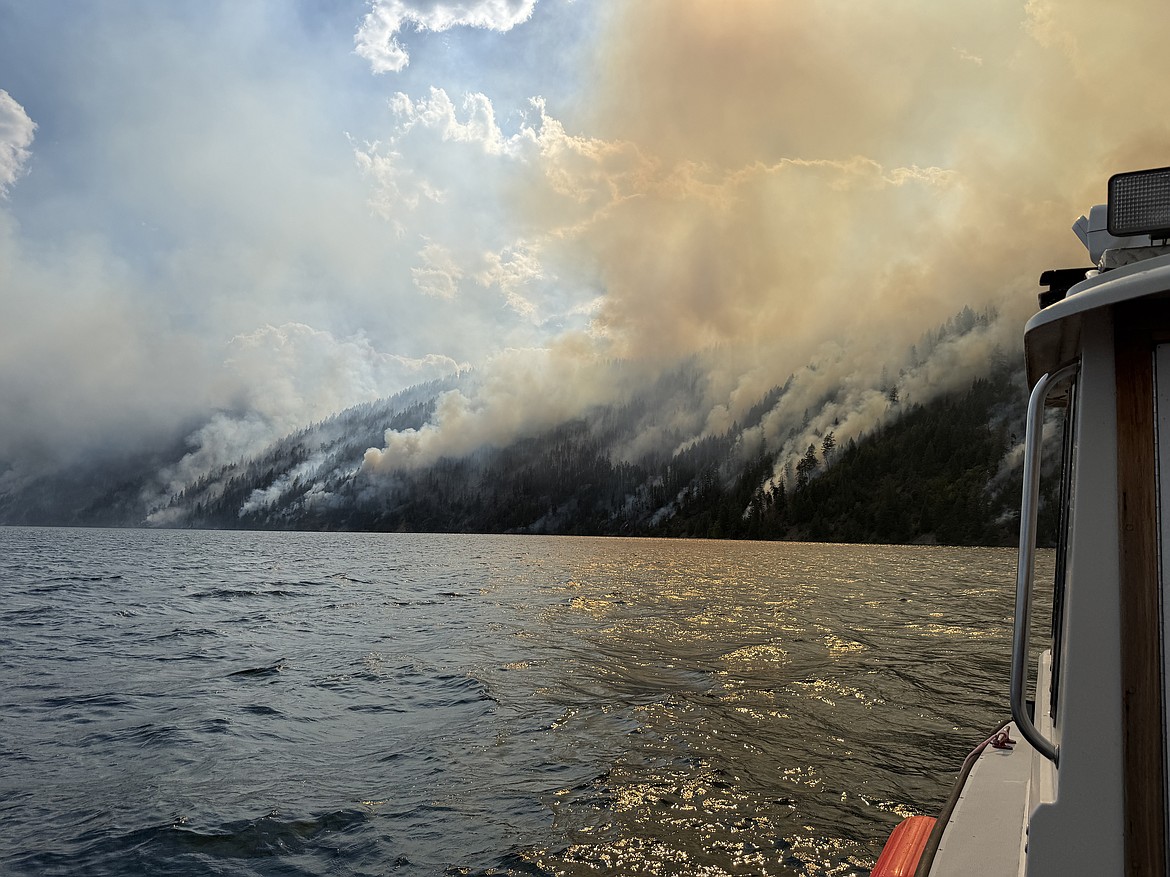
The Sunset Fire is pictured burning along the shores of Lake Pend Oreille on Thursday, Aug. 14, 2025, in southern Bonner County.
Photo courtesy TODD WENDLE
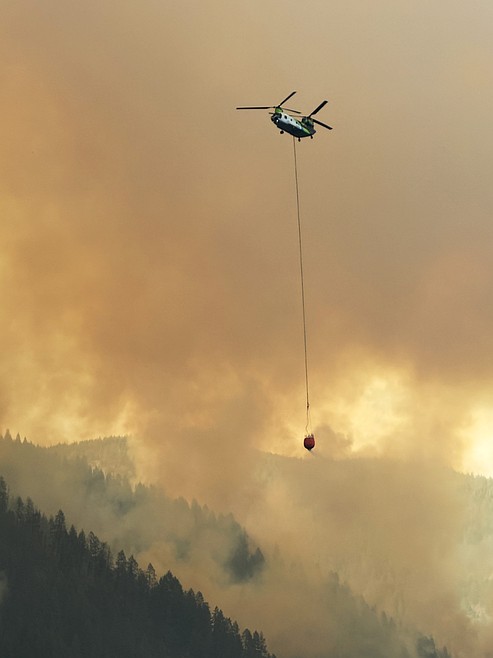
A helicopter is seen silhouetted against the smoke as it readies to drop a lot of water on the Sunset Fire on Thursday, Aug. 14.
Photo courtesy TODD WENDLE
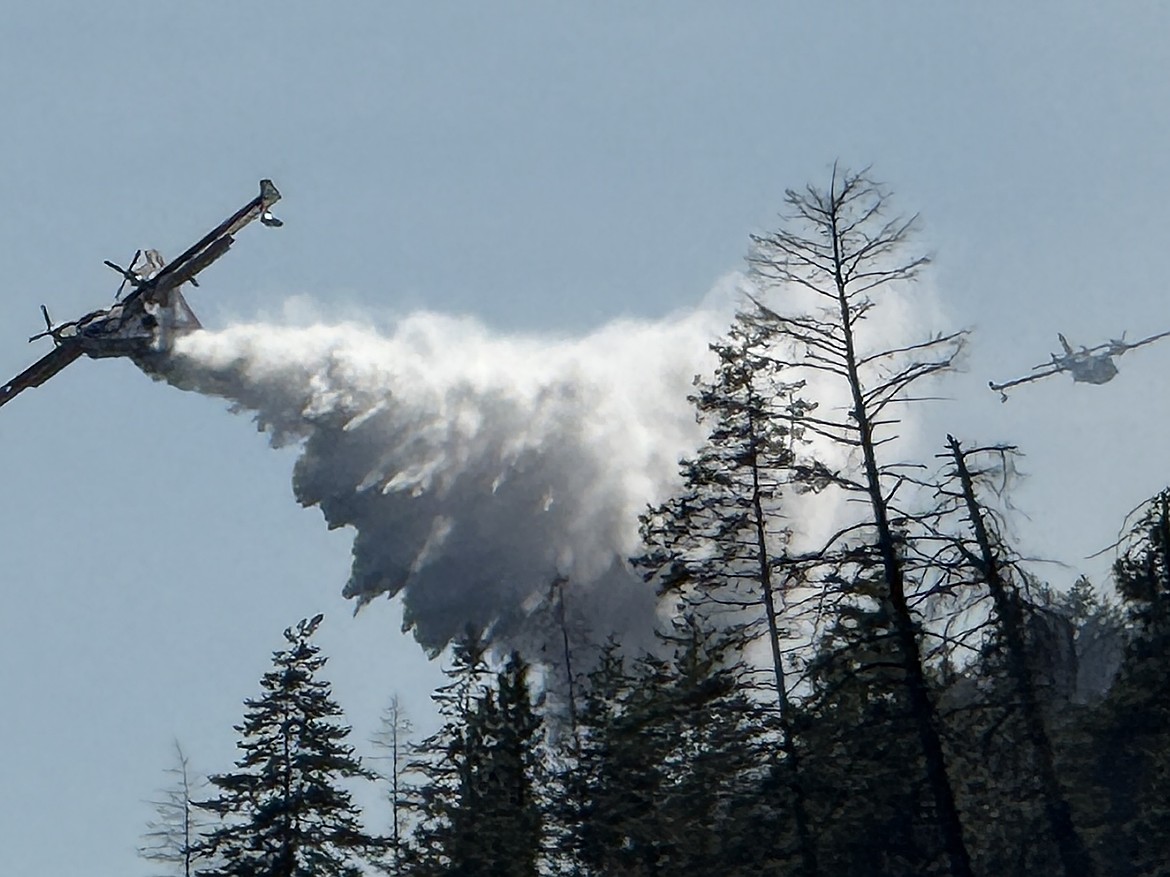
A plane drops a load of water onto the Sunset Fire on Thursday, Aug. 14.
Photo courtesy TODD WENDLE
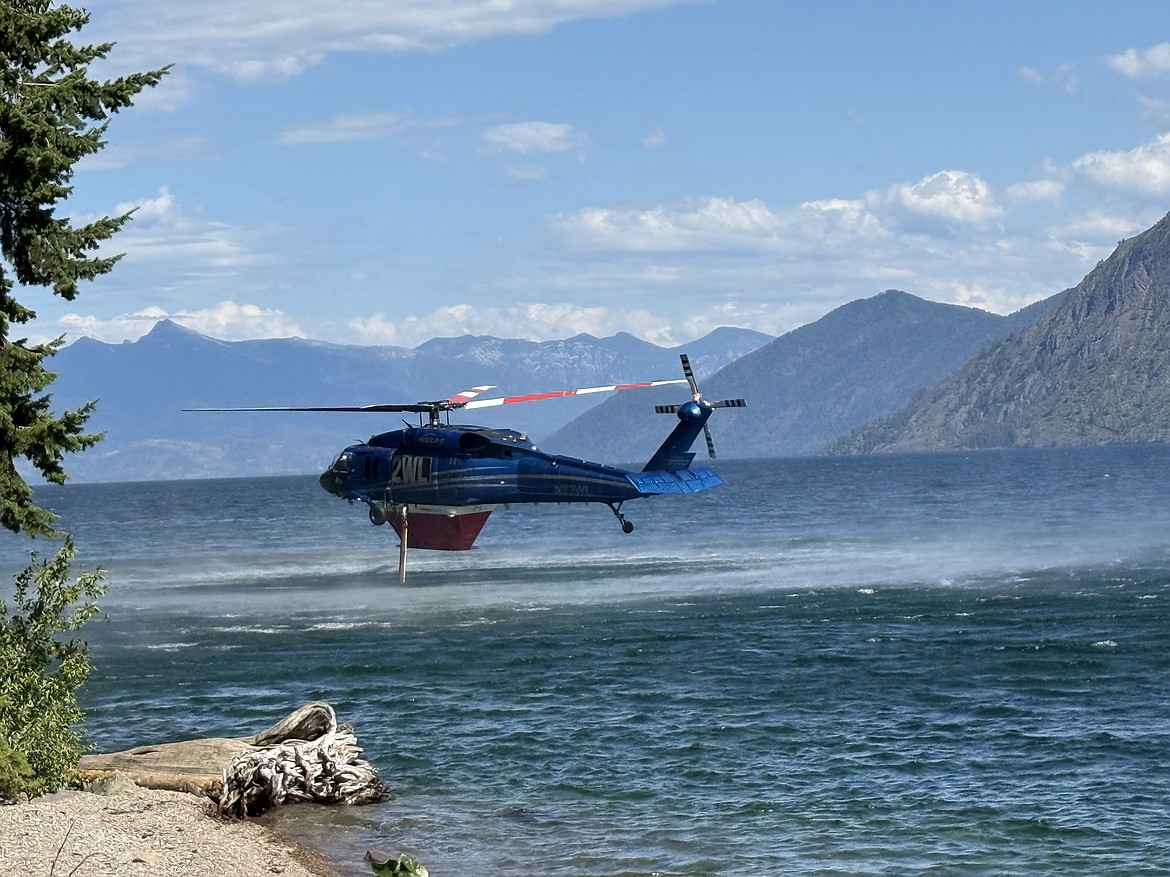
A helicopter is pictured pulling water from Lake Pend Oreille on Thursday, Aug. 14, to drop onto the Sunset Fire.
Photo courtesy TODD WENDLE
We, personnel of volunteer fire departments, are asked what do we do all day? Well, here is a brief glimpse into a volunteer firefighter's day whose district is adjacent to one of our many waterways during a major forest fire. In Bonner County, Timberlake, Selkirk Fire, Sandpoint Fire and Sam Owen Fire all have fireboats as part of their fleet of firefighting apparatus.
Early afternoon of Aug. 14, 2025. The pager screeched to life. IDL (Idaho Department of Lands) is requesting Sandpoint and Sam Owen fire boats to help with the Sunset fire northeast of Athol.
Both stations let dispatch know they have received and are on the way. Sam Owen volunteers jump up and grab their radio. The radio crackles with volunteers responding to station one. Adrenalin is already seeping into the bloodstream. The Sam Owen fire boat works well with a crew of two who are highly trained for fire boat duty. Two firefighters quickly gear up in their wildland gear and head straight to the marina.
Mooring lines are tossed and gear stowed. The two outboards beep twice and commence "purring." It is going to be a 20-minute ride to go from Hope to Talache. The wind is blowing hard and there are whitecaps and 2–3-foot swells. Most people are headed off the lake, but the fire boat heads directly into the oncoming waves.
The fire's smoke column can be seen from across the lake. As we approach the fire, we begin to smell smoke and see ash drifting down. Entire groups of ridge trees are bursting into flame. Spot fires are everywhere with more starting every minute. Along the shoreline, long-dead driftwood is burning like a campfire, only bigger and with no one around. Trees start smoking, and poof into flame. The mountainside drops steeply into the water. If there is any sort of beach, it is extremely narrow. The smoke is thicker here and the wind is fanning the flames. Burning logs, rocks and dirt are tumbling down the mountain lighting brush along the way and crashing into the lake. It felt like being "inside" a forest fire. As we watched this all unfold, the wind-driven fire had already jumped three ridges toward the north. The sound of helicopters and airplanes fill the air.
We approach and raft up with the command boat. The man in charge immediately gives us our assignment for the day. "We'd like you to head south and protect a structure that is accessible only by boat. In addition, once you have the area watered down, we would like you to continue south and put out any fires burning on the shore that can be reached with your monitor. (Big spray nozzle mounted directly to the boat.)
The separate pump is fired and one of the crew mans the monitor. Water begins flowing at 750 gallons a minute from Lake Pend Oreille out through the nozzle some 300 feet. The structure and the surrounding area are completely drenched with water dripping everywhere. 200 yards above however, the fire waits, burning slowly down the hillside out of reach from the fire boat. A spot fire appears on the ridge just south.
It is time for some air support. The distinctive whump-whump of a Chinook helicopter is heard before seen. The helicopter drops down over the ridge with the bucket streaming out behind. Hovering, the bucket is dropped into the lake, filled, lifted and back at the fire in minutes. With pinpoint accuracy the load of approximately 2,500 gallons is dropped on the growing flames. Great plumes of steam rises and the helicopter is gone and back over the water for another bucket. Round and round and the fire slowly is pushed back and slowed.
With the air support in play, we move slowly along the shore to the south putting out the beach fires. They are incredibly stubborn and take minutes of water to put out. We were lucky in that the wind was off the lake and pushing the smoke up the mountain. Before we knew it, 6:30 p.m. arrived along with impending darkness. We were released for the day and headed for the "barn" for refueling and a night's rest.
IDL asked us back the next day for continued support. Boat crews were quickly assigned for the coming days. Our duties included protecting structures along the shore, keeping people in their boats away from the helicopters and airplanes, ferrying firefighting crews to inaccessible shorelines, and filling water trucks (tenders in firefighting language) with water from the lake.
On the second day, the pump quit running. Our mechanics jumped into action and had it fixed and ready to go before the next day's shift.
This is what we do. Among many other things we do nestled along the shores of Lake Pend Oreille.
We have been at it six days in a row now and have plans to be back at it daily for the rest of the week.
Please. Please. If headed out on the lake to take a look, STAY WAY AWAY from the helicopters and the airplanes. We know it is exciting, but the pilots have a very difficult job to do. They do not need help from the public. They are concentrating on getting water and NOT watching for boats in their flight path.
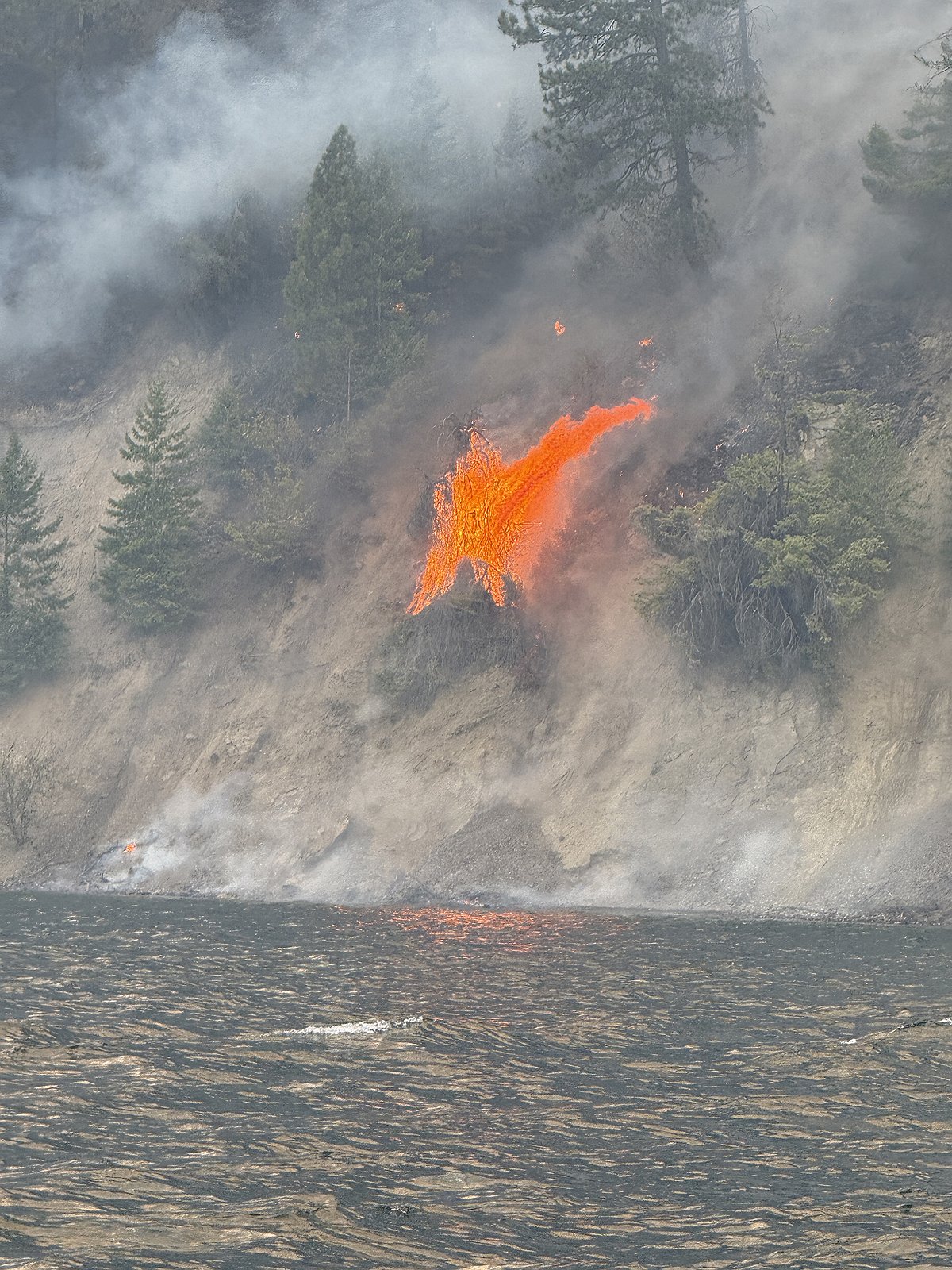 A tree is seen consumed in flames in this photo taken by Sam Owen Fire Department's Todd Wendle of the Sunset Fire in southern Bonner County.
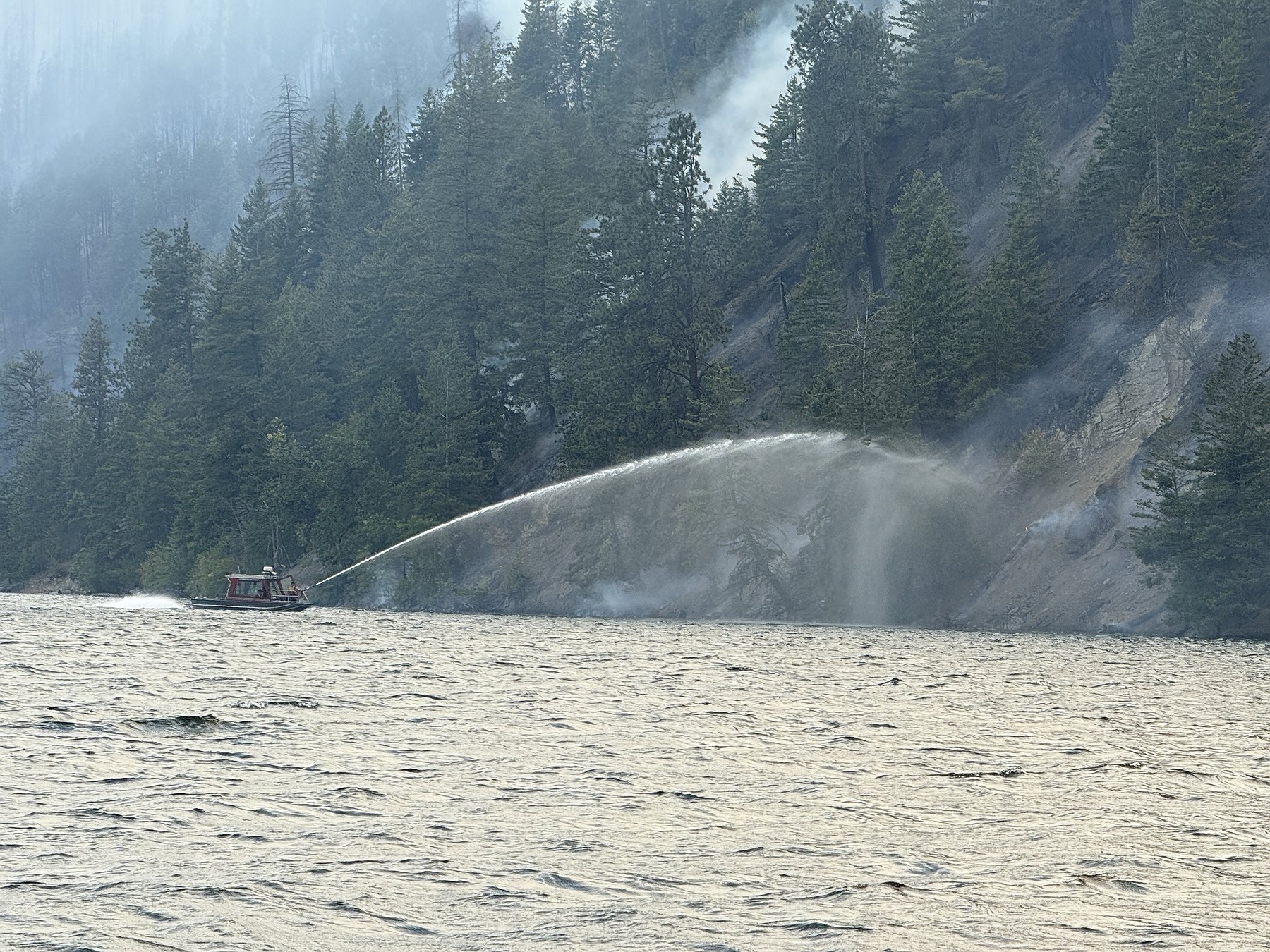 A fire boat shoots water onto the Sunset Fire on Thursday, Aug. 14.
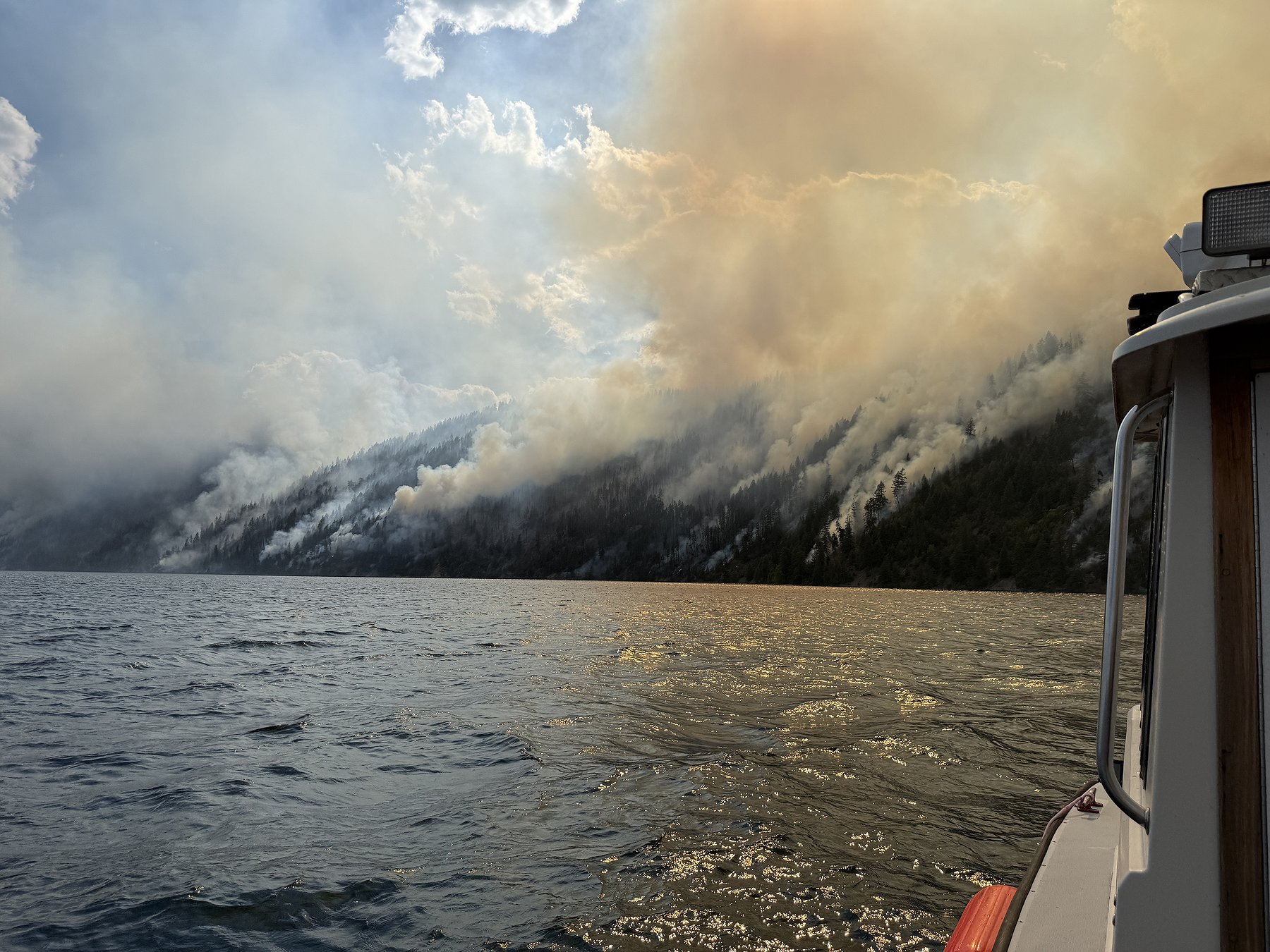 The Sunset Fire is pictured burning along the shores of Lake Pend Oreille on Thursday, Aug. 14, in southern Bonner County.
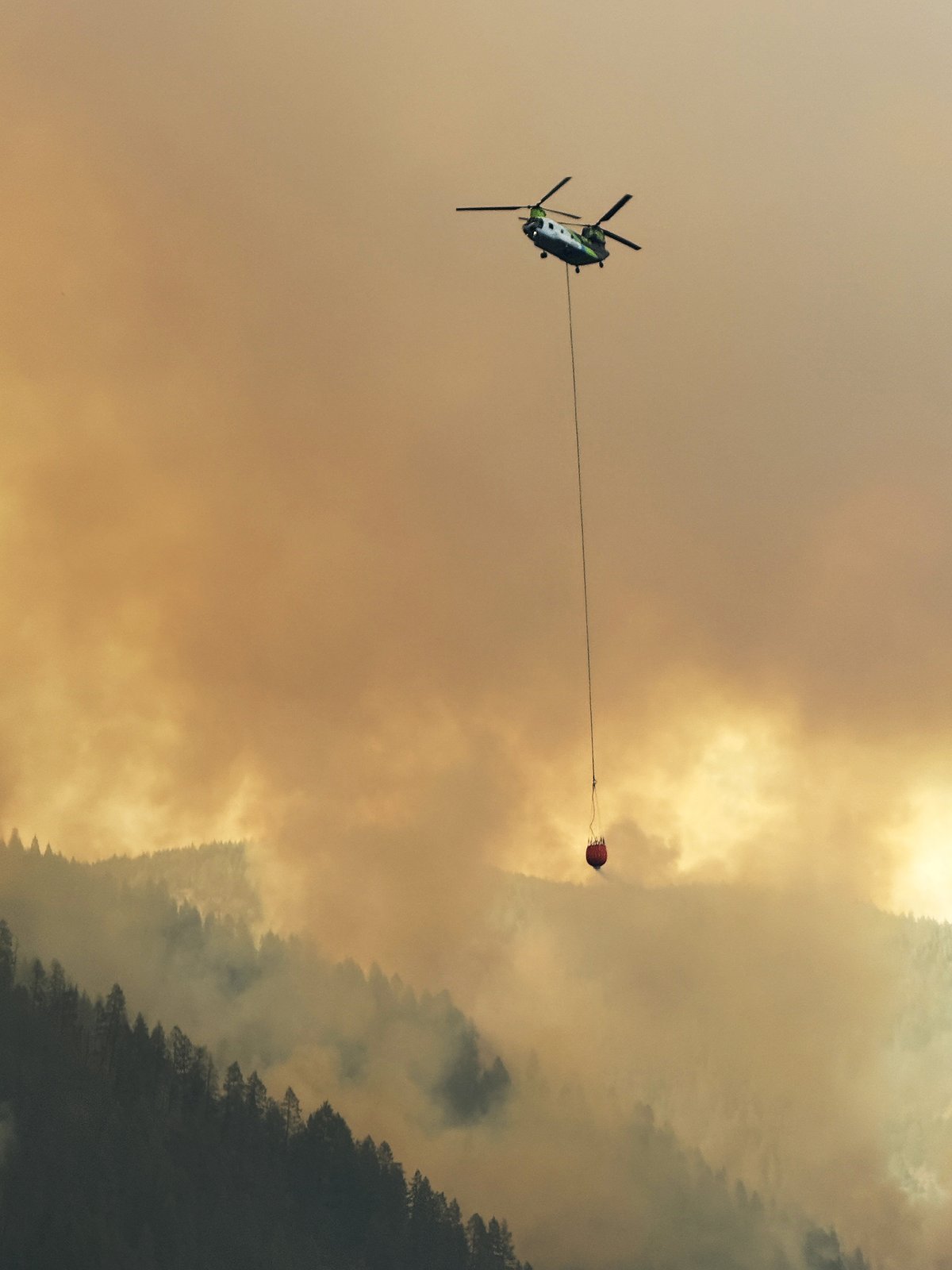 A helicopter is seen silhouetted against the smoke as it readies to drop a lot of water on the Sunset Fire on Thursday, Aug. 14.
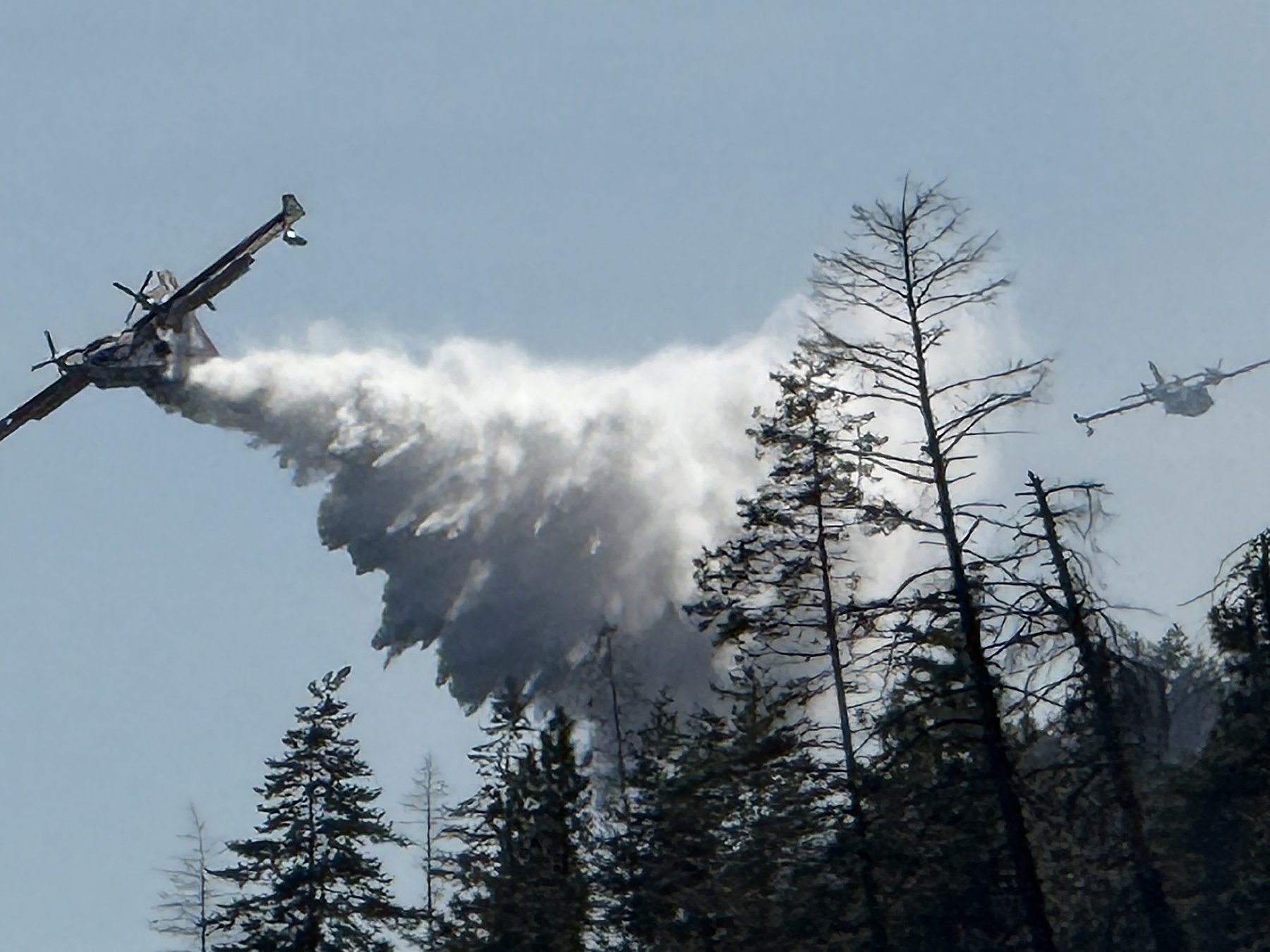 A plane drops a load of water onto the Sunset Fire on Thursday, Aug. 14.
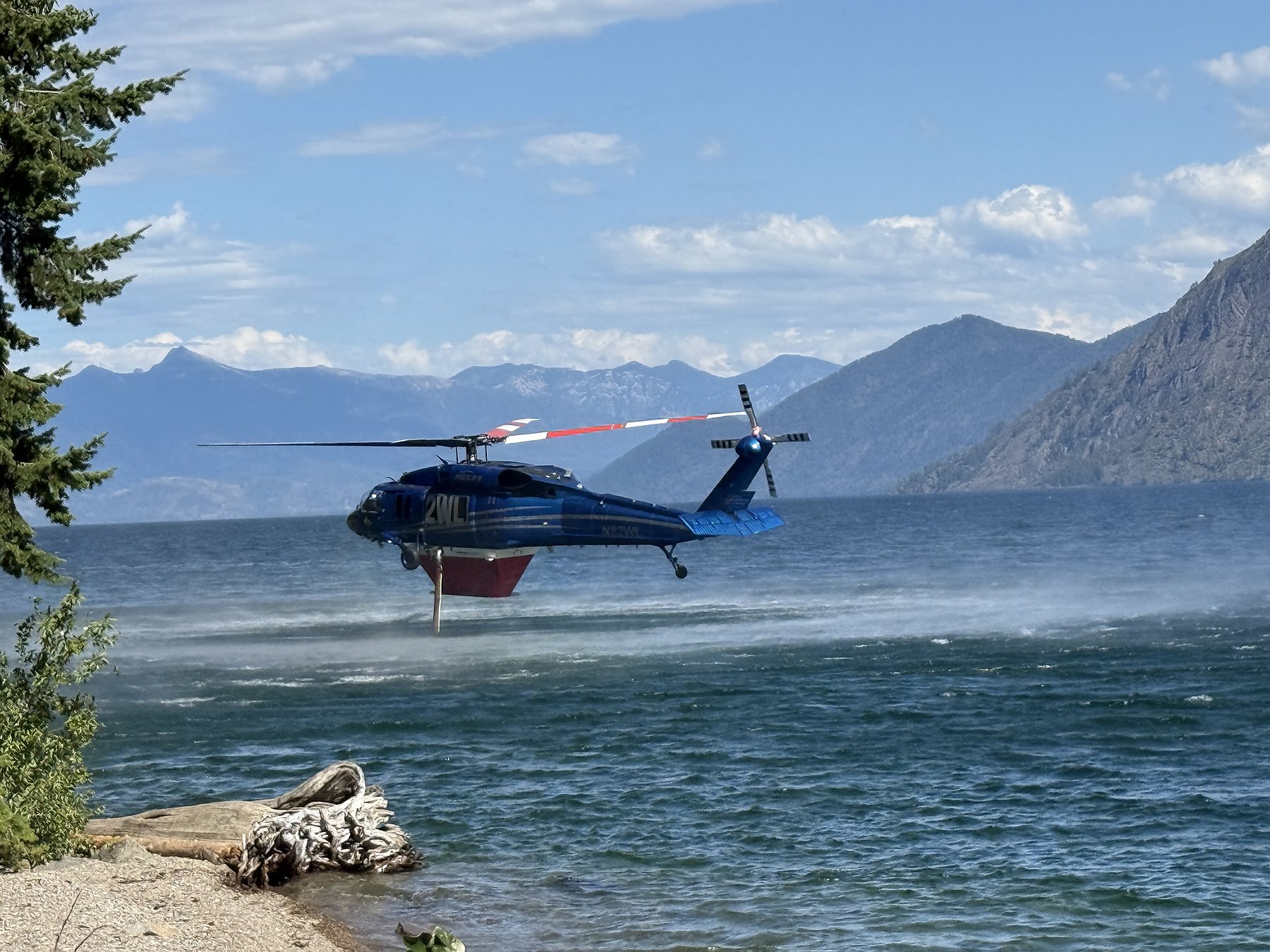 A helicopter is pictured pulling water from Lake Pend Oreille on Thursday, Aug. 14, to drop onto the Sunset Fire.