

Exploring the heart of the Beatles in ‘John & Paul’
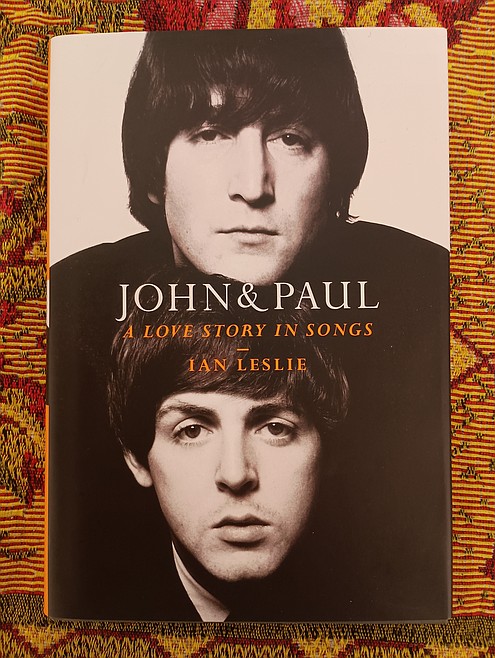
“John & Paul: A Love Story in Songs” focuses on the Lennon-McCartney songwriting partnership.
REBEKAH NIELSEN/Press
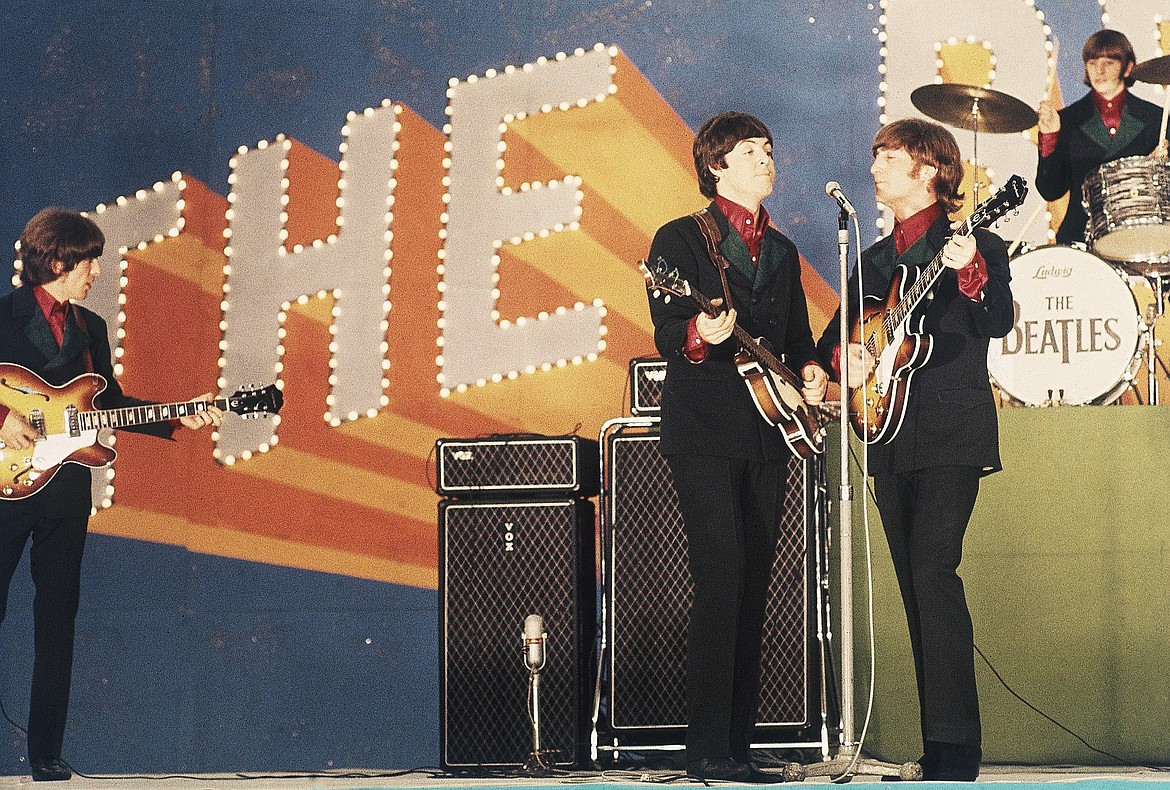
In this June 30, 1966, file photo, the Beatles perform at Budokan Hall in Tokyo for the first time. From left: George Harrison, Paul McCartney, John Lennon and Ringo Starr.
AP Photo/File
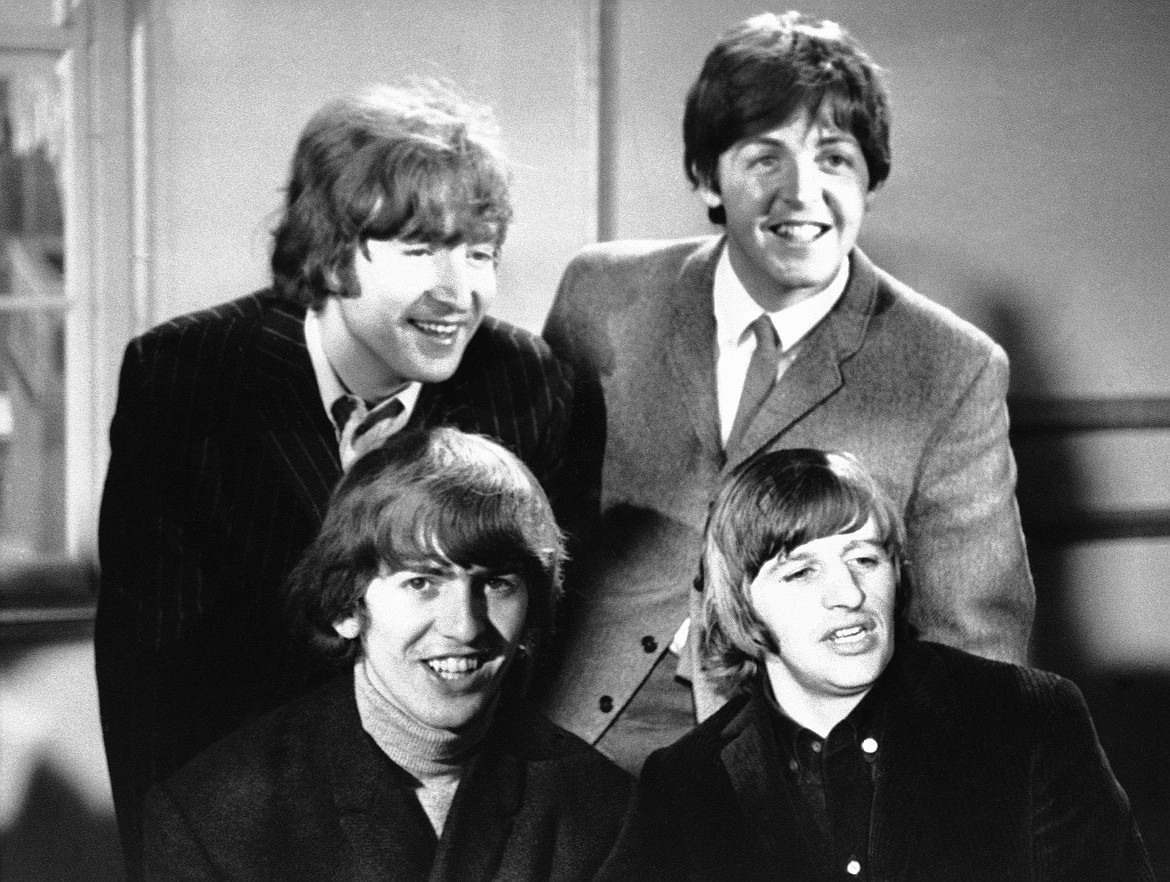
The Beatles at a press conference at Twickenham Studios, Middlesex, on June 12, 1965, when they spoke about their latest acquisition of an MBE each. The Beatles from Liverpool were made Members of the Most Excellent Order of the British Empire in the Queen's birthday Honors list. John Lennon, top left, and Paul McCartney, the two songwriters of the team, grin over the heads of George Harrison, left, and drummer Ringo Starr.
AP Photo
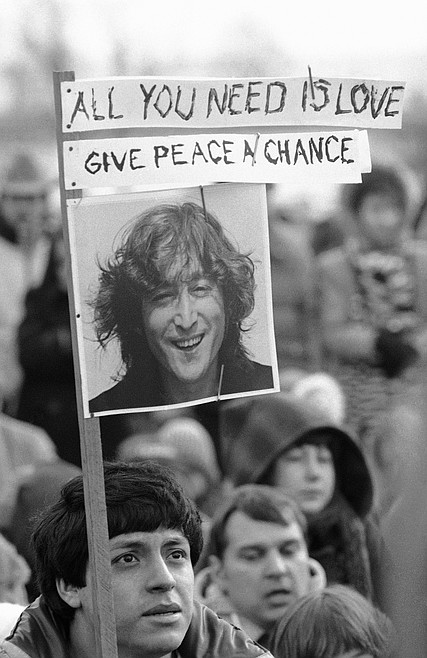
Carrying a sign emblazoned with John Lennon's picture and titles from two of his songs, a young man joins in a memorial service for the slain ex-Beatle in Chicago on Dec. 15, 1980. A crowd estimated by police to be in excess of 1,000 people listened and sang along to Lennon's songs before joining in a 10-minute period of silence asked for by his widow, Yoko Ono.
AP Photo
The Beatles are a band we can’t seem to get enough of.
Just last year, standing in a grocery store checkout line, I saw a magazine boasting answers for why the band broke up — very timely, 55 years after the fact! With all of the years between us and the ’60s, it’s easy to wonder if there’s any point in picking up a new book on the Fab Four. What more is there to say?
Plenty, if “John & Paul: A Love Story in Songs” by Ian Leslie is any indication.
I was shocked to learn this book, published in April, is the first to focus on the Lennon-McCartney songwriting partnership. Considering how many books have been written about the Beatles, it seemed impossible that no one had bothered to write about the creative team at the heart of the world’s favorite band.
And yet, no one had.
In spite of the Beatles, the reputations of Lennon and McCartney have remained largely distinct: Lennon, the rebellious truth-teller, fighting for peace; McCartney, the cheerful guy with a million silly love songs. The general consensus was that they may have worked closely at some point, but not for long.
“By the time we got to ‘Revolver’ or ‘Sgt. Pepper,’ it was separate,” Lennon would say in a bitter 1971 interview with Rolling Stone. “The whole myth of us being this perfect team is just that — a myth. And I’m sick of it.”
But when the documentary “The Beatles: Get Back” was released in 2021, audiences were met with a surprise. Everyone expected the 1969 footage to show the band falling apart; instead, we saw four close friends constantly collaborating on songs, with two obvious best friends in particular. There was strain, but no one was expecting the footage to be as warm as it was — McCartney included.
“I definitely bought into the dark side of the Beatles breaking up and thought, ‘God, I’m to blame,’” he said to The Times in 2021. “But at the back of my mind there was this idea that it wasn’t like that.”
“The Beatles: Get Back” came out at the height of the pandemic. Around that same time, Leslie, a journalist and author, had some time to himself. He wrote a blog post, “64 Reasons to Celebrate Paul McCartney.”
It really took off.
“Surprised by the scale and intensity of the response, I started to wonder if I could write a whole book about the group I have loved since childhood,” he wrote in the acknowledgment of “John & Paul.”
It was a departure from his previous work — books on psychology and communication — but he felt his background might bring an interesting perspective to the Lennon-McCartney story. Communication certainly plays a devastating role in the story he tells.
He isn’t a researcher, and no new discoveries are found here. It is, however, a much more detailed version of the story than most people will be familiar with. (Speaking of which, this one is definitely “R” rated, folks.) While the book isn’t sourced as heavily as an academic text, it’s more rigorous than many rock ‘n’ roll biographies, with a detailed bibliography and notes.
“John & Paul” tells its story in a novel way: Focusing on the songs they sang. Each chapter is named after a song that plays a role in the story, usually written by Lennon, McCartney or both. For example, the first chapter is about Lennon and McCartney’s childhoods in post-war Liverpool, and their meeting July 6, 1957. It is called “Come Go With Me,” after the Del-Vikings song Lennon performed (and heavily embellished) on stage that day — something a 15-year-old McCartney found impressive.
Leslie does more than just rehash the story, however; in every chapter, he deftly blends the human and musical elements of the story. Some readers may find his musical analysis difficult to keep up with, but it isn’t overly technical. He covers a wide range of topics in different songs: Sometimes lyrics, sometimes chord structure, sometimes performance or production.
In chapter one he writes about genre, discussing how “Come Go With Me,” a doo-wop song, was an unusual choice for Lennon to perform. At the time, skiffle and rock ‘n’ roll were the trending sounds in England. Knowing a group like the Del-Vikings was a sign of great musical curiosity … something Lennon and McCartney clearly had in common.
The book covers 43 songs, in 43 chapters. While Leslie occasionally dips into speculation (such as applying motives to actions), the overall narrative he paints is convincing and moving. It follows both men — depicted as sympathetic, frustrating and always very human — as their friendship is pitted against all the perils of fame, fortune and a rapidly shifting culture.
The book’s description reads, “John and Paul’s bond was defined by its complexity: competitive, tender and tempestuous; full of longing; riven with jealousy.” It’s an apt statement, and if you find it appealing I think you will love the book. The prose is a bit romantic for my (admittedly dry) taste, but the story of the Beatles is fascinating from pretty much every angle it’s told, and it’s told well here.
If you love the Beatles, I’d recommend this one. If you don’t care about the Beatles, but love a compelling drama, I’d still suggest picking up a copy. Odds are, you won’t regret it.
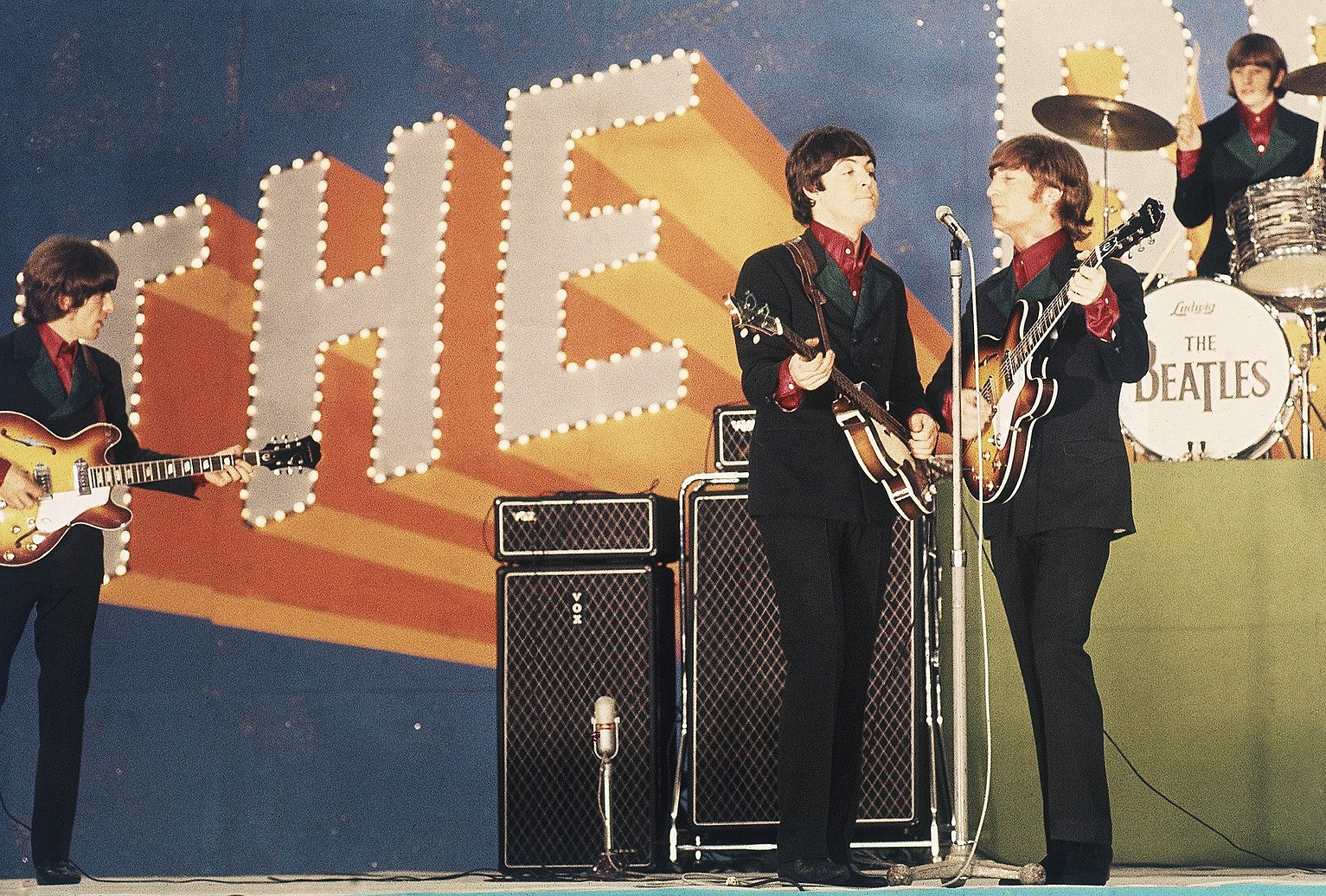 In this June 30, 1966, file photo, the Beatles perform at Budokan Hall in Tokyo for the first time. From left: George Harrison, Paul McCartney, John Lennon and Ringo Starr.
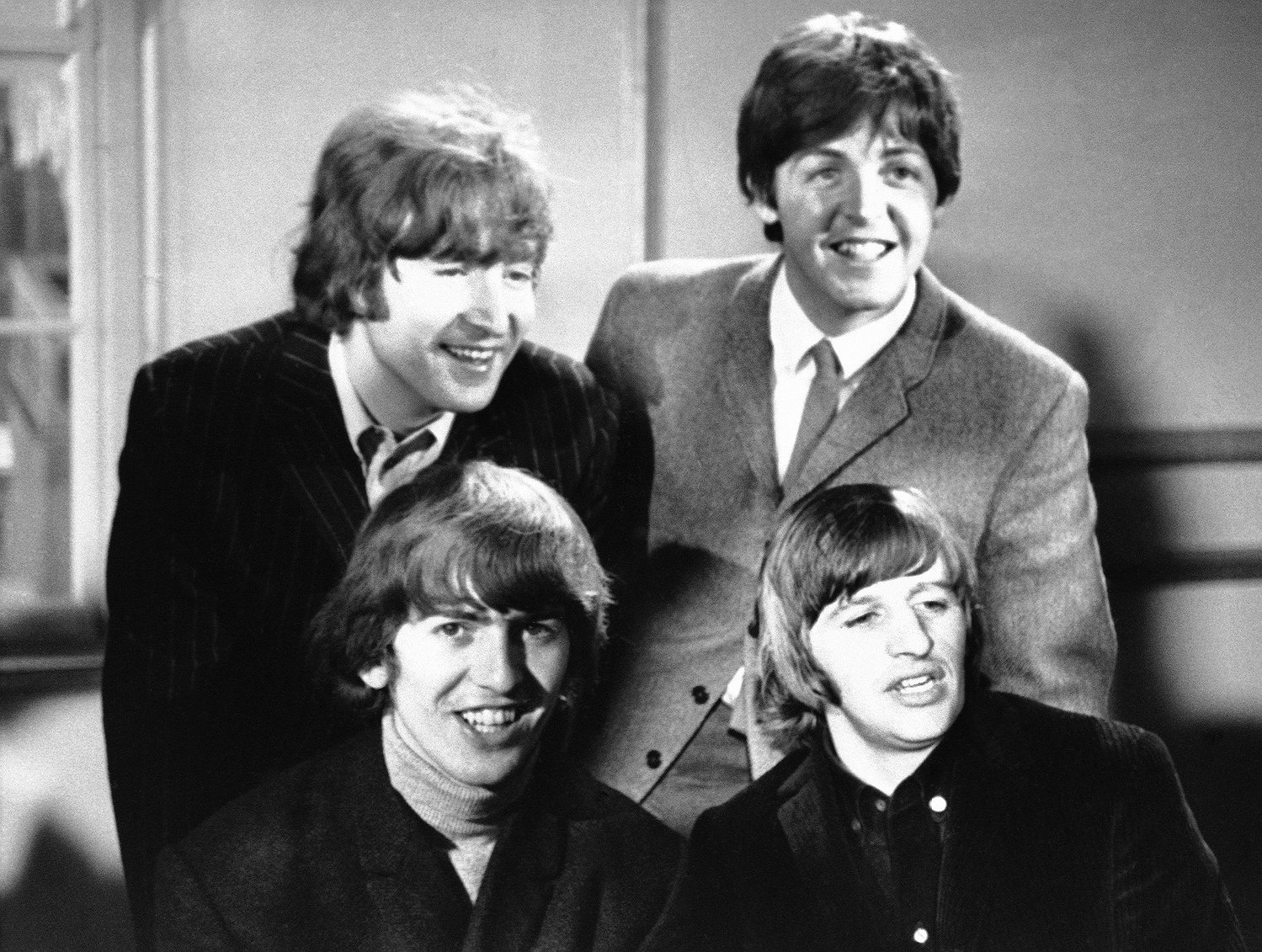 The Beatles at a press conference at Twickenham Studios, Middlesex, on June 12, 1965, when they spoke about their latest acquisition of an MBE each. The Beatles from Liverpool were made Members of the Most Excellent Order of the British Empire in the Queen's birthday Honors list. John Lennon, top left, and Paul McCartney, the two songwriters of the team, grin over the heads of George Harrison, left, and drummer Ringo Starr.
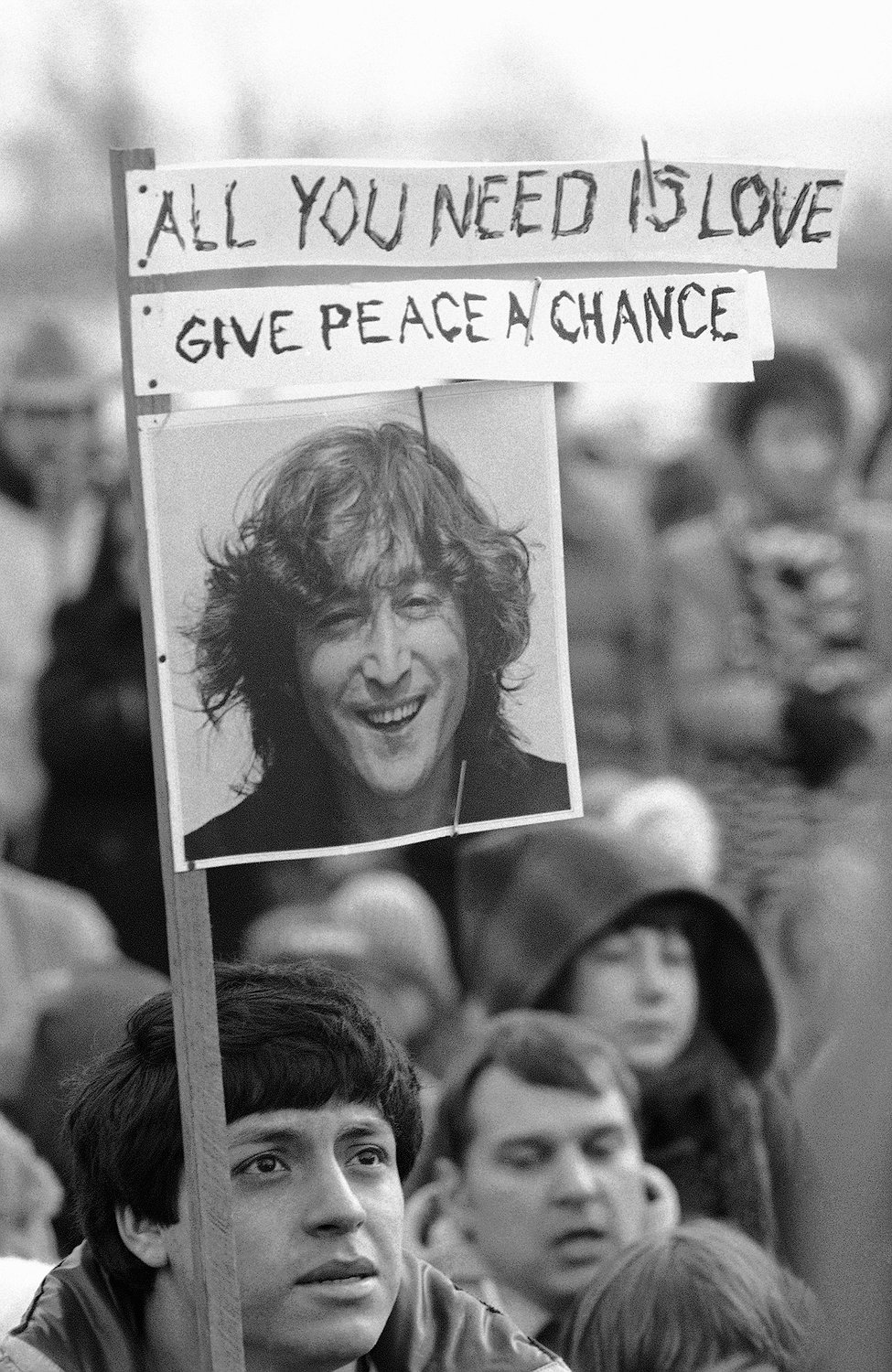 Carrying a sign emblazoned with John Lennon's picture and titles from two of his songs, a young man joins in a memorial service for the slain ex-Beatle in Chicago on Dec. 15, 1980. A crowd estimated by police to be in excess of 1,000 people listened and sang along to Lennon's songs before joining in a 10-minute period of silence asked for by his widow, Yoko Ono.