
Swans making safe stop
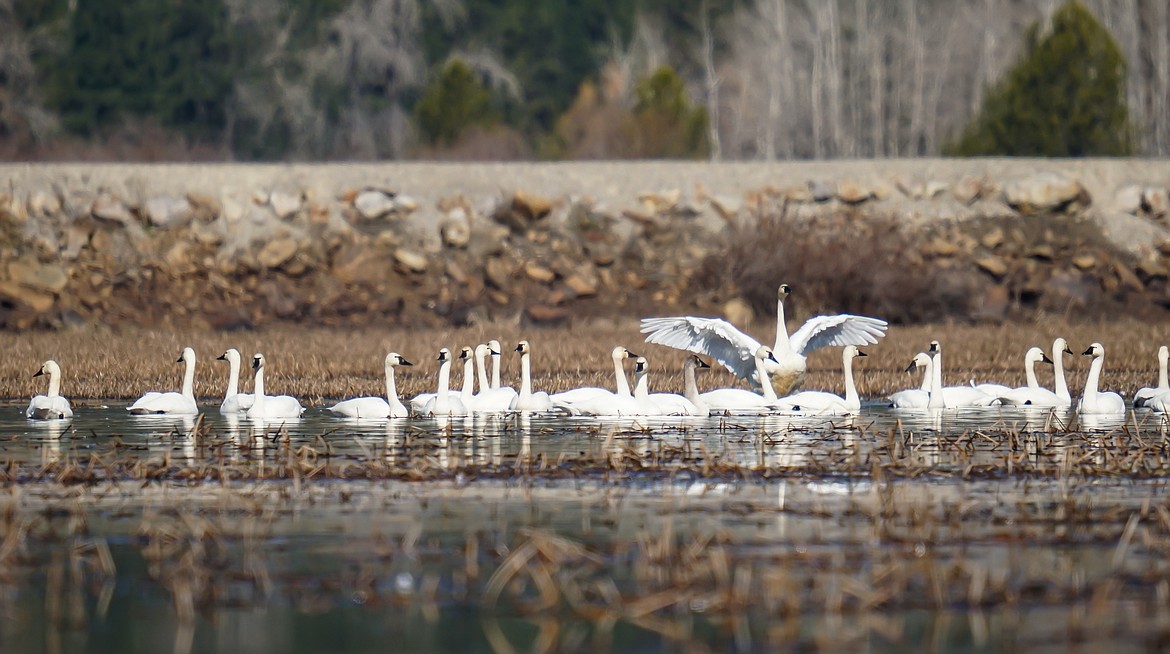

COEUR d’ALENE — Peak season for viewing tundra swans in the Coeur d’Alene basin typically falls in the second to third week of March. Concerns have lingered over the birds dying in recent years.
The annual migration happened a little earlier this year, and the mortality rate is much lower than in recent years, said Dave Leptich, regional wildlife habitat biologist with Idaho Fish and Game.
Leptich said this year his department has only counted one dead swan. He said there has been a multi-agency effort to improve soil condition and to run tests on the swans.
“We go out and catch some of the swans,” Leptich said. “Then we attach radio collars and draw blood and run tests to check for toxins.”
Concentrated regenerative efforts in areas with heavy toxins resulted in the remediation of one 400-acre section of land, and another 700-acre parcel is currently being modified as well.
In recent years, some of the swans have died when stopping in the area. Mine waste and heavy metals in the sediment have been identified as the cause for the fowl deaths.
Tundra swan mortalities averaged 128 in 2018 and 2019, FWS reported. In previous years, it was about 50.
In 2022, tundra swan mortalities were described as "unprecedented" at more than 350.
Leptich said during the years with high mortality rates, birds congregated to areas where the sediment was very toxic. He said the birds didn’t have many options for feeding grounds, so the options available were extremely hazardous.
He said the migration timeline this year has been ahead of schedule, but the numbers of migrating birds are good this year.
“On average, we will see 2,500 to 3,000 swans in the basin,” Leptich said. “Most of them have already left for this season.”
Some groups are still in the area, as between 200-300 have settled into the wetlands along Highway 3 near Rose Lake. He said a final count won’t be tallied until April.
Leptich said the swans stop here to feed and rest while they migrate from the Sacramento Valley in California to the west coast of Alaska, which is the primary breeding ground for the birds.
Leptich said the ongoing reclamation work will take decades before tangible results can be tracked.
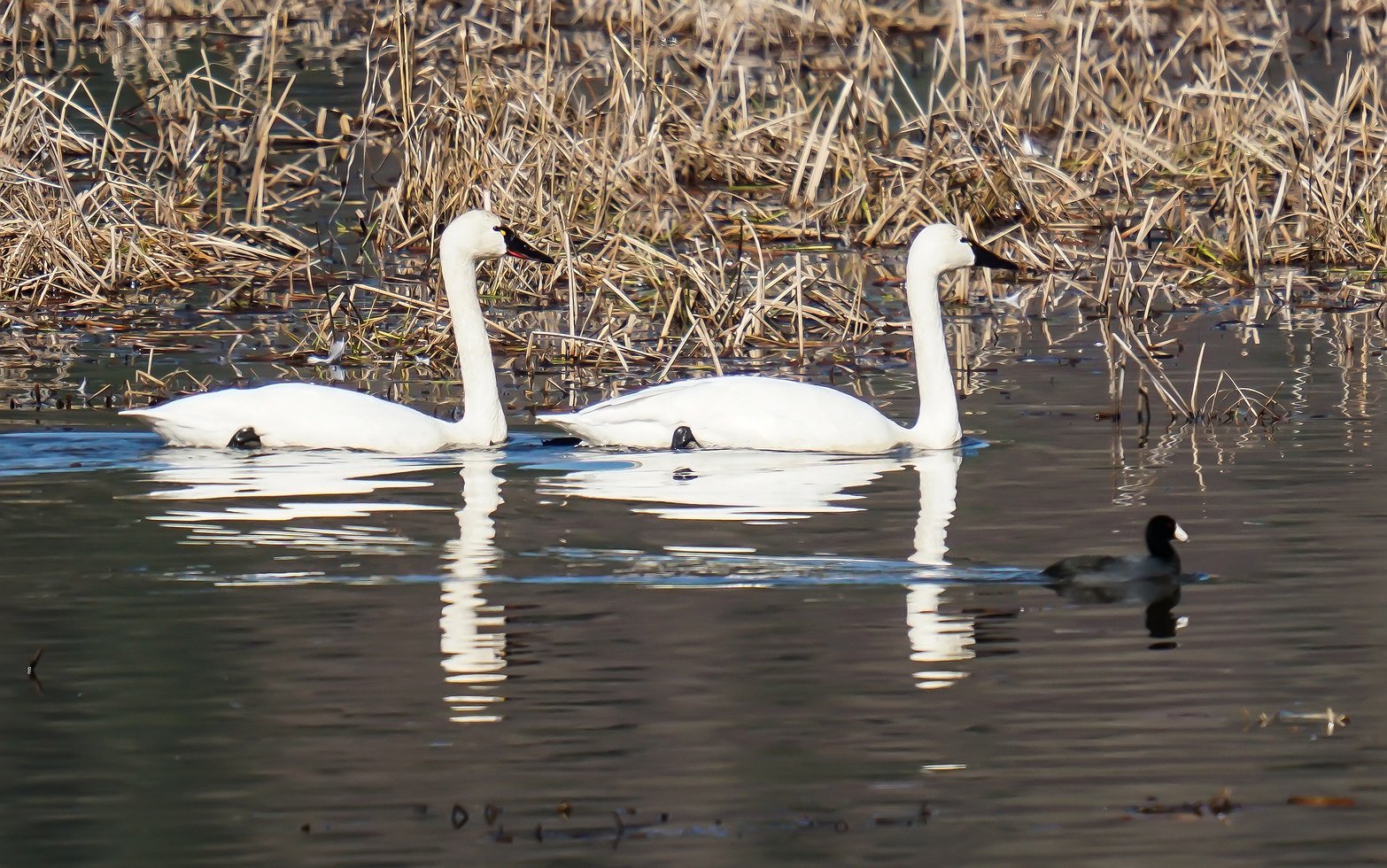 A pair of tundra swans float across a pond along Highway 3 near Rose Lake on Wednesday morning.